Sourcing interactive displays directly from a smart board OEM factory in China has become the default strategy for distributors, system integrators, education suppliers, and AV brands across North America, Europe, the Middle East, Southeast Asia, and Latin America. The reason is simple: China produces the overwhelming majority of the world’s interactive flat panels, and the Pearl River Delta alone hosts hundreds of factories capable of building a custom-branded 65-inch to 110-inch touchscreen at a cost that is difficult to match anywhere else.
But not every factory is equal. Behind the attractive quotations and glossy product catalogs, buyers often discover inconsistent panel grades, weak after-sales support, missing certifications, or “factories” that are actually trading companies reselling other people’s products. This guide walks you through how to evaluate a Chinese smart board manufacturer step by step, what questions to ask, which specifications to define before requesting a quote, and how to protect your brand when you place your first OEM order.
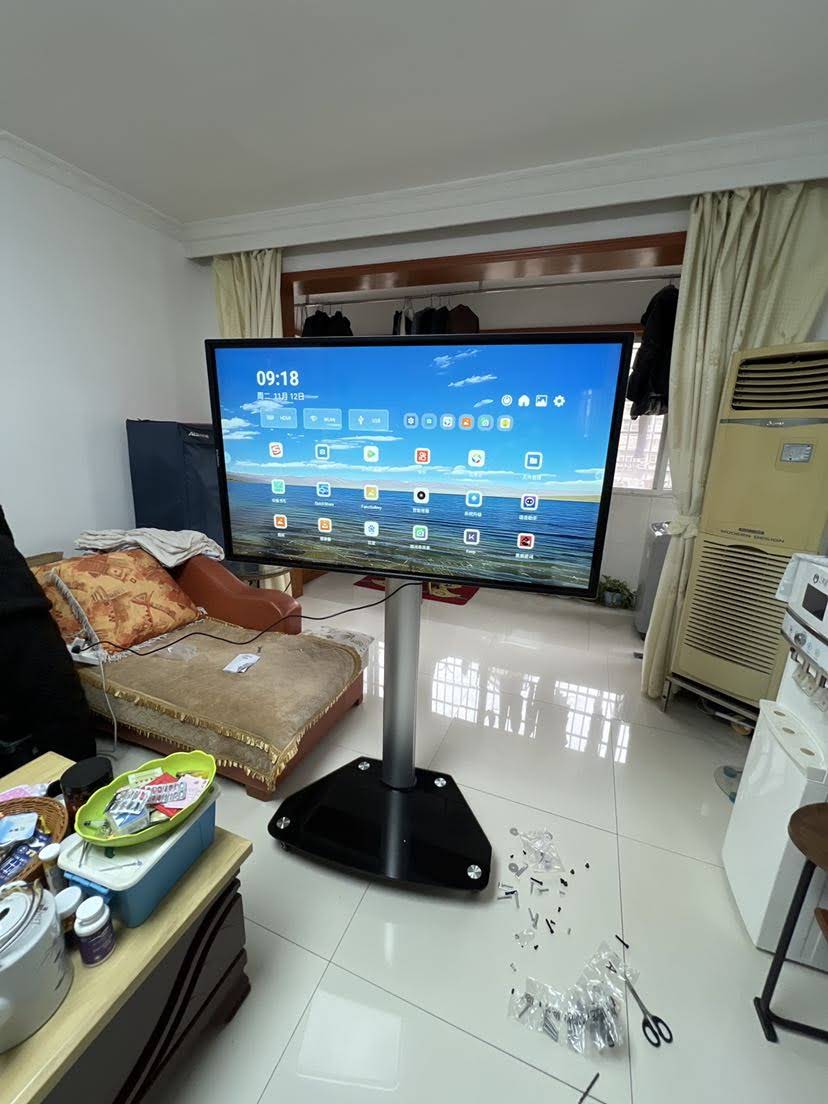
Why China Remains the Global Hub for Smart Board OEM Manufacturing
Interactive display production is a supply-chain business. A smart board combines an LCD panel, an infrared or capacitive touch frame, a mainboard running Android or Windows, tempered anti-glare glass, speakers, cameras, microphones, and a metal chassis. Every one of these components has a mature supplier ecosystem in southern China, and that concentration is what makes Chinese OEM factories so cost-efficient and fast.
The Shenzhen and Pearl River Delta Advantage
- Panel proximity: BOE, CSOT, HKC, and other panel makers operate within a few hours’ drive, which shortens lead times and lowers logistics cost.
- Dedicated touch-frame, PCBA, and OPS module suppliers cluster around Shenzhen, Dongguan, Huizhou, and Guangzhou.
- Deep engineering talent pool experienced in Android firmware, Windows OPS integration, and wireless screen-sharing protocols.
- Established export infrastructure through Shenzhen Yantian, Shekou, and Guangzhou Nansha ports, with regular routes to Rotterdam, Hamburg, Los Angeles, Jebel Ali, and Singapore.
- Experience with international compliance: CE, FCC, RoHS, UKCA, CB, Energy Star, and country-specific requirements such as SASO or BIS.
Demand is also structural. Government digital-education programs in Europe, the United States, India, and the Gulf keep classroom display demand high, while hybrid work drives meeting-room upgrades. The UNESCO Technology in Education Report and the OECD Digital Education Outlook both document how interactive technology has moved from “nice to have” to core classroom infrastructure, which is exactly why reliable OEM capacity matters.
OEM vs. ODM vs. White Label: Which Model Fits Your Business?
Before contacting any factory, clarify which cooperation model you actually need. Many buyers say “OEM” when they mean “white label,” and the price, MOQ, and development timeline differ significantly between the three.
| Model | What the Factory Does | Typical MOQ | Best For |
|---|---|---|---|
| White Label | Ships an existing model with your logo on the bezel, packaging, and boot screen | 5–20 units | New distributors testing a market |
| OEM | Builds to your specification: panel grade, ports, firmware UI, pre-installed apps, accessories, packaging | 50–200 units | Established brands and regional AV integrators |
| ODM | Designs a new industrial design, mold, or mainboard exclusively for you | 500+ units plus tooling fee | Brands seeking a differentiated product line |
For most importers, OEM is the sweet spot: you get meaningful customization without the six-figure tooling investment of a full ODM project, and you can scale from a pilot batch to container orders with the same partner.
Ten Criteria for Evaluating a Smart Board OEM Factory in China
1. Verify That It Is a Real Factory
Ask for a business license, factory address, and a live video tour of the SMT line, assembly line, aging room, and warehouse. A genuine manufacturer will show you panel bonding, touch-frame calibration stations, and 48–72 hour burn-in racks. A trading company will usually offer only product photos or a showroom.
2. Years of Experience in Interactive Displays Specifically
A factory that has built TVs for a decade is not automatically good at interactive panels. Touch latency, palm rejection, writing accuracy, and Android optimization require dedicated R&D. Look for a track record of at least 8–10 years in interactive flat panels, and ask which education or enterprise brands they have supplied.
3. Panel Grade and Component Transparency
The single largest cost driver is the LCD panel. Insist that the quotation states the panel brand (BOE, CSOT, HKC, Innolux, LG, Samsung), the grade (A or A+), the backlight type (DLED vs. ELED), and whether the glass is 4 mm anti-glare tempered glass with Mohs 7 hardness. Unclear answers here usually mean mixed-grade panels in your shipment.
4. Certifications for Your Target Market
- Europe/UK: CE (EMC, LVD, RED), RoHS, REACH, UKCA, ErP
- United States/Canada: FCC, UL or ETL, Energy Star where applicable
- Middle East: SASO (Saudi Arabia), ESMA (UAE), G-Mark
- India: BIS registration for the display and power supply
- Global: CB report, ISO 9001 quality-management certification for the factory itself
5. Depth of Customization Available
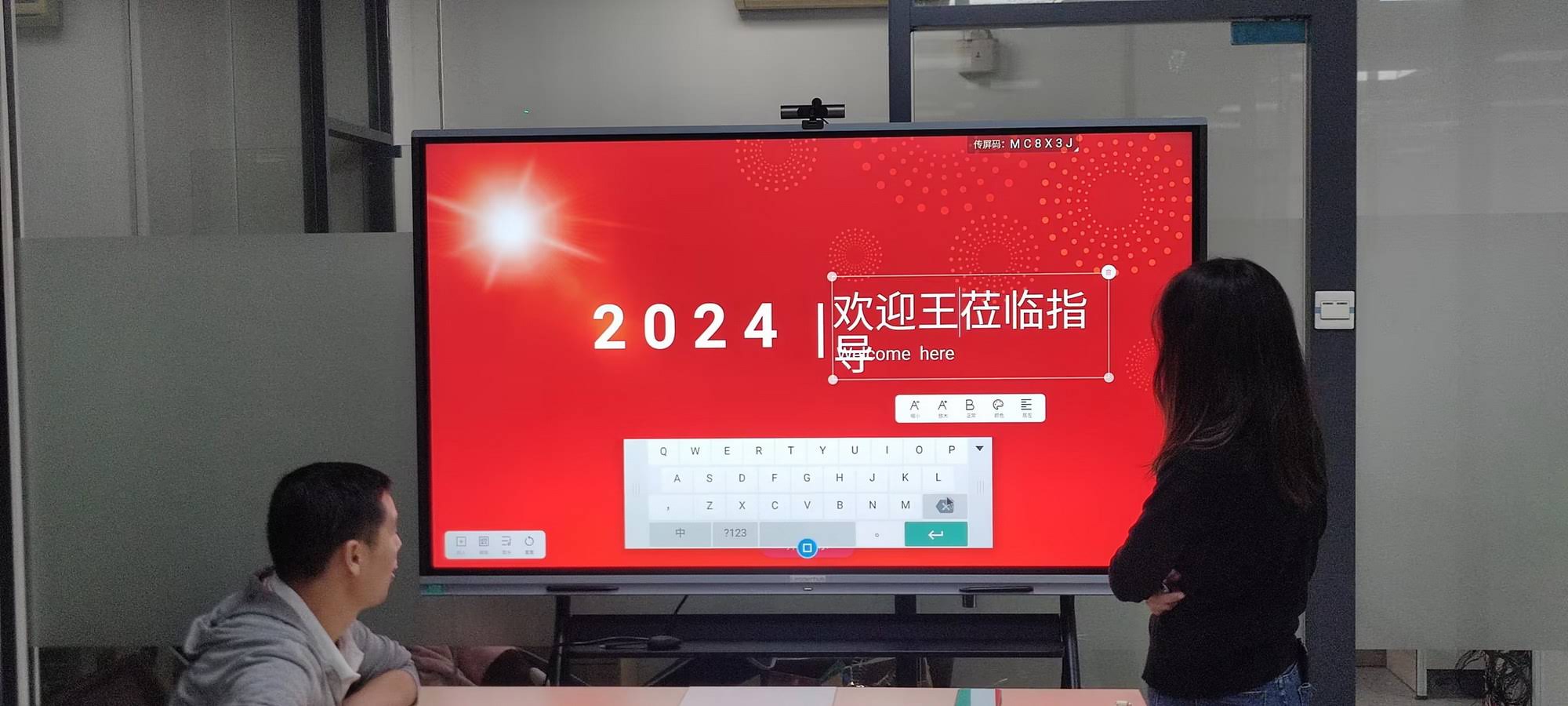
A capable OEM partner should be able to customize the logo (laser-etched or silk-printed), boot animation, Android launcher UI, pre-installed whiteboard and screen-sharing apps, remote control, port configuration, OPS slot, camera and microphone array, wall mount or mobile stand, and retail packaging. Ask for a written customization checklist, not verbal promises.
6. Quality Control Process
Request the factory’s QC flow document. At minimum it should include incoming material inspection (IQC), in-process inspection (IPQC), 100% touch-point calibration, 100% dead-pixel screening against a stated standard (for example, zero bright dots and no more than two dark dots), a 48-hour aging test, and outgoing quality control (OQC) with AQL sampling. You should also have the right to appoint a third-party inspector such as SGS, TÜV, or Intertek before shipment.
7. R&D and Firmware Support
Interactive displays are software products as much as hardware. Confirm that the factory maintains its own Android firmware team, offers OTA update servers, can patch security vulnerabilities, and supports MDM (mobile device management) for school districts and enterprises. A factory that outsources firmware will struggle to support you two years after delivery.
8. MOQ, Pricing Structure, and Payment Terms
Standard terms are 30% deposit and 70% before shipment, with T/T or L/C accepted. Be cautious of factories demanding 100% upfront or offering prices 25–30% below the market average; those are classic signals of either low-grade panels or cash-flow problems.
9. Warranty and Spare Parts Policy
A reliable OEM factory offers a 2–3 year warranty, ships spare mainboards, touch frames, power boards, and remotes with each container (typically 1–2% of order value), and provides remote diagnostics for your technicians. Clarify who pays for return freight on defective units and how fast replacement parts ship.
10. International Presence and Communication
Factories that exhibit at ISE in Barcelona, InfoComm in the United States, GITEX in Dubai, Bett in London, or the Canton Fair have invested in their export business and are easier to hold accountable. Industry bodies like AVIXA also publish AV standards that a mature manufacturer should be familiar with. Equally important is a dedicated English-speaking project manager who responds within one business day across your time zone.
Key Specifications to Define Before You Request a Quotation
The more precise your RFQ, the more comparable the quotations you receive. Use the table below as a template when contacting smart board OEM factories in China.
| Specification | Entry Level | Mainstream | Premium |
|---|---|---|---|
| Screen Sizes | 55″ / 65″ | 65″ / 75″ / 86″ | 86″ / 98″ / 110″ |
| Resolution | 4K UHD | 4K UHD, 60 Hz | 4K UHD, 120 Hz optional |
| Touch Technology | Infrared, 20 points | Infrared, 40 points, <8 ms latency | Zero-bonding capacitive or IR 50 points |
| Android System | Android 11, 4 GB + 32 GB | Android 13/14, 8 GB + 128 GB | Android 14, 8 GB + 256 GB, AI chipset |
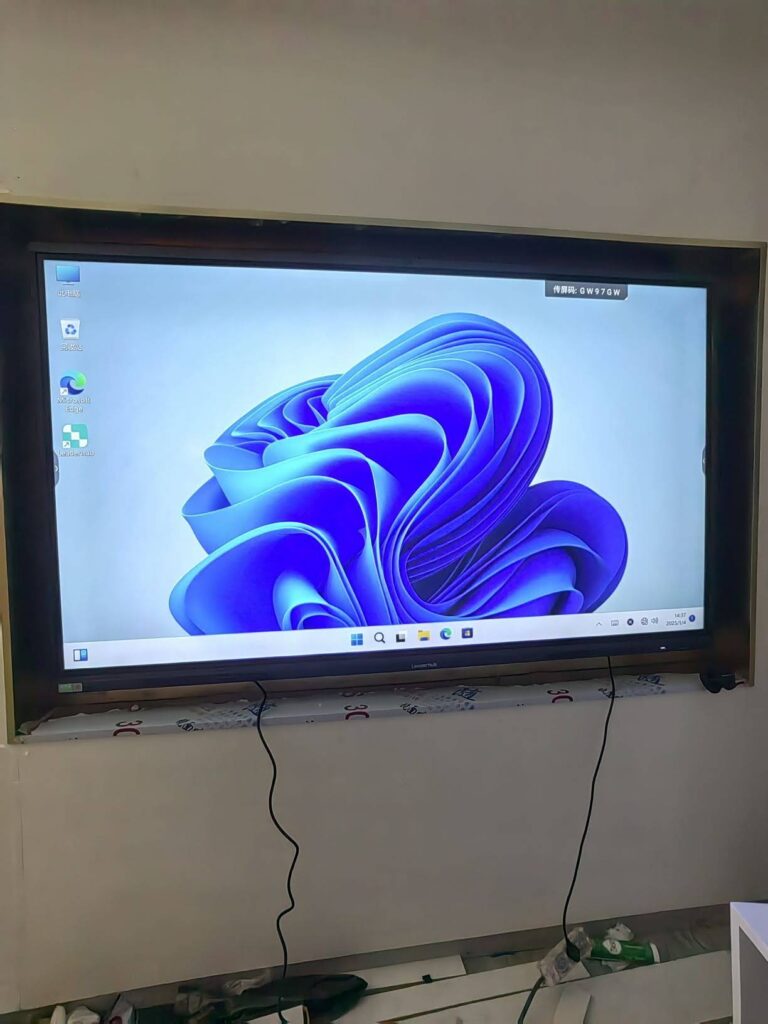
| Windows Option | OPS slot only | OPS with Intel i5 | OPS with Intel i7, dual-system switching |
| Camera & Audio | Optional external camera | Built-in 13 MP camera, 6-array mic | 48 MP AI camera, 8-array mic, 2.1 speakers |
| Glass | 3 mm tempered | 4 mm anti-glare tempered, Mohs 7 | 4 mm AG + anti-fingerprint coating |
| Warranty | 1 year | 2 years | 3 years + on-site options |
Red Flags That Signal an Unreliable Manufacturer
- Refuses a live factory video call or only shows a showroom.
- Quotation does not specify panel brand or grade.
- Certificates are issued to a different company name than the one on the invoice.
- No firmware update history or OTA server can be demonstrated.
- Sample unit differs from the mass-production unit in bezel, ports, or software.
- Communication quality drops sharply after the deposit is paid.
- No written spare-parts or warranty policy.
A Practical Seven-Step Sourcing Process
- Define your product brief using the specification table above, plus target FOB price, annual volume, and launch date.
- Shortlist 5–8 factories through trade shows, verified B2B platforms, and referrals from integrators in your region.
- Send an identical RFQ to each and compare line-by-line, not just the bottom-line price.
- Order 1–2 samples from the top two or three candidates and test writing latency, viewing angles, audio, Wi-Fi stability, and screen sharing with your own laptops and phones.
- Conduct a factory audit, either in person in Shenzhen or via a third-party inspection agency.
- Place a pilot order of 20–50 units with pre-shipment inspection written into the contract.
- Review field performance after 90 days, then negotiate annual framework pricing and exclusivity if desired.
Understanding the Cost Structure of an OEM Smart Board
Knowing roughly where the money goes helps you negotiate intelligently rather than simply demanding a lower price. For a mainstream 75-inch 4K interactive panel built in China, the approximate cost breakdown looks like this:
| Cost Component | Approximate Share | Negotiation Lever |
|---|---|---|
| LCD Panel & Backlight | 45–55% | Panel brand choice, order timing against panel price cycles |
| Touch Frame & Glass | 10–15% | Touch-point count, glass thickness |
| Mainboard, RAM, Storage | 10–12% | Chipset generation, memory configuration |
| Camera, Mic, Speakers | 5–8% | Built-in vs. optional module |
| Chassis, Packaging, Accessories | 8–10% | Standard vs. custom packaging, stand bundling |
| Labor, Testing, Overhead, Margin | 10–15% | Annual volume commitment |
Freight is a separate consideration. A 40-foot high-cube container typically holds 90–110 units of 75-inch panels or 60–70 units of 86-inch panels, so ordering in full-container quantities materially reduces your landed cost per unit.
What an OEM-Ready Product Portfolio Looks Like
A useful way to judge a factory’s capability is to examine its own branded line. If the manufacturer already ships a coherent range covering classroom, boardroom, mobile, and large-venue use cases, it has the engineering depth to adapt those platforms to your brand. Below is an example of the kind of lineup that a mature Shenzhen manufacturer offers as the basis for OEM projects.
| Series | Sizes | Positioning | Reference Price |
|---|---|---|---|
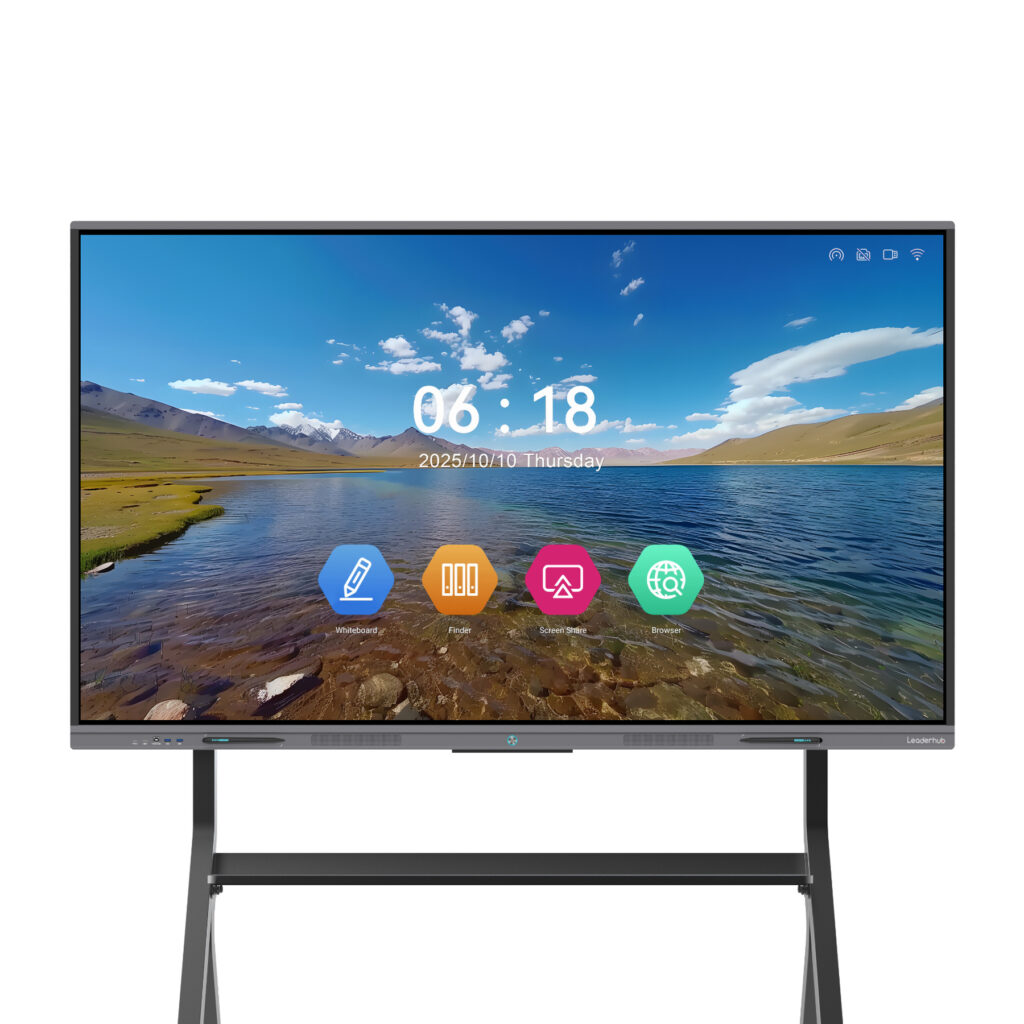
| ZM Series Interactive Whiteboard | 65″ / 75″ / 86″ | Cost-effective education and SME meeting rooms | From $1,099 |
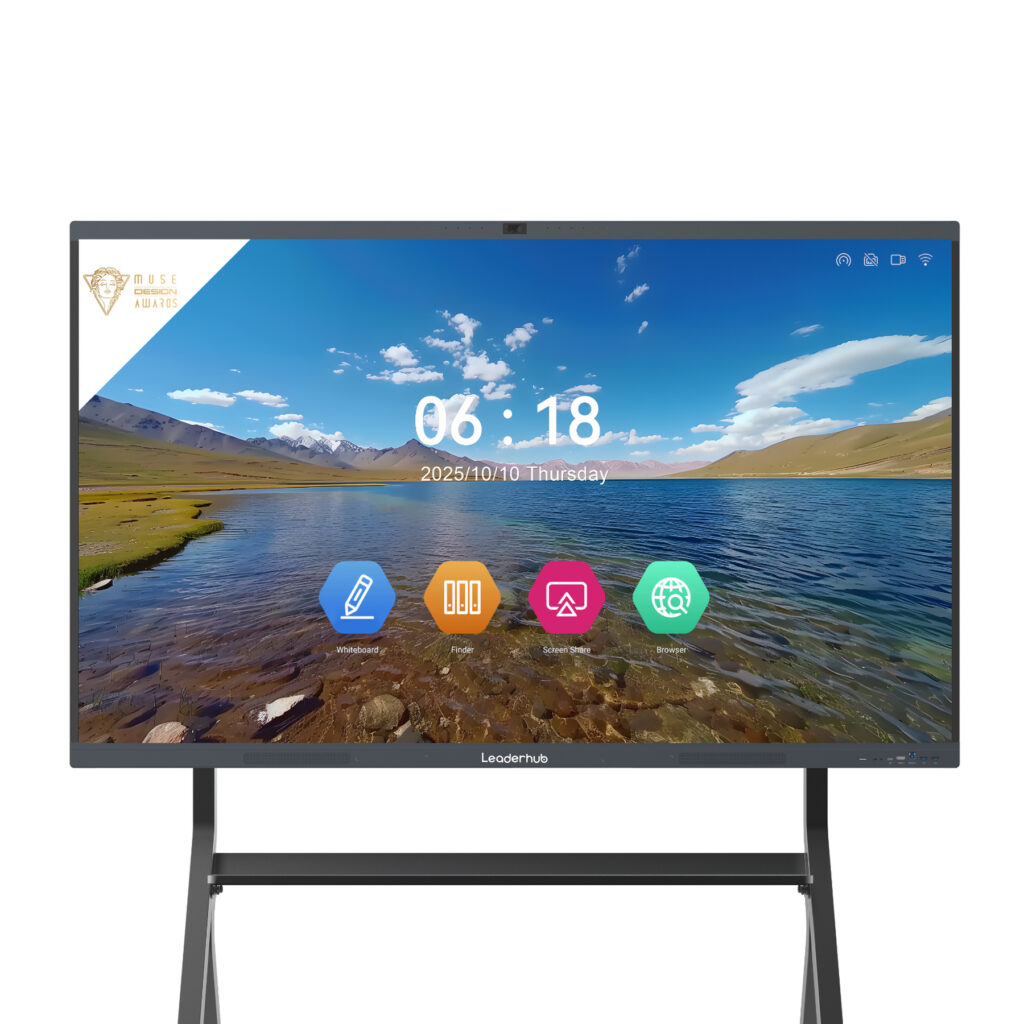
| HM Series Smart Whiteboard | 65″ / 75″ / 86″ | Rotatable conference hub, award-winning design | From $1,299 |
| H Pro Interactive Flat Panel | 75″ / 110″ | Premium boardrooms and lecture halls | From $2,399 |
| U55Pro Mobile Smart Display | 55″ | Battery-powered, movable between rooms | $2,499 |
| Portable Rotating Screens | 24.5″ / 27″ | Handheld Android smart screens with battery | From $699 |
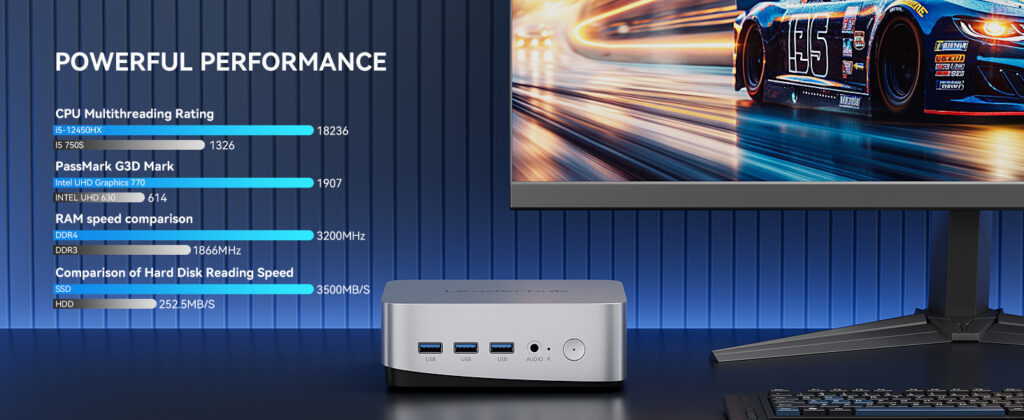
| Mini PCs | Intel N100 to i5-12450HX | Windows computing companion for smart boards | From $399 |
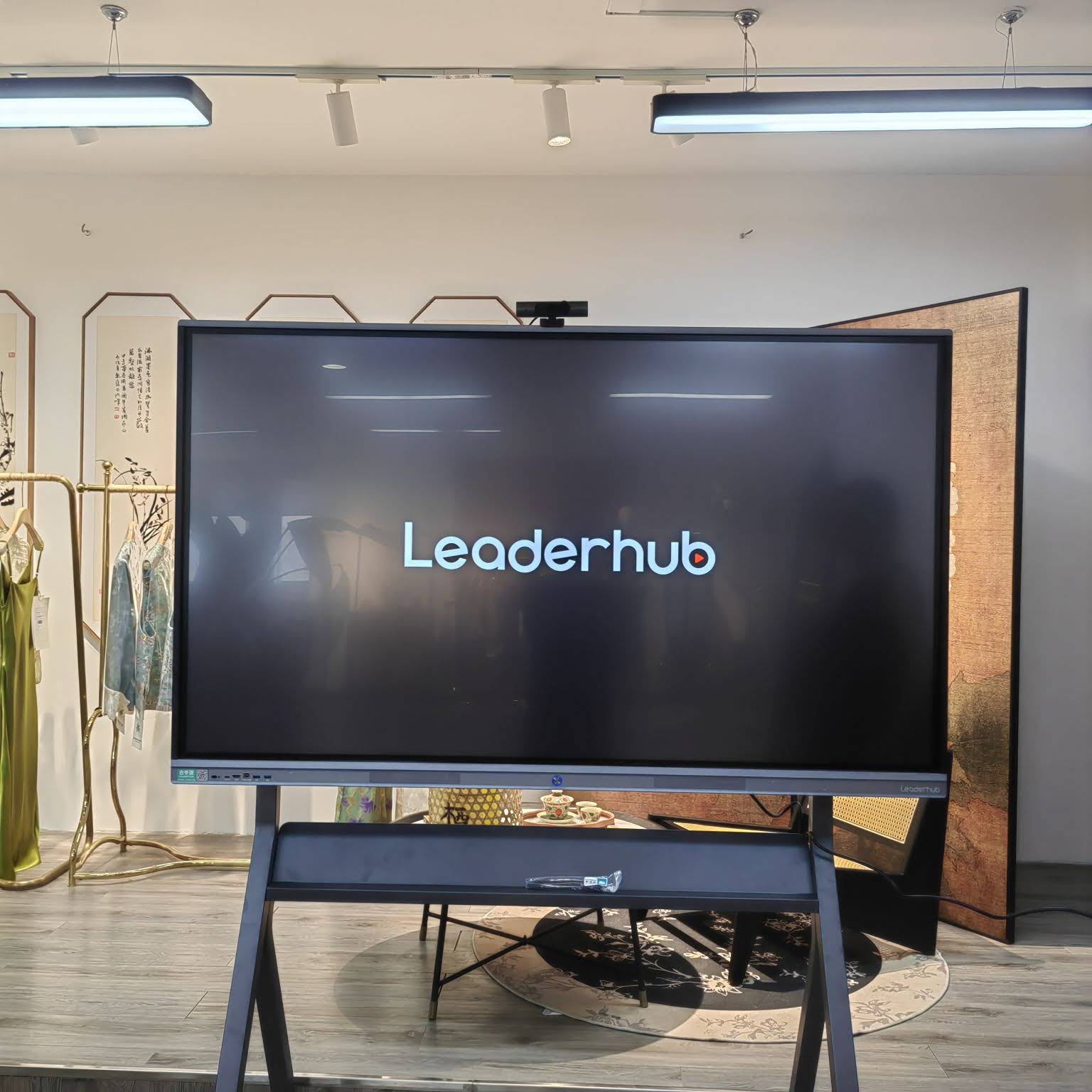
Leaderhub is a Shenzhen-based technology company with 16 years of experience in the interactive panel industry, ranked NO.1 in its JD.com subcategory and shipping smart whiteboards, interactive flat panels, mini PCs, and portable smart screens to 82 countries. Its HM Series was recognized by the MUSE Design Awards as a rotatable conference hub, and the company regularly exhibits at global electronics shows where distributors and integrators can discuss OEM and ODM projects face to face. You can browse the full smart whiteboard range to see how a complete platform family is structured.
Regional Considerations for International Buyers
Europe and the United Kingdom
Prioritize CE/UKCA documentation, ErP energy compliance, GDPR-friendly firmware with no unauthorized data collection, and multilingual UI support. Schools often require compatibility with Google Workspace for Education and Microsoft 365, so ask about pre-installed clients and MDM. The EU Digital Education Action Plan continues to fund classroom equipment, which sustains demand through 2027.
United States and Canada
FCC and UL/ETL certification is essential, as is E-rate awareness for K-12 buyers. District procurement teams commonly reference guidance like the EdTech Magazine K-12 display selection guide, so position your OEM product around durability, lesson-software compatibility, and total cost of ownership rather than specs alone.
Middle East and Africa
Specify high-brightness panels (450 nits or more) for sun-lit classrooms, wide operating temperature ranges, Arabic and French UI localization, and SASO or G-Mark certification. Dust-resistant port covers and robust power protection are worth the small premium.
South and Southeast Asia
Price sensitivity is higher, so a ZM-type entry series with a 1–2 year warranty is often the right OEM starting point. BIS registration is mandatory for India, and 220–240 V power supplies with surge protection are expected. Government smart-classroom programs documented by NITI Aayog make tender compliance a decisive factor.
Frequently Asked Questions
How long does an OEM smart board order take from deposit to shipment?
For a white-label or light OEM order of 50–200 units, expect 25–35 days. Projects with custom firmware, new packaging artwork, or a custom stand typically take 45–60 days for the first batch, then 25–30 days for repeat orders.
Can I get exclusivity for my country?
Many Chinese factories grant regional exclusivity in exchange for an annual volume commitment, usually starting at 500–1,000 units. Put the territory, volume, and review period in the contract.
What is a realistic defect rate?
A well-run factory delivers a field failure rate below 1% in the first year. Anything above 2–3% suggests weak incoming inspection or insufficient burn-in testing.
Should I choose Android-only or Android plus Windows OPS?
Education buyers in most markets are satisfied with a strong Android system plus wireless casting. Corporate buyers frequently want a Windows OPS module or a companion mini PC so that Teams, Zoom, and proprietary software run natively. Offering both configurations under one brand is a common OEM strategy.
How do I protect my brand’s reputation with a Chinese OEM partner?
Written specifications, golden samples sealed by both parties, pre-shipment inspection, a spare-parts allowance, and a firmware escrow or update commitment are the five safeguards that experienced importers never skip.
Final Thoughts
Choosing a smart board OEM factory in China is less about finding the lowest price and more about finding a partner whose panel sourcing, firmware capability, quality control, and after-sales commitment match your market’s expectations. Define your specification precisely, verify the factory with your own eyes or a trusted inspector, test samples under real conditions, and start with a pilot batch. Done properly, a Shenzhen manufacturing partnership gives you a competitive, custom-branded interactive display line that can grow with your business for years.
If you are planning an OEM or ODM project for classrooms, meeting rooms, or portable collaboration devices, you can contact the Leaderhub team to request a sample, a detailed quotation, or an invitation to the next exhibition where you can test the products in person. For a quick overview of currently available platforms, visit the online product catalog.