When you request pricing for interactive flat panels, the document you receive almost always carries a line that reads something like “This quotation is valid for 30 days.” Most buyers skim past it. Yet that single line governs how long the price, specifications, lead time and payment terms stay locked, and it frequently determines whether a school, company or distributor ends up paying more than expected. This guide has the smart board quotation validity period explained in plain English, with practical advice on how to negotiate terms that work in your favor.
What Is a Quotation Validity Period on a Smart Board Quote?
A quotation validity period is the window of time during which a supplier commits to honoring the terms written in the quote. During this window, the unit price, included accessories, warranty coverage, shipping terms and estimated delivery date remain fixed, provided you place the order and meet the payment conditions before the expiry date.
Once the period lapses, the supplier is no longer legally or commercially bound to the quoted figures. The quote becomes a reference document rather than an offer. In practice, this means the supplier may re-quote at a higher price, revise the lead time or change the included components, depending on current market conditions.
Typical Validity Windows in the Interactive Display Industry
| Quotation Type | Common Validity | Typical Buyer |
|---|---|---|
| Single-unit retail quote | 7–15 days | Small business, home office, single classroom |
| Standard B2B quote (5–50 units) | 30 days | SMEs, training centers, private schools |
| Project / tender quote | 60–90 days | School districts, government, large enterprises |
| Distributor annual price list | 3–12 months with adjustment clause | Resellers, system integrators |
| OEM / ODM quote | 15–30 days, often tied to panel pricing | Brand owners, private-label buyers |
Why Smart Board Suppliers Limit Quote Validity
Buyers sometimes read a short validity window as a pressure tactic. In reality, it reflects the cost structure behind an interactive flat panel. Several of the largest cost drivers move on a weekly or monthly basis, and a manufacturer who guarantees a price for six months without protection would be taking on considerable risk.
- LCD panel pricing — the open-cell display accounts for a large share of the total cost of a 65″, 75″ or 86″ smart board, and panel prices are set by a small number of glass manufacturers whose quotes change monthly.
- Exchange rate movement — most interactive displays are manufactured in Asia and quoted in USD, while buyers pay in EUR, GBP, AUD or local currencies. A 3–5% currency swing can erase a supplier’s margin.
- Ocean and air freight — container rates and fuel surcharges fluctuate seasonally, and a quote that includes delivery (CIF or DDP) is exposed to these changes.
- Component availability — touch frames, mainboards, OPS computing modules and camera modules can face supply constraints that affect both price and lead time.
- Promotional pricing — quarter-end or trade-show discounts are usually time-boxed, so the validity period mirrors the promotion window.
- Volume-based tiers — a quote for 20 units at a given price assumes you order 20 units; the validity date keeps the quantity commitment honest on both sides.
Understanding these drivers is useful because each one is a potential negotiation lever. A supplier who knows you understand why their validity period is 30 days is usually more willing to discuss a structured extension.
Key Terms That Appear Alongside the Validity Period
The validity date rarely stands alone. It interacts with several other clauses, and reading them together is the only way to understand your real exposure.
| Term | What It Means | What to Check |
|---|---|---|
| Valid Until / Expiry Date | Last day the quoted terms can be accepted | Is acceptance defined as PO receipt, signed quote, or deposit paid? |
| Price Basis | Incoterm (EXW, FOB, CIF, DDP) and currency | Whether freight and duties are fixed or “subject to change” |
| Lead Time | Days from order confirmation to shipment | Is lead time guaranteed only if ordered within validity? |
| Payment Terms | Deposit %, balance timing, accepted methods | Does a late deposit void the quote even if the PO was on time? |
| Price Adjustment Clause | Conditions under which price may change | Threshold (e.g. >5% panel cost change) and notice period |
| Specification Lock | Guarantee that hardware configuration stays as quoted | RAM, storage, Android version, OPS slot, camera, stand included? |
What Happens When a Smart Board Quotation Expires?
Expiry does not automatically mean a higher price. It means the supplier regains the right to re-evaluate. There are three common outcomes, and knowing which one you are likely to face helps you decide whether to rush an order or request a refresh.
Scenario 1: The Quote Is Simply Re-Issued
If market conditions have not moved, most suppliers will re-issue the same figures with a new date. This is the most frequent outcome for standard products ordered in modest quantities. Ask for the refreshed quote in writing rather than relying on an email that says “price still OK.”
Scenario 2: Price Rises but Lead Time Holds
This usually happens after a panel price increase or a currency shift. The supplier may add 2–8% to the unit price while keeping the same delivery schedule. If you have a documented procurement delay (for example, a board approval meeting), many suppliers will honor the old price for a short grace period if you ask.
Scenario 3: Price and Configuration Both Change
When a model is being phased out or a component is discontinued, an expired quote may be replaced with a quote for a successor model. This can be an opportunity to get newer hardware at a similar price, but you must re-verify the specification sheet rather than assuming parity.
How to Negotiate Better Quotation Terms
Negotiating a smart board quote is not only about pushing the unit price down. In many cases, securing a longer validity window or a price-protection clause saves more money than a small percentage discount, especially for buyers whose purchasing process involves tenders, committee sign-off or budget-year timing.
1. Request a Validity Period That Matches Your Approval Cycle
Before you ask for a quote, map your internal timeline. If your finance committee meets monthly and a purchase order takes two weeks to process, a 15-day quote will expire before you can act. Tell the supplier upfront: “We need 45 days validity to complete internal approval.” Suppliers would rather extend a quote for a serious buyer than lose the order to a competitor.
2. Offer a Small Deposit to Lock Pricing
A refundable or partially refundable deposit of 10–20% transforms a quote into a reservation. The supplier can use it to secure panels at current cost, which removes their main risk, and in return you receive a price lock that often extends to 60–90 days. This is particularly effective for larger orders of interactive smart whiteboards where panel allocation matters.
3. Negotiate a Capped Price Adjustment Clause
Instead of a fixed expiry, propose a clause such as: “Price valid for 90 days; if panel cost increases by more than 5%, supplier may adjust by the documented difference only, with 7 days written notice.” This protects both sides and is standard in distributor agreements. Make sure the clause works in both directions so you benefit if panel costs fall.
4. Bundle Volume Across Phases
Schools and enterprises often roll out interactive displays in phases: ten classrooms this term, fifteen next term. Ask the supplier to quote the total projected volume with phased delivery and a single validity period covering the whole program. You receive tier pricing on the full quantity while paying only for each phase as it ships.
5. Trade Flexibility for Fixed Terms
If you can accept a flexible shipping window (for example, “ship within 4–8 weeks” rather than a fixed date), suppliers can consolidate your order with other shipments and are more willing to hold the price. Likewise, paying by bank transfer rather than card or letter of credit reduces the supplier’s cost and gives you a stronger position on validity.
6. Ask What Is Fixed and What Is Estimated
A surprising number of disputes arise because the buyer assumed freight was fixed when the quote said “freight estimated.” Ask the supplier to separate the quote into firm items (unit price, accessories, warranty) and variable items (freight, duties, insurance). You can then negotiate caps on the variable items rather than treating the whole quote as uncertain.
Sample Timeline: From Quotation to Delivery
The table below shows how a 30-day validity period fits into a realistic procurement timeline for a mid-sized order of 75″ interactive panels. Use it to identify where your own process might run past the expiry date.
| Stage | Typical Duration | Validity Status |
|---|---|---|
| Quote issued | Day 0 | 30-day clock starts |
| Technical review and sample request | Days 1–10 | Within validity |
| Internal budget approval | Days 10–25 | Within validity — risk zone if delayed |
| Purchase order and deposit | Days 25–30 | Must be completed before expiry |
| Production | 15–25 days | Price locked by PO |
| Shipping and customs | 7–40 days (air vs. sea) | Freight terms as agreed |
| Installation and training | 1–5 days | Warranty period begins |
Special Considerations for Education Buyers
Schools and districts face a unique mismatch: budgets are approved annually, tenders can take months, and installation must happen during holidays. A quote issued in March for a September installation will almost certainly expire under standard terms. Government research such as the UK EdTech Market Assessment highlights how procurement timing and total cost of ownership shape school technology decisions, and quotation terms sit at the center of that calculation.
Practical steps for education procurement teams include:
- Request a “tender validity” quote of 90 days explicitly labelled as such; suppliers experienced with public procurement will recognize the request.
- Ask for a separate line that fixes the warranty term and on-site support regardless of when the order is placed.
- Include a clause allowing the quantity to vary by ±15% at the same unit price, so that enrollment changes do not force a re-quote.
- Align delivery with term breaks and confirm the supplier can hold finished goods for a short period if needed.
Broader guidance from the OECD Digital Education Outlook and the World Bank EdTech program also stresses sustainability of investment, which depends on predictable pricing across multi-year rollouts.
Reference Pricing: What a Transparent Quote Looks Like
Published list prices make it easier to judge whether a quote and its validity period are reasonable. The models below are quoted with clear configurations, which is the kind of transparency you should expect from any manufacturer before discussing validity or volume terms.
| Model | Size & Type | List Price |
|---|---|---|
| L65ZM Interactive Whiteboard | 65″ 4K smart panel | $1,099 |
| L75HM Smart Whiteboard | 75″ 4K touchscreen | $1,599 |
| L86ZM Interactive Whiteboard | 86″ 4K smart panel | $1,699 |
| U55Pro Mobile Interactive Panel | 55″ mobile 4K display | $2,499 |
| L110H Interactive Flat Panel | 110″ large-format display | $7,999 |
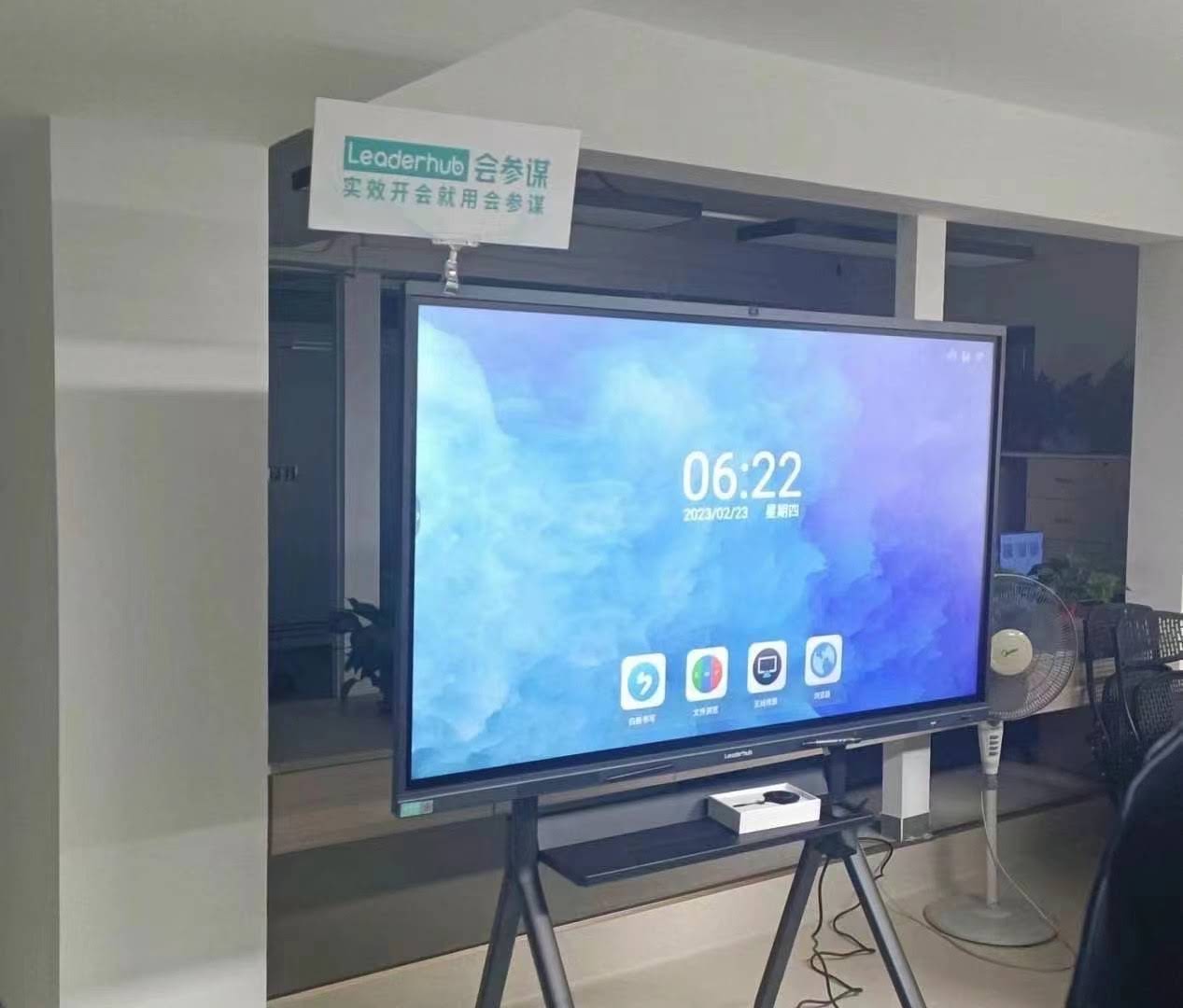
These prices come from Leaderhub, a Shenzhen-based interactive display manufacturer with 16 years of industry experience, four product lines and customers in 82 countries, which publishes list pricing so that buyers can benchmark project quotations with confidence. Volume quotes for the full smart board and mini PC range are issued with clearly stated validity and payment terms.

Checklist: Before You Accept a Smart Board Quotation
- Confirm the exact expiry date and what action counts as acceptance.
- Verify that the currency and Incoterm are stated and that freight is either fixed or capped.
- Check the full specification: panel brand or grade, touch technology, Android version, RAM and storage, OPS slot, built-in camera and microphone array, wall mount or mobile stand.
- Make sure warranty length, coverage scope and on-site or advance-replacement terms are written into the quote, not just mentioned verbally.
- Ask whether the quoted lead time is contingent on ordering within the validity period.
- Request a written price adjustment clause if your approval cycle exceeds the validity window.
- Clarify deposit refund conditions in case the project is cancelled or delayed.
- Keep the quote, sample test results and all email clarifications in a single file for audit and dispute purposes.
Frequently Asked Questions
Is a 30-day validity period negotiable?
Yes, in most cases. Suppliers set 30 days as a default. If you explain your procurement timeline and show that the order is genuine, 45 to 60 days is a common compromise, and 90 days is achievable with a deposit or a price adjustment clause.
Does the validity period also cover the lead time?
Not automatically. The validity period covers the offer; the lead time starts when the order is confirmed. However, some quotes state that the lead time is “based on current factory schedule,” which means it can change even within the validity window. Ask for a committed shipping window to be written into the quote.
What if the price drops after I accept the quote?
Once a purchase order is confirmed, the price is contractually fixed in both directions unless an adjustment clause applies. If you expect panel prices to fall, negotiate a symmetric clause or delay acceptance toward the end of the validity period while monitoring the market.
Can I request a quote in my local currency?
Many manufacturers will quote in EUR, GBP or other major currencies, but they typically shorten the validity period to offset exchange rate risk. A USD quote with a 30-day validity may become a EUR quote with 15-day validity. Decide which risk you prefer to carry.
Should I get multiple quotes with aligned validity dates?
Absolutely. Request quotes from shortlisted suppliers in the same week so that all expire around the same time. This lets you compare total cost, warranty and lead time on an equal footing and gives you leverage to ask the preferred supplier to match specific terms before any quote lapses.
Final Thoughts
The validity period on a smart board quotation is far more than a formality. It defines how long your budget figure is safe, how much negotiating power you hold, and how smoothly your installation will proceed. By understanding why suppliers set the window the way they do, reading the surrounding terms carefully, and negotiating for validity that matches your own approval process, you can secure pricing that holds from committee approval through to classroom or boardroom installation.
If you are preparing a procurement for interactive displays and want a quotation with transparent pricing, clearly stated validity and flexible terms for phased rollouts, contact our sales team to discuss your project timeline.