When a company grows past a handful of offices, smart board purchasing rarely stays organized. Marketing buys one brand for its creative studio, the sales division orders another for regional branches, HR picks a third for training rooms, and the IT team inherits a patchwork of panels that share nothing except a power cord. Smart board procurement consolidation across business units fixes this by bringing every interactive display purchase under one strategy, one specification set, and one negotiating position. This guide walks through the practical steps, the numbers that matter, and the mistakes to avoid.
Why Decentralized Smart Board Purchasing Costs More Than It Looks
The sticker price of an interactive panel is only the visible part of the cost. When each department buys independently, the organization pays several hidden premiums at the same time:
- Lost volume discounts – ten orders of three units never earn the pricing of one order of thirty.
- Fragmented support contracts – multiple warranty terms, multiple vendor portals, multiple escalation paths.
- Training duplication – staff who move between offices must relearn a different interface each time.
- Spare parts and accessory sprawl – styluses, wall mounts, OPS modules and cables that are not interchangeable.
- Shadow IT risk – unmanaged devices on the corporate network with inconsistent firmware and security settings.
Industry bodies such as AVIXA consistently point out that the total cost of ownership for AV equipment is dominated by lifecycle and management overhead rather than the initial purchase. Consolidation attacks exactly that overhead.
Step 1: Audit Current Smart Board Spend in Every Business Unit
You cannot standardize what you cannot see. Start with a 30-day data collection sprint that asks every business unit, facility manager and regional IT lead to report their existing interactive display inventory and any purchases planned for the next 12 to 18 months.
What the audit should capture
| Data Point | Why It Matters | Source |
|---|---|---|
| Brand, model, screen size | Reveals how many vendors and form factors are in play | Asset register, physical walk-through |
| Purchase date and price paid | Shows price variance between units for similar hardware | Accounts payable, purchase orders |
| Warranty and support status | Identifies refresh timing and overlapping contracts | Vendor portals, contract files |
| Room type and usage frequency | Separates genuine needs from over-specified rooms | Room booking system, facilities team |
| Planned purchases (12–18 months) | Builds the consolidated demand forecast used in negotiation | Department budgets, expansion plans |
In most mid-sized organizations this audit alone exposes price variance of 20–40% for functionally identical panels purchased by different departments within the same year.
Step 2: Define One Standard Smart Board Specification
A consolidated program does not mean every room gets the same device. It means every room is matched to one of a small number of pre-approved configurations. Three tiers usually cover more than 90% of corporate use cases.
Core specification criteria to lock down
- Resolution and panel quality – 4K UHD with anti-glare glass should be the floor for any shared room.
- Touch technology – 20-point or higher infrared or capacitive touch, with palm rejection.
- Operating system and compute – built-in Android for quick whiteboarding, plus an optional slot or external mini PC for full Windows workloads.
- Connectivity – HDMI, USB-C with power delivery, wireless screen sharing, and enterprise Wi-Fi support.
- Manageability – remote device management, OTA firmware updates, and domain or MDM enrollment.
- Mounting and mobility – wall mount by default; mobile stands only where room layouts change frequently.
Example three-tier standard
| Tier | Typical Room | Approved Configuration | Reference Unit Price |
|---|---|---|---|
| Tier 1 – Huddle | 2–6 people, quick stand-ups | L65ZM 65″ 4K smart panel | $1,099 |
| Tier 2 – Conference | 6–14 people, hybrid meetings | L75HM 75″ 4K smart whiteboard | $1,599 |
| Tier 3 – Training / Boardroom | 15+ people, large-format presentation | L86ZM 86″ 4K smart panel or L110H 110″ interactive flat panel | $1,699 / $7,999 |
| Flex – Mobile | Open plan, agile teams, event spaces | U55Pro 55″ mobile 4K display | $2,499 |
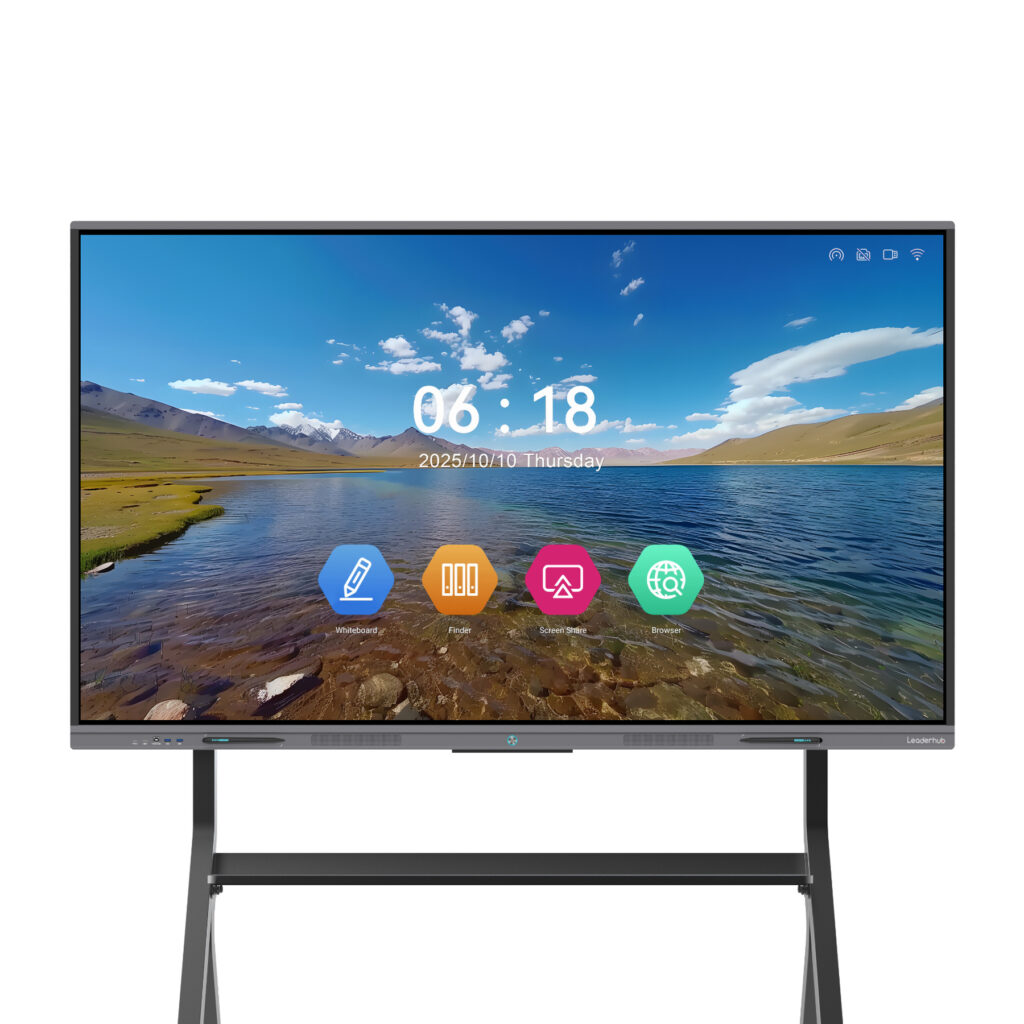
Keeping all tiers within one product family from a single smart whiteboard range means identical software, identical styluses, and a single training deck for the entire company.
Step 3: Form a Cross-Functional Procurement Council
Consolidation fails when it is perceived as a central mandate imposed on departments. It succeeds when every business unit has a seat at the table and understands that standardization gives them better equipment for less money. A lightweight council of five to seven people is usually enough:
- Procurement lead – owns the RFP, vendor negotiation, and contract terms.
- IT or AV manager – owns the technical specification and network integration.
- Facilities representative – owns room readiness, mounting, and power.
- Finance partner – validates total cost of ownership and budget allocation.
- Two or three business unit champions – rotate annually, represent end-user needs.
Give the council a clear charter: approve the tier standard, approve the preferred vendor list, and review any exception request within five working days. Fast exception handling prevents departments from quietly going around the process.
Step 4: Consolidate Vendors and Negotiate on Aggregated Volume
With a forecast built from the audit and a specification agreed by the council, you now hold real leverage. Instead of issuing scattered purchase orders, issue one framework agreement that covers all units for 24 to 36 months.
Negotiation levers that deliver the biggest savings
- Committed annual volume with staged call-off deliveries rather than one bulk shipment.
- Bundled accessories – mounts, styluses, cables and compute modules priced into the unit cost.
- Extended warranty harmonized to one term across all tiers, ideally 3 to 5 years on-site.
- Price protection clauses covering currency movement and component inflation.
- Spare pool – a small number of hot-swap units held centrally to cut downtime.
Manufacturers that sell direct and also work with regional integrators can be especially flexible. The China Smart Board Selection Guide offers useful benchmarks for comparing direct-from-manufacturer pricing against distributor pricing on 4K interactive panels.
Decentralized vs. consolidated purchasing: a worked example
Consider an organization with eight business units that together need 60 panels over two years, split as 30 Tier 1, 22 Tier 2 and 8 Tier 3.
| Cost Element | Decentralized (8 separate buyers) | Consolidated (1 framework) |
|---|---|---|
| Hardware (list vs. ~15% volume discount) | $81,700 | $69,450 |
| Accessories and mounts | $9,000 | $4,800 (bundled) |
| Extended warranty | $12,000 (mixed terms) | $7,200 (single 3-year term) |
| Training and onboarding | $8,000 (8 sessions, 4 interfaces) | $2,500 (1 program, 1 interface) |
| Procurement admin time | $6,400 (est. 160 hours) | $2,000 (est. 50 hours) |
| Two-year total | $117,100 | $85,950 |
The result is a saving of roughly 27% before counting lower downtime and faster room turn-up. Your figures will differ, but the shape of the saving is remarkably consistent across industries.
Step 5: Standardize Deployment, Training and Support
Savings evaporate if rollout is chaotic. Treat deployment as a repeatable product, not a series of one-off projects.
Deployment playbook
- One room-readiness checklist covering power, data drops, wall structure and sightlines.
- One golden image or configuration profile pushed through remote device management.
- Pre-labelled asset tags and QR codes linking to the support desk from day one.
Training playbook
- A 15-minute video for everyday users and a 60-minute session for room champions.
- A single laminated quick-start card on the wall beside every panel.
- Refresher content pushed to new hires through the LMS automatically.
Support playbook
- One ticket category, one SLA, one vendor escalation contact.
- Quarterly firmware review and a 30-minute usage report to the council.
- Central spare pool with next-business-day swap for Tier 2 and Tier 3 rooms.
Measuring the Results: KPIs for Consolidated Smart Board Procurement
Define success metrics before the first consolidated order ships, then report them to leadership every quarter.
| KPI | Target After 12 Months | How to Measure |
|---|---|---|
| Average unit cost per tier | 15–25% below pre-consolidation baseline | Purchase order data |
| Number of active vendors | 1 primary, 1 approved alternate | Vendor master file |
| Spec compliance rate | 95% of new installs on approved tiers | Asset register vs. standard |
| Room turn-up time | Under 10 working days from request to live | Ticketing timestamps |
| Support tickets per panel per quarter | Below 0.3 | Help desk reporting |
| User satisfaction | 4.2 / 5 or higher | Quarterly pulse survey |
Common Pitfalls and How to Avoid Them
- Over-standardizing. Forcing a 86-inch panel into a four-person huddle room wastes budget and wall space. Keep the tier model flexible.
- Ignoring legacy devices. Plan a phased retirement schedule rather than a rip-and-replace that creates budget shock.
- Skipping the pilot. Run a 60-day pilot of each tier in two or three business units before committing to the full framework.
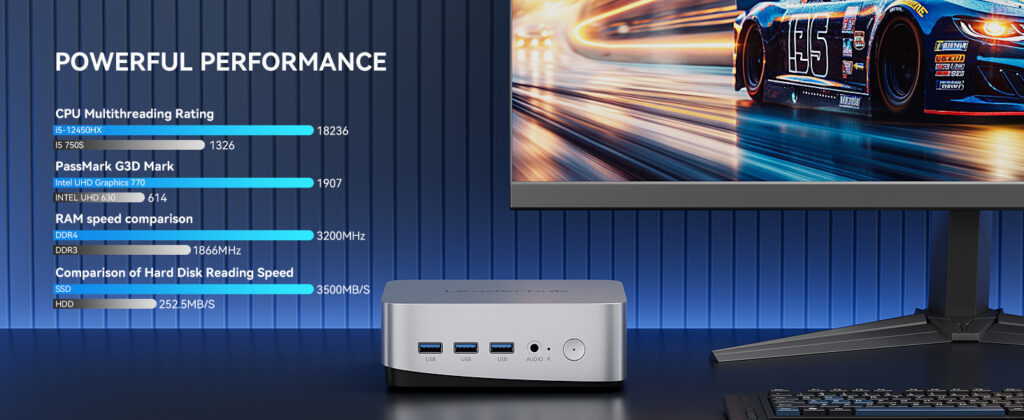
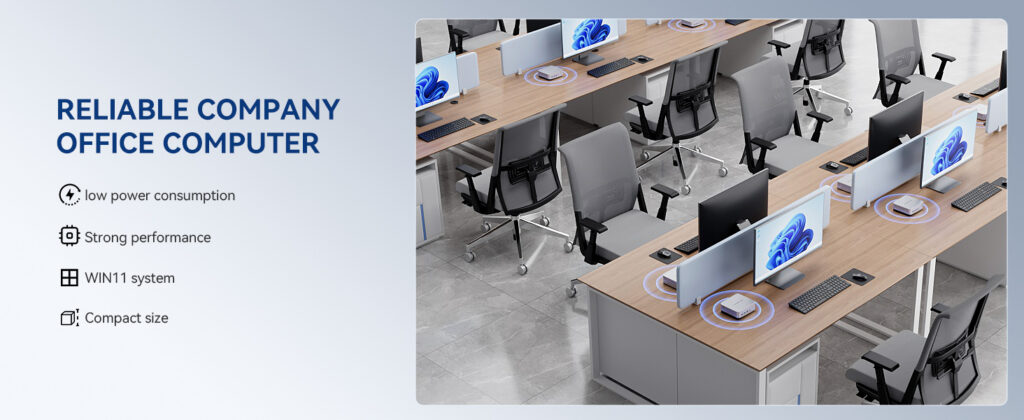
- Neglecting compute strategy. Decide early whether rooms run on the panel’s built-in Android, a slot-in module, or an external compact PC such as the LP1C mini PC, and standardize that too.
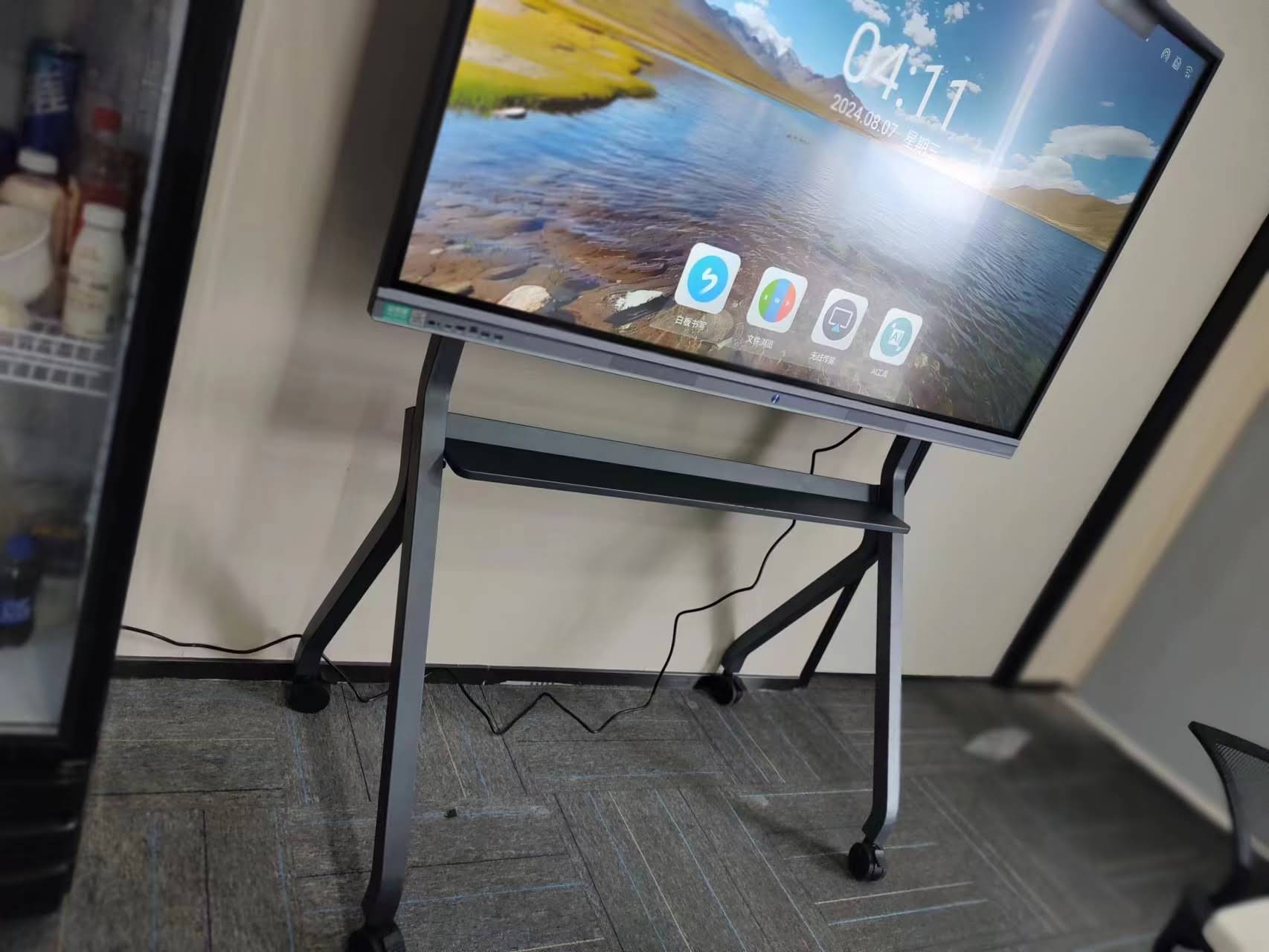
- Forgetting mobile and flexible spaces. Agile teams and event areas benefit from battery-powered rotating and portable smart screens that move between rooms, which should be part of the approved catalog rather than an afterthought.
A Sample 12-Month Consolidation Roadmap
| Phase | Timeline | Key Deliverables |
|---|---|---|
| Discover | Months 1–2 | Inventory audit, spend baseline, demand forecast |
| Design | Months 3–4 | Tier specification, council charter, exception process |
| Pilot | Months 5–6 | Two to three units per tier in live rooms, user feedback |
| Source | Months 7–8 | RFP, vendor shortlist, framework agreement signed |
| Deploy | Months 9–12 | Staged rollout by business unit, training, KPI reporting |
Choosing a Manufacturing Partner for a Multi-Unit Program
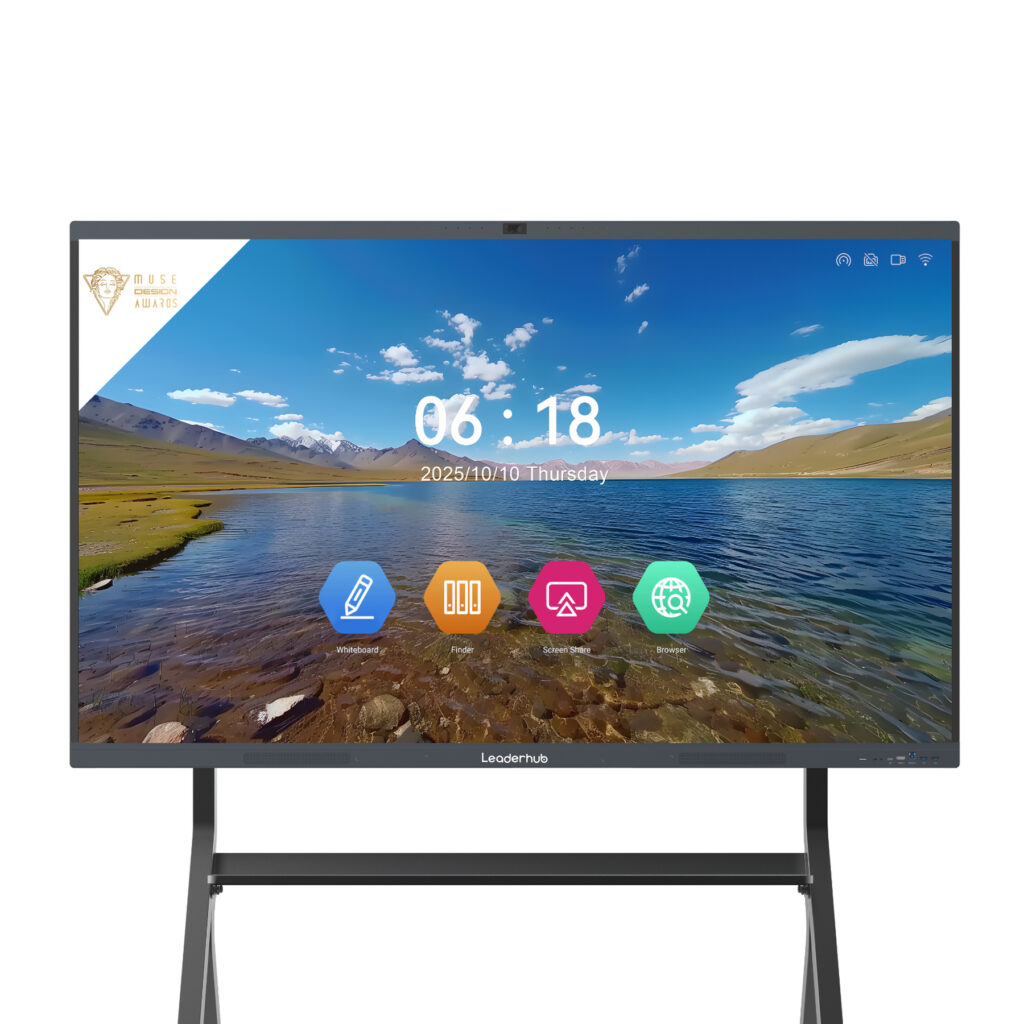
A consolidation program is only as strong as the supplier behind it. Look for a partner that offers a complete size range within one software platform, direct factory pricing for committed volume, OEM or ODM options for branded deployments, and a track record of serving enterprise customers across regions. Leaderhub, a Shenzhen-based interactive display manufacturer with 16 years of experience and customers in 82 countries, builds its smart whiteboards, interactive flat panels, mini PCs and portable smart screens specifically to help small and medium-sized enterprises standardize on affordable, AI-enabled collaboration hardware; the company’s HM series was also recognized with a MUSE Design Award as a rotatable conference hub.
Frequently Asked Questions
How many smart boards do we need before consolidation is worth the effort?
The tipping point is usually around 15 to 20 panels across three or more locations. Below that, a simple preferred-vendor list may be sufficient; above it, a formal framework with tiered specifications almost always pays for itself within the first purchasing cycle.
Should we standardize on one screen size for every room?
No. Standardize on one platform and a small set of sizes mapped to room types. One brand, one operating system and one management console deliver the savings; forcing one size on every room creates waste and user frustration.
How do we handle business units that already have a different brand installed?
Let existing panels run to the end of their warranty or useful life, then replace them under the consolidated standard. Document the retirement dates in the roadmap so finance can plan the refresh budget without surprises.
Can consolidation include education or training divisions with different needs?
Yes. Training rooms and internal academies typically fit the Tier 3 configuration, and the same management, warranty and support arrangements apply. Larger 86-inch and 110-inch panels simply become an approved option within the framework rather than a separate purchasing track.
Final Thoughts
Consolidating smart board procurement across business units is less about restricting choice and more about replacing dozens of small, expensive decisions with one well-informed strategy. Audit what you own, define a short list of approved configurations, give every unit a voice on the council, negotiate on aggregated volume, and deploy from a single playbook. The outcome is lower unit cost, a consistent meeting experience in every office, and an IT estate that is actually manageable. If you are preparing a multi-site rollout and want tiered volume pricing on 4K interactive panels, contact the team to request a consolidated quotation for your business units.