Buying one smart board for a meeting room is simple. Buying fifty, two hundred or two thousand for a school district, a corporate campus or a distribution network is a completely different exercise. At volume, a small defect rate becomes a logistics problem, a vague warranty becomes a budget risk, and a supplier who cannot scale becomes a delivery delay. That is why defining clear smart board supplier selection criteria for bulk orders before you request quotations is the single most important step in the procurement process.
This guide breaks down the ten criteria that procurement teams, system integrators, resellers and education buyers should use to evaluate interactive display suppliers. It also includes a practical scoring table, a bulk-order checklist and answers to the questions buyers most frequently ask.
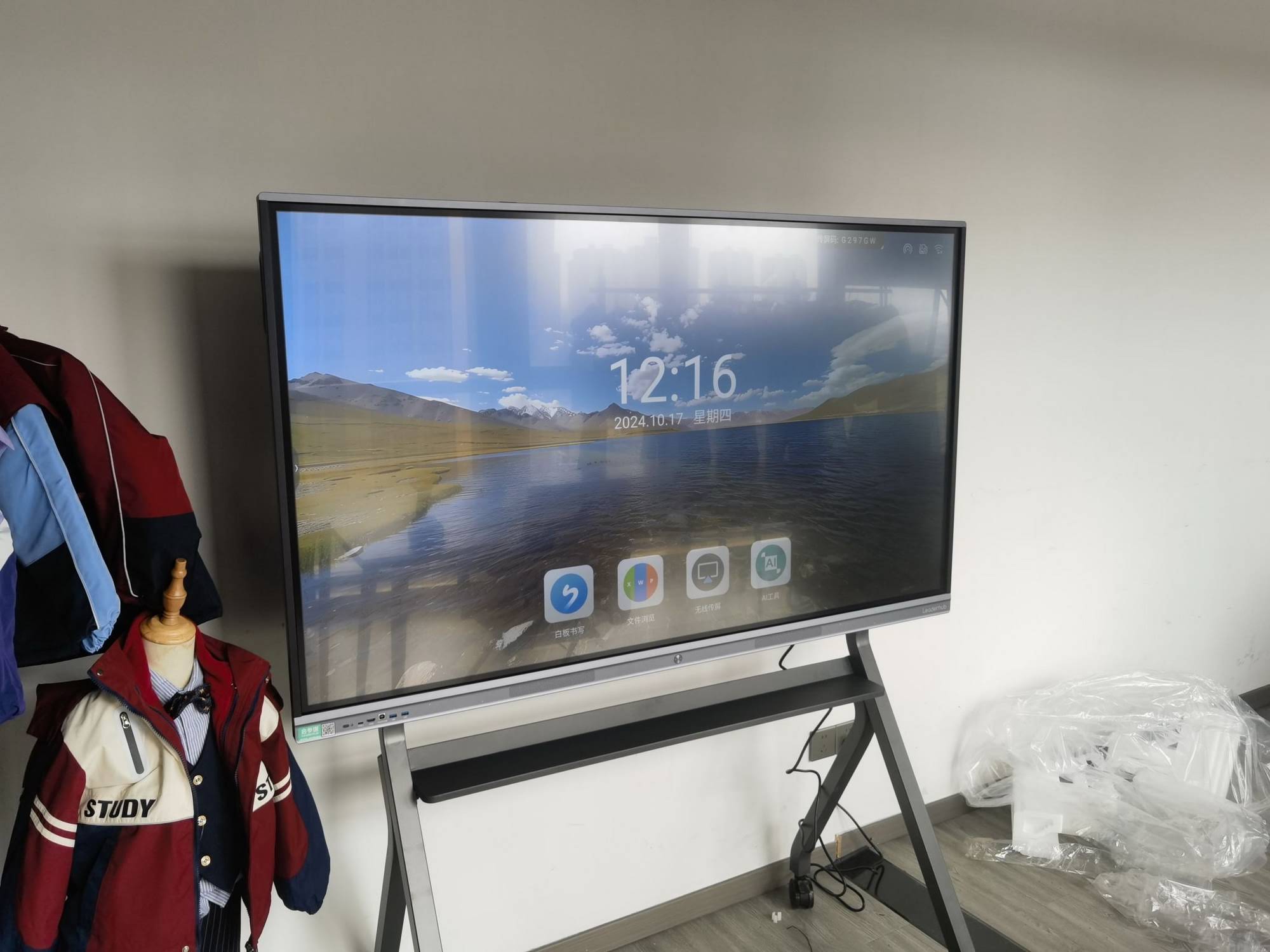
Why Supplier Selection Matters More for Bulk Smart Board Orders
Interactive flat panels sit at the intersection of display hardware, touch sensing, embedded computing and classroom or meeting-room software. Each layer can fail independently, and at scale those failures compound. Research from the UNESCO Technology in Education Report highlights that technology investments only deliver results when deployment, training and maintenance are planned together, not just purchased. A supplier is therefore not simply a vendor of panels; it is a partner in a multi-year deployment.
Bulk buyers typically face four risks that single-unit buyers never encounter:
- Consistency risk — panels from different production batches with mismatched color, brightness or firmware.
- Capacity risk — a factory that can build 50 units a month but promises 500.
- Support risk — no regional spare parts, no remote diagnostics, no clear RMA process.
- Total cost risk — a low unit price offset by freight surprises, import duties, or replacement costs.
The ten criteria below are designed to surface these risks early, while you still have leverage in the negotiation.
The 10 Key Smart Board Supplier Selection Criteria for Bulk Orders
1. Manufacturing Capability and Production Capacity
Start with the most basic question: can the supplier actually build what you need, when you need it? Ask whether they own their factory or outsource assembly, how many SMT and final-assembly lines they operate, and what their monthly output is for the specific sizes you plan to order (65″, 75″, 86″ and above). A genuine manufacturer will share factory audit reports, production photos or video walkthroughs without hesitation.
For large tenders, request a capacity confirmation letter stating the quantity and delivery window the supplier commits to. This document protects you if the supplier later over-books their lines for another client.
2. Display Quality, Touch Technology and Component Sourcing
Panel grade determines how your smart boards look in year four, not just on day one. Clarify the following with every candidate supplier:
- LCD panel source and grade (A-grade panels from established panel makers vs. refurbished or B-grade cells).
- Resolution and brightness — 4K UHD with 350–450 nits is the current standard for classrooms and meeting rooms.
- Touch technology — infrared with 20 or 40 touch points, response time under 8 ms, and palm-rejection support.
- Glass — anti-glare tempered glass, typically 4 mm, with a Mohs hardness rating of 7 or higher.
- Bonding method — zero-gap or optical bonding reduces parallax and improves writing accuracy.
Request sample units from an actual production batch, not hand-picked showroom demos. Test writing latency, viewing angles and color uniformity under the lighting conditions of your real deployment sites.
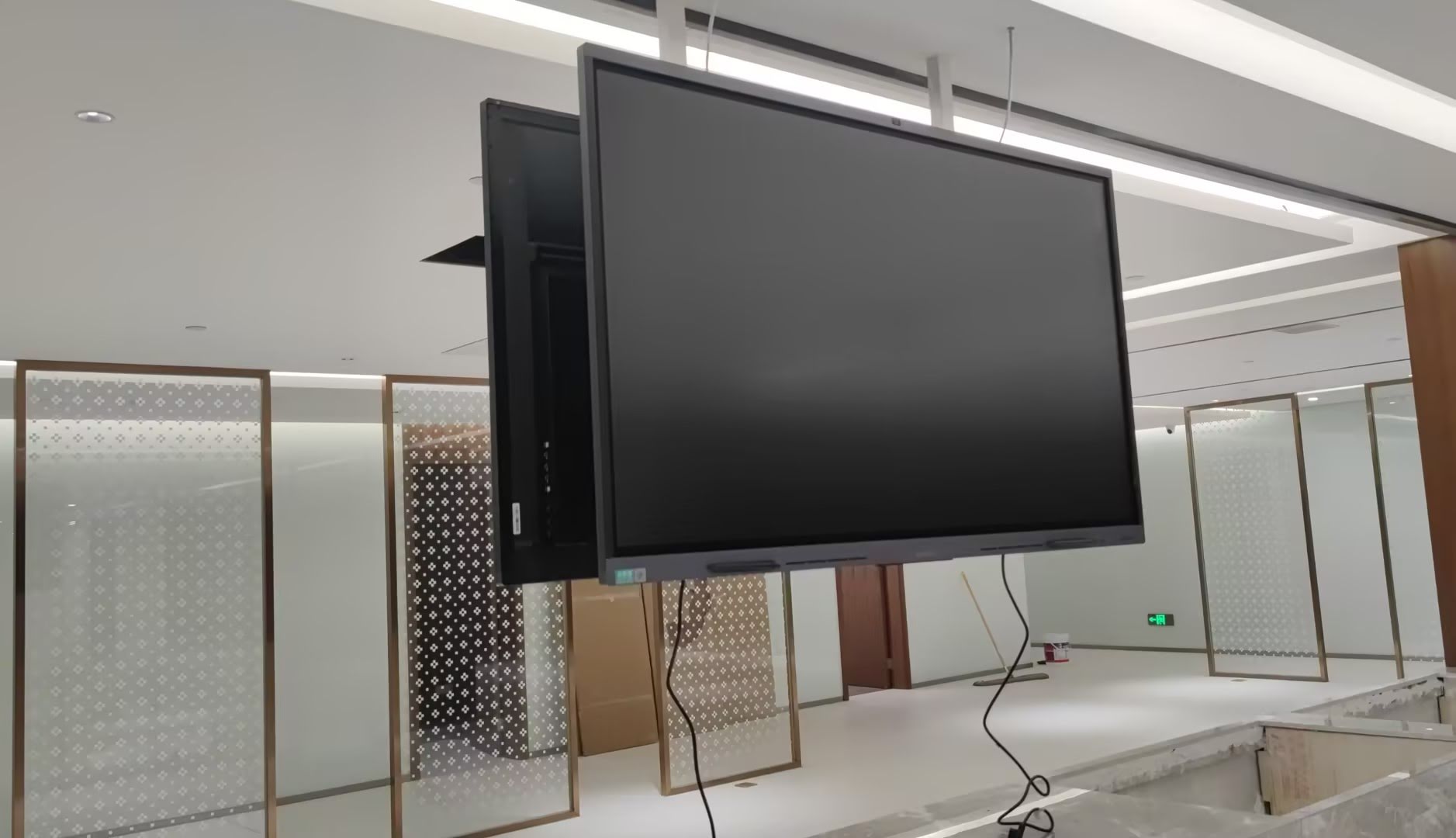
3. Certifications and Regulatory Compliance
Bulk shipments that fail customs or safety inspection can be held for weeks. Verify that the supplier holds current certificates for your destination markets and that the certificates are issued for the exact model numbers you are ordering, not for a “similar” product.
| Market | Key Certifications | What to Verify |
|---|---|---|
| European Union / UK | CE, UKCA, RoHS, REACH, WEEE | Declaration of Conformity with model-specific test reports |
| North America | FCC, UL / ETL, Energy Star (optional) | FCC ID searchable in the public database |
| Middle East / Asia-Pacific | SASO, KC, PSE, BIS, RCM | Certificate validity dates and importer-of-record requirements |
| Factory Level | ISO 9001, ISO 14001, BSCI | Audit reports less than 12 months old |
4. OEM / ODM Customization Flexibility
Distributors and large institutions often need more than a stock product. Evaluate whether the supplier can deliver private-label branding, custom boot logos, pre-installed software packages, localized UI languages, specific port configurations, or even custom bezel colors. Ask about the minimum order quantity for each level of customization — logo printing may start at 20 units while a custom mainboard may require 500 or more.
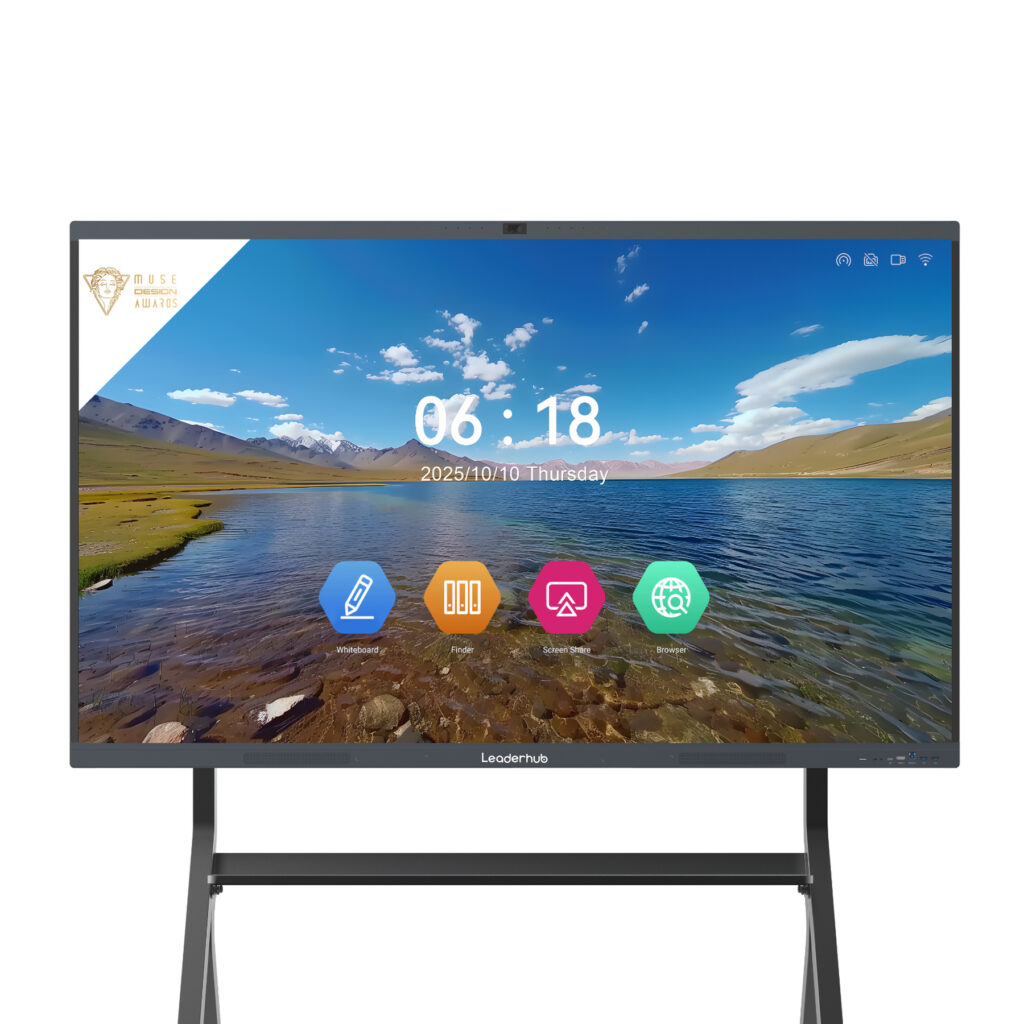
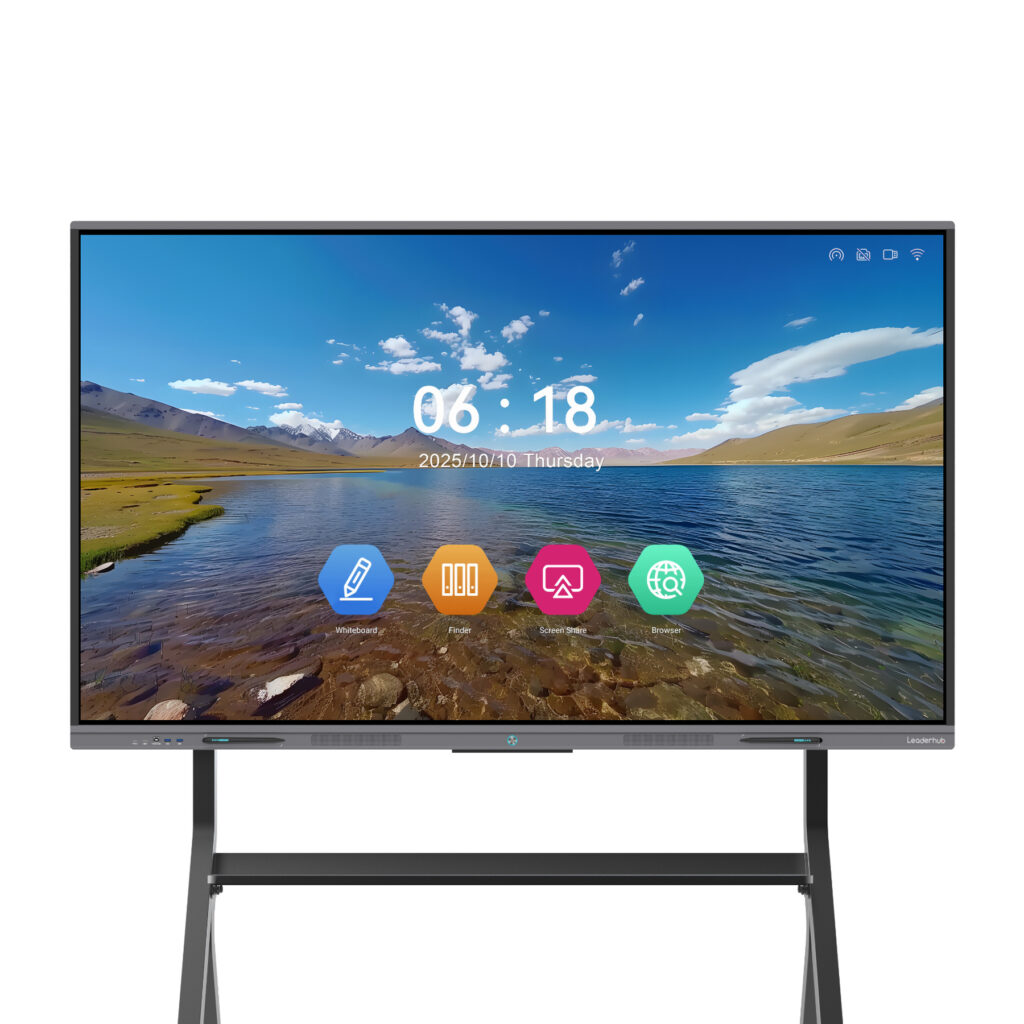
Suppliers with established OEM programs, such as the Leaderhub smart whiteboard range, can usually provide a customization menu with clear MOQ tiers, which makes budgeting far more predictable.
5. Pricing Structure, MOQ and Payment Terms
Unit price is only one line in the total cost of ownership. For bulk orders, insist on a quotation that separates:
- Ex-works unit price by quantity tier (e.g., 50 / 100 / 300 / 500+ units).
- Optional accessories: OPS modules, mobile stands, wall mounts, cameras and styluses.
- Packaging upgrades for sea freight or multi-stage distribution.
- Freight, insurance and estimated duties for your Incoterm (FOB, CIF or DDP).
- Payment terms — 30% deposit with 70% before shipment is common; letters of credit are often available for orders above a certain value.
Be cautious of quotations that are dramatically lower than the market average. The China Smart Board Selection Guide notes that unusually low prices frequently indicate B-grade panels, reduced warranty coverage or omitted certifications.
6. Warranty, Spare Parts and After-Sales Service
A three-year warranty is now the baseline for commercial interactive displays, and many education tenders require it. More important than the headline number is how the warranty is executed across borders. Confirm:
- Whether the supplier provides advance replacement or requires defective units to be shipped back first.
- The percentage of spare parts (mainboards, power supplies, touch frames, remotes) shipped free with the bulk order — 2% to 3% is typical.
- Availability of remote diagnostics, firmware recovery tools and technician training for your local service team.
- Response time commitments for technical tickets in your time zone.
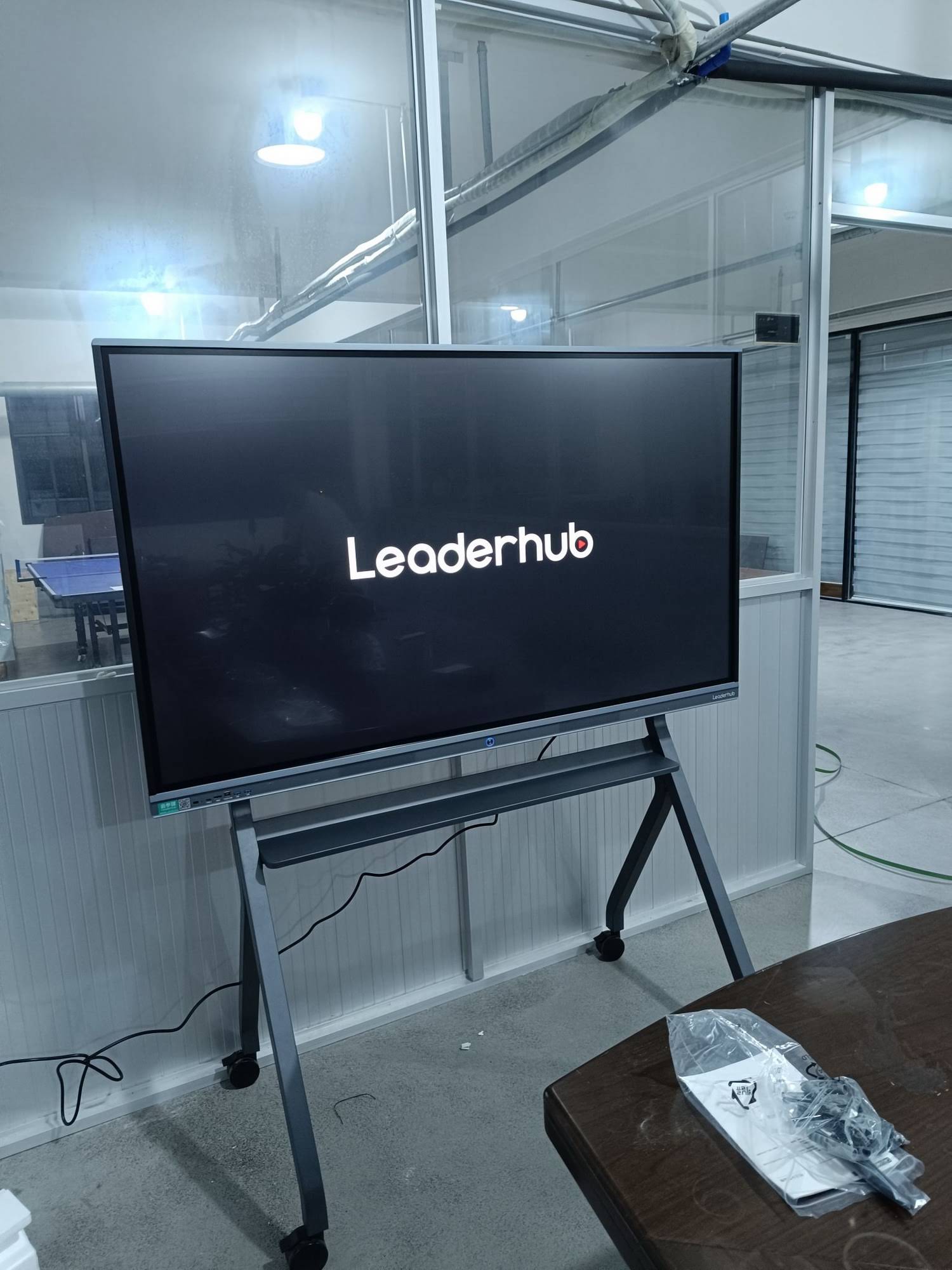
7. Software Ecosystem, Security and Firmware Updates
Hardware ages gracefully; software does not. Ask what Android version ships on the panel, how long the supplier commits to delivering OTA firmware updates, and whether the whiteboard, screen-sharing and device-management applications are developed in-house or licensed from a third party. For enterprise and government deployments, confirm support for mobile device management (MDM), remote lock, and the ability to disable app stores or USB ports.
The OECD Digital Education Outlook emphasizes that data governance and interoperability are now core procurement considerations, not afterthoughts. Suppliers who publish their update roadmap and privacy documentation are generally safer long-term partners.
8. Packaging, Logistics and Lead Time Reliability
Large-format panels are fragile and expensive to ship. A supplier experienced with bulk exports will offer honeycomb or wooden-crate packaging, corner protection, and container loading plans that minimize damage. Request their documented damage rate for sea shipments and the procedure for filing transit claims.
Lead time is equally critical. Typical production lead time for 100–500 units is 25 to 45 days after deposit, depending on customization. Ask how the supplier handles panel shortages and whether they maintain a safety stock of popular sizes.
9. Industry Experience and Verifiable References
A supplier that has shipped interactive displays for a decade has already solved problems a newcomer has not yet encountered. Look for evidence of longevity: years in business, number of export markets, industry awards, participation in trade shows such as InfoComm or ISE, and case studies from clients similar to you. Resources from AVIXA, the AV industry association, can help you benchmark what professional-grade suppliers typically offer.
Most importantly, ask for two or three reference customers in your region who placed orders of comparable size, and actually call them.
10. Communication, Transparency and Long-Term Partnership
The final criterion is the hardest to quantify but often the most decisive. During the quotation phase, observe how quickly and clearly the supplier responds, whether they volunteer potential issues, and whether they assign a dedicated account manager who will stay with your project after the deposit is paid. A supplier that is transparent about what they cannot do is usually more reliable than one who promises everything.
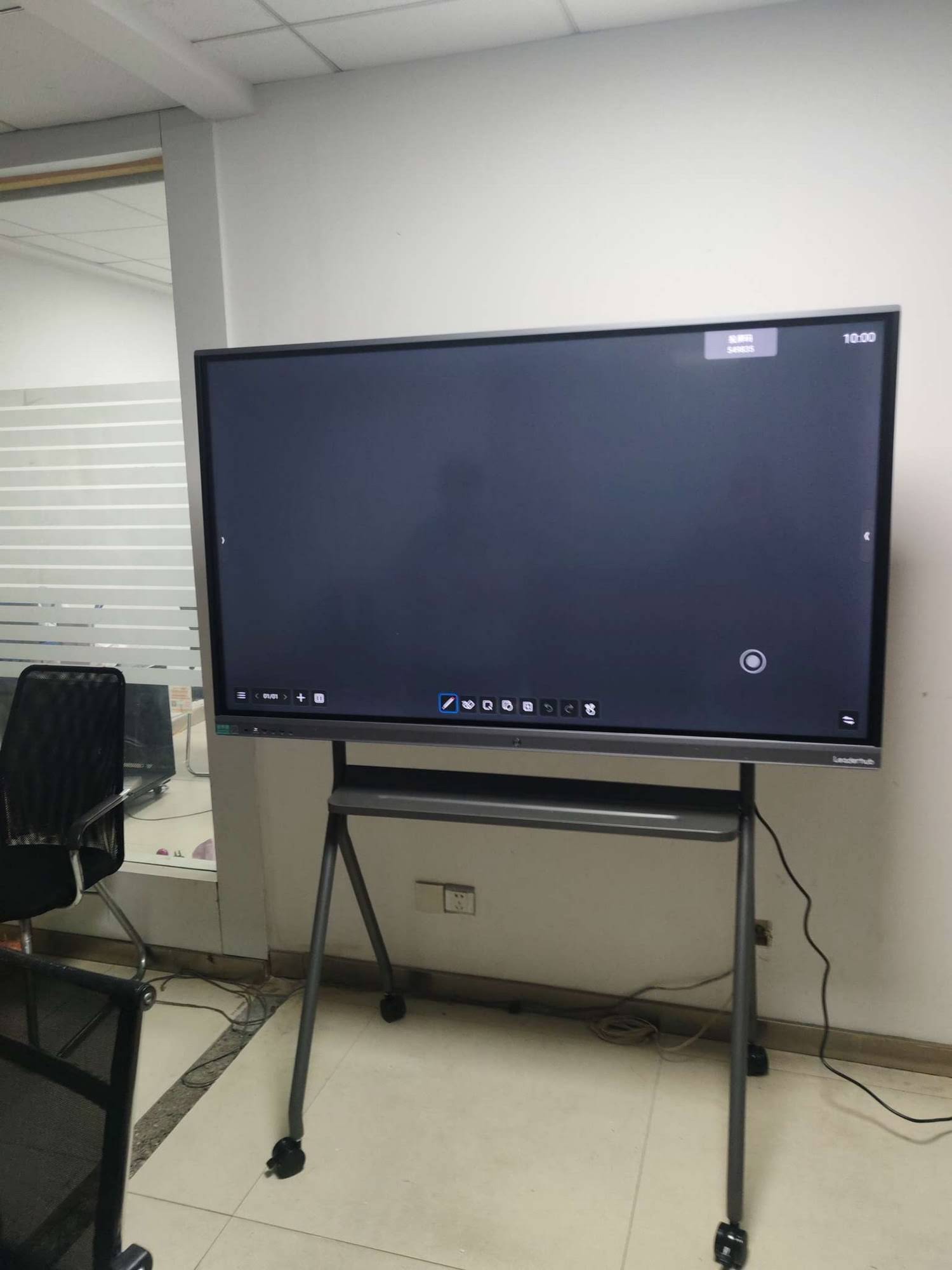
Supplier Scoring Matrix for Bulk Smart Board Procurement
Use the following weighted matrix to compare shortlisted suppliers objectively. Score each criterion from 1 to 5, multiply by the weight, and total the results.
| Criterion | Suggested Weight | Key Evidence to Request | Red Flags |
|---|---|---|---|
| Production capacity | 15% | Factory video, capacity letter | Refuses factory visit or audit |
| Display & touch quality | 15% | Production-batch samples, panel spec sheet | Unnamed panel source |
| Certifications | 10% | Model-specific certificates | Certificates for a different model |
| OEM / ODM flexibility | 10% | Customization menu with MOQ tiers | No written customization terms |
| Pricing & terms | 15% | Itemized tiered quotation | Price far below market average |
| Warranty & support | 12% | Written RMA process, spare parts ratio | Warranty valid only in origin country |
| Software & updates | 8% | Update roadmap, MDM documentation | Outdated Android with no OTA plan |
| Logistics & lead time | 7% | Packaging spec, damage rate history | Vague delivery dates |
| Experience & references | 5% | Client references, trade show history | No contactable references |
| Communication | 3% | Response time during RFQ | Delayed or evasive answers |
Matching Smart Board Models to Bulk Deployment Scenarios
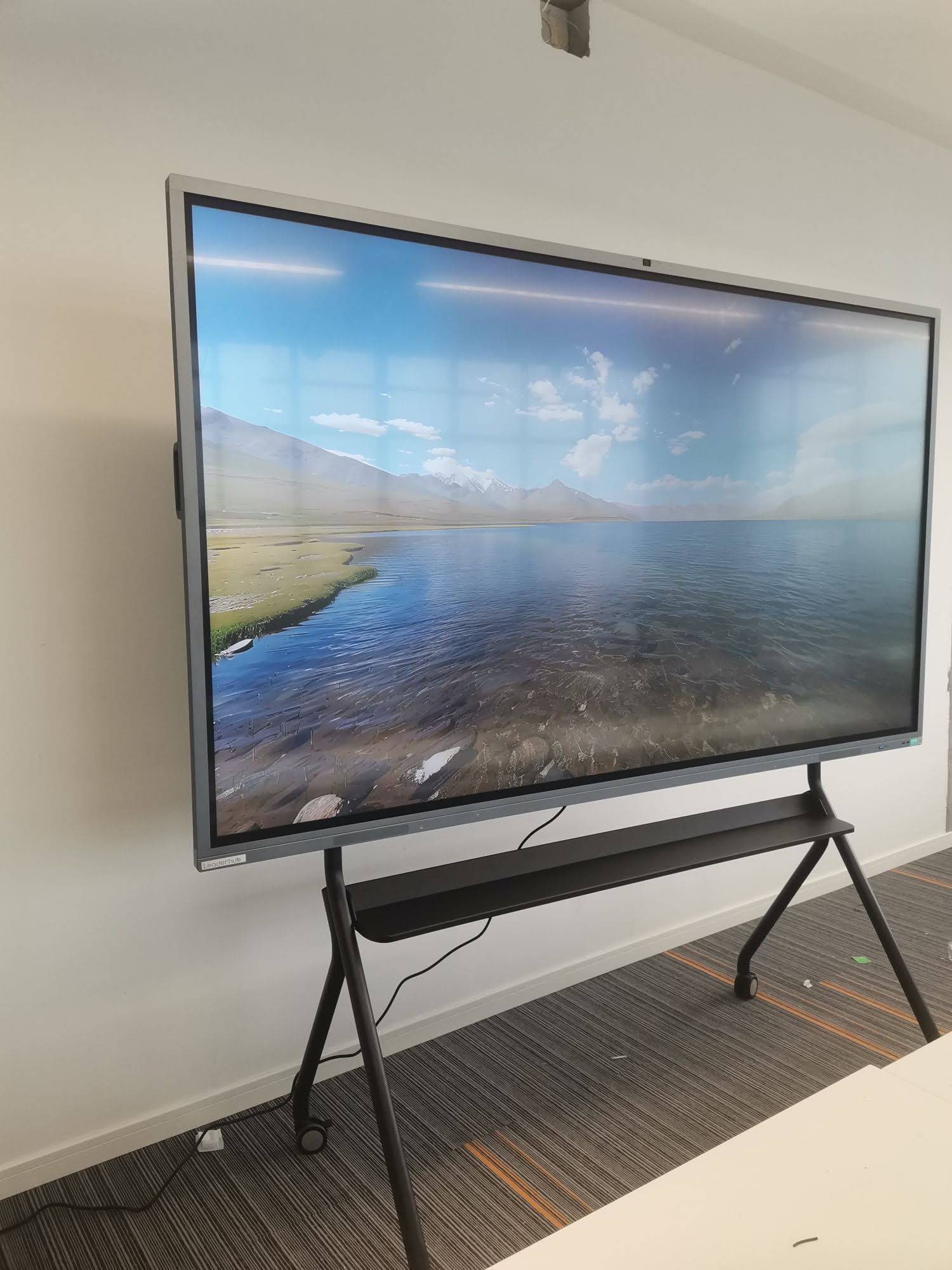
Different deployment environments call for different panel sizes and feature sets. The table below illustrates how a typical manufacturer catalog maps to common bulk-order scenarios, using models from one established interactive display producer as examples.
| Deployment Scenario | Recommended Size | Example Model | Reference Price |
|---|---|---|---|
| K-12 classrooms, budget-driven tenders | 65″ – 75″ | L65ZM 65″ 4K Smart Panel | From $1,099 |
| Lecture halls and training centers | 86″ | L86ZM 86″ 4K Smart Panel | From $1,699 |
| Corporate meeting rooms, hybrid work | 75″ | L75HM 75″ Interactive Smart Whiteboard | From $1,599 |
| Flexible huddle spaces and mobile use | 55″ mobile | U55Pro 55″ Mobile 4K Smart Display | From $2,499 |
| Boardrooms and auditoriums | 110″ | L110H 110-Inch Interactive Flat Panel | From $7,999 |
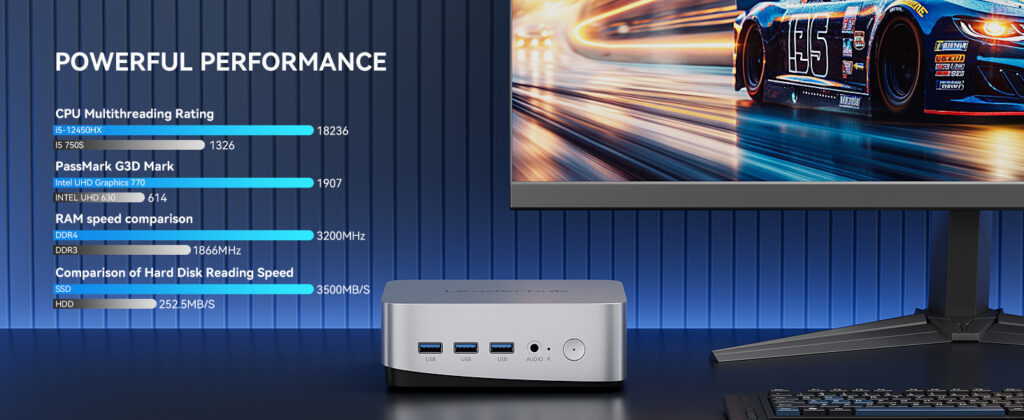
Buyers who pair interactive panels with compact computing for signage or kiosk use may also want to evaluate a supplier’s mini PC lineup, since sourcing both from one manufacturer simplifies compatibility testing and consolidates warranty handling.
Common Mistakes Buyers Make When Sourcing Smart Boards in Volume
- Approving the showroom sample only. Always test a unit pulled from the production line that will fulfill your order.
- Ignoring the OPS and accessory ecosystem. Stands, mounts and compute modules often add 15–25% to the total project cost.
- Skipping a pilot phase. Deploying 10–20 units for one semester or quarter reveals software, training and network issues before a full rollout.
- Underestimating training needs. Guidance on choosing an interactive display for K-12 consistently shows that teacher adoption depends on onboarding, not just hardware specs.
- Signing without a defect-rate clause. Define acceptable dead-pixel limits and dead-on-arrival percentages in the contract.
A Practical Pre-Order Checklist
- Define quantities, sizes, deployment sites and target delivery dates.
- Shortlist three to five suppliers using the scoring matrix above.
- Request production-batch samples and run a two-week evaluation.
- Verify certificates in official databases and confirm factory audit dates.
- Negotiate an itemized quotation including spare parts and packaging.
- Agree on warranty execution, RMA logistics and technical training.
- Run a pilot deployment before releasing the full purchase order.
- Lock in a production schedule with milestone-based inspections.
Working With an Experienced Interactive Display Manufacturer
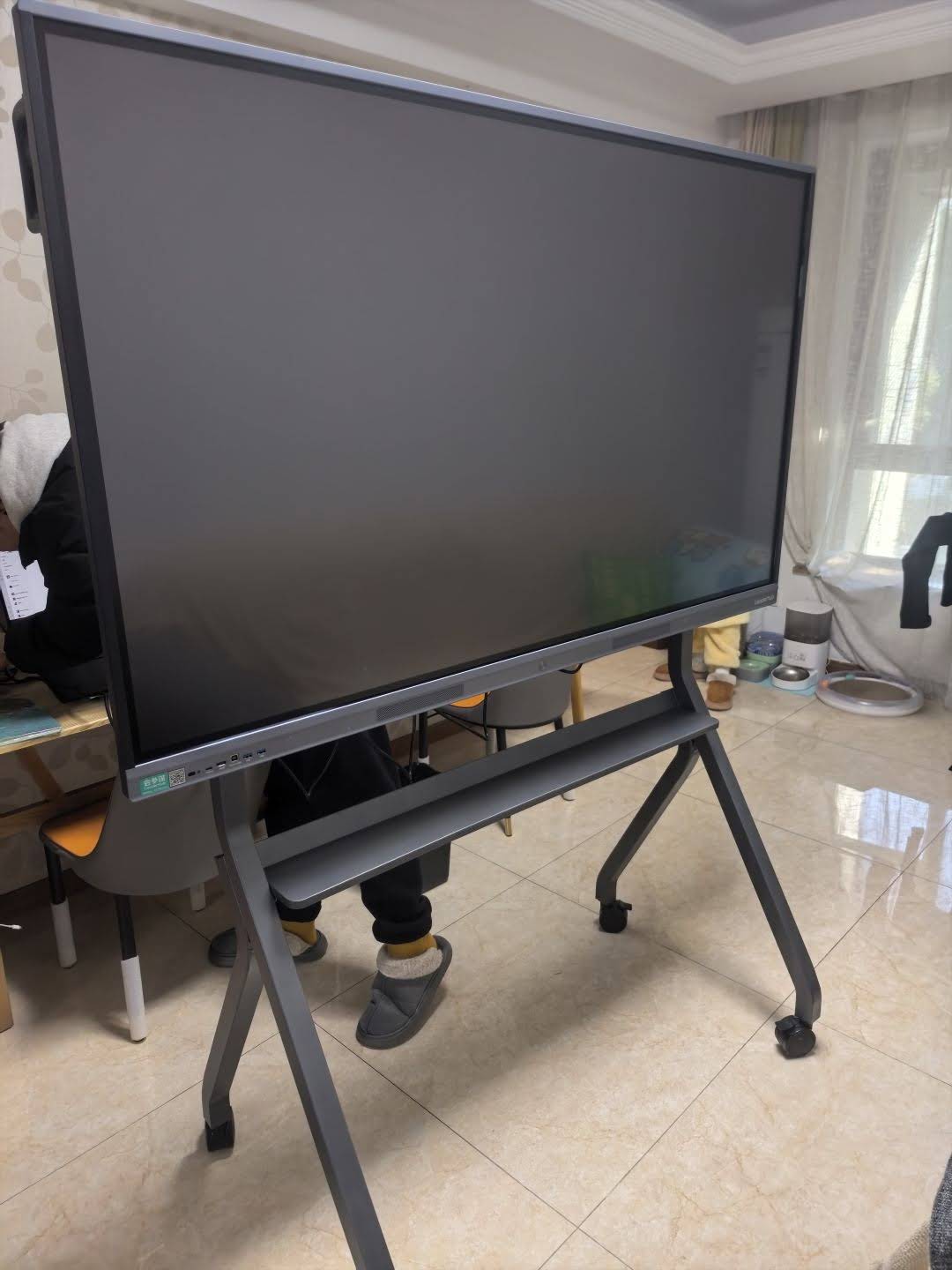
Suppliers who meet most of the ten criteria tend to share a profile: direct factory ownership, a decade or more of export history, a multi-size product portfolio and a structured OEM program. Leaderhub, a Shenzhen-based technology company with 16 years of interactive-display experience, serves distributors, schools and enterprises in more than 82 countries with smart whiteboards, interactive flat panels, mini PCs and portable smart screens, and regularly exhibits at global electronics trade shows where bulk buyers can inspect products and discuss customized solutions in person.
Frequently Asked Questions
What is a typical minimum order quantity for smart boards from a manufacturer?
Most manufacturers accept orders starting from 10 to 20 units for stock models. Customized OEM units commonly require 50 to 100 units per size, and hardware-level changes may start at 300 to 500 units.
How long does production take for a bulk smart board order?
Standard models in quantities of 100 to 500 units usually ship within 25 to 45 days after deposit. Customized orders, peak-season panel shortages or additional certifications can extend this to 60 days or more.
Should I choose a trading company or a direct manufacturer?
Direct manufacturers typically offer better pricing, faster technical answers and more customization control. Trading companies can be useful when you need to consolidate many product categories in one shipment, but you should still verify the factory behind every product.
What warranty should I expect on bulk interactive flat panels?
Three years is the commercial standard. Negotiate for a spare-parts allowance of 2–3%, advance replacement for dead-on-arrival units, and clear responsibility for return freight costs.
How do I evaluate a supplier’s software quality?
Test the whiteboard application, wireless screen sharing and device management tools on sample units. Ask for the firmware release history of the last two years and confirm how long OTA updates will continue for the model you plan to purchase.
Final Thoughts
Applying structured smart board supplier selection criteria for bulk orders transforms procurement from a price negotiation into a risk-managed partnership. Production capacity, panel quality, certifications, customization, transparent pricing, warranty execution, software longevity, logistics, verifiable experience and clear communication together determine whether a deployment succeeds over its full lifecycle. Evaluate carefully, pilot before scaling, and choose a partner who will still be answering your calls in year five.
If you are planning a volume deployment and would like a tiered quotation, production samples or OEM options, you can contact the Leaderhub team to discuss your project requirements.