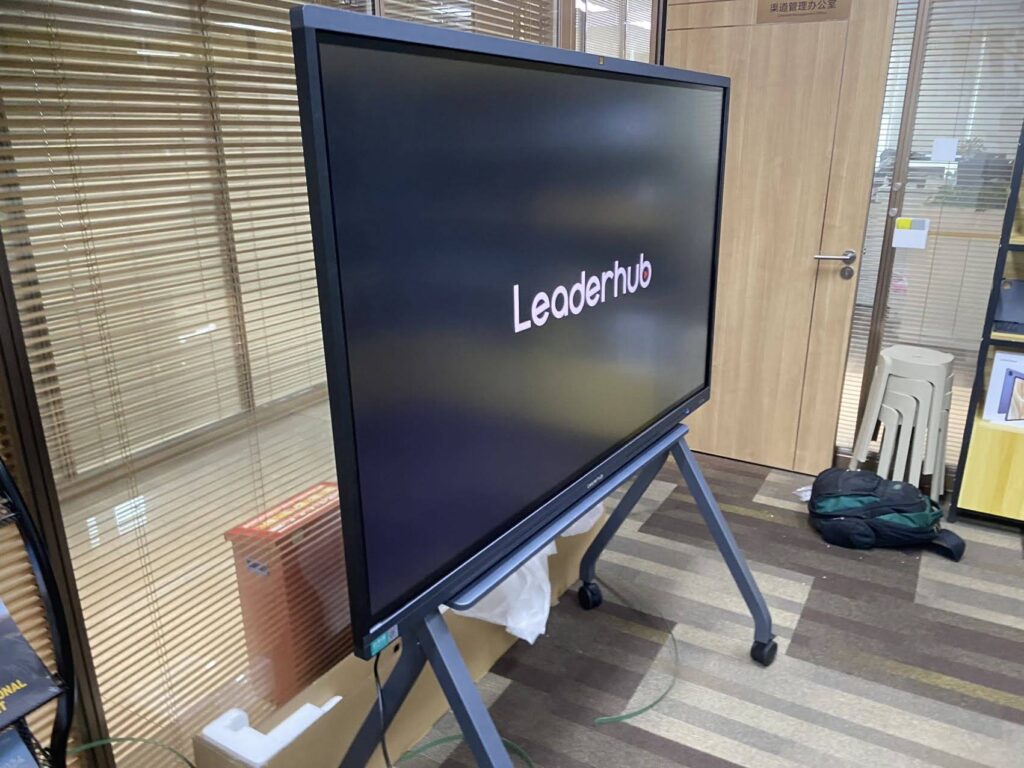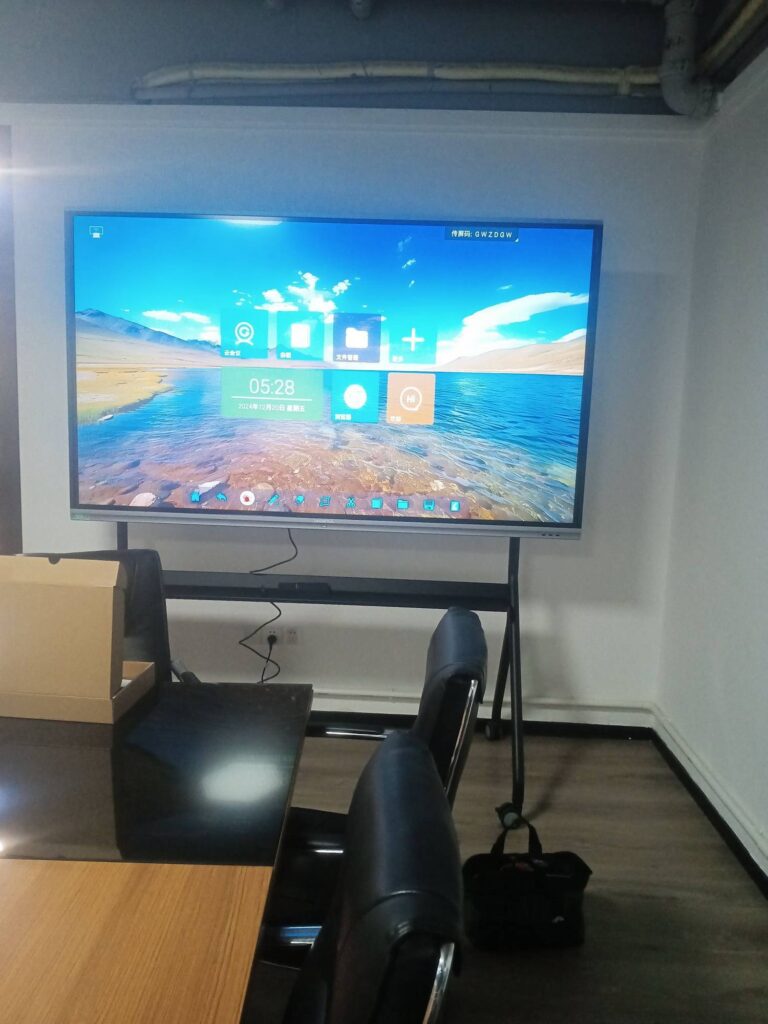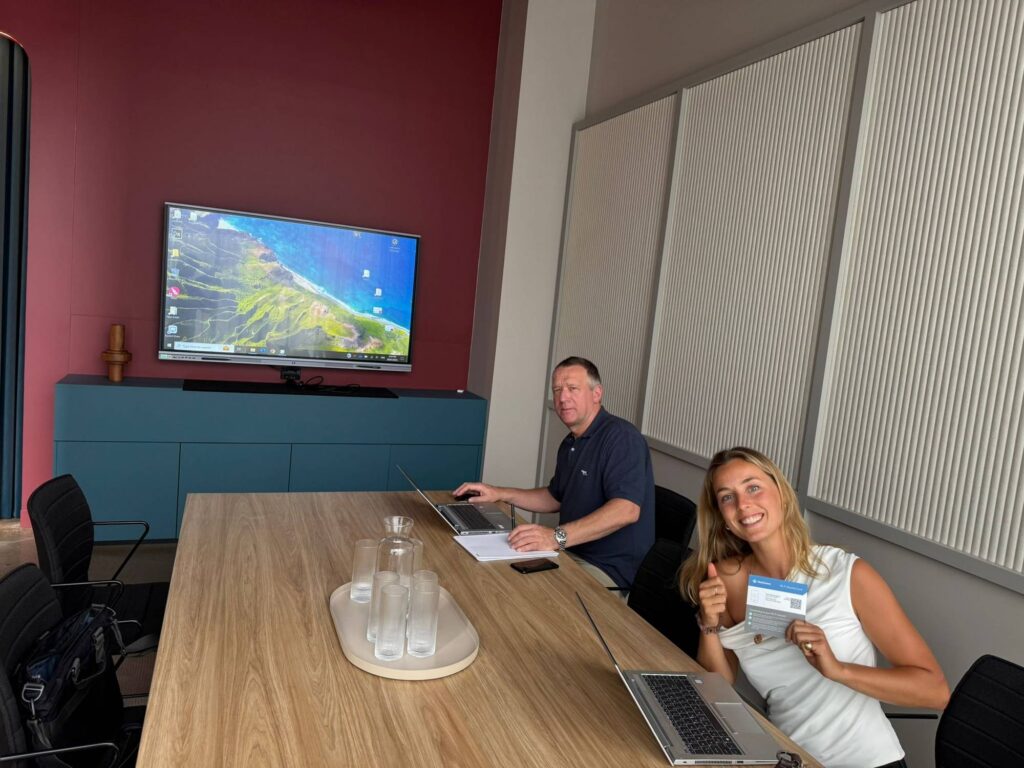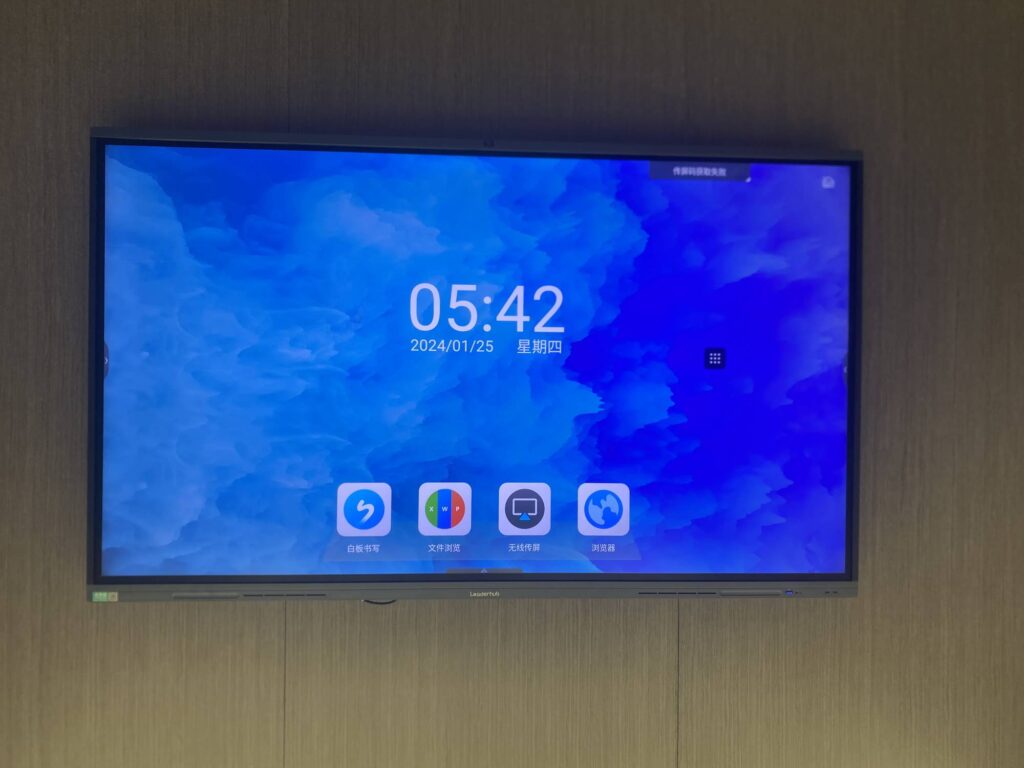
Interactive smart board whiteboards have revolutionized how we teach, collaborate, and present information in modern workplaces and classrooms. These advanced digital displays combine traditional whiteboard functionality with powerful computing capabilities, creating dynamic environments where ideas flow naturally and engagement reaches new heights. Understanding how these sophisticated devices work helps organizations make informed decisions about implementing interactive technology solutions.
Understanding Interactive Smart Board Technology
An interactive smart board whiteboard functions as a large-scale touch-sensitive display that responds to user input through various detection methods. At its core, the technology relies on sophisticated sensors and processors that track touch points, stylus movements, and gestures across the display surface. When a user touches the screen or writes with a digital pen, the system instantly converts these physical actions into digital signals that the computer processes and displays in real-time.
The technology behind interactive whiteboards has evolved significantly over the past decade. Modern smart boards utilize infrared sensors, capacitive touch technology, or electromagnetic detection systems to achieve precise input recognition. These systems work together with high-resolution displays, powerful processors, and intelligent software to create seamless interactive experiences that feel natural and responsive.
Core Components That Power Interactive Whiteboards
Touch Detection System
The touch detection system represents the fundamental technology that enables interaction with the smart board. Different manufacturers employ various approaches to detect user input, each with distinct advantages:
- Infrared Touch Technology: Uses a grid of invisible infrared light beams across the display surface. When a finger or stylus interrupts these beams, the system calculates the exact touch position with remarkable accuracy.
- Capacitive Touch Systems: Detect changes in electrical fields when conductive objects like fingers make contact with the screen, enabling multi-touch gestures and precise input recognition.
- Electromagnetic Recognition: Specially designed styluses interact with electromagnetic fields beneath the display, providing pressure-sensitive writing that closely mimics traditional pen-and-paper experiences.
- Camera-Based Detection: High-speed cameras positioned around the display perimeter track user movements and calculate touch positions through advanced image processing algorithms.
Display Technology
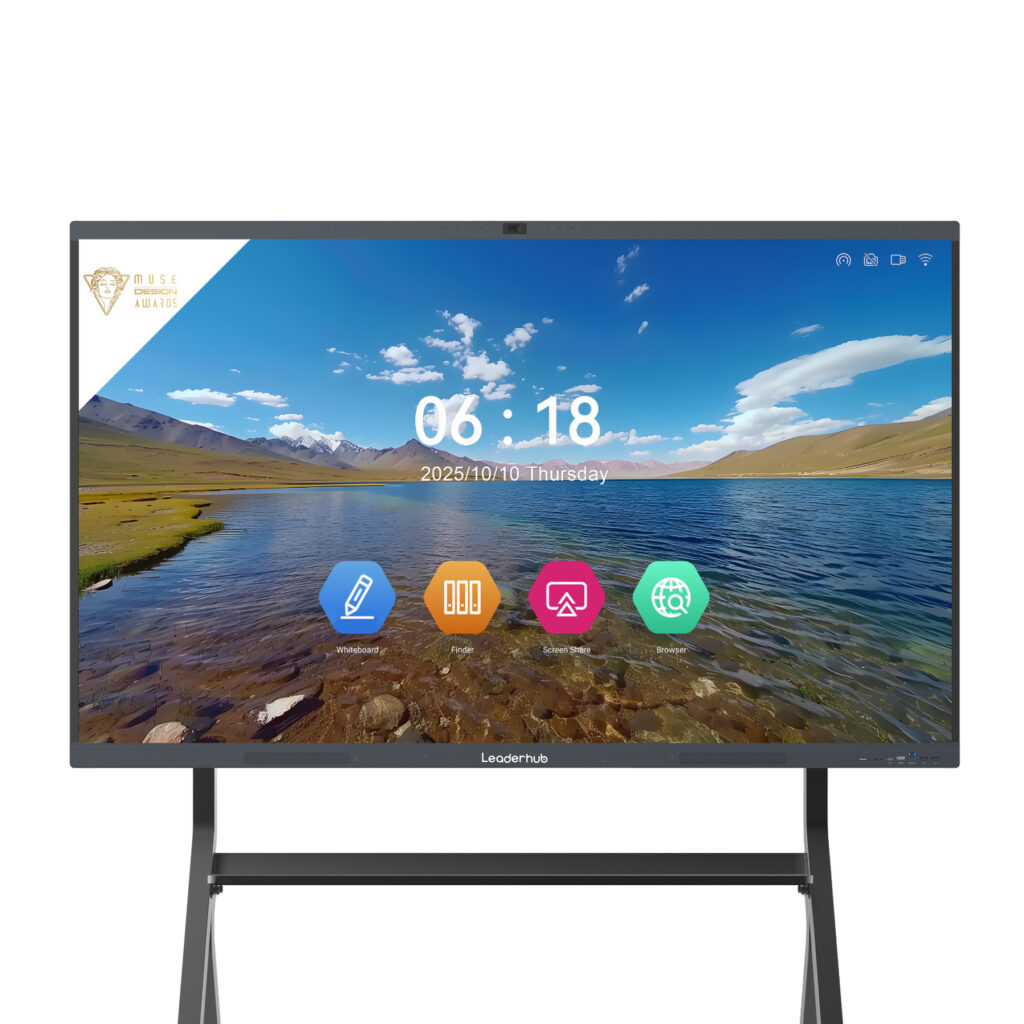
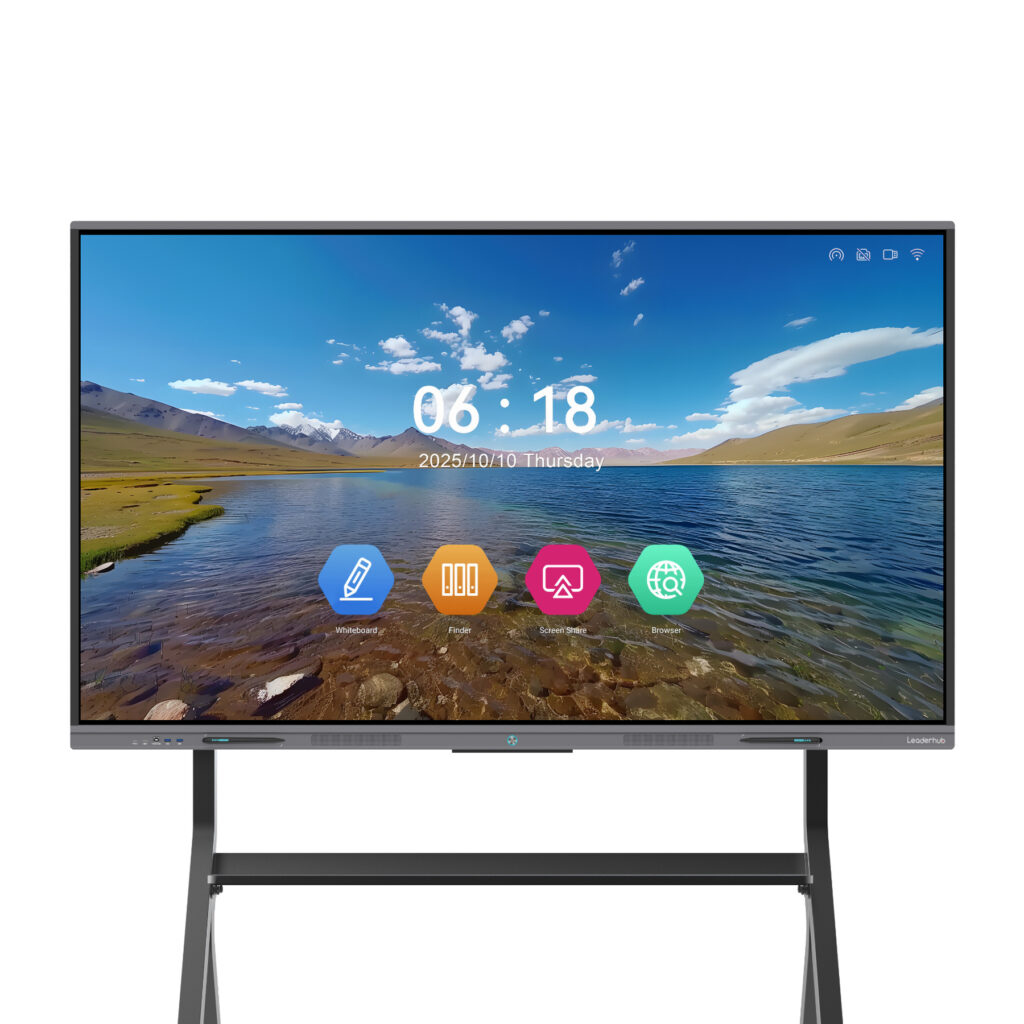
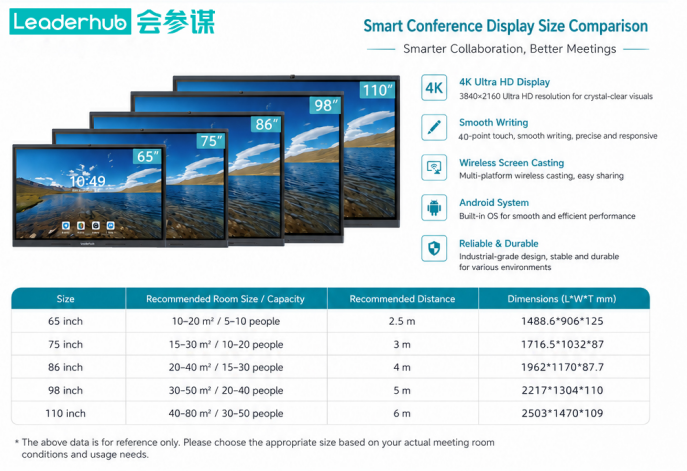
Modern interactive smart boards typically incorporate LED or LCD display panels that deliver sharp, vibrant visuals. These displays range from 55 inches to over 100 inches diagonally, with resolutions reaching 4K Ultra HD for crystal-clear image quality. The display panel serves as both the output device for visual content and the input surface for user interaction, making its quality crucial for overall user experience.
Computing Hardware
Built-in computing systems power the smart board’s functionality. These integrated computers run operating systems like Android or Windows, enabling users to access applications, browse the internet, and run collaborative software solutions directly on the device. Processors, memory, and storage components determine the board’s performance capabilities, affecting how smoothly it handles multiple applications and complex tasks.
How Touch Input Gets Processed
When a user interacts with an interactive smart board whiteboard, a sophisticated sequence of operations occurs within milliseconds. The touch detection sensors continuously scan the display surface, monitoring for any interruptions or changes. Upon detecting input, the system identifies the precise coordinates and communicates this information to the controlling processor.
| Processing Stage | Function | Response Time |
|---|---|---|
| Touch Detection | Sensors identify contact location and pressure | 1-5 milliseconds |
| Signal Processing | Controller converts sensor data to coordinates | 5-10 milliseconds |
| Software Interpretation | Operating system recognizes gestures and commands | 10-20 milliseconds |
| Visual Feedback | Display updates to show user input results | 16-33 milliseconds |
The processor interprets the input data within the context of the currently running application. For writing and drawing operations, the system translates touch movements into digital ink strokes. For navigation tasks, touch inputs become click events or gesture commands. Advanced palm rejection algorithms distinguish between intentional stylus input and accidental hand contact, ensuring clean, accurate results.
Software Integration and Intelligence
The software layer transforms raw hardware capabilities into practical productivity tools. Modern interactive whiteboard software provides extensive functionality including digital writing tools, annotation features, screen recording, wireless screen sharing, and cloud-based collaboration platforms. Many systems now incorporate artificial intelligence to enhance user experiences through features like handwriting recognition, automatic shape correction, and intelligent content suggestions.
AI-Powered Features
According to research published by the International Society for Technology in Education, AI integration in interactive displays has increased productivity by 34% in educational settings and 28% in corporate environments. AI-enhanced smart boards can automatically convert handwritten notes to typed text, recognize drawn shapes and convert them to perfect geometric forms, translate content between languages in real-time, and suggest relevant content based on meeting or lesson context.
LeaderHub has been at the forefront of integrating AI technology into interactive display solutions for over 16 years, developing smart whiteboards that help people communicate and collaborate more effectively across 82+ countries worldwide.
Connectivity and Collaboration Capabilities
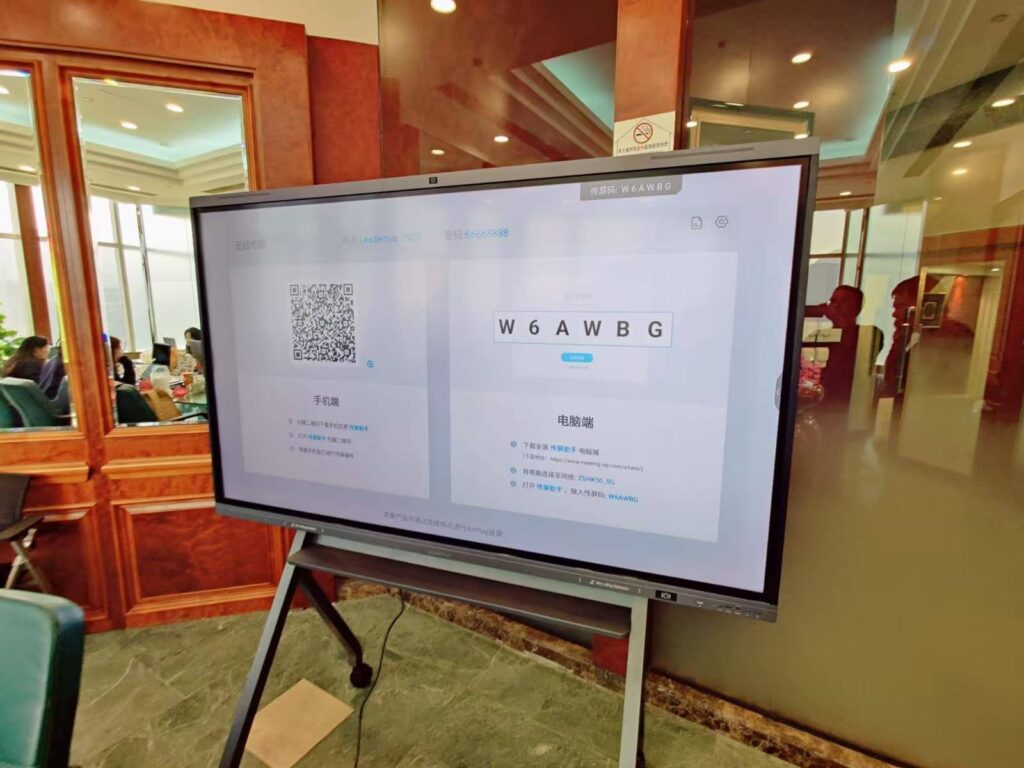
Modern interactive smart board whiteboards function as central hubs for digital collaboration. They connect to networks via Ethernet or Wi-Fi, enabling wireless screen mirroring from laptops, tablets, and smartphones. Multiple users can connect simultaneously, sharing content and collaborating on documents in real-time regardless of physical location.
Wireless Connectivity Options
- Screen Mirroring Protocols: Support for Miracast, AirPlay, and Google Cast allows seamless content sharing from various devices
- Cloud Service Integration: Direct access to Google Drive, OneDrive, Dropbox, and other cloud storage platforms
- Video Conferencing: Built-in support for Zoom, Microsoft Teams, Google Meet, and other professional communication platforms
- Remote Collaboration: Participants can join sessions remotely, viewing and interacting with the whiteboard content from their own devices
Writing and Annotation Technologies
Digital writing on interactive whiteboards achieves remarkable precision through advanced stylus technology and palm rejection algorithms. When using a digital pen, electromagnetic or pressure-sensitive systems detect subtle variations in pressure and angle, creating natural-feeling writing experiences that closely mimic traditional markers on whiteboards.
The software layer processes pen strokes in real-time, applying smoothing algorithms to create clean, professional-looking lines even when handwriting naturally varies. Color selection, line thickness adjustment, and eraser functions work intuitively, allowing users to focus on content rather than technology operation. Advanced systems support simultaneous multi-user writing, enabling collaborative brainstorming sessions where multiple participants can write on the board concurrently.
Precision and Accuracy Metrics
Professional-grade interactive whiteboards achieve touch accuracy within 1-2 millimeters, with response times under 10 milliseconds for pen input. This level of precision enables detailed technical drawings, mathematical equations, and artistic work that requires fine motor control. Studies from the Consumer Technology Association show that modern capacitive touch systems recognize up to 20 simultaneous touch points, supporting complex multi-user interactions.
Data Processing and Storage Architecture
Interactive smart boards employ sophisticated data management systems to handle the continuous flow of information during active use. As users write, draw, import files, and manipulate content, the system stores this data in multiple layers. The immediate working layer holds current session information in volatile memory for instant access and manipulation. Background processes automatically save content to persistent storage at regular intervals, protecting work against unexpected power loss or system crashes.
File Management System
Smart boards organize content in structured file systems that mirror familiar desktop computing paradigms. Users can create folders, name files descriptively, and organize materials logically. Export functionality allows saving sessions in various formats including PDF, image files, interactive whiteboard formats, and editable documents. Cloud synchronization features automatically upload saved content to designated cloud storage accounts, ensuring accessibility across devices and locations.
Power and Display Management
Energy-efficient components and intelligent power management systems keep operational costs reasonable despite the large display sizes. LED backlighting technology consumes significantly less power than older display technologies while delivering superior brightness and color accuracy. Proximity sensors detect when users approach the board, automatically waking the display from sleep mode and returning it to standby when the room remains unoccupied for preset durations.
| Display Size | Typical Power Consumption (Active) | Standby Power | Annual Energy Cost* |
|---|---|---|---|
| 65 inches | 150-200 watts | 0.5 watts | $75-$100 |
| 75 inches | 200-250 watts | 0.5 watts | $100-$125 |
| 86 inches | 250-300 watts | 0.5 watts | $125-$150 |
| 98 inches | 300-350 watts | 0.5 watts | $150-$175 |
*Based on 8 hours daily usage, 250 working days annually, at $0.12 per kWh
Security and Access Control Systems
Enterprise-grade interactive whiteboards incorporate comprehensive security measures to protect sensitive information and maintain organizational data governance standards. User authentication systems require credentials before accessing the device, while role-based permissions control which features and content different users can access. Network security protocols encrypt data transmission between the smart board and connected devices or cloud services.
Data Protection Mechanisms
Advanced security features include automatic session timeout and content clearing when meetings conclude, preventing unauthorized access to confidential materials. Encrypted storage protects saved files from unauthorized access even if physical security is compromised. Remote management capabilities allow IT administrators to apply security patches, monitor device status, and enforce organizational policies across entire fleets of interactive displays.
Real-World Application Scenarios
Interactive smart board whiteboards demonstrate their value across diverse professional environments. In educational institutions, teachers use them to deliver dynamic lessons that incorporate multimedia content, interactive exercises, and real-time student participation. Students can solve problems directly on the board, manipulate virtual objects, and engage with educational content in hands-on ways that enhance learning retention.
Corporate environments leverage interactive whiteboards for more productive meetings and brainstorming sessions. Teams can collaborate on strategic planning, review design mockups, annotate presentations, and document decisions in real-time. The ability to save and share meeting notes ensures nothing gets lost and remote participants remain fully engaged. According to Frost & Sullivan research, organizations using interactive collaboration technology report 37% faster decision-making and 42% improvement in meeting effectiveness.
Healthcare Applications
Medical facilities deploy interactive whiteboards for patient education, surgical planning, and interdisciplinary care coordination. Physicians can display diagnostic images, annotate anatomical diagrams, and explain treatment options in visually engaging ways that improve patient understanding. Research teams use them for collaborative analysis of clinical data and research findings.
Design and Creative Industries
Architects, designers, and creative professionals utilize large-format interactive displays for design reviews, client presentations, and collaborative ideation sessions. The ability to sketch ideas at full scale, manipulate 3D models with touch gestures, and annotate design documents streamlines creative workflows and enhances client communication.
Maintenance and Longevity Considerations
Modern interactive smart boards are engineered for reliable, long-term operation with minimal maintenance requirements. Commercial-grade displays typically provide 50,000 hours of operational life, equivalent to over 15 years of standard business use. The solid-state design with no moving parts reduces mechanical failure risks.
Routine maintenance primarily involves keeping the display surface clean using microfiber cloths and appropriate cleaning solutions. Regular software updates maintain security and add new features, with many systems supporting automatic update scheduling during off-hours. Component modularity in professional systems allows replacing individual elements like touch sensors or computing modules without replacing entire units, reducing long-term ownership costs.
Future Developments in Interactive Whiteboard Technology
The interactive whiteboard industry continues advancing rapidly, with several emerging technologies poised to enhance capabilities further. Artificial intelligence development focuses on more sophisticated content recognition, automatic meeting summarization, and intelligent assistance that anticipates user needs. Natural language processing improvements will enable voice control for hands-free operation and verbal commands for common functions.
Emerging Technology Trends
- Haptic Feedback Systems: Tactile response when touching the screen, simulating the feeling of physical buttons or writing resistance
- Advanced Computer Vision: Gesture recognition beyond simple touch, enabling spatial interaction and 3D manipulation of virtual objects
- Enhanced Wireless Collaboration: Ultra-low latency screen sharing and multi-device synchronization for seamless hybrid work environments
- Integrated Environmental Sensors: Automatic brightness adjustment, air quality monitoring, and occupancy detection for smarter room management
- Augmented Reality Integration: Blending physical whiteboard content with digital overlays visible through mobile devices or AR glasses
Selecting the Right Interactive Smart Board System
Organizations evaluating interactive whiteboard solutions should consider several critical factors to ensure their investment delivers maximum value. Display size should match room dimensions and typical audience sizes¡ªsmaller conference rooms work well with 65-75 inch displays, while large training rooms or auditoriums may require 86 inches or larger. Resolution matters significantly for detailed work; 4K displays provide noticeably sharper text and images compared to Full HD alternatives.
Touch technology choices impact user experience and maintenance requirements. Infrared systems offer excellent durability and support writing with any object, while capacitive touch provides the most responsive multi-touch gestures. Computing power requirements depend on intended use¡ªbasic annotation and presentation needs less processing power than running complex simulations or CAD software. Network connectivity options should align with existing IT infrastructure and security policies.
Total Cost of Ownership Analysis
Beyond initial purchase price, organizations should evaluate ongoing costs including software subscriptions, technical support agreements, energy consumption, and potential accessory purchases like additional styluses or mounting solutions. Professional installation ensures proper mounting and cable management, while training programs help users leverage advanced features effectively. Extended warranty options provide financial protection and often include preventive maintenance services.
Implementation Best Practices
Successful interactive whiteboard deployment requires more than simply installing hardware. Organizations should develop clear usage guidelines, provide comprehensive training, and designate technology champions who can assist colleagues with questions. Creating templates and saved files with frequently used content accelerates meeting setup and ensures consistent professional presentation quality.
Regular usage monitoring helps identify which features deliver the most value and where additional training might be beneficial. Collecting user feedback through surveys or informal discussions reveals practical challenges and opportunities for process improvements. Establishing maintenance schedules for cleaning and software updates keeps systems performing optimally and extends operational lifespan.
Conclusion: The Technology Behind Modern Collaboration
Interactive smart board whiteboards represent sophisticated integration of multiple technologies working in harmony¡ªadvanced displays, precise touch detection, powerful computing, intelligent software, and robust connectivity¡ªall designed to make collaboration more natural, productive, and engaging. Understanding how these components function together helps users maximize the technology’s potential and organizations make informed decisions about interactive display investments.
As artificial intelligence continues advancing and connectivity becomes even more seamless, interactive whiteboards will become increasingly intelligent partners in educational and professional environments. The fundamental principles of detecting user input, processing that information, and presenting responsive visual feedback remain constant, but the sophistication with which systems accomplish these tasks continues improving. Organizations that embrace interactive whiteboard technology position themselves to communicate more effectively, collaborate more productively, and adapt more readily to evolving workplace dynamics.