For procurement managers, school district buyers, AV integrators and distributors, sourcing from a smart board manufacturing company in China is one of the most effective ways to secure high-quality interactive whiteboards and displays at competitive prices. China produces the majority of the world’s interactive flat panels, and the Pearl River Delta — particularly Shenzhen and Guangzhou — hosts the densest ecosystem of LCD panel suppliers, touch-frame makers, mainboard designers and final assembly plants anywhere on earth. Yet the same depth of the market that makes China attractive also makes supplier selection difficult: hundreds of factories, trading companies and resellers compete for the same overseas orders, and their capabilities vary enormously.
This guide explains how the Chinese smart board industry is structured, what separates a genuine manufacturer from a middleman, which technical and commercial criteria matter most, and how to verify a supplier before you commit to a container order. Whether you are equipping classrooms in Europe, boardrooms in the Middle East or training centers in Southeast Asia, the principles below will help you choose a partner you can rely on for years.
Why China Dominates Global Smart Board Manufacturing
Understanding why Chinese factories lead this category helps you evaluate them more intelligently. The advantage is not simply low labor cost; it is the vertical integration of the entire display supply chain within a few hundred kilometers.
- Panel proximity: BOE, CSOT and HKC — three of the world’s largest LCD panel makers — operate fabs in Guangdong and neighboring provinces, giving local assemblers early access to 4K panels in 55″ to 110″ sizes.
- Touch technology clusters: Infrared touch frames, capacitive sensors and anti-glare tempered glass are produced by specialized suppliers in Shenzhen, Dongguan and Huizhou.
- Electronics and firmware talent: Shenzhen’s mainboard designers develop Android and Windows OPS modules, camera arrays and AI chipsets for conferencing and classroom use.
- Export infrastructure: Shenzhen’s Yantian and Shekou ports, together with Guangzhou’s Nansha port, make FOB and CIF shipments to Europe, North America, the Middle East and Africa routine.
- Scale and iteration speed: A mature Chinese factory can move from a customer’s sketch to a working OEM prototype in weeks, and respond to firmware requests in days.
Global policy bodies continue to drive demand for this hardware. The UNESCO Technology in Education Report highlights how interactive displays have become a core component of classroom digitization, while the OECD Digital Education Outlook documents national investment programs in digital classroom equipment across member states. For overseas buyers, this translates into sustained volume — and the need for suppliers who can scale with it.
Three Types of Smart Board Suppliers You Will Meet in China
Before you compare prices, identify which category a supplier actually belongs to. Many companies describe themselves as “manufacturers” on Alibaba or at trade shows when they are not.
| Supplier Type | What They Do | Advantages | Risks |
|---|---|---|---|
| Brand Manufacturer | Owns R&D, production lines and its own brand; also offers OEM/ODM | Stable quality, firmware control, long-term support, proven products | Higher MOQ for fully custom designs |
| Contract / OEM Factory | Assembles panels to customer specification without a consumer brand | Flexible on housing, logo and packaging | Software often generic; after-sales depends on you |
| Trading Company | Sources from multiple factories and resells | Low MOQ, mixed product sourcing, English-speaking sales | No control over production; batch-to-batch inconsistency; warranty gaps |
None of these categories is inherently wrong — a trading company can suit a small pilot order — but you should know which one you are dealing with and price the risk accordingly.
Eight Criteria for Choosing a Reliable Smart Board Manufacturing Company in China
1. Verified Manufacturing Capability
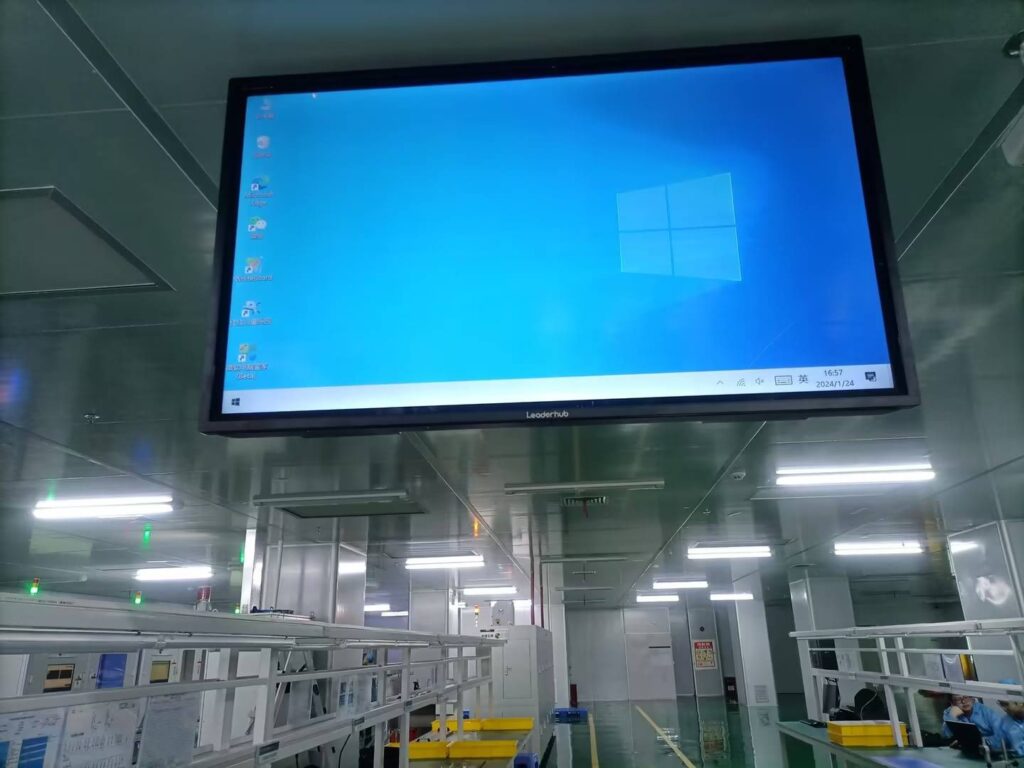
Ask for the factory’s business license (营业执照), the registered address, and photos or live video of SMT lines, aging rooms and packing areas. A genuine manufacturer will show you touch-frame calibration stations and burn-in racks where panels run for 24–72 hours before shipment. Cross-check the registered company name against export records and the name printed on certification documents.
2. Certifications That Match Your Destination Market
Interactive displays are regulated electrical products. The exact list depends on where you sell, but a serious supplier will already hold the core approvals:
- CE (EMC, LVD, RED) and RoHS for the European Union and UK (UKCA)
- FCC for the United States and IC for Canada
- SASO / SABER for Saudi Arabia, BIS for India, KC for South Korea
- ISO 9001 quality management and, ideally, ISO 14001
- Energy labels such as Energy Star or ErP where required
Request certificate numbers and verify them with the issuing laboratory. Expired or borrowed certificates are a common shortcut among low-tier suppliers.
3. Display and Touch Hardware Quality
Two 75-inch panels can look identical in a brochure and perform very differently in a bright classroom. Specify and confirm the following on the sample:
| Component | What to Ask For | Why It Matters |
|---|---|---|
| LCD Panel | Grade A, 4K UHD, 350–450 nits, 178° viewing angle, panel brand named | Grade B panels show dead pixels and uneven backlight within months |
| Glass | 4 mm tempered, anti-glare, Mohs 7 hardness, zero-bonding or optical bonding option | Reduces reflections, parallax and scratches in classroom use |
| Touch | 20–40 point infrared or capacitive, <8 ms response, palm rejection, dual-pen | Determines writing feel and multi-user collaboration |
| Mainboard | Android 13/14, 8 GB RAM / 128 GB storage or higher, optional OPS slot for Windows | Old Android 9/11 boards cannot run modern AI or conferencing apps |
| Audio & Camera | 2×15 W or better speakers, 8-array microphone, 4K/48 MP camera with auto-framing | Essential for hybrid meetings and remote teaching |
| Connectivity | HDMI 2.0 ×3, USB-C with 65–100 W PD, Wi-Fi 6, Bluetooth 5, Gigabit LAN | Future-proofs the installation for 5+ years |
4. Software, AI Features and Update Policy
Hardware is only half the product. Evaluate the whiteboard application, wireless screen-sharing (Miracast, AirPlay, Chromecast and proprietary dongles), split-screen, cloud storage integration and device management (MDM) for IT administrators. Increasingly, buyers also expect AI functions such as handwriting recognition, meeting transcription, real-time translation and automatic summaries. Ask how firmware updates are delivered (OTA or manual) and for how many years the supplier commits to security patches.
5. OEM / ODM Flexibility
Distributors building their own brand need more than a logo on the bezel. A capable supplier should offer custom boot animations, localized UI languages, pre-installed regional apps, bespoke packaging, colored housings and, for larger volumes, mechanical changes such as rotating stands or battery modules. Clarify tooling costs, MOQ per customization level and who owns the final design files.
6. Quality Control Process
Request the written QC flow: incoming material inspection (IQC), in-process checks (IPQC), aging test duration, touch calibration, cosmetic inspection and outgoing quality control (OQC) sampling standard (usually AQL 1.0 or 1.5). Reliable factories allow you to hire a third-party inspector such as SGS, TÜV or Intertek before shipment.
7. Warranty and After-Sales Support
A standard offer is 2–3 years for the panel and 1 year for accessories, with spare parts (mainboards, touch frames, power boards) shipped free during the warranty period. Ask about remote diagnostics, English-language technical documentation, training videos for installers and the average response time to support tickets in your time zone.
8. Transparent Pricing and Commercial Terms
Compare quotations line by line: panel grade, glass type, RAM/storage, camera inclusion, wall mount or mobile stand, packaging and Incoterms. A price that is 20–30% below the market average almost always hides a downgraded panel or a refurbished mainboard. Favorable terms include 30% deposit / 70% before shipment, with L/C options for larger orders.
Reference Pricing: What Factory-Direct Smart Boards Cost
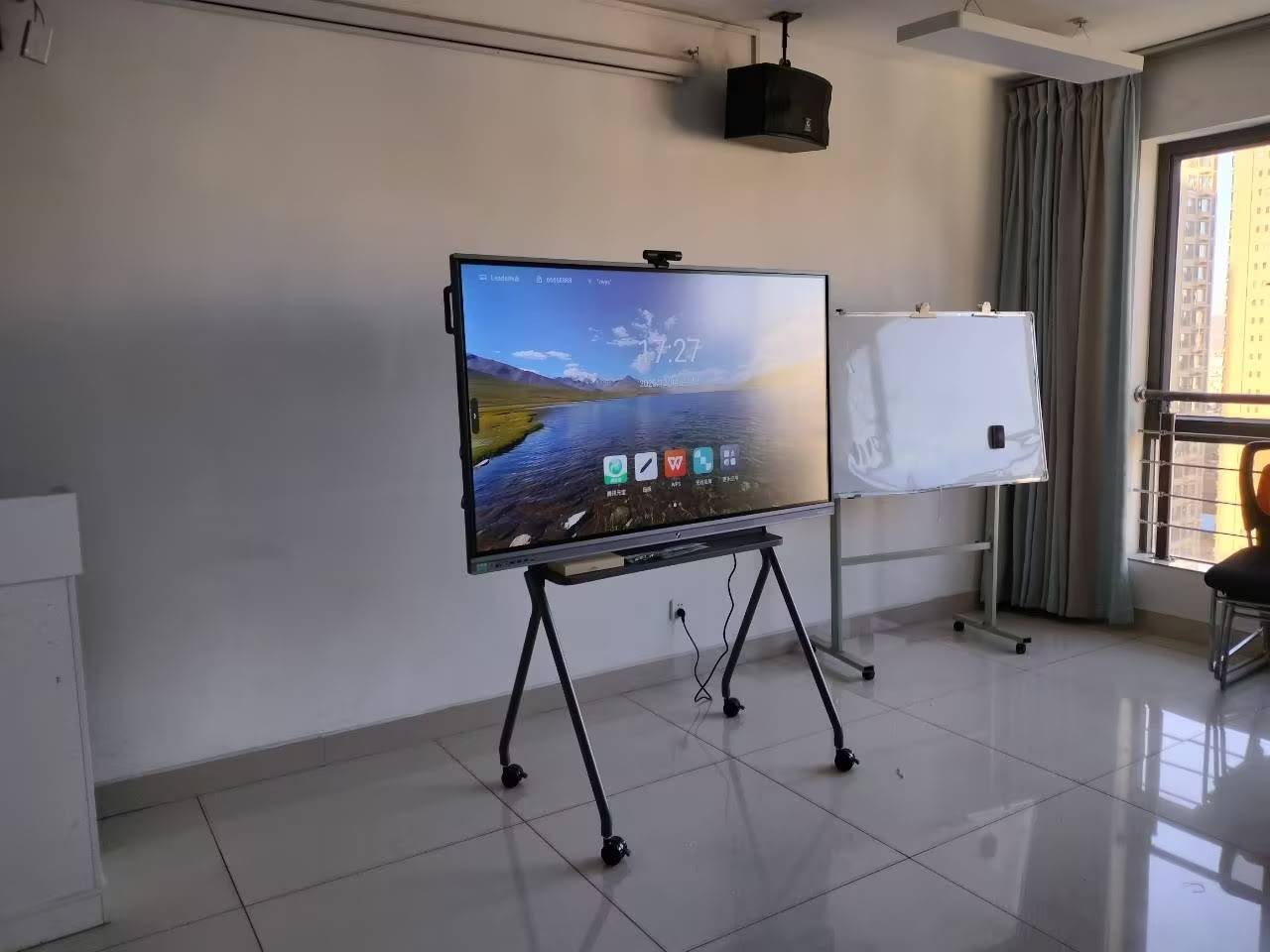
Pricing from a factory-direct source is far more transparent than through layered distribution. The table below shows typical unit prices for mainstream 4K interactive models currently sold direct from Shenzhen, which you can use as a benchmark when evaluating quotations from any supplier.
| Model | Size | Positioning | Reference Price |
|---|---|---|---|
| L65ZM Interactive Whiteboard | 65″ 4K | Entry classroom / small meeting room | $1,099 |
| L65HM Smart Whiteboard | 65″ 4K | AI conference hub with rotating design | $1,299 |
| L75HM Smart Whiteboard | 75″ 4K | Standard classroom / mid-size boardroom | $1,599 |
| L86ZM Interactive Whiteboard | 86″ 4K | Large lecture hall / training center | $1,699 |
| U55Pro Mobile Interactive Flat Panel | 55″ 4K | Battery-powered, movable between rooms | $2,499 |
| L110H Interactive Flat Panel | 110″ 4K | Auditorium / executive briefing center | $7,999 |
Buyer tip: Volume orders of 50+ units normally qualify for tiered discounts of 8–15%, and container-level orders can include free custom packaging and localized firmware. Always confirm whether the quoted price includes the wall mount, stylus pens, remote control and camera module.
Step-by-Step: How to Verify a Chinese Smart Board Supplier
- Shortlist by product fit. Browse the supplier’s complete smart whiteboard catalog and confirm the sizes and feature tiers match your target customers before discussing price.
- Hold a live video audit. Ask the sales engineer to walk through the production floor on camera, showing current work orders and the aging room.
- Order one or two samples. Test the panel in your real environment: a sunlit classroom, a video call with your own conferencing software, a week of daily writing.
- Check references. Request contacts of existing distributors in your region or a neighboring market and ask about defect rates and support responsiveness.
- Visit in person or at a trade show. Guangdong-based manufacturers exhibit at the Canton Fair, Hong Kong Electronics Fair, ISE in Barcelona, InfoComm and GESS Dubai — ideal venues to compare several factories in one trip. The AV Industry Standards and Resources from AVIXA are also a useful benchmark when assessing display performance claims.
- Agree on a QC and acceptance plan. Define the AQL level, third-party inspection rights and the remedy if a shipment fails inspection.
- Start with a pilot order. A single pallet of 10–20 units lets you validate logistics, packaging durability and after-sales processes before scaling.
Red Flags That Signal an Unreliable Supplier
- Refusal to name the LCD panel brand or grade in writing
- Certificates issued to a different company name than the one on your contract
- Prices quoted without specifying RAM, storage, Android version or glass type
- No physical address, or an address that resolves to an office tower rather than a factory
- Pressure to pay 100% upfront or to a personal bank account
- Generic product photos that also appear on dozens of other listings
- Inability to provide a firmware changelog or an update roadmap
Matching the Supplier to Your Target Segment
Education Buyers
Schools prioritize durability, anti-glare glass, low blue-light modes, classroom management software and multi-user writing. Procurement teams in Europe and North America should also check compliance with child safety and data-privacy expectations; the guidance in Choosing an Interactive Display for K-12 offers a useful district-level checklist.
Corporate and Government Buyers
Boardrooms demand strong conferencing credentials: certified compatibility with Zoom, Teams and Google Meet, high-quality cameras with auto-framing, wireless BYOD sharing and enterprise MDM. A supplier that also produces mini PCs and OPS modules can deliver a complete Windows-based meeting room from one source.
Distributors and System Integrators
Resellers need a supplier with a full product ladder — from 55″ mobile units to 110″ flagships, plus portable rotating smart screens for creative and hospitality use — so they can serve every budget without managing multiple vendors.
An Example of a Verified Shenzhen Manufacturer
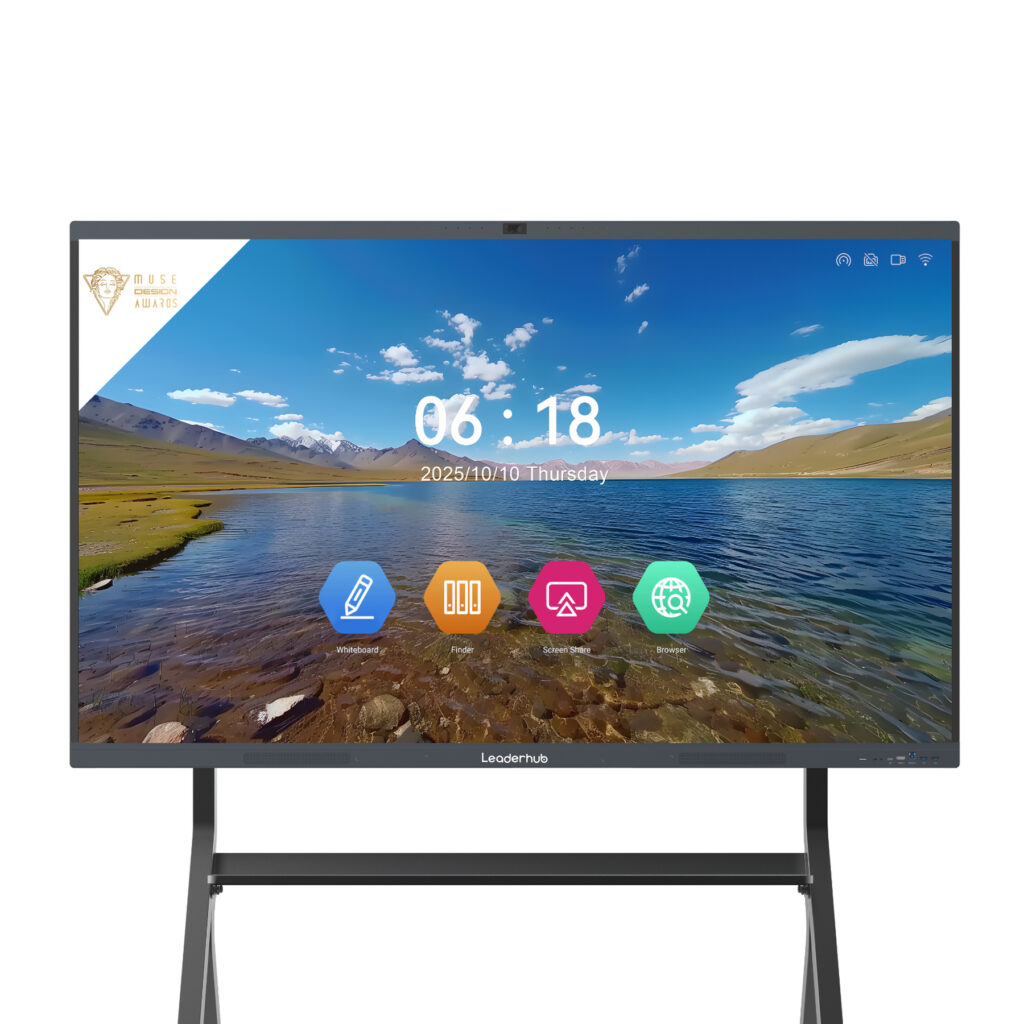
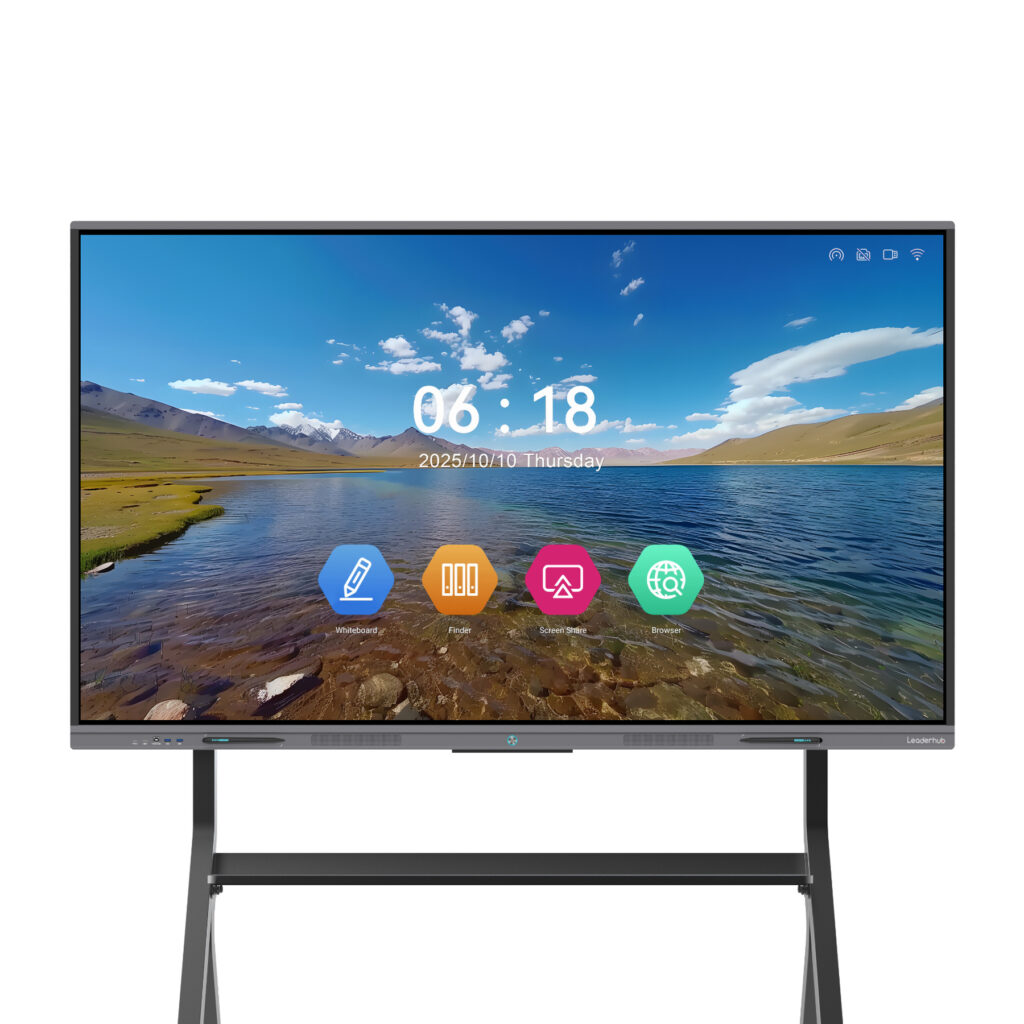
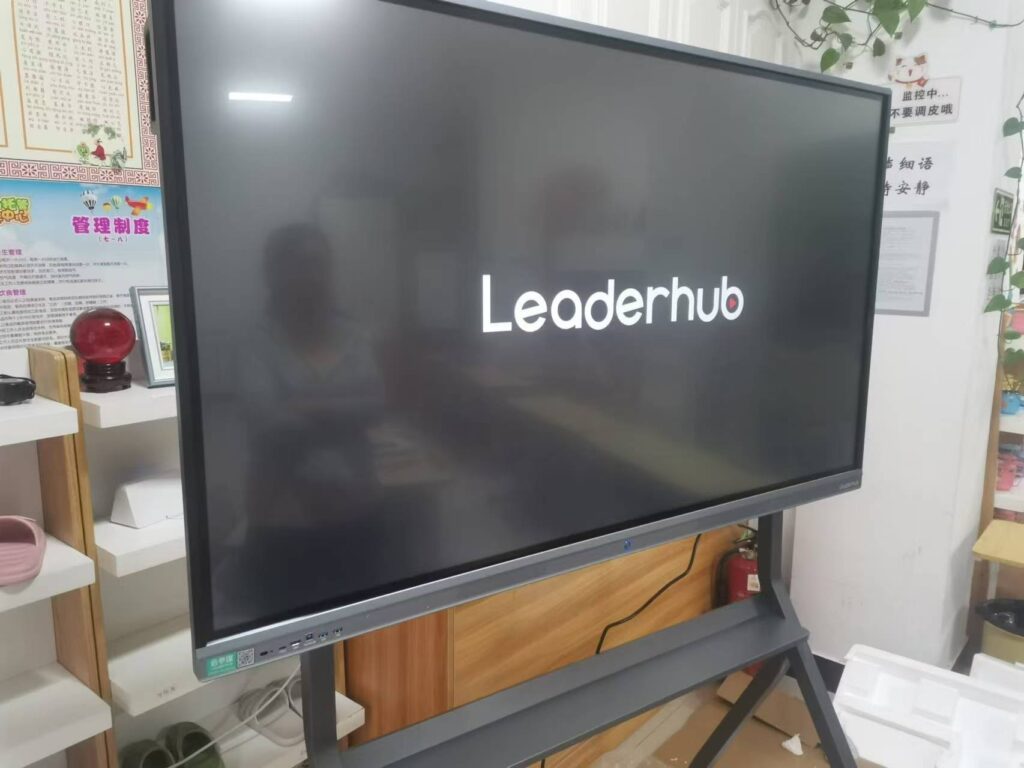
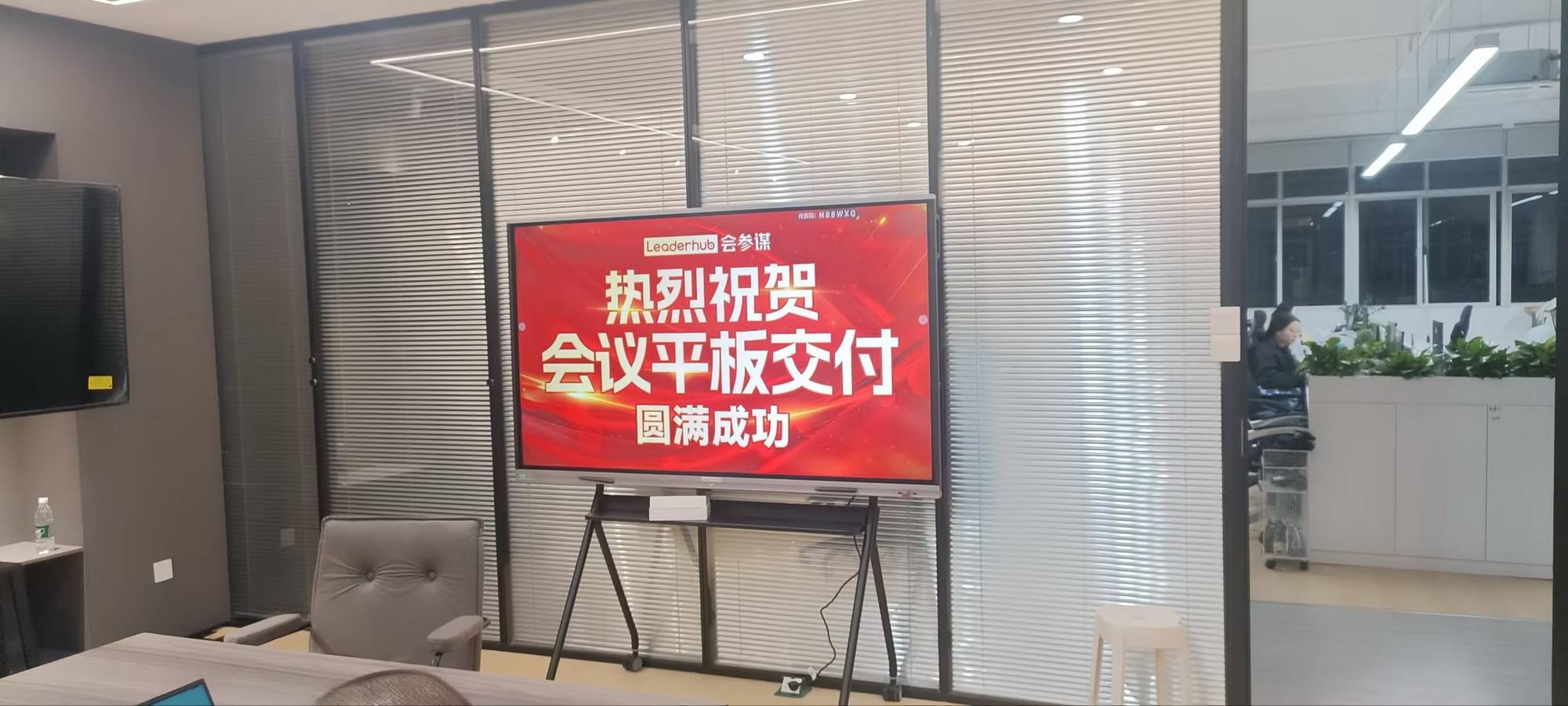
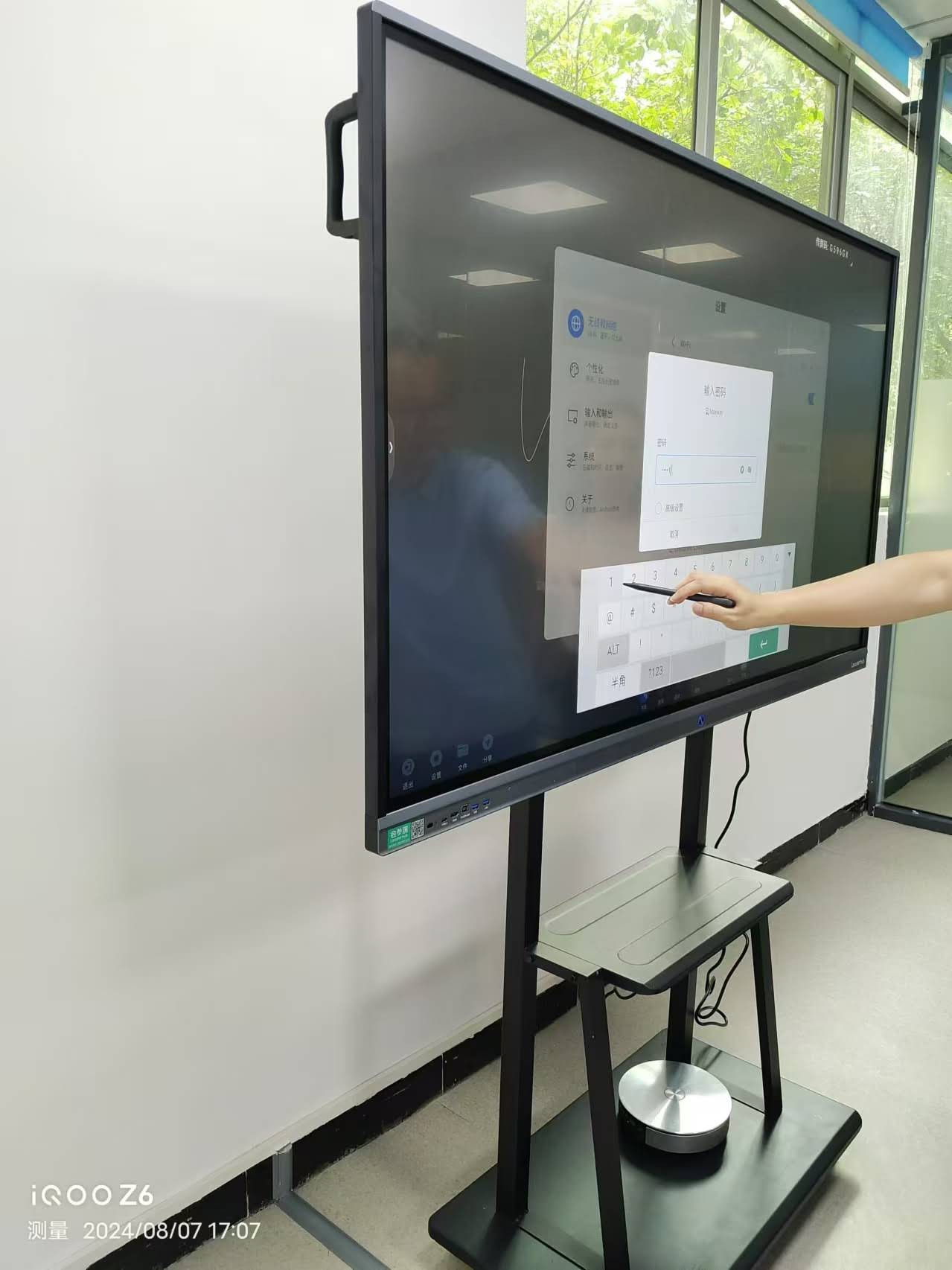
To illustrate what the criteria above look like in practice: Leaderhub is a Shenzhen-based technology company with 16 years of experience in the interactive panel industry, producing smart whiteboards, interactive flat panels, mini PCs and portable smart screens that are delivered to 82 countries. The company ranks NO.1 in its JD.com subcategory for interactive panels, has received the Annual Most Invested-Value Brand and Shenzhen Famous Brand awards, and holds partnerships across finance, internet, education, training and government sectors — the kind of verifiable track record that distinguishes a long-term manufacturing partner from a short-lived trading operation.
Frequently Asked Questions
What is the typical MOQ when buying smart boards from a Chinese manufacturer?
For standard models with logo customization, most factories accept 5–10 units for a trial order and 20–50 units for regular OEM orders. Deep customization such as new housing molds generally requires 200–500 units.
How long does production and shipping take?
Standard models usually ship within 7–15 days of deposit; customized orders take 20–35 days. Sea freight to Europe or the US East Coast takes roughly 30–40 days, while the Middle East and Southeast Asia are 12–20 days.
Can I get a smart board with my own brand and software?
Yes. Reputable manufacturers offer white-label hardware with custom boot logos, UI themes, pre-installed apps and even dedicated firmware builds for larger volumes.
What warranty should I expect?
Expect 2–3 years on the panel and 12 months on accessories, with spare parts supplied free during the warranty period and remote technical support in English.
Is it safer to buy through a trading company?
Not necessarily. Trading companies can simplify small orders, but they add margin and lack control over production and firmware. For repeat business, working directly with a verified manufacturer typically delivers better consistency and support.
Final Thoughts
Choosing a smart board manufacturing company in China is ultimately a question of verification rather than luck. Confirm that your supplier truly manufactures, that its certifications match your market, that panel and touch specifications are documented in writing, and that software updates and after-sales support are part of the contract. Start with samples, validate with a pilot order, and scale with a partner that has already proven itself across multiple regions. If you would like a quotation, sample unit or OEM consultation for your market, you can contact the Leaderhub team directly to discuss your requirements.