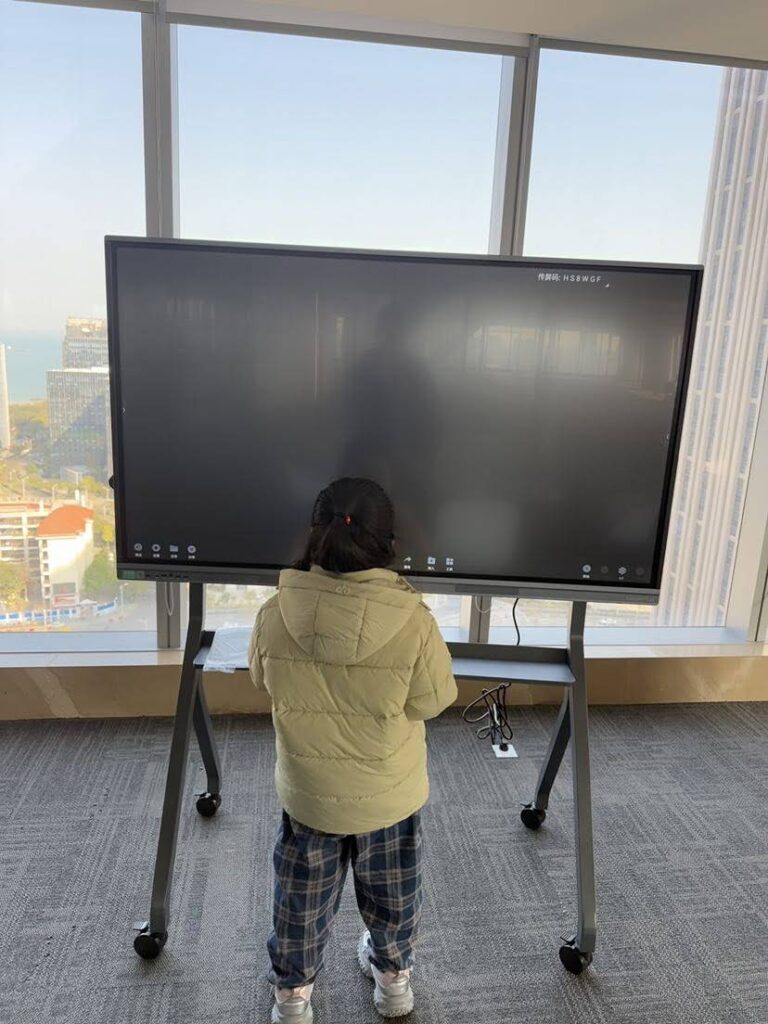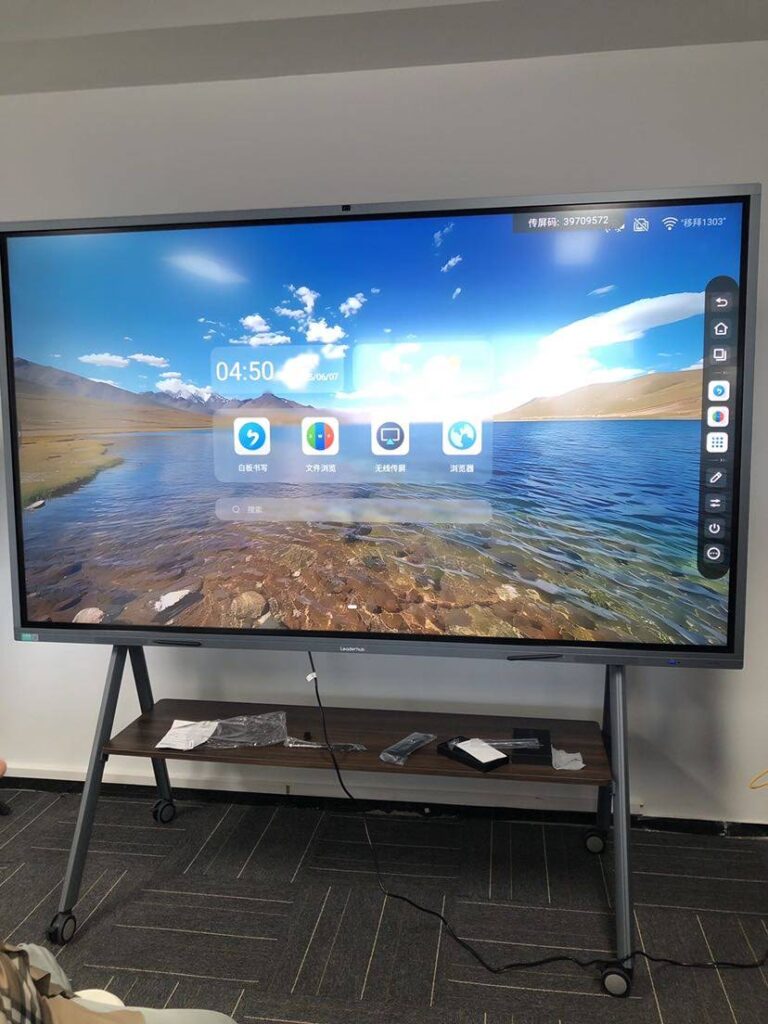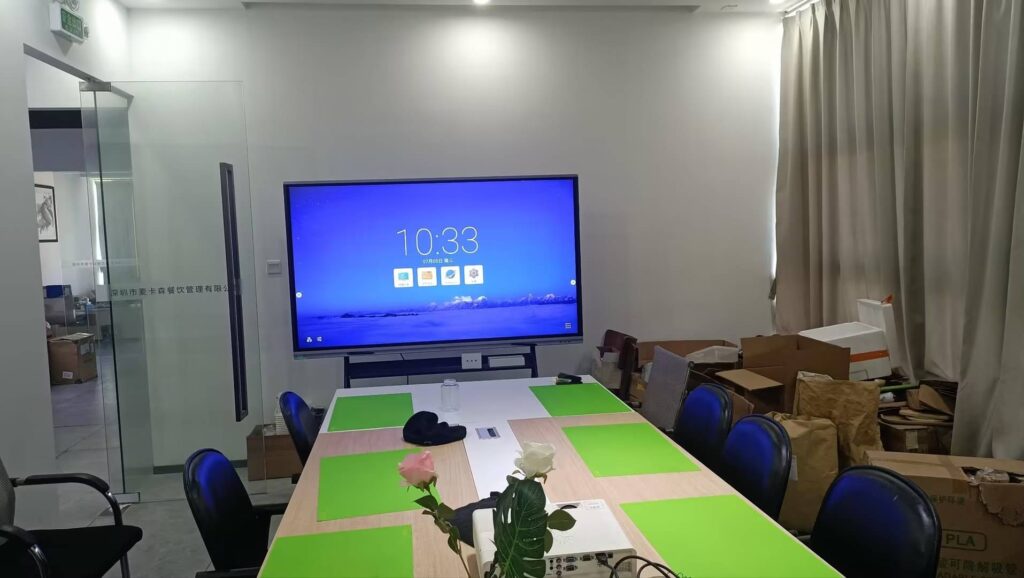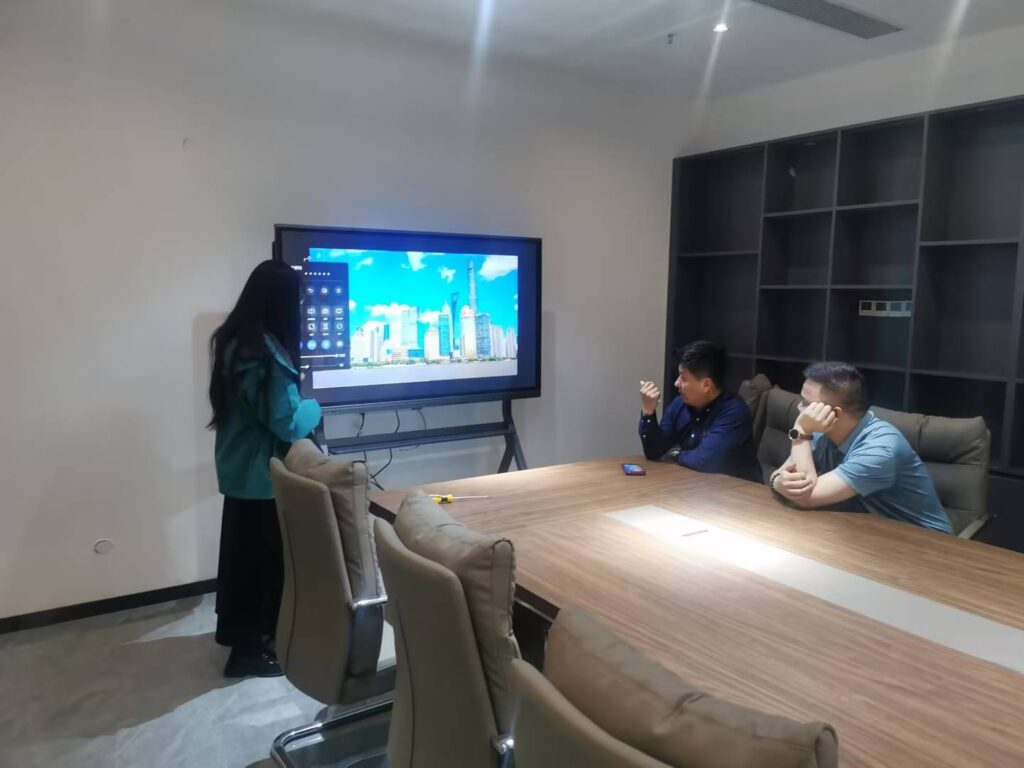
Walk into almost any modern classroom or corporate boardroom today, and you’ll likely see a large touch-enabled display at the front of the room. These interactive whiteboards, often called smart boards, have become so common that it’s easy to forget they weren’t always part of the furniture. So when did this technology actually appear, and how did it evolve into the AI-powered displays we use now?
This article traces the complete timeline of interactive whiteboard development, from the earliest patents in the 1990s to today’s 4K interactive flat panels with built-in AI capabilities. Whether you’re a school administrator researching classroom technology or a business owner exploring collaboration tools, understanding this history helps explain why smart boards look and function the way they do today.
The Origins: Late 1980s to Early 1990s
The concept of an interactive whiteboard didn’t emerge overnight. It grew out of two separate technology trends converging: computer projection systems and touch-sensitive surfaces.
In 1991, a Canadian company called SMART Technologies (founded by David Martin and Nancy Knowlton) introduced what is widely credited as the world’s first interactive whiteboard. Their invention combined a projector, a computer, and a touch-sensitive board, allowing users to control a computer simply by touching the projected image on the wall-mounted surface. This was revolutionary at the time because it eliminated the need for a mouse or keyboard to interact with digital content in a group setting.
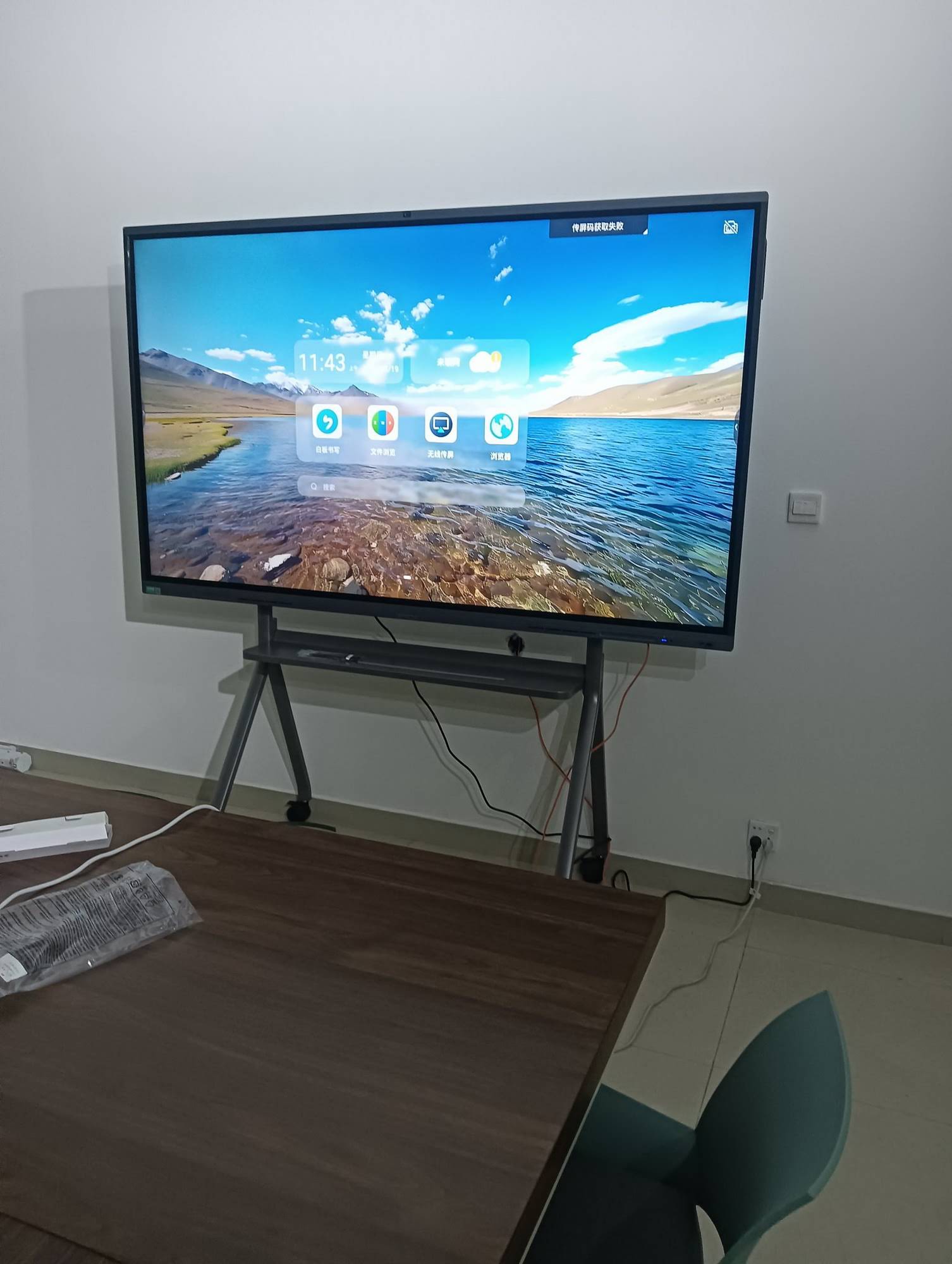
Prior to this, classrooms and offices relied entirely on chalkboards and later, dry-erase whiteboards. The idea of touching a screen to control software was still largely experimental, mostly confined to research labs and specialized industrial applications.
The 1990s: Early Commercial Adoption
Throughout the 1990s, interactive whiteboards remained relatively expensive and niche. They were primarily adopted by:
- Corporate training departments needing better presentation tools
- Government and military organizations for briefing rooms
- A small number of well-funded schools and universities
During this period, other companies began entering the market. Promethean, a UK-based company, launched its ActivBoard line in the late 1990s, introducing competition into what had previously been a single-player market. This competition would prove important, as it drove down costs and accelerated feature development over the following decade.
| Decade | Key Development | Typical Use Case |
|---|---|---|
| 1991 | First interactive whiteboard by SMART Technologies | Corporate boardrooms |
| Late 1990s | Promethean enters the market | Early school adoption |
| 2000s | Government-funded school rollouts | K-12 classrooms |
| 2010s | Shift to flat-panel LED/LCD touch displays | Schools and offices worldwide |
| 2020s | AI-integrated interactive flat panels | Hybrid classrooms and meeting rooms |
The 2000s: Mass Adoption in Education
The 2000s marked the true turning point for interactive whiteboards, particularly in education. In the United Kingdom, a nationwide government initiative provided funding for schools to install interactive whiteboards in classrooms. By the mid-2000s, it was estimated that the majority of UK primary schools had at least one interactive whiteboard installed.
Similar trends followed in the United States, Australia, and parts of Europe, though adoption rates varied significantly based on school funding and district priorities. This era’s whiteboards were still largely projector-based systems¡ªa projector cast the image onto a special resistive or infrared touch surface, and a connected computer ran the software.
Common limitations of this generation included:
- Bulb replacement costs and projector maintenance
- Shadow interference when users stood between the projector and the board
- Calibration issues affecting touch accuracy
- Lower resolution compared to modern displays
The 2010s: The Shift to Flat-Panel Displays
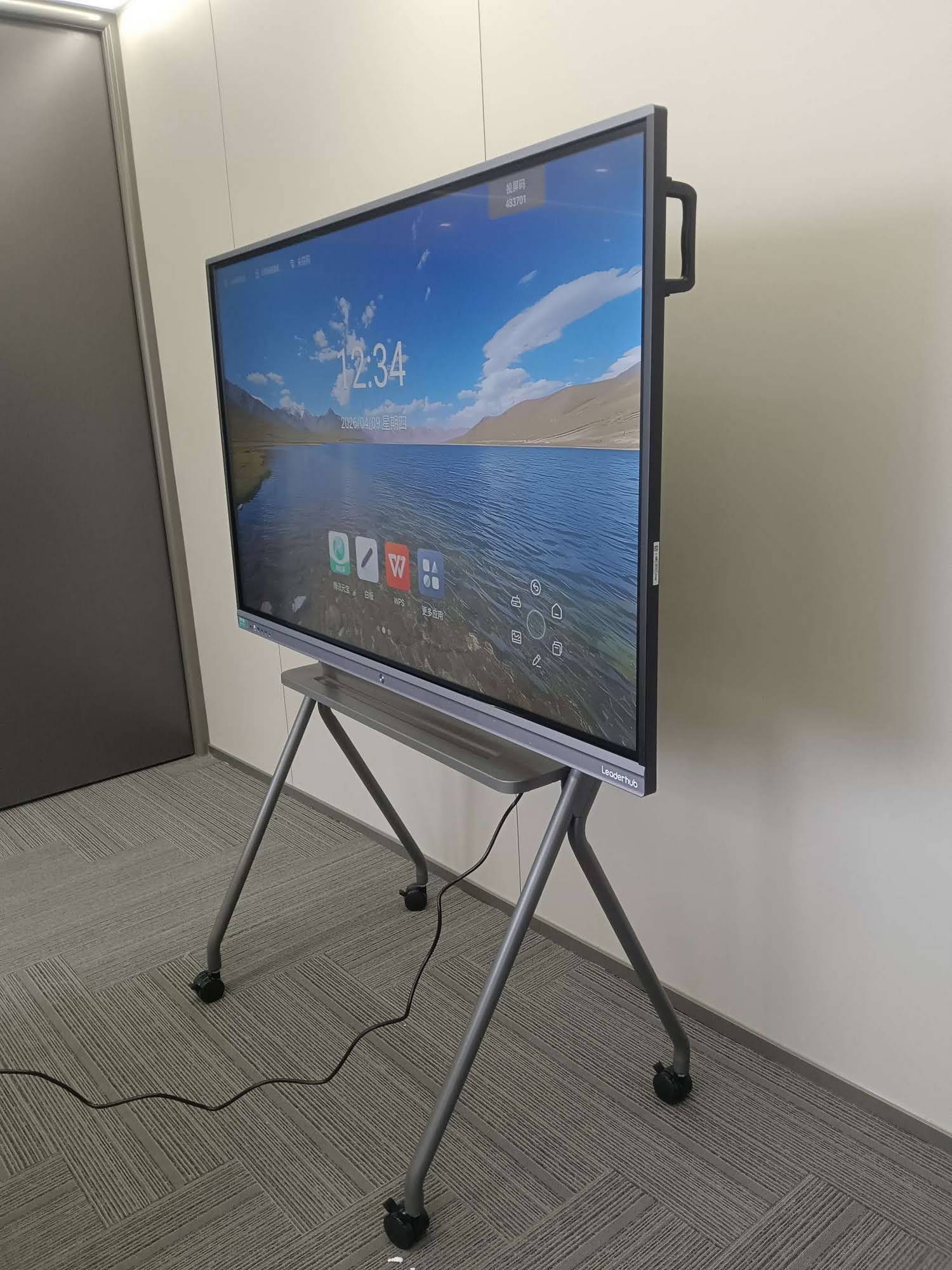
Around 2012 to 2015, the industry underwent a significant transformation. Projector-based interactive whiteboards began to be replaced by interactive flat panels¡ªessentially large LED or LCD touchscreens similar to giant tablets. This shift addressed nearly every complaint users had with the older technology.
Why Flat Panels Took Over
Interactive flat panels offered several clear advantages:
- No bulb replacement ¨C LED panels don’t require the maintenance projectors demanded
- Sharper image quality ¨C Full HD and later 4K resolution became standard
- No shadow interruption ¨C Since there’s no projected light source, presenters can stand anywhere
- Multi-touch capability ¨C Many panels support 10-20 simultaneous touch points, enabling group collaboration
- Built-in computing ¨C Android-based operating systems eliminated the need for a separate PC in many cases
This period also saw manufacturers based in Asia, including companies in China’s Pearl River Delta region, become significant global suppliers of touch panel technology and display hardware, helping reduce costs and increase accessibility for schools and businesses worldwide.
The 2020s: AI Integration and Smart Collaboration
The most recent chapter in smart board history has been shaped by two major forces: the global shift toward hybrid work and learning (accelerated by the pandemic), and the rapid advancement of artificial intelligence.
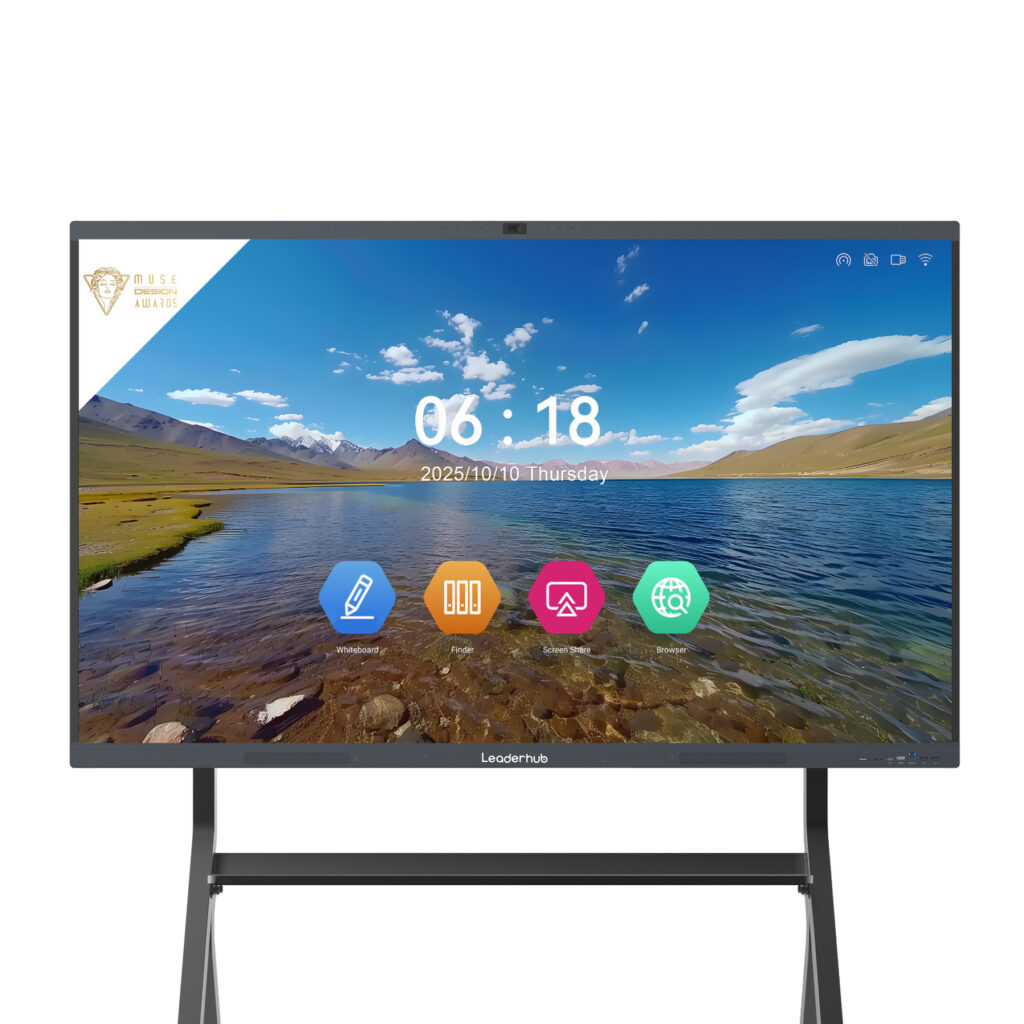
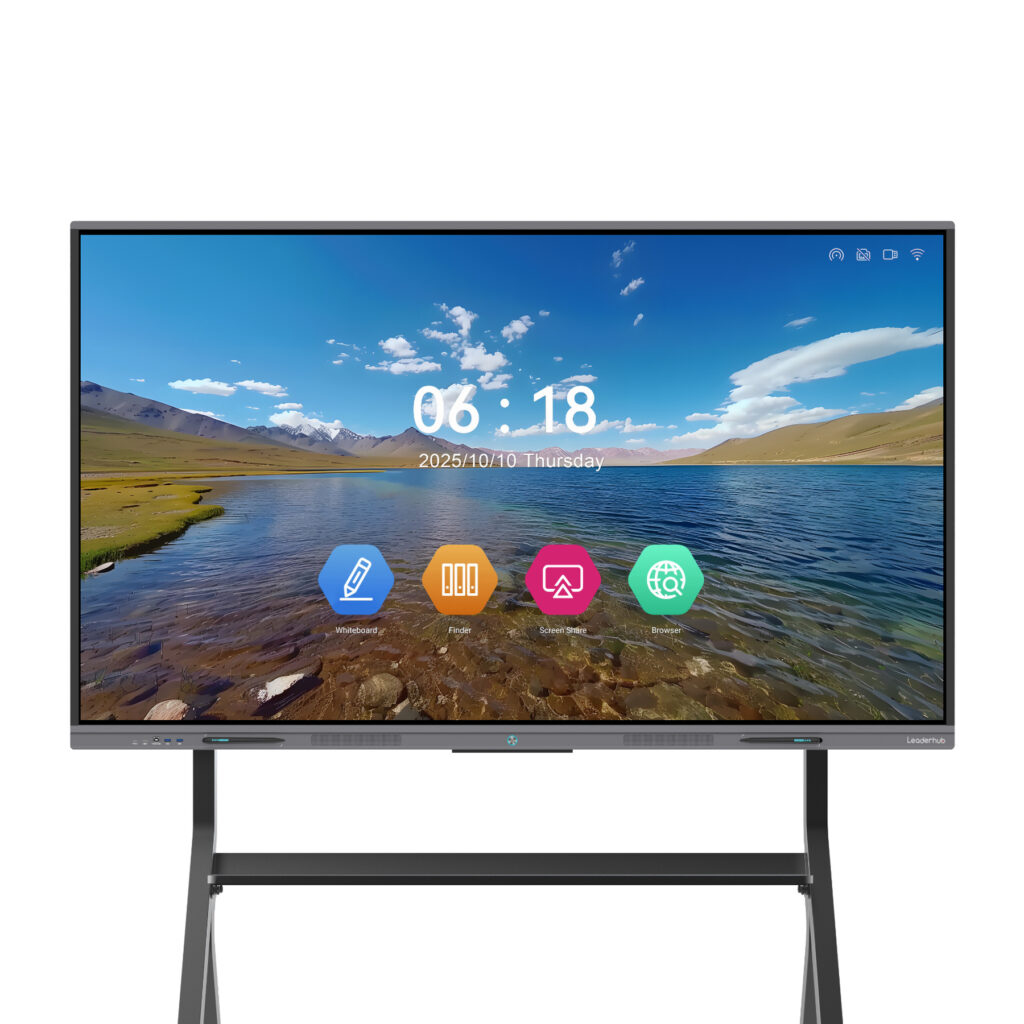
Today’s interactive flat panels typically include:
- Built-in video conferencing cameras and microphones for hybrid meetings
- Wireless screen mirroring from laptops and mobile devices
- Cloud-based whiteboard software for remote collaboration
- AI-powered handwriting recognition and conversion to text
- Voice-to-text transcription for meeting notes
- Integration with popular platforms like Zoom, Microsoft Teams, and Google Meet
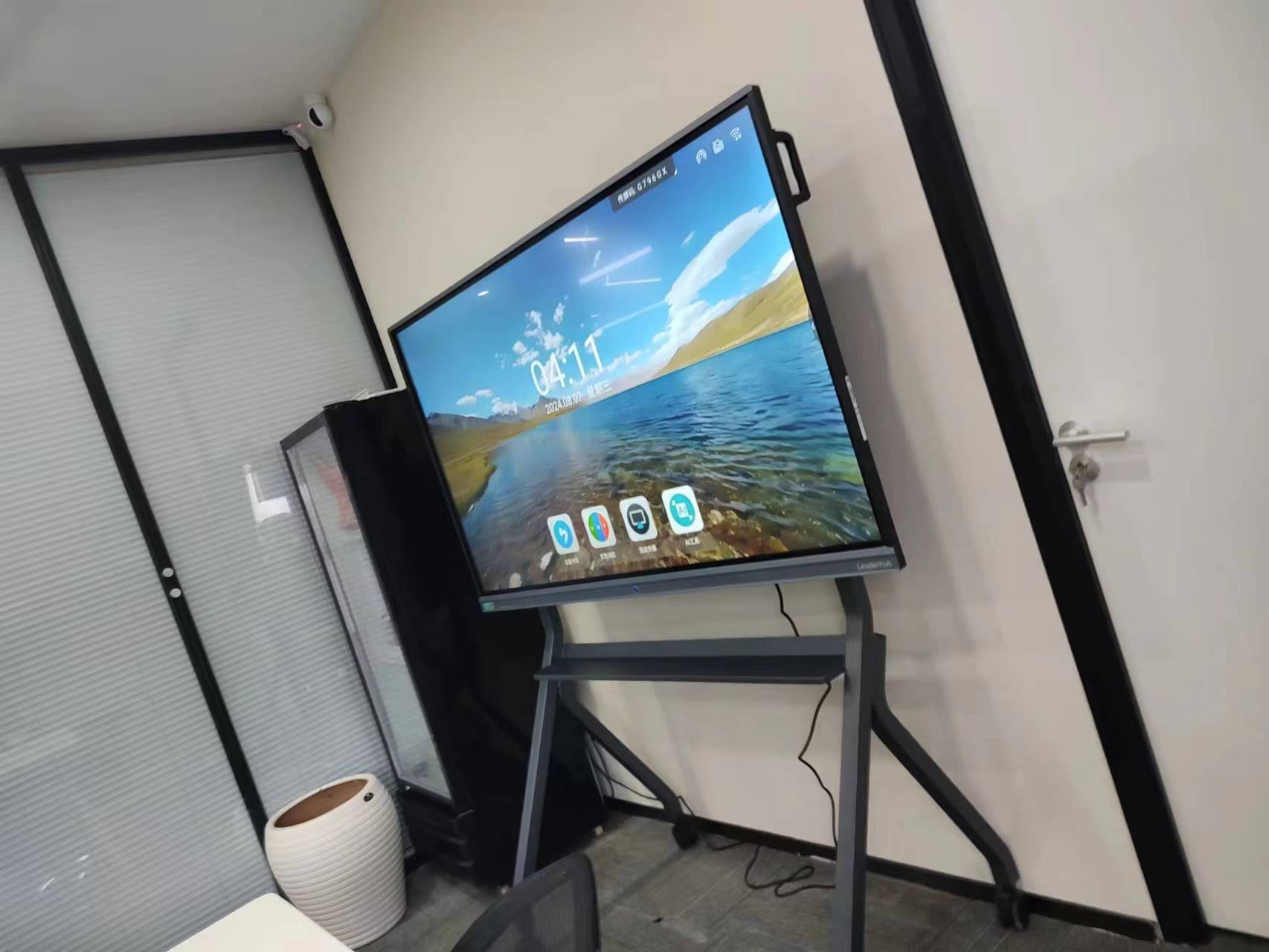
Industry data from sources such as Futuresource Consulting has consistently shown steady year-over-year growth in interactive flat panel shipments globally, with education remaining the largest sector, followed by corporate and government use. This reflects a broader recognition that visual collaboration tools improve both learning retention and meeting productivity.
How Smart Boards Are Used Today
Modern smart boards serve far more purposes than the original whiteboards ever could. Their applications now span multiple sectors:
In Education
Teachers use interactive flat panels to display multimedia lessons, run interactive quizzes, annotate documents in real time, and connect with remote students during hybrid learning sessions. Studies on classroom technology have suggested that visual and interactive teaching methods can improve student engagement compared to traditional lecture formats.
In Business
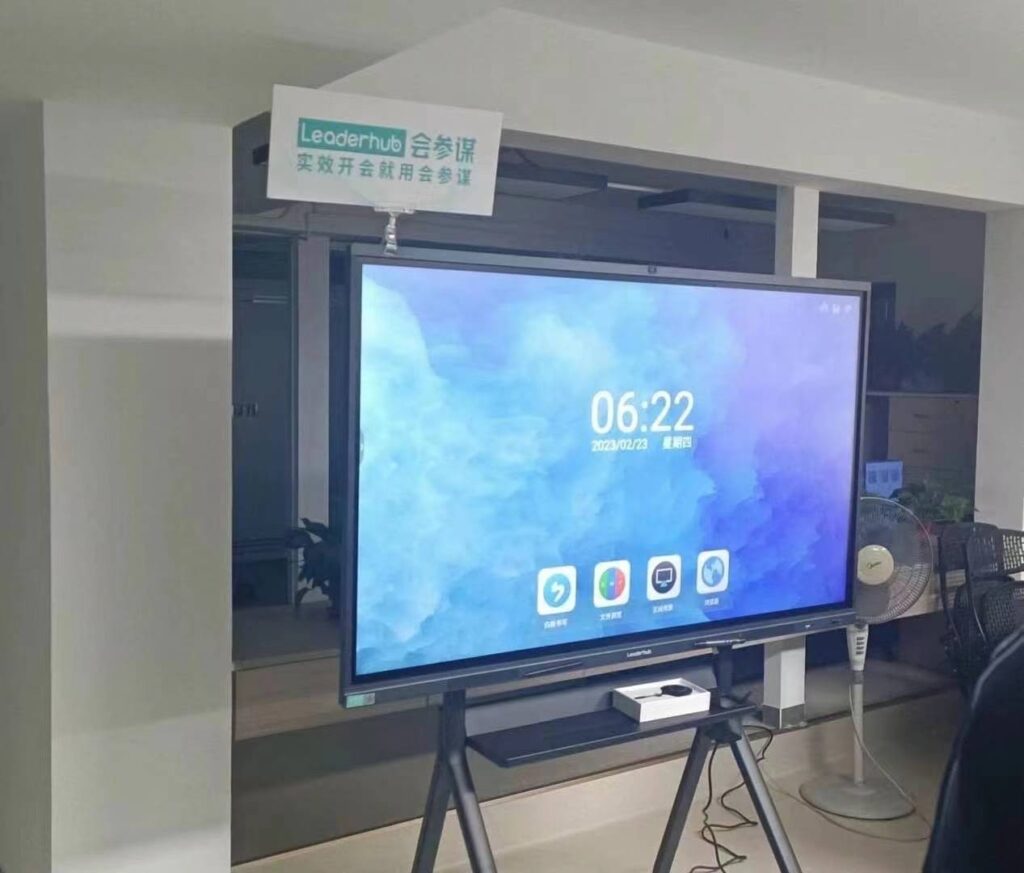
Conference rooms increasingly rely on smart boards for brainstorming sessions, client presentations, and hybrid meetings connecting in-office and remote team members. The ability to save annotated whiteboard sessions and share them instantly has become a standard expectation in modern workplaces.
In Training Centers
Corporate training departments use interactive displays to deliver more engaging onboarding materials, technical training, and certification programs, often combining video content with live annotation.
Choosing an Interactive Whiteboard: What Matters Most
For organizations considering an upgrade or first-time purchase, a few practical factors matter more than flashy marketing claims:
| Factor | Why It Matters |
|---|---|
| Screen Size | Should match room size; 65″-75″ for small rooms, 86″+ for large classrooms or auditoriums |
| Touch Accuracy | Infrared or capacitive touch technology affects writing precision |
| Operating System | Android-based systems offer app flexibility; Windows-compatible models support existing software |
| Durability | Anti-glare, scratch-resistant glass matters for long-term daily use |
| Software Ecosystem | Look for annotation tools, cloud sync, and cross-device compatibility |
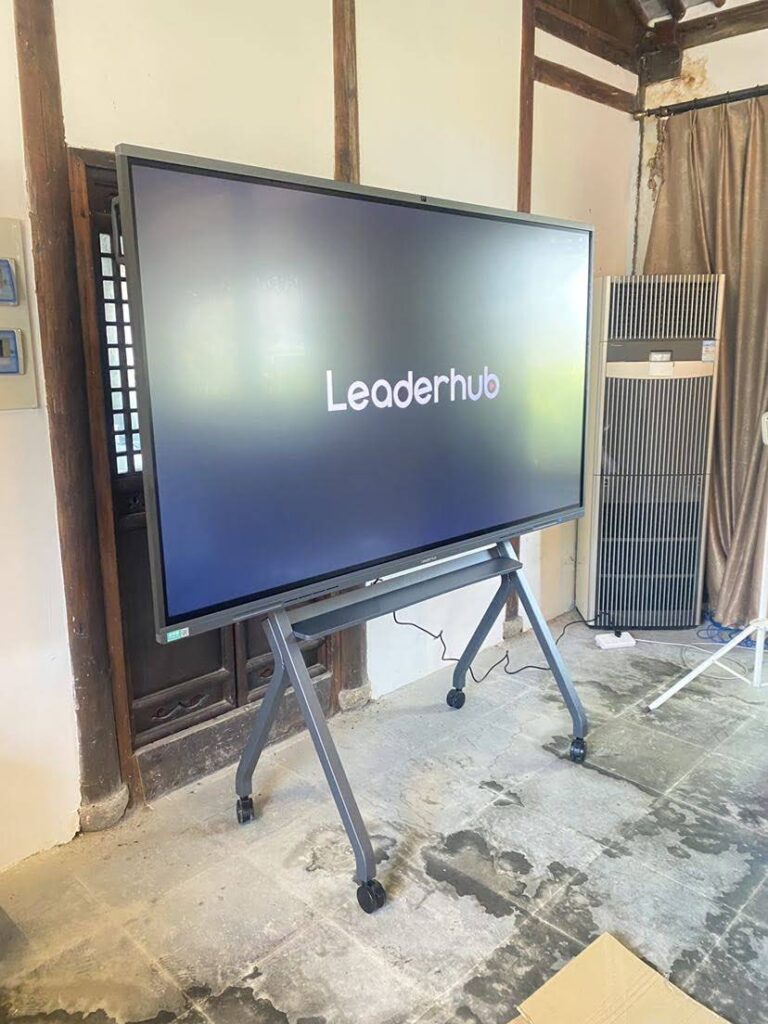
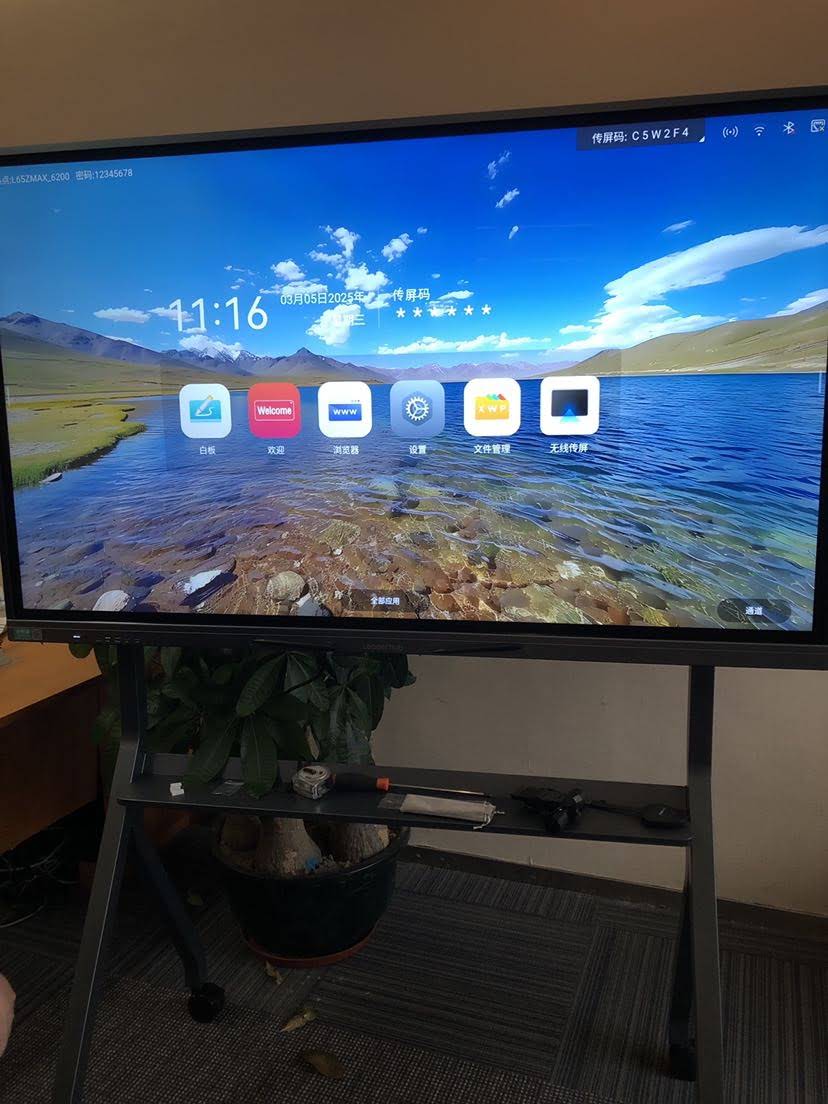
Manufacturers with long-term industry experience often provide better long-term reliability and support. For example, LeaderHub, a Shenzhen-based interactive display manufacturer with more than 16 years of industry experience, has developed products used in over 82 countries, ranging from smart whiteboards and interactive flat panels to portable smart screens and mini PCs, reflecting how far the category has evolved since its 1991 origins.
Common Questions About Smart Board History
Who invented the first interactive whiteboard?
SMART Technologies, founded in Calgary, Canada, is credited with creating the first commercially successful interactive whiteboard in 1991.
When did schools start using interactive whiteboards widely?
Mass adoption in education primarily occurred during the 2000s, particularly following government-funded technology initiatives in countries like the United Kingdom.
What replaced projector-based whiteboards?
Interactive flat panels, using LED/LCD touchscreen technology similar to large tablets, began replacing projector-based systems around 2012-2015 and remain the dominant format today.
Are smart boards still evolving?
Yes. Current development focuses heavily on AI integration, including handwriting-to-text conversion, automated meeting transcription, and smarter video conferencing features built directly into the panel’s operating system.
Final Thoughts
From a single Canadian invention in 1991 to today’s globally distributed, AI-enhanced interactive flat panels, smart board technology has undergone more than three decades of continuous refinement. What began as a niche corporate tool became a classroom staple by the 2000s, transformed into sleek touchscreen displays in the 2010s, and is now becoming an intelligent collaboration hub in the 2020s.
As hybrid work and digital learning continue shaping how people communicate, the interactive whiteboard’s evolution shows no signs of slowing down. Understanding this history not only satisfies curiosity but also helps buyers make more informed decisions when selecting technology that will serve their classrooms or meeting rooms for years to come.