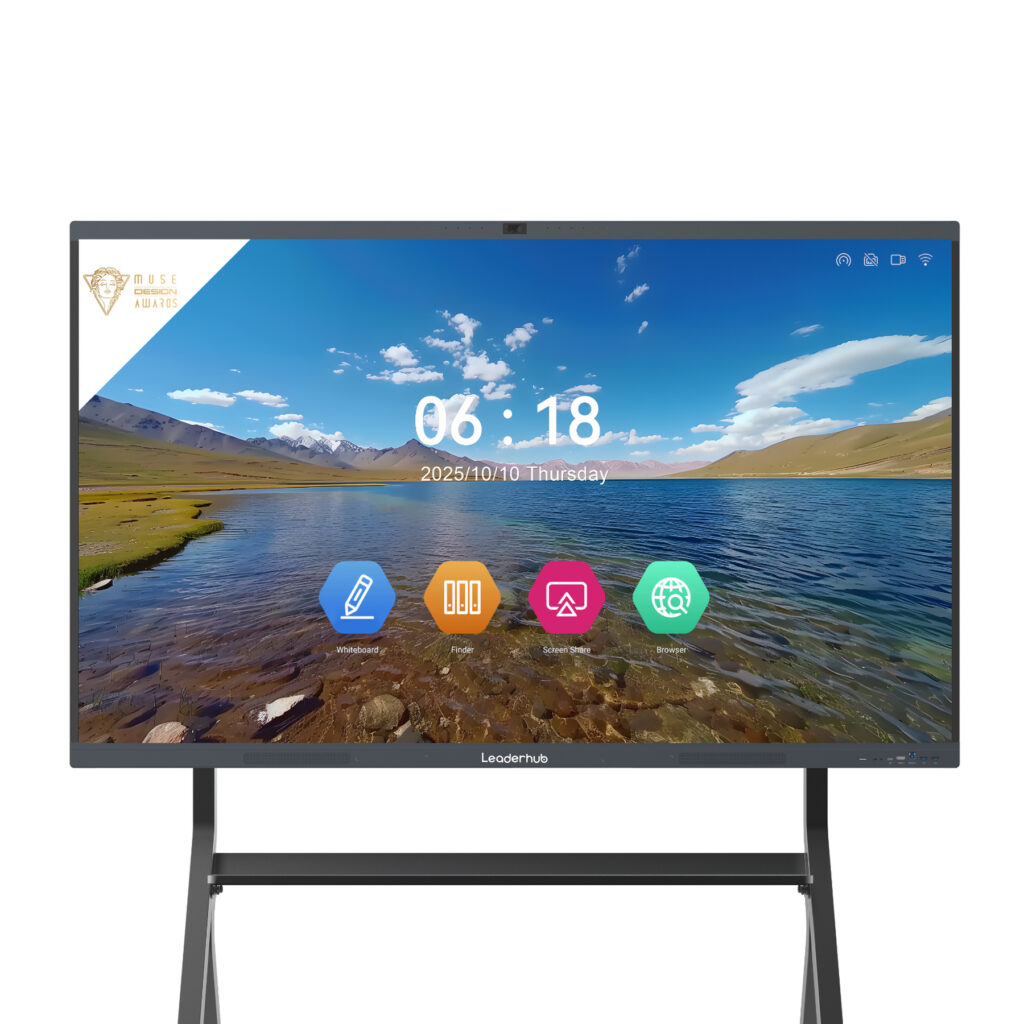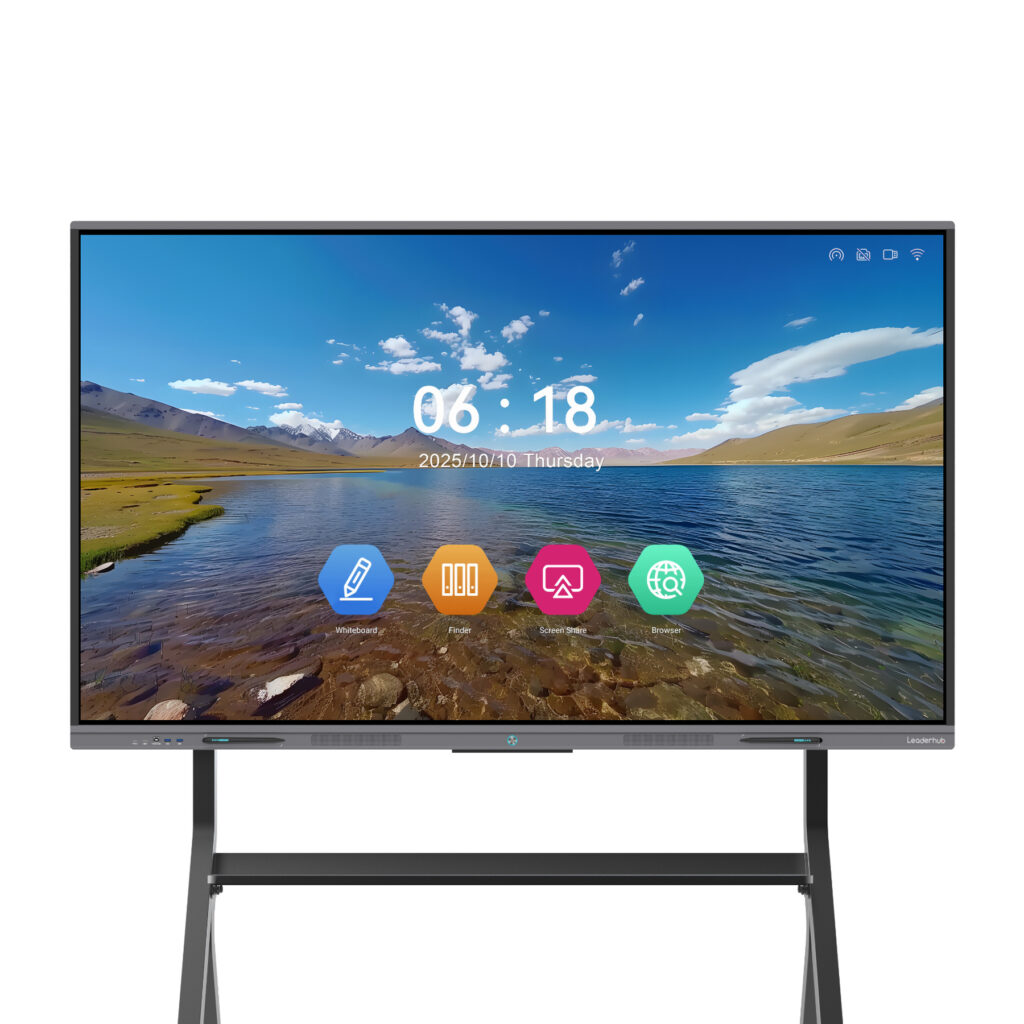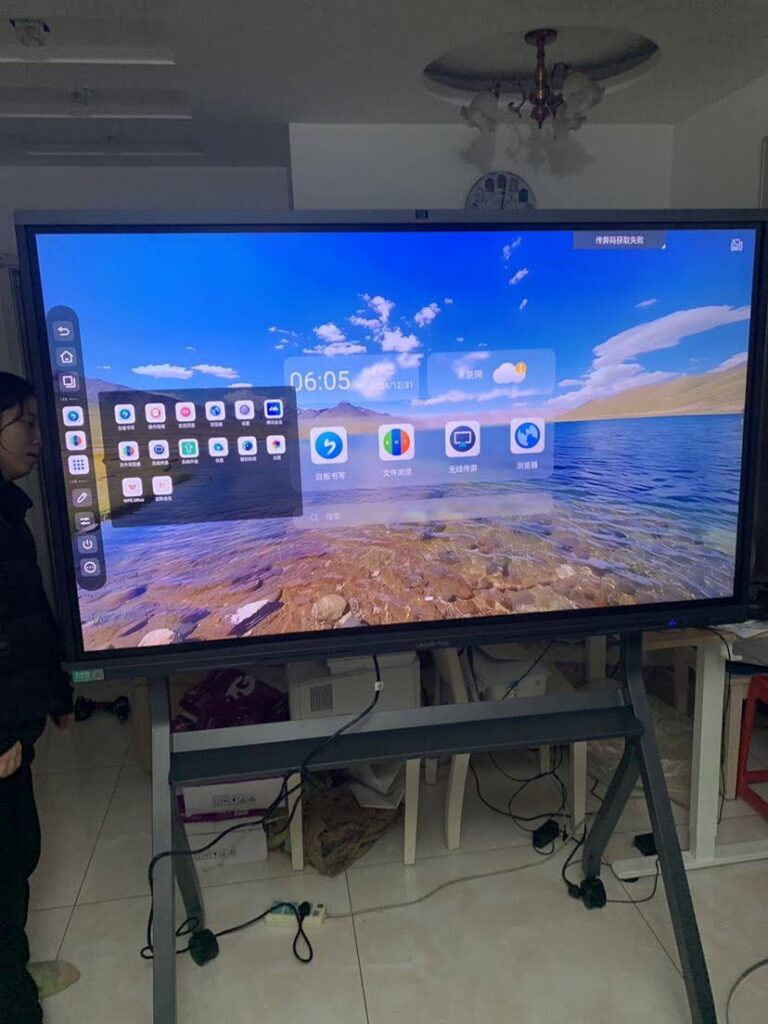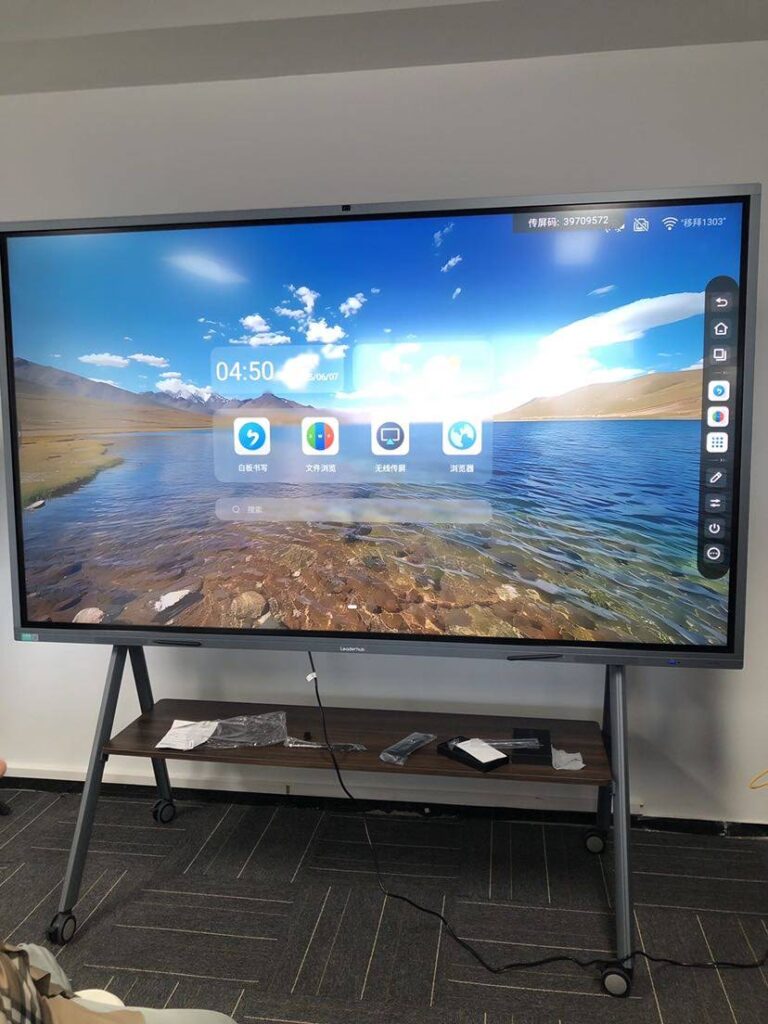
Importing smart boards looks simple on paper: find a factory, compare quotes, place an order. In practice, interactive flat panels are high-value, fragile, regulation-heavy electronics, and a single oversight can wipe out the margin on an entire container. A structured smart board procurement risk assessment for importers is the difference between a profitable product line and a warehouse full of returns. This guide walks through the risks that matter most, how to score them, and the practical checks that protect your business before, during, and after the purchase order.
Why Smart Board Imports Carry Higher Risk Than Typical Electronics
Unlike small consumer gadgets, a 65-inch to 110-inch interactive display combines a large LCD panel, a touch frame, embedded Android or Windows computing, cameras, microphones, and speakers in one unit. Each component introduces its own failure mode, certification requirement, and logistics challenge. Buyers in education and corporate markets also expect long service life, consistent firmware, and responsive after-sales support, which raises the bar for supplier reliability.
Public-sector purchasers are increasingly cautious as well. The UNESCO Technology in Education Report emphasizes that classroom technology should be evaluated on evidence of value and appropriateness, not just price, and the OECD Digital Education Outlook highlights how procurement decisions shape long-term digital infrastructure. Importers who sell into schools and institutions inherit these expectations, so risk assessment must cover the whole lifecycle of the product, not only the landed cost.
The Seven Core Risk Categories for Smart Board Importers
A useful risk framework groups threats into categories that can be scored independently. The table below summarizes the seven categories most importers encounter, along with typical triggers and the potential financial impact.
| Risk Category | Typical Triggers | Potential Impact |
|---|---|---|
| Supplier Risk | Trading company posing as a factory, short operating history, no export track record | Delayed shipments, inconsistent quality, no warranty support |
| Product Quality Risk | Grade B panels, poor touch calibration, weak thermal design | High return rates, reputational damage, replacement costs |
| Compliance Risk | Missing CE, FCC, RoHS, UKCA or energy labels; invalid test reports | Customs seizure, fines, forced recalls |
| Logistics Risk | Weak packaging, improper palletizing, uninsured freight | Cracked panels, transit damage disputes |
| Financial Risk | Large upfront deposits, currency swings, unclear Incoterms | Cash flow strain, lost deposits, margin erosion |
| Software & Security Risk | Outdated Android versions, no OTA updates, unknown pre-installed apps | Data privacy concerns, rejection by schools and enterprises |
| After-Sales Risk | No spare parts, slow technical response, unclear warranty terms | Customer churn, costly local repairs |
Step 1: Supplier Due Diligence
Supplier risk sits at the top of the list because every other risk flows from it. A reliable manufacturer solves compliance, packaging, and support issues before they reach you; an unreliable one creates them.
Verify Manufacturing Capability
- Request a business license and cross-check the registered scope of operations.
- Ask for factory photos or a live video walkthrough showing SMT lines, bonding rooms, and aging test areas.
- Confirm how many years the company has produced interactive displays specifically, not electronics in general.
- Check how many export markets they already serve; experience with 82+ countries, for example, signals familiarity with diverse certification regimes.
Look for Third-Party Validation
Industry awards, marketplace rankings, and design recognitions are not guarantees, but they are useful signals. A product that has earned recognition such as the Leaderhub HM Series design award, or a brand that holds a top position in a major e-commerce subcategory, has been scrutinized by parties outside the sales conversation.
Step 2: Product Quality Risk Assessment
Smart boards from different factories can look identical in a catalog while differing dramatically in panel grade, touch technology, and internal components. Your assessment should focus on the specifications that drive real-world performance and failure rates.
Critical Specifications to Audit
| Component | What to Verify | Red Flag |
|---|---|---|
| LCD Panel | Panel brand, grade (A/A+), 4K resolution, brightness in nits | Supplier refuses to disclose panel source |
| Touch Frame | Infrared or capacitive, touch points, response time, anti-glare glass hardness | Lag above 10 ms or ghost touches in demo |
| Embedded System | Android version, RAM/ROM, optional OPS slot for Windows | Android older than two major releases |
| Thermal Design | Ventilation, fanless operation, continuous-use rating | Overheating during 8-hour burn-in |
| Audio & Camera | Speaker wattage, microphone array pickup range, camera resolution | Specs listed without model numbers |
Sampling and Pre-Shipment Inspection
Always order a sample before committing to volume, and test it under the conditions your customers will use. For education buyers, that means hours of continuous whiteboarding and screen sharing; for enterprise buyers, video conferencing with multiple participants. Then build a pre-shipment inspection into the contract, either with your own staff or a third-party agency, using AQL sampling on each batch.
Reviewing a transparent product page helps you benchmark what a well-specified panel should disclose. For example, the Leaderhub L75HM 75-inch 4K interactive smart whiteboard lists resolution, touch technology, and system details upfront, which is the level of clarity importers should demand from any supplier.
Step 3: Compliance and Certification Risk
Certification failures are among the most expensive mistakes importers make, because they usually surface at customs or after products are already installed. Requirements vary sharply by destination.
Certification Checklist by Region
- European Union: CE (EMC, LVD, RED for Wi-Fi/Bluetooth), RoHS, REACH, WEEE registration, EU energy labeling where applicable.
- United Kingdom: UKCA marking alongside or replacing CE, UK WEEE registration.
- United States: FCC Part 15, UL or ETL safety listing, California Proposition 65 labeling, FCC ID for wireless modules.
- Middle East: SASO/SABER for Saudi Arabia, ESMA for the UAE, G-Mark for GCC countries.
- Other Markets: BIS for India, KC for South Korea, PSE for Japan, RCM for Australia, INMETRO for Brazil.
Do not accept a certificate at face value. Verify the report number with the issuing laboratory, confirm the tested model matches the exact SKU you are ordering, and make sure the certificate holder is the manufacturer, not an unrelated trading entity. Importers supplying schools should also review child-safety and data expectations outlined in resources such as Child Protection in Digital Education, since education buyers increasingly ask about these topics during tenders.
Step 4: Logistics and Packaging Risk
Large panels are vulnerable to vibration, corner impacts, and humidity. Transit damage is often disputed between factory, forwarder, and importer, so prevention is far cheaper than claims.
Packaging Standards to Require
- Five-layer or seven-layer corrugated export cartons with EPS or EPE corner protection.
- Wooden or plywood crates for 86-inch and larger panels, with ISPM-15 fumigation stamps.
- Panels shipped upright, never flat-stacked, with clear orientation and fragile markings.
- Shock and tilt indicators on each pallet for high-value shipments.
- Moisture-barrier bags with desiccant for sea freight to humid regions.
Incoterms and Insurance
Clarify responsibility boundaries with precise Incoterms. FOB gives you control over the forwarder and insurance; DDP shifts customs risk to the seller but reduces your visibility. Whichever you choose, insure the cargo at full replacement value including freight and duties, and document the condition of every pallet at unloading with time-stamped photos.
Step 5: Financial and Contractual Risk
Payment structure is a negotiation lever and a risk control. A balanced arrangement protects both parties while keeping your exposure limited.
- Negotiate a 30% deposit with 70% against copy of bill of lading or inspection report, rather than 100% upfront.
- Use a letter of credit for first orders with new suppliers or for orders above your comfort threshold.
- Fix the currency and quote validity period in writing; panel prices fluctuate with LCD market cycles.
- Define penalties for late delivery and a clear remedy process for defective units discovered within an agreed window.
- Specify warranty duration, what it covers, and whether replacement parts ship free of charge.
Understanding the price ladder across sizes also helps you set realistic budgets and avoid quotes that are suspiciously low. As a reference, published pricing for 65-inch 4K panels typically starts around $1,099 to $1,299, 75-inch models range from roughly $1,399 to $2,399 depending on features, and 86-inch units fall between $1,699 and $3,199. Quotes dramatically below these bands usually signal lower panel grades, refurbished components, or missing certifications.
Step 6: Software, Security, and Longevity Risk
Hardware is only half the product. Importers frequently overlook firmware quality, update policy, and data handling, yet these factors increasingly decide whether institutional buyers will sign.
Questions to Ask Every Supplier
- Which Android version ships on the board, and how long will OTA updates be provided?
- Can the launcher be customized with your brand, and is there a mobile device management option?
- What pre-installed applications are included, and can they be removed?
- Does the whiteboard software save files locally, to cloud services, or both, and where are servers located?
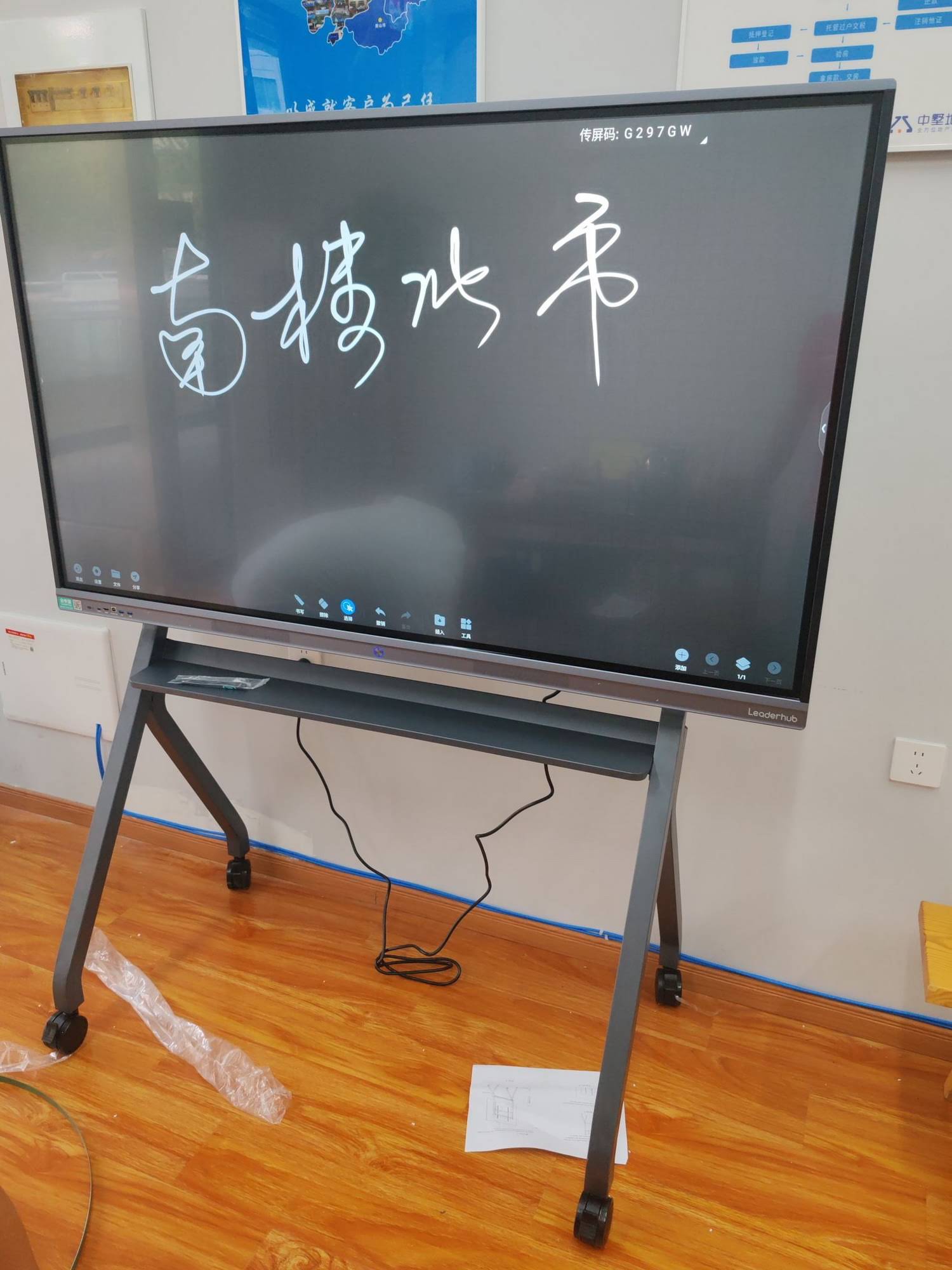
- Is there an OPS slot so customers can add a Windows module later, such as a compact mini PC, extending useful life without replacing the panel?
Education buyers in particular reference frameworks like the Effective Technology Use in Schools guidelines, which stress sustainable, supported technology. A panel that cannot be updated after two years becomes a liability for the school and, by extension, for the importer who sold it.
Step 7: After-Sales and Spare Parts Risk
Even top-tier panels fail occasionally. What separates a manageable incident from a costly one is how quickly the supplier responds and whether parts are available.
| After-Sales Element | Minimum Acceptable Standard |
|---|---|
| Warranty Period | At least 1 year on the full unit, with extension options to 3 years |
| Spare Parts Kit | 1–2% of order volume in mainboards, power boards, touch frames, and remotes shipped with the order |
| Technical Response | Written response within 24 hours, remote diagnostics within 48 hours |
| Documentation | English service manuals, firmware files, and training videos for your technicians |
| Defect Rate Commitment | Agreed DOA threshold with free replacement above that threshold |
Building Your Risk Scoring Matrix
Once you have gathered information across all seven categories, translate it into a simple score so decisions are consistent across suppliers and repeatable across orders. Rate each category from 1 (low risk) to 5 (high risk), then weight the categories according to your business model.
Suggested Weighting for a Typical Importer
- Supplier reliability: 25%
- Product quality: 20%
- Compliance: 20%
- After-sales support: 15%
- Logistics and packaging: 10%
- Financial terms: 5%
- Software and security: 5%
A weighted score below 2.0 indicates a supplier you can scale with confidently. Between 2.0 and 3.0, proceed with a smaller trial order and tighter inspection. Above 3.0, the risk generally outweighs any price advantage. Importers serving education markets may wish to raise the weight of software and security, since public tenders scrutinize those areas more closely, as discussed in the Choosing Technology in Education guidance.
Common Costly Mistakes and How to Avoid Them
Mistake 1: Choosing on Unit Price Alone
A panel that is $150 cheaper but carries a 6% defect rate instead of 1% will cost more after replacements, shipping, and lost customers. Always calculate total cost of ownership over three years.
Mistake 2: Skipping the Sample Stage
Catalog specifications cannot reveal touch lag, color uniformity, or fan noise. Test physical samples under real workloads before ordering volume.
Mistake 3: Assuming Certificates Transfer Between Models
A CE report for a 65-inch model does not cover the 86-inch variant. Match certificates to exact model numbers and hardware revisions.
Mistake 4: Ignoring Local Market Preferences
Markets differ in preferred sizes, mounting styles, and software ecosystems. Corporate buyers in some regions favor mobile stands and rotating formats, while schools often standardize on fixed wall mounts at 75 inches. Importers who stock a mix of fixed panels alongside flexible options such as a 55-inch mobile 4K interactive flat panel can serve more customer segments from a single supplier relationship.
Mistake 5: No Exit Plan for Defective Batches
Agree in advance how disputes will be resolved, who pays return freight, and whether credit notes or replacements are the default remedy. Written procedures prevent months of email back-and-forth.
Working With an Experienced Manufacturing Partner
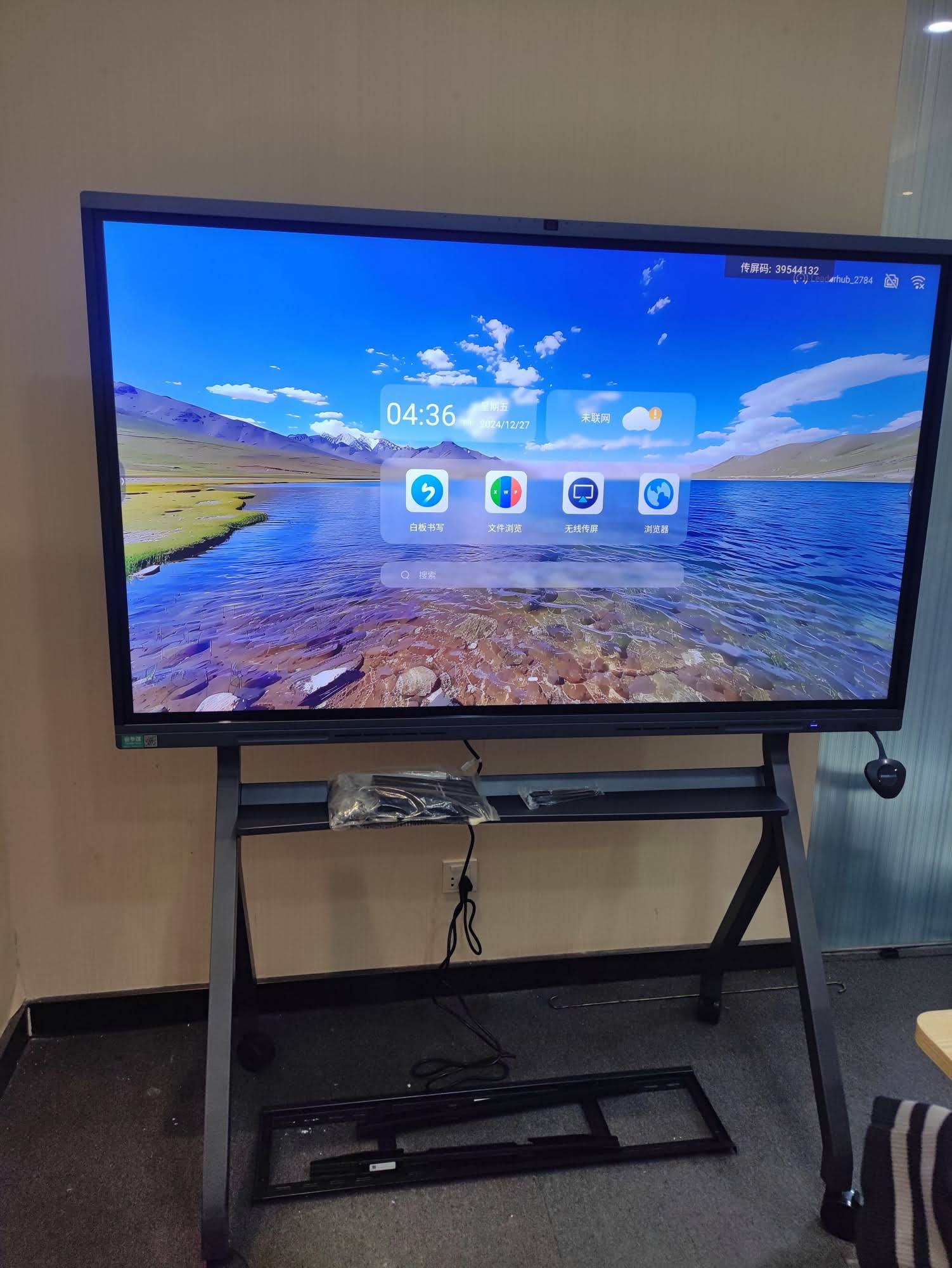
Much of the risk described above shrinks when you partner with a manufacturer that already operates at export scale. Leaderhub, a Shenzhen-based company with 16 years in the interactive display industry since 2010, supplies smart whiteboards, interactive flat panels, mini PCs, and portable smart screens to customers in 82 countries, holds the NO.1 position in its JD.com subcategory, and has earned recognition including the Annual Consumer Trustworthy Brand award. Importers can review the full smart whiteboard range online, request samples, or discuss OEM and ODM requirements through the contact page, which is a practical first step in validating supplier capability before a formal risk assessment begins.
Pre-Order Risk Assessment Checklist
Use this condensed checklist to confirm you have covered every category before signing a purchase order.
- Business license verified and factory capability confirmed by video or visit.
- Panel brand, grade, and touch technology documented in the contract.
- Sample tested under real workloads for at least 48 hours.
- Certificates matched to exact model numbers and verified with the issuing lab.
- Packaging specification, pallet layout, and shipping orientation agreed in writing.
- Incoterms, payment milestones, currency, and quote validity fixed.
- Firmware version, OTA policy, and data handling practices confirmed.
- Warranty terms, spare parts kit, and technical response times included in the contract.
- Pre-shipment inspection scheduled with defined AQL levels.
- Dispute resolution and defective-batch procedure documented.
Final Thoughts
A thorough smart board procurement risk assessment for importers is not about slowing down purchasing; it is about buying with clarity. By scoring supplier reliability, product quality, compliance, logistics, finance, software, and after-sales support in a consistent framework, you convert uncertainty into measurable decisions. The importers who grow steadily in this market are rarely the ones who found the cheapest quote. They are the ones who identified the risks early, negotiated protections into their contracts, and built relationships with manufacturers capable of delivering the same quality on the hundredth container as on the first.