Choosing the right technology partner for your classroom, boardroom, or training center is one of the most important decisions an education administrator, IT manager, or business owner will make this year. A smart whiteboard manufacturer isn’t just selling you a touchscreen — they are providing the backbone of your collaboration, teaching, and communication strategy for years to come. With dozens of suppliers claiming to offer the “best” interactive panels, how do you separate genuine industry leaders from short-term assemblers?
This guide breaks down the practical, experience-based criteria that procurement teams, system integrators, and school districts around the world use when evaluating smart whiteboard suppliers. We’ll cover manufacturing capability, certification standards, customization options, and long-term reliability — the factors that actually determine whether a product performs well after the warranty period ends.
Why the Manufacturer You Choose Matters More Than the Spec Sheet
It’s tempting to compare interactive flat panels purely on resolution, screen size, or price. But two boards with identical 4K specifications can perform completely differently after 18 months of daily use. The difference almost always comes down to the manufacturer’s engineering discipline, component sourcing, and quality control process — not the marketing brochure.
According to field data collected from education technology deployments across Asia, Europe, and the Middle East, panels from manufacturers with in-house R&D and vertically integrated production report significantly lower failure rates in the first three years compared to panels assembled from third-party white-label components. This is why evaluating the manufacturer — not just the product — is the smarter long-term strategy.
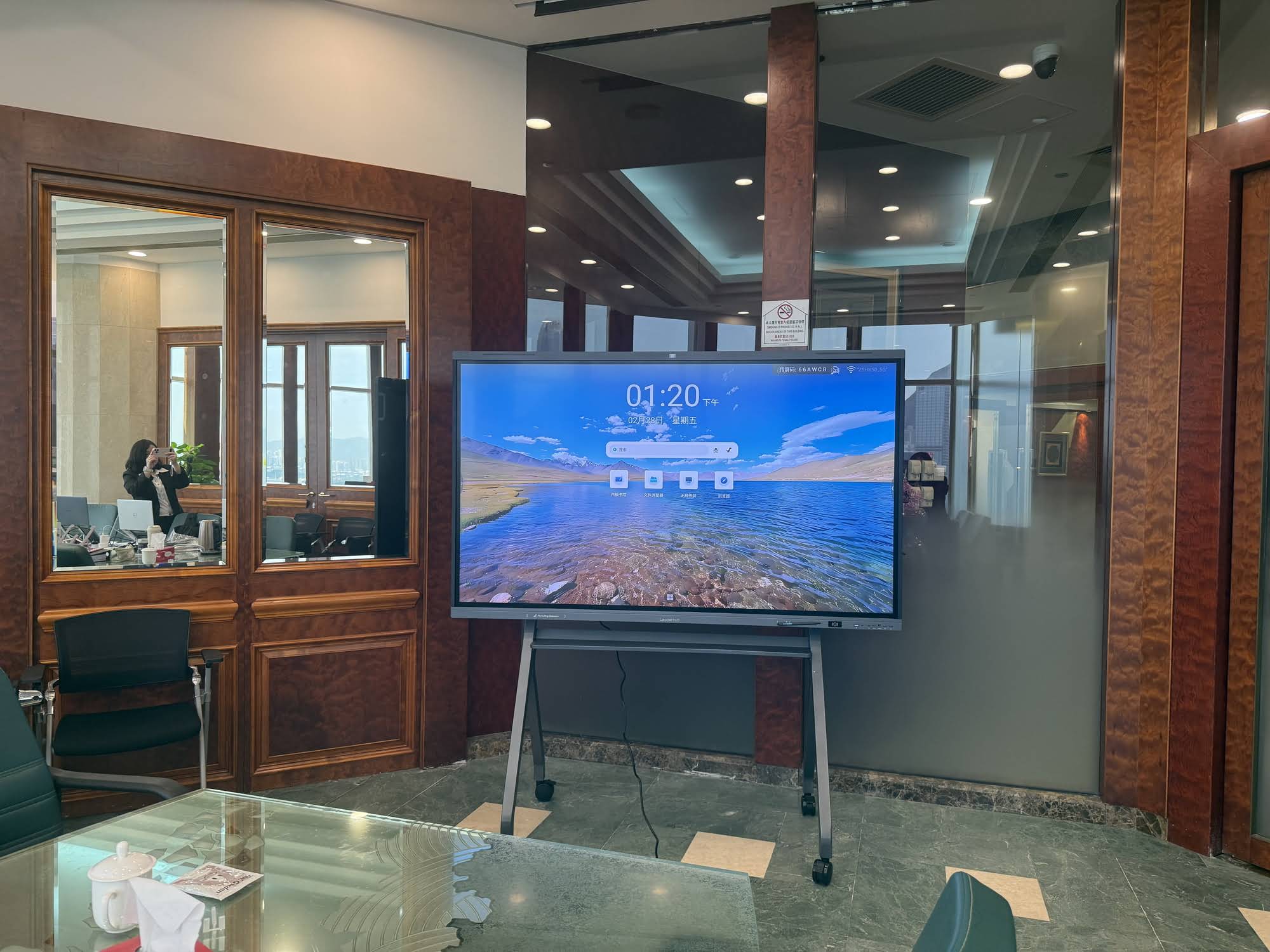
1. Industry Experience and Manufacturing Track Record
Longevity in the interactive display industry is a strong signal of stability. Manufacturers that have operated for a decade or more have typically weathered multiple hardware generations — from resistive touch to infrared, and now to capacitive multi-touch with embedded AI processing. This experience translates directly into fewer design flaws and better firmware optimization.
- Ask how long the company has manufactured interactive panels, not just how long the brand has existed.
- Check whether they design their own mainboards or purchase generic ones from third parties.
- Look for evidence of continuous product iteration — multiple product lines released over several years indicates active R&D investment.
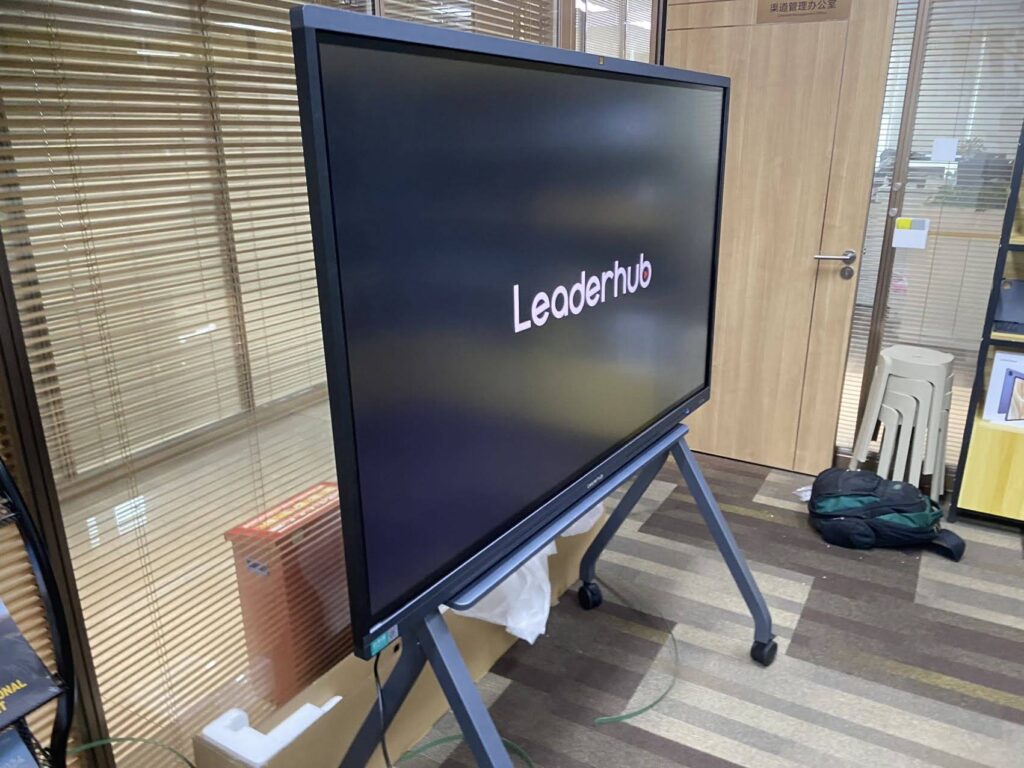
For example, LeaderHub, a Shenzhen-based interactive display manufacturer, has been developing smart whiteboards, mini PCs, and portable smart screens since 2010, shipping products to more than 82 countries. That level of sustained operation across four product lines reflects the kind of manufacturing consistency schools and enterprises should look for.
2. Product Range and Technical Depth
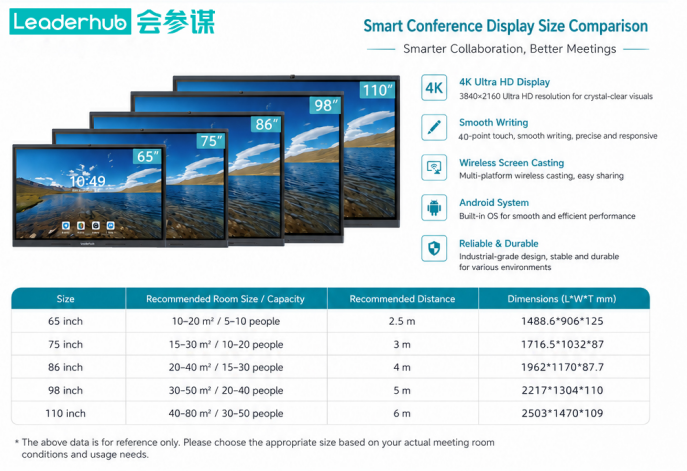
A manufacturer that only produces one panel size or a single form factor often lacks the engineering flexibility to support your organization as it scales. Strong suppliers typically offer a range of screen sizes (55″ to 110″), multiple operating systems (Android and Windows OPS), and complementary hardware such as mini PCs and rotating touchscreens for hybrid meeting rooms.
| Evaluation Area | What to Verify | Why It Matters |
|---|---|---|
| Screen Technology | 4K UHD panel, anti-glare coating, touch response speed | Determines visual clarity and daily usability |
| Processing Hardware | Android version, RAM/storage, optional Windows module | Impacts software compatibility and lifespan |
| Certifications | CE, FCC, RoHS, ISO9001 factory audit | Ensures safety compliance for export markets |
| Customization | OEM/ODM support, branding, firmware modification | Critical for resellers and system integrators |
| After-Sales Support | Warranty length, local service partners, spare parts availability | Reduces downtime and total cost of ownership |
Manufacturers offering diversified catalogs — such as mini PCs that slot directly into interactive panels, or rotating touchscreens for flexible meeting spaces — demonstrate a broader engineering capability that benefits buyers looking for a single, reliable supply chain partner rather than juggling multiple vendors.
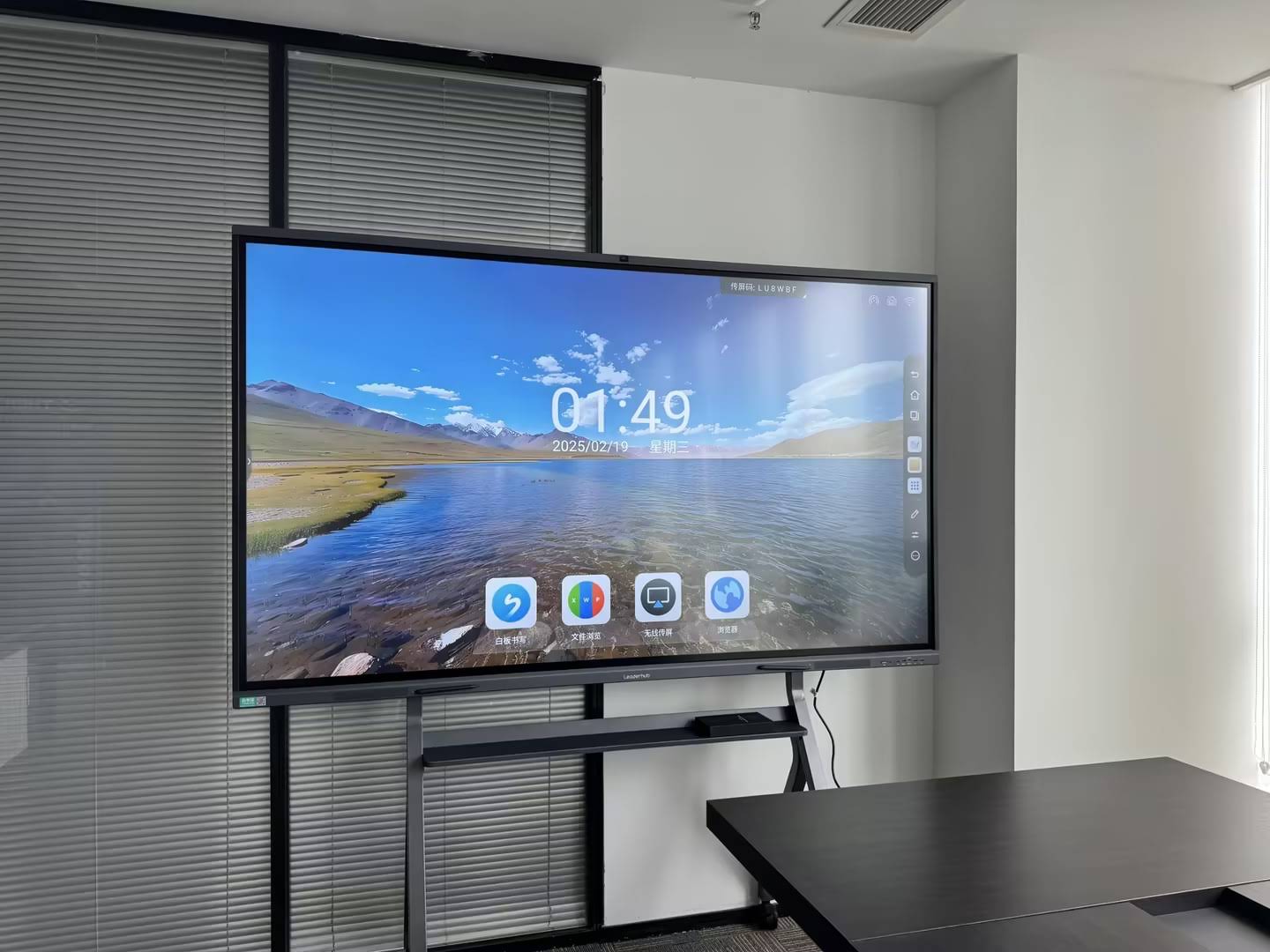
3. Manufacturing Quality Control and Certifications
This is where most buyers underestimate the risk. Touch panels, glass bonding, and mainboard soldering are precision processes. A single defect in optical bonding can cause visible “rainbow” distortion within months of installation. Reputable manufacturers run panels through burn-in testing, humidity resistance checks, and drop testing before shipment.
When evaluating a factory, request the following documentation:
- ISO 9001 quality management certification
- CE/FCC/RoHS compliance reports for your target market
- Burn-in test duration (ideally 24–72 hours before packaging)
- Factory audit reports or third-party inspection records (SGS, Bureau Veritas, etc.)
Manufacturers that proudly display recognitions such as being ranked NO.1 in a major e-commerce subcategory or receiving industry innovation awards typically have gone through rigorous third-party evaluation to earn that recognition — a useful signal of trustworthiness that goes beyond self-reported claims.
4. OEM/ODM Flexibility for Resellers and Distributors
If you’re a distributor, system integrator, or regional reseller, the manufacturer’s willingness and ability to support private-label production is essential. Ask specific questions:
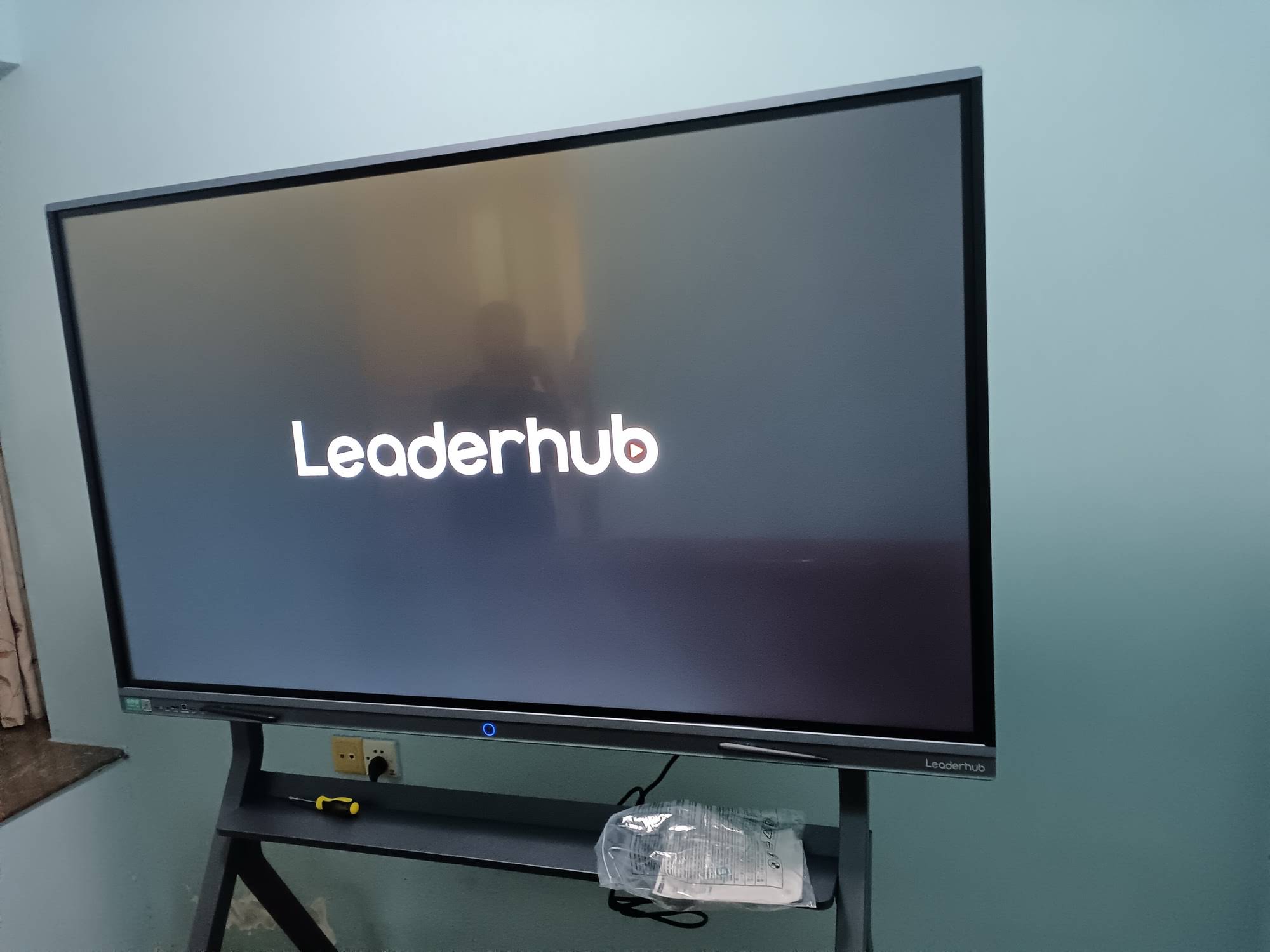
- Can they modify the boot logo, packaging, and firmware branding?
- What is the minimum order quantity (MOQ) for custom configurations?
- Do they provide sample units for regional certification testing before mass production?
- Can they support mixed container shipments across multiple product lines (whiteboards, mini PCs, portable screens)?
Manufacturers that participate actively in global electronics exhibitions tend to have more mature OEM/ODM workflows, since they are regularly negotiating custom orders with international distributors face-to-face. This exposure typically results in faster turnaround times and clearer communication for customization requests.
5. After-Sales Support, Warranty, and Spare Parts Availability
A 3-year warranty is meaningless if the manufacturer cannot ship replacement touch modules or power boards within a reasonable timeframe. Before signing a purchase agreement, confirm:
- Average spare parts shipping time to your region
- Whether local service centers or authorized partners exist in your country
- Remote diagnostic or firmware update support via network connection
- Clear escalation contacts for warranty claims (avoid generic support email addresses with no SLA)
6. Pricing Transparency and Total Cost of Ownership
Lower upfront pricing is often a red flag rather than a bargain. Interactive panels priced significantly below market average frequently cut corners on glass thickness, touch sensor grade, or mainboard components — all of which shorten usable lifespan. Instead of comparing sticker price alone, calculate total cost of ownership over a 5-year period, including:
| Cost Factor | Typical Impact Over 5 Years |
|---|---|
| Initial hardware cost | One-time, varies by screen size (e.g., 65″–110″) |
| Replacement parts & repairs | Higher with low-grade touch sensors or glass |
| Software/firmware updates | Free with active manufacturers; costly with abandoned product lines |
| Downtime during repairs | Directly tied to spare parts availability and support speed |
Real-World Example: What a Well-Chosen Panel Delivers
A regional training center in Southeast Asia replaced its projector-based classrooms with 75″ 4K interactive whiteboards and reported a 40% reduction in lesson preparation time within the first semester, largely due to built-in annotation tools and cloud file sync. Facilities managers noted that choosing a manufacturer with active firmware support meant the panels received two major software updates within the first year — extending usability without additional hardware investment.
Similarly, corporate offices deploying mobile interactive flat panels for hybrid meetings found that portability combined with reliable touch accuracy reduced meeting setup time by several minutes per session — a small but measurable productivity gain when scaled across dozens of weekly meetings.
Checklist: Questions to Ask Before Signing a Purchase Order
- How many years has your factory produced interactive touch panels specifically?
- Can you provide ISO certification and recent third-party audit reports?
- What is your standard burn-in testing procedure before shipment?
- Do you support OEM branding and custom firmware for bulk orders?
- What is your average spare parts delivery time to my country?
- Do you have case studies or references from similar-sized organizations?
Final Thoughts
Selecting a smart whiteboard manufacturer is a long-term infrastructure decision, not a one-time purchase. Prioritize suppliers with demonstrable manufacturing history, transparent certification records, flexible OEM/ODM capability, and responsive after-sales support. Companies with over a decade of dedicated engineering experience — shipping across dozens of countries and maintaining multiple active product lines — are generally better positioned to support your organization’s evolving technology needs than newer entrants relying solely on marketing claims.
Whether you’re outfitting a single classroom or managing procurement for a nationwide school network, taking the time to evaluate manufacturing depth, certification, and support infrastructure will pay dividends in reliability and total cost of ownership for years to come.