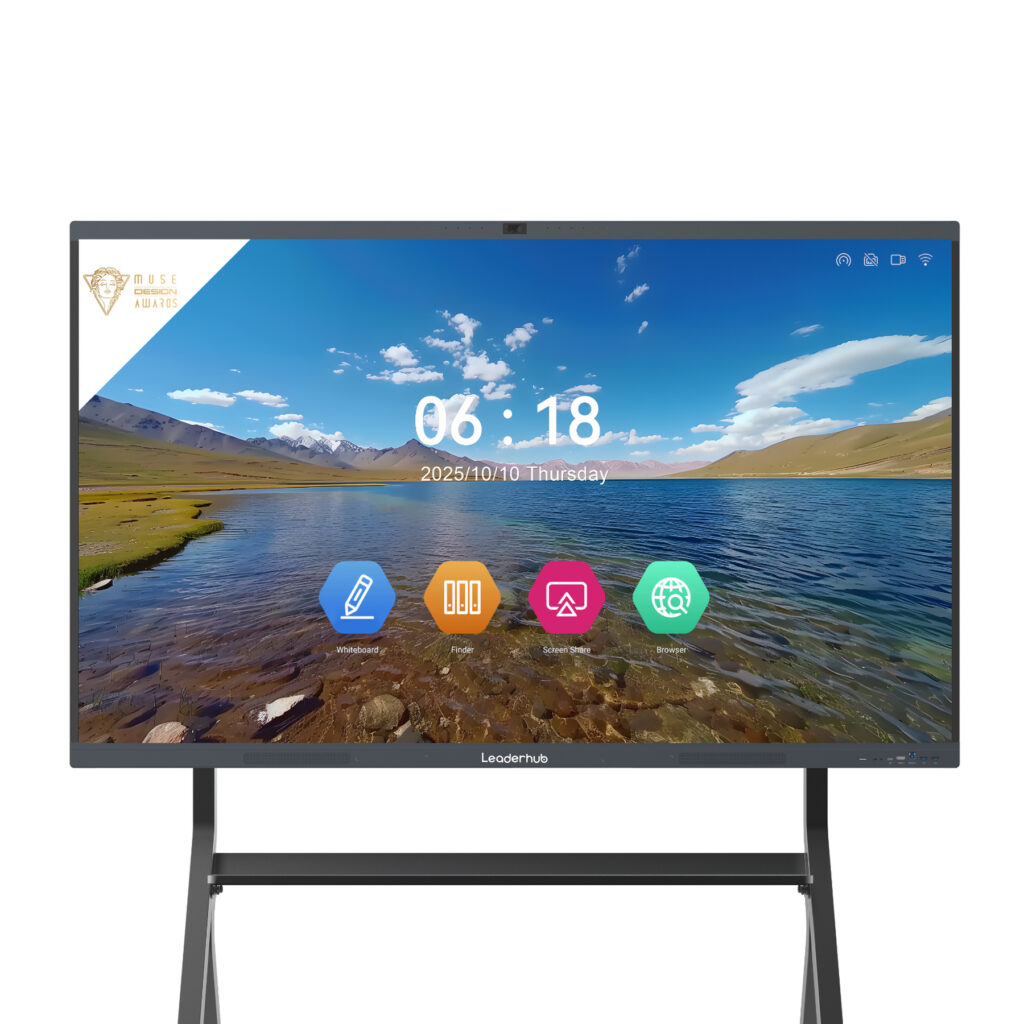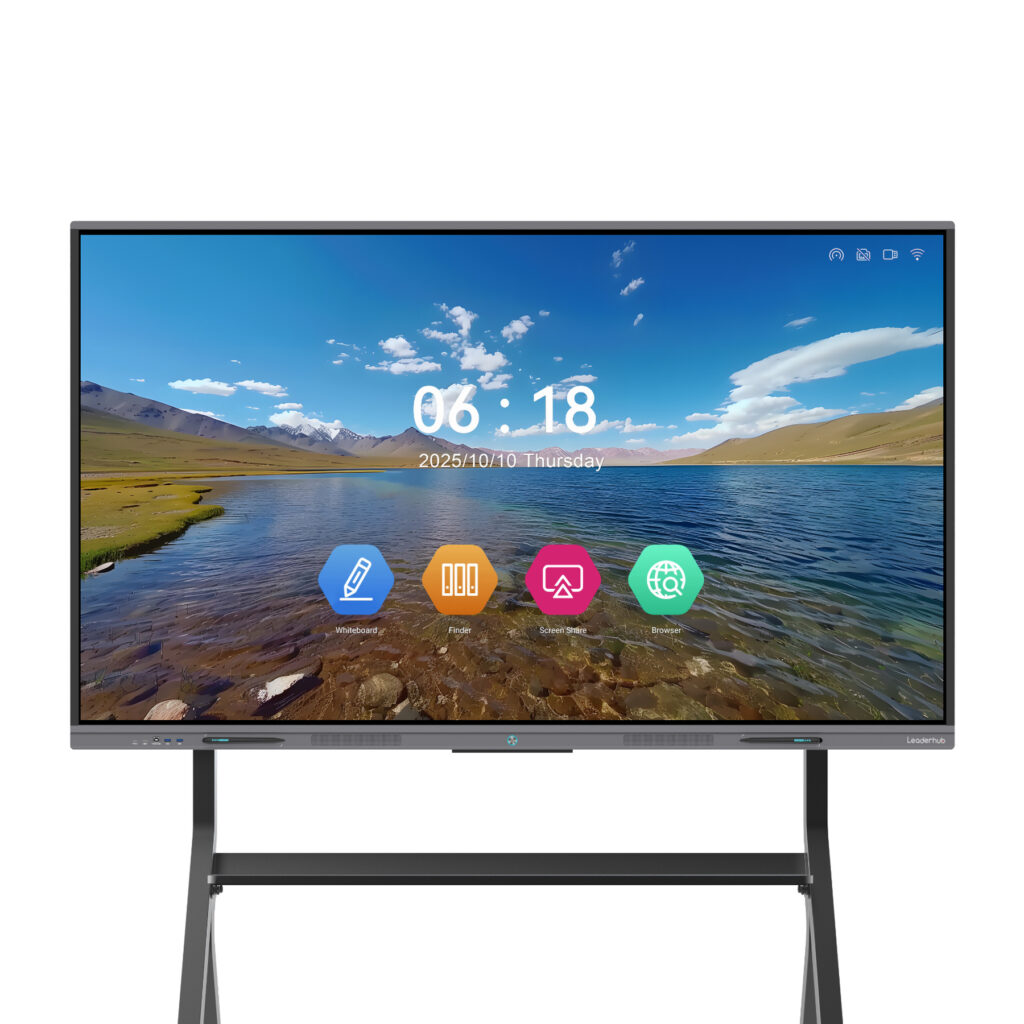
Sourcing interactive displays from China has become the default route for distributors, system integrators and corporate procurement teams across North America, Europe, the Middle East, Southeast Asia and Latin America. The reason is simple: the vast majority of the world’s interactive flat panels are designed and assembled in Guangdong Province, and a well-chosen business smart board supplier in China can deliver 4K touch displays at a fraction of the price charged by Western brands that often source from the very same factories. The challenge is not finding a supplier — it is separating reliable manufacturers from resellers, assemblers and short-lived trading companies. This guide walks you through the Chinese interactive display landscape, the criteria that matter, realistic price benchmarks and a step-by-step sourcing process you can apply immediately.
Why China Dominates Interactive Display Manufacturing
The Pearl River Delta — Shenzhen, Guangzhou, Dongguan and Huizhou — hosts an unmatched concentration of the components that go into a smart board: LCD panels from BOE and CSOT, infrared and capacitive touch frames, Android and OPS motherboards, speakers, cameras, aluminum enclosures and tempered glass. When every tier of the supply chain sits within a two-hour drive, lead times shrink, costs drop and iteration speeds up. This is why even established international AV brands rely on Chinese ODM partners for their conference and classroom panels.
For international buyers, this concentration brings three practical advantages:
- Cost efficiency — a 75-inch 4K interactive panel that retails for $4,000–$6,000 under a Western label can be sourced directly for $1,400–$2,400.
- Flexible customization — logo branding, firmware localization, pre-installed collaboration software and regional power/plug configurations are routine requests.
- Mature export infrastructure — Shenzhen’s Yantian and Shekou ports, combined with experienced freight forwarders, make FOB, CIF and DDP shipping straightforward for most destinations.
Independent market overviews such as the China Smart Board Selection Guide confirm that the quality gap between tier-one Chinese manufacturers and global brands has largely disappeared, while the price gap remains significant.
Who Typically Sources Business Smart Boards from China?
Understanding where you fit helps you frame the right questions for suppliers. The buyers we meet at international electronics exhibitions generally fall into one of these groups:
- AV distributors and resellers in the US, UK, Germany, UAE and Australia looking for a white-label or co-branded line to compete with premium brands.
- System integrators building boardroom, huddle room and training-center solutions for corporate clients.
- Corporate IT and facilities managers equipping multiple offices and wanting consistent hardware across regions.
- Education procurement officers and private school chains in Southeast Asia, Africa and Latin America where budget per classroom is tight.
- Government and public-sector tender participants who must meet strict certification and warranty requirements.
Each group weighs price, customization, certification and after-sales support differently — but all of them need to answer the same first question.
Manufacturer, Trading Company or OEM/ODM Factory?
On sourcing platforms, nearly every listing claims to be a “factory.” In reality, suppliers fall into three categories, and the differences directly affect your pricing, quality control and long-term support.
| Supplier Type | How to Identify | Advantages | Risks |
|---|---|---|---|
| Brand Manufacturer | Owns R&D, has its own branded products sold domestically and abroad, holds design patents | Stable firmware updates, proven products, long-term support, real engineering team | Higher MOQ for deep customization |
| OEM/ODM Factory | Produces for other brands, limited own-brand presence, large assembly lines | Competitive unit pricing at volume, flexible specs | Software may be generic; support depends on contract terms |
| Trading Company | Wide, unrelated product catalog; cannot host factory audits; prices change frequently | Low MOQ, convenient for mixed small orders | No control over quality, warranty or spare parts; may disappear between orders |
For a business-critical product like a conference display that will be used daily for five to eight years, a brand manufacturer or a manufacturer that also offers OEM/ODM services is almost always the safer choice.

8 Criteria for Evaluating a Business Smart Board Supplier in China
1. Years in the Interactive Display Industry
The interactive panel market has seen waves of new entrants since 2015, many of which exited within two or three years. A supplier with ten or more years of continuous operation has survived component shortages, price wars and shifting standards — and is far more likely to still be around when you need a replacement part in year four.
2. Certifications for Your Target Market
Request actual certificate copies, not just logos on a brochure, and verify the certificate numbers. Minimum requirements by region:
- European Union: CE (EMC, LVD, RED), RoHS, REACH, ErP
- United Kingdom: UKCA
- United States / Canada: FCC Part 15, UL or ETL, Energy Star (preferred for public tenders)
- Middle East: SASO (Saudi Arabia), ESMA (UAE), G-Mark (GCC)
- Factory-level: ISO 9001 quality management, ISO 14001 environmental management
3. Display and Touch Technology
A business panel must perform in bright, glass-walled offices and support natural writing. Look for 4K UHD resolution, 350–450 nit brightness, anti-glare tempered glass of at least 4 mm, 20-point (or higher) infrared touch with sub-8 ms response, and zero-bonding or optical bonding on premium models to eliminate parallax. Ask which panel supplier is used — BOE, CSOT and LG panels are preferred over unbranded or refurbished grades.
4. Built-in Computing and Operating System
Business users expect to walk in, tap and present. Evaluate the Android version (Android 13 or 14 is current), RAM and storage (8 GB / 128 GB is a sensible baseline for business), and whether an OPS slot allows a Windows module. Suppliers that also manufacture mini PCs can bundle a matching Windows unit, which simplifies procurement for IT departments standardizing on Microsoft Teams or Zoom Rooms.
5. Collaboration Software and AI Features
Hardware is increasingly commoditized; software differentiates. Check for wireless screen sharing across Windows, macOS, iOS and Android, a built-in whiteboard with cloud save and QR-code export, split-screen multitasking, and newer AI functions such as meeting transcription, automatic summaries and handwriting-to-text. Ask how often firmware updates are released and whether over-the-air updates are supported.
6. OEM/ODM Capability
If you plan to build your own brand, confirm what can be customized and at what MOQ: logo on bezel and boot screen, custom Android launcher, language packs, remote-control branding, packaging and user manuals. Serious manufacturers will provide a written customization matrix rather than a vague “everything is possible.”
7. Warranty, Spare Parts and Remote Support
A standard warranty from a credible Chinese smart board manufacturer is two to three years on the panel. Clarify whether warranty is handled by parts shipment, local service partners or advance replacement, and how long the supplier commits to stocking spare parts after end-of-life. Time-zone-aligned remote support (English-speaking engineers available during European or American working hours) is a major differentiator for business clients.
8. Logistics, MOQ and Payment Terms
Interactive panels are large, fragile and freight-heavy; a 75-inch unit in export packaging occupies roughly 0.35 cubic meters. Reliable suppliers offer wooden-crate or honeycomb-reinforced packaging, provide loading plans for 20-ft and 40-ft containers, and accept standard terms such as 30% deposit / 70% before shipment, with letter of credit available for larger orders.
Technical Specification Checklist for Business Interactive Displays
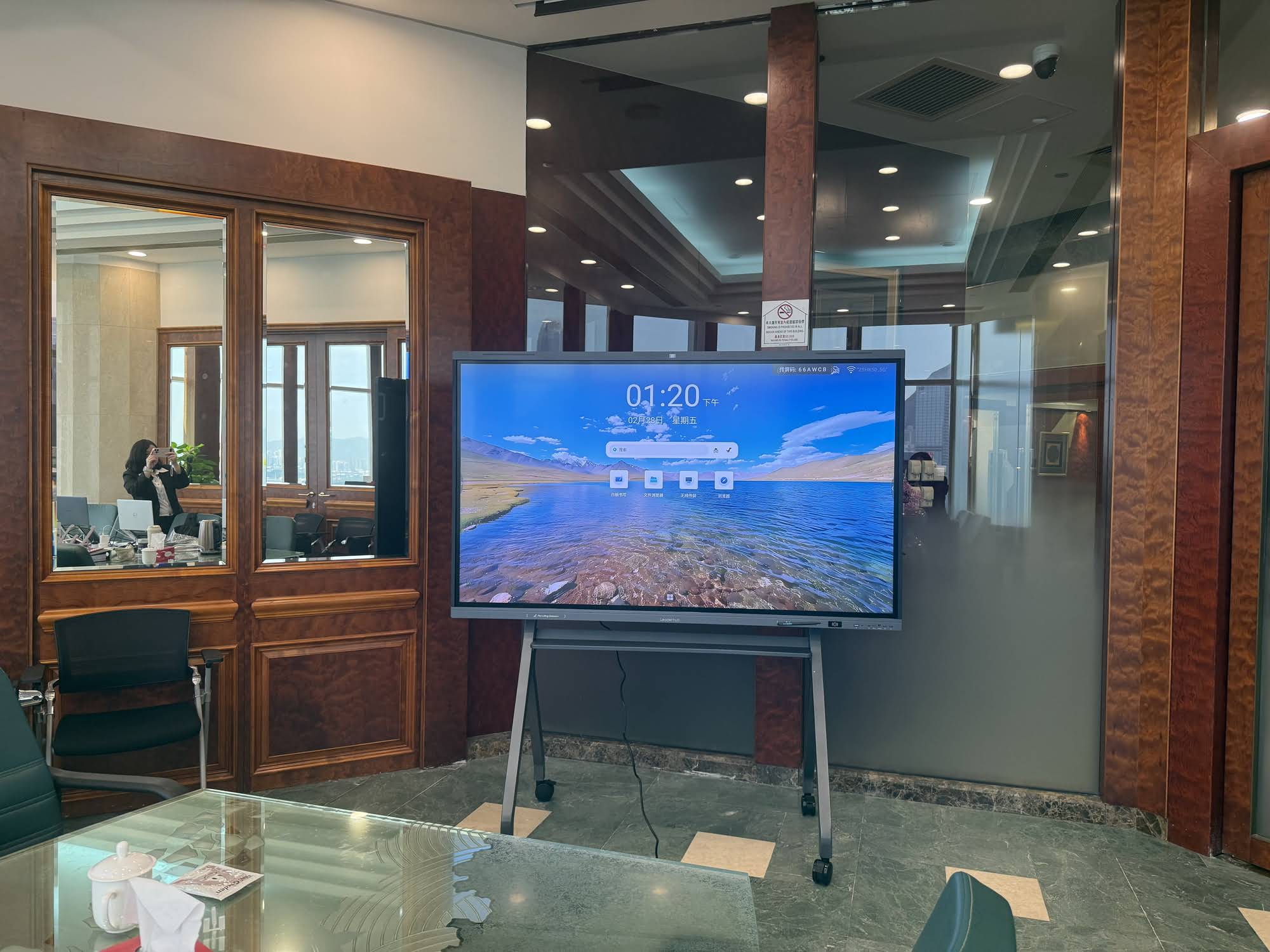
| Specification | Business Baseline | Why It Matters |
|---|---|---|
| Resolution | 3840 × 2160 (4K UHD) | Sharp spreadsheets and CAD drawings at close range |
| Brightness | ≥ 350 nits | Visibility in daylight-filled glass meeting rooms |
| Touch Points | 20-point infrared or 40-point capacitive | Multiple participants annotating simultaneously |
| Glass | 4 mm anti-glare tempered, Mohs 7 | Scratch resistance and reduced reflections |
| Android System | Android 13/14, 8 GB RAM, 128 GB storage | Smooth multitasking and long software support life |
| Camera & Mic | 4K or 13 MP camera, 6–8 mic array | Hybrid meetings without extra peripherals |
| Connectivity | HDMI 2.0 ×3, USB-C with 65 W PD, OPS slot, Wi-Fi 6, Bluetooth 5 | Single-cable laptop connection and future upgrades |
| Mounting | VESA wall mount + optional mobile stand, rotation on select models | Flexibility across boardrooms, huddle spaces and training rooms |
For a deeper understanding of professional AV standards that corporate integrators follow, the AV industry standards and resources published by AVIXA are a useful reference when drafting your RFQ.
Price Benchmarks: What Business Smart Boards Cost Direct from China
Pricing varies with screen size, panel grade, Android configuration and order volume. The table below uses publicly listed single-unit prices from a Shenzhen manufacturer’s catalog to give you a realistic reference point before negotiating volume discounts.
| Model | Size | Positioning | Reference Price |
|---|---|---|---|
| L65ZM Interactive Whiteboard | 65″ | Entry-level huddle rooms | $1,099 |
| L75ZM Interactive Whiteboard | 75″ | Standard meeting rooms | $1,399 |
| L75HM Smart Whiteboard | 75″ | Rotatable conference hub | $1,599 |
| L86ZM Interactive Whiteboard | 86″ | Large boardrooms and training halls | $1,699 |
| L75H Pro Interactive Flat Panel | 75″ | Premium executive rooms | $2,399 |
| U55Pro Mobile Flat Panel | 55″ | Battery-powered, moves between rooms | $2,499 |
| L110H Interactive Flat Panel | 110″ | Auditoriums and command centers | $7,999 |
As a rule of thumb, volume orders of 50 units or more typically unlock 10–20% discounts, and container-load orders can go further. Be cautious of quotes dramatically below these benchmarks — they usually indicate A- or B-grade panels, refurbished components or missing certifications.
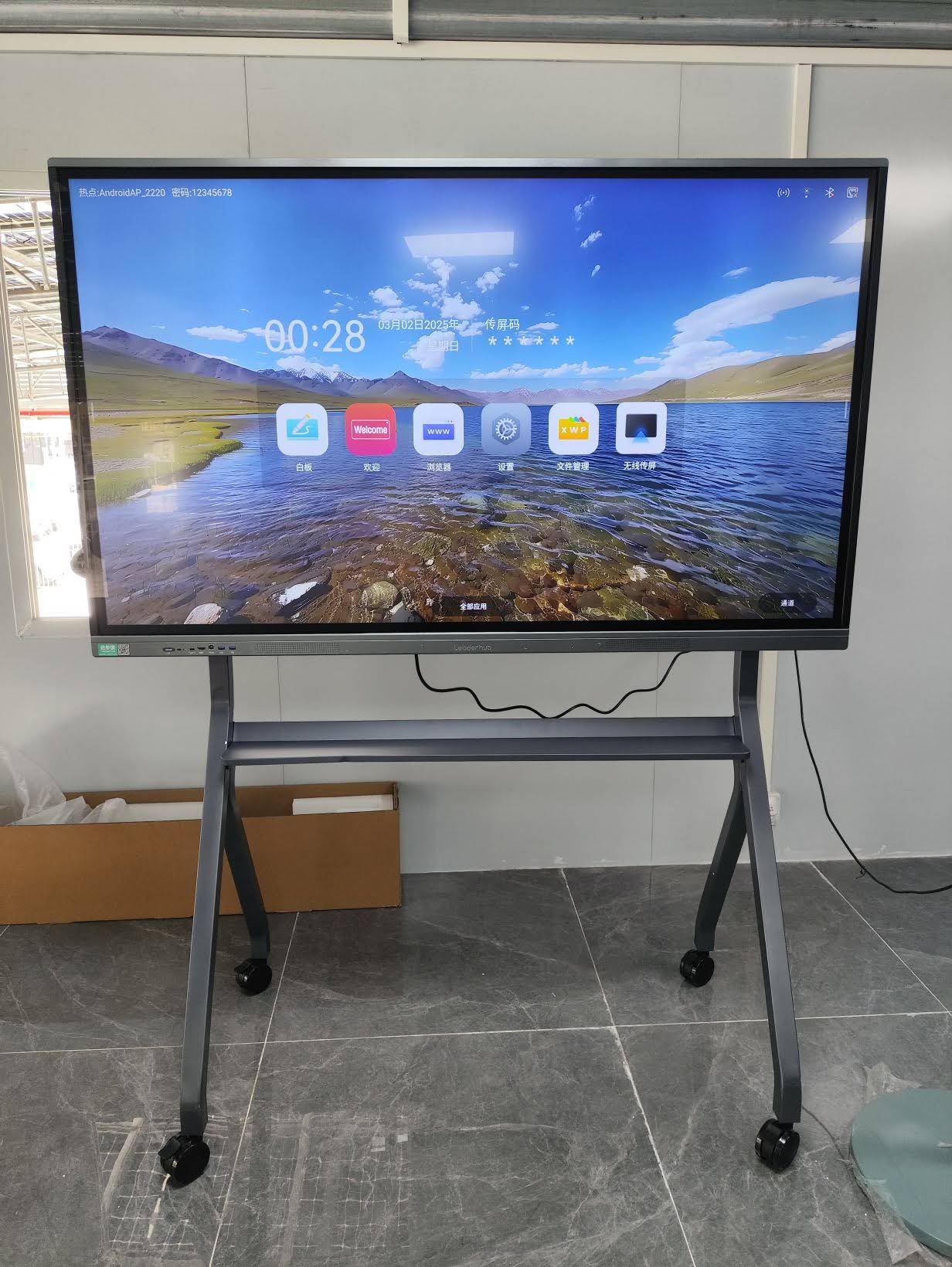
Red Flags When Sourcing Interactive Displays from China
- The supplier cannot host a live video factory tour or declines a third-party audit.
- Certificates are provided as low-resolution images without verifiable numbers.
- Product photos are identical to those on several other companies’ websites.
- No published firmware changelog or app update history.
- Warranty terms are verbal only, or spare-parts pricing is not disclosed upfront.
- Pressure to pay 100% in advance via personal accounts or unusual payment channels.
- Sales staff cannot answer basic engineering questions about panel origin, touch frame type or OPS compatibility.
Step-by-Step Sourcing Process for Business Buyers
- Define requirements: room sizes, number of units, target market certifications, software ecosystem (Teams, Zoom, Google Meet) and budget per unit.
- Shortlist three to five suppliers based on years in business, certifications and verified export history to your region.
- Request detailed quotations with full spec sheets, packaging dimensions, warranty terms and lead times.
- Order samples — one or two units — and test them in a real meeting room for at least two weeks, including wireless casting from every device type your staff uses.
- Verify the factory through a video walkthrough or an on-site inspection by a third-party agency.
- Negotiate the contract: payment schedule, Incoterms, defect allowance, replacement procedures and intellectual property terms for custom branding.
- Arrange pre-shipment inspection covering power-on testing, touch calibration, dead-pixel checks and packaging drop tests.
- Plan the rollout with installation guides, admin training and a documented escalation path for technical support.
Organizations deploying displays in educational or training environments may also find the UNESCO Technology in Education Report and the OECD Digital Education Outlook helpful for aligning hardware purchases with evidence-based adoption strategies.
Why Global Buyers Partner with LeaderHub
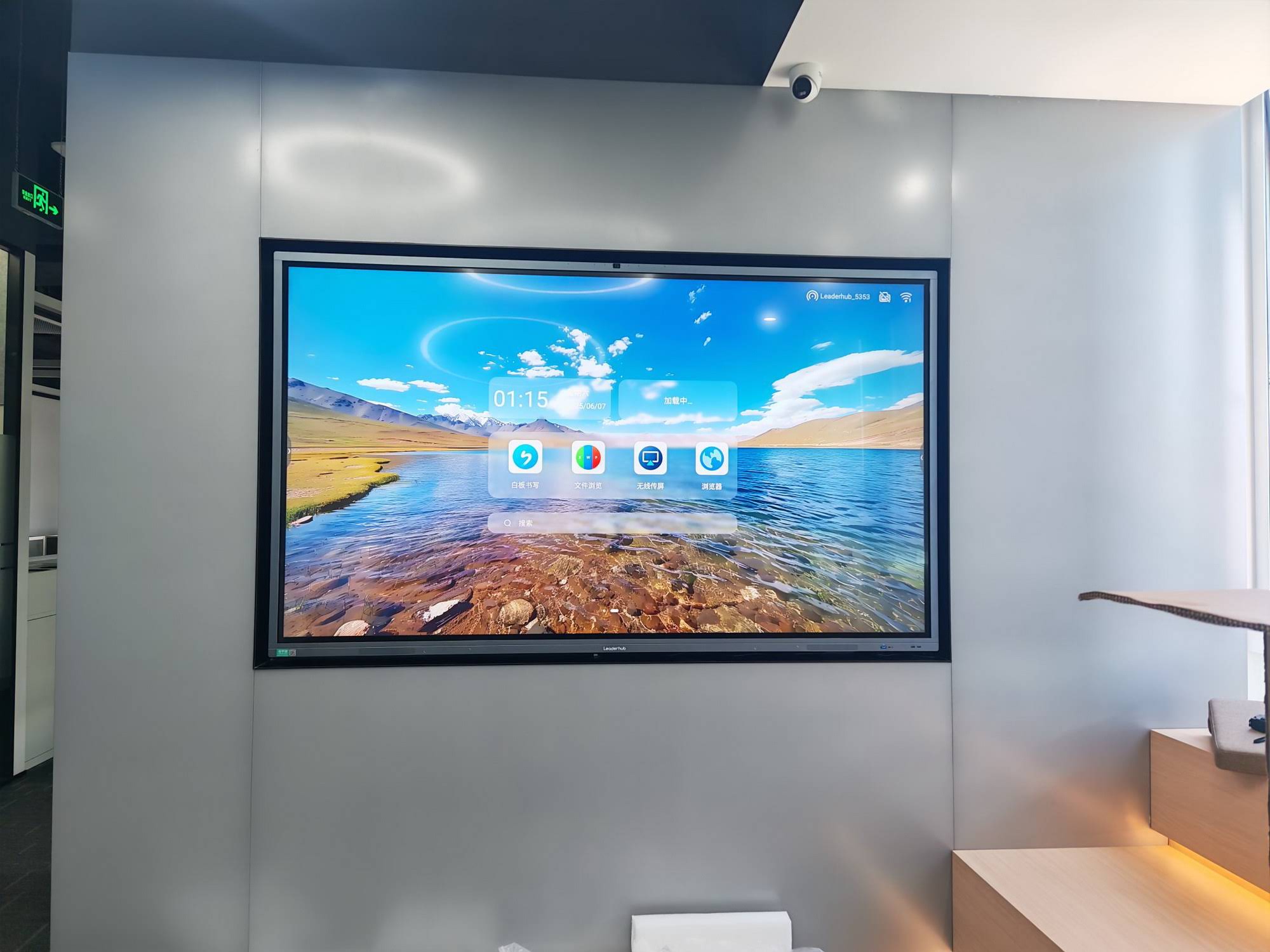
LeaderHub is a Shenzhen-based technology company with 16 years of professional experience in the interactive panel industry, serving enterprise, education and creative customers in 82 countries. Its four product lines — smart whiteboards, interactive flat panels, mini PCs and rotating smart screens — are engineered around the mission “AI Changes Life,” combining hardware innovation with AI-driven meeting tools to make business collaboration more efficient and affordable for small and medium-sized enterprises. The company ranks NO.1 in the interactive panel subcategory on JD.com, holds the Shenzhen Famous Brand title, and its HM Series rotatable conference hub has received international design recognition. With strategic partnerships across finance, internet, education, training and government sectors, LeaderHub offers OEM/ODM services, verifiable export certifications and English-language remote support aligned with global business hours.
Frequently Asked Questions
What is the typical MOQ when buying business smart boards from a Chinese manufacturer?
Most established manufacturers accept sample orders of one to two units, standard orders from five to ten units, and require 50–100 units for deep customization such as a custom Android launcher or bespoke bezel design.
How long does production and shipping take?
Standard models usually ship within 7–15 working days of deposit. Sea freight adds roughly 30–40 days to Europe and the US East Coast, 18–25 days to the US West Coast and 20–30 days to the Middle East. Air freight is available for urgent small orders but significantly increases landed cost for large panels.
Can a Chinese supplier pre-install Microsoft Teams Rooms or Zoom Rooms?
Native certification for Teams Rooms or Zoom Rooms requires specific Windows hardware. The common approach is to pair the panel with an OPS module or an external Windows mini PC such as the LP5C Mini PC, which runs the full desktop client while the Android system handles whiteboarding and wireless casting.
Is it safe to pay a Chinese supplier before receiving goods?
Paying a 30% deposit to a registered company’s corporate bank account is standard practice and low-risk when the supplier has a verifiable business license, an audited factory and references in your region. Avoid any supplier requesting payment to personal accounts.
How do warranties work across borders?
Reliable suppliers ship replacement boards, touch frames or power supplies free of charge within the warranty period, provide remote diagnosis by video call, and in larger markets work with local service partners. Ask for the warranty policy in writing before placing an order.
Final Thoughts
Choosing a business smart board supplier in China is ultimately about verifying three things: that the company genuinely manufactures what it sells, that its products meet the technical and regulatory standards of your market, and that it will still be answering emails three years from now. Apply the eight criteria above, insist on samples and documentation, and benchmark pricing against transparent catalogs rather than the lowest quote in your inbox. If you are ready to evaluate interactive displays for your boardrooms, training centers or distribution portfolio, contact the LeaderHub team for specifications, OEM/ODM options and volume pricing, or browse the full product range to compare models side by side.