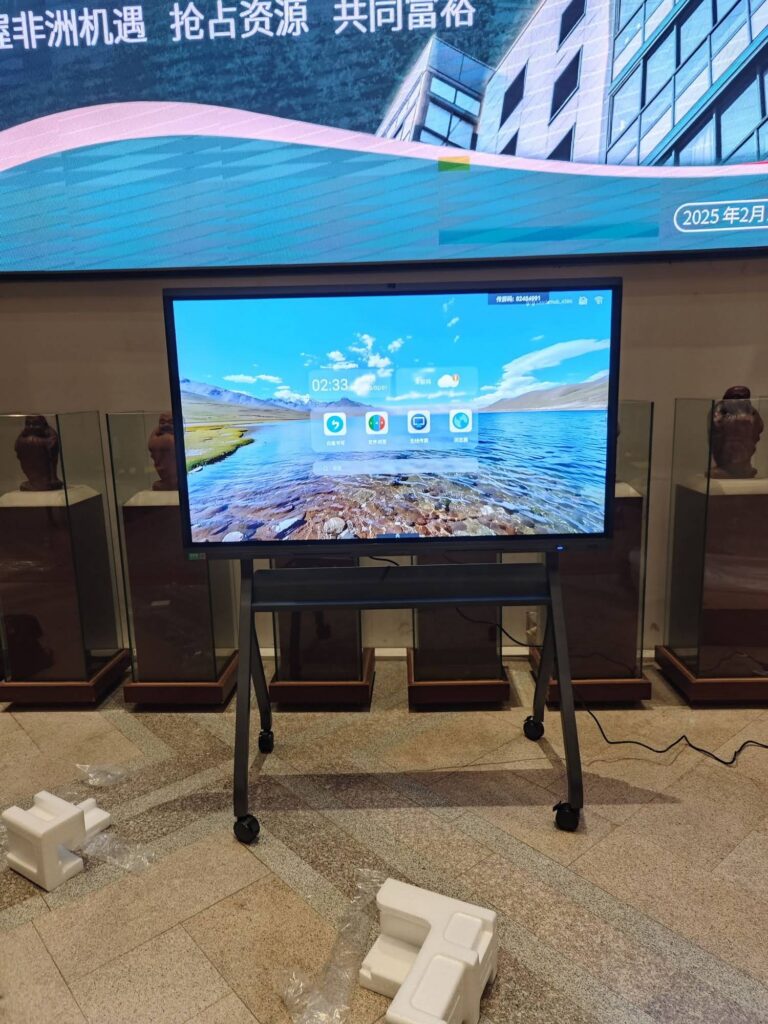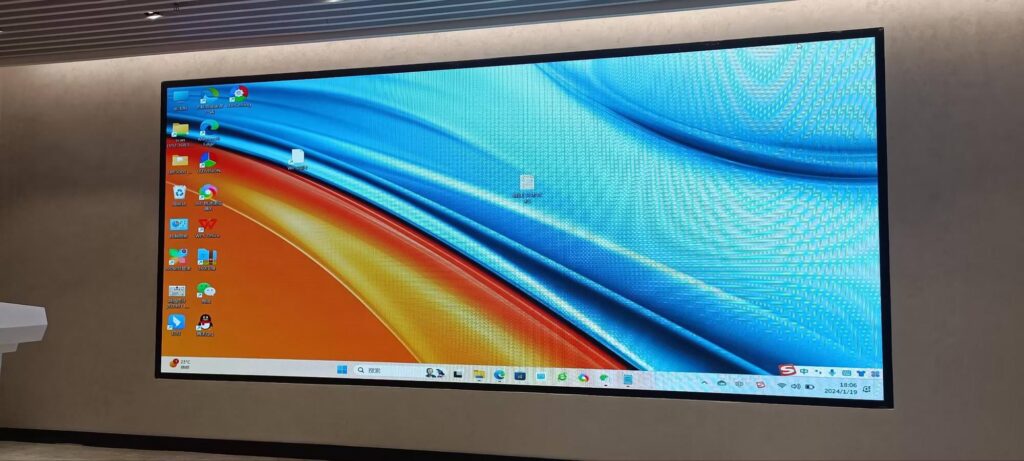
Sourcing a smart board for a boardroom, training center, or multi-site office rollout is a very different exercise from buying a single display for a classroom. Corporate projects involve procurement committees, IT security reviews, brand guidelines, installation across multiple cities, and multi-year service expectations. That is why more and more enterprise buyers, system integrators, and AV consultants are looking for a smart board manufacturer in China for corporate projects that can deliver OEM/ODM flexibility without sacrificing reliability.
China produces the majority of the world’s interactive flat panels, and the Shenzhen–Guangzhou–Huizhou corridor in Guangdong Province is where most of the panel assembly, touch-frame production, and firmware development actually happens. This guide walks you through how the Chinese interactive display industry is structured, what separates a trustworthy OEM/ODM partner from a trading company, and which questions to ask before you sign a purchase agreement.
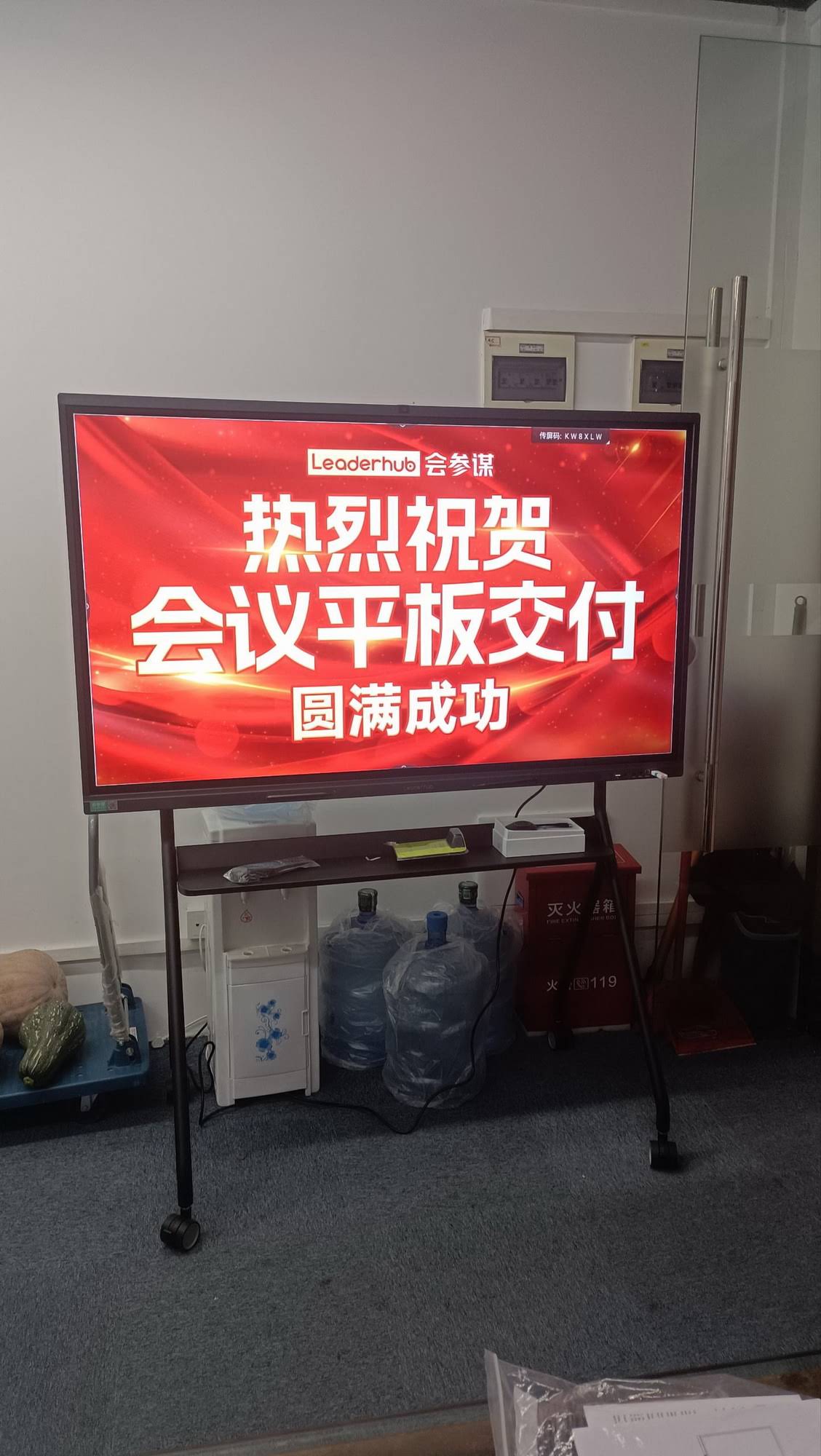
Why Corporate Buyers Source Smart Boards from China
The interactive display supply chain in China is unusually complete. Within a two-hour drive of Shenzhen you can find LCD panel suppliers, infrared and capacitive touch module makers, aluminum enclosure factories, mainboard designers, and Android/Windows firmware teams. For a corporate buyer, this density translates into three concrete advantages:
- Cost efficiency at scale – a 75-inch 4K interactive panel built in Guangdong typically lands at 30–50% below comparable Western-branded units, which matters when you are equipping 40 meeting rooms rather than one.
- Rapid customization – ODM teams can adapt logos, boot animations, enclosure colors, port layouts, and even pre-installed enterprise software within weeks, not quarters.
- Export maturity – established Chinese manufacturers already hold CE, FCC, RoHS, and often UL or Energy Star certifications, and they are used to shipping to Europe, North America, the Middle East, and Southeast Asia.
Understanding the Local Manufacturing Landscape
Chinese smart board suppliers fall into roughly four tiers. Knowing which tier you are talking to prevents expensive misunderstandings later.
| Supplier Type | What They Actually Do | Best For | Risk Level |
|---|---|---|---|
| Brand Manufacturer with Own Factory | Designs, assembles, tests, and supports its own branded products; offers OEM/ODM as an additional service | Corporate projects requiring long-term firmware support and warranty | Low |
| Pure ODM Factory | Builds white-label panels for other brands; little or no own-brand retail presence | Distributors launching a private label | Low to Medium |
| Assembly Workshop | Buys open-cell panels and mainboards, assembles in small batches | Small, price-driven orders | Medium to High |
| Trading Company | Resells products from one or more factories; no engineering control | One-off purchases where support is not critical | High for corporate rollouts |
OEM vs. ODM: Which Model Fits Your Corporate Project?
The two terms are often used interchangeably, but they define very different relationships with your Chinese partner. Before requesting quotes, decide which path your organization actually needs.
| Aspect | OEM (Original Equipment Manufacturer) | ODM (Original Design Manufacturer) |
|---|---|---|
| Who owns the design | You provide specifications or industrial design; factory builds to your drawings | Factory supplies an existing, proven design; you apply branding and select options |
| Typical MOQ | 300–1,000 units per model | 20–100 units; some suppliers accept lower for logo-only changes |
| Lead time | 90–180 days including tooling and certification | 25–45 days after deposit |
| Customization depth | Enclosure, PCB, ports, software – essentially unlimited | Logo, UI skin, pre-installed apps, color, packaging, accessory bundle |
| Ideal corporate scenario | Enterprise with a proprietary collaboration platform that needs purpose-built hardware | Multi-office rollout, hotel or bank branch network, corporate training academy |
For the vast majority of corporate deployments, the ODM route delivers the best balance of speed, cost, and risk. The hardware has already passed certification, the firmware has been field-tested, and your project team can focus on integration rather than engineering.
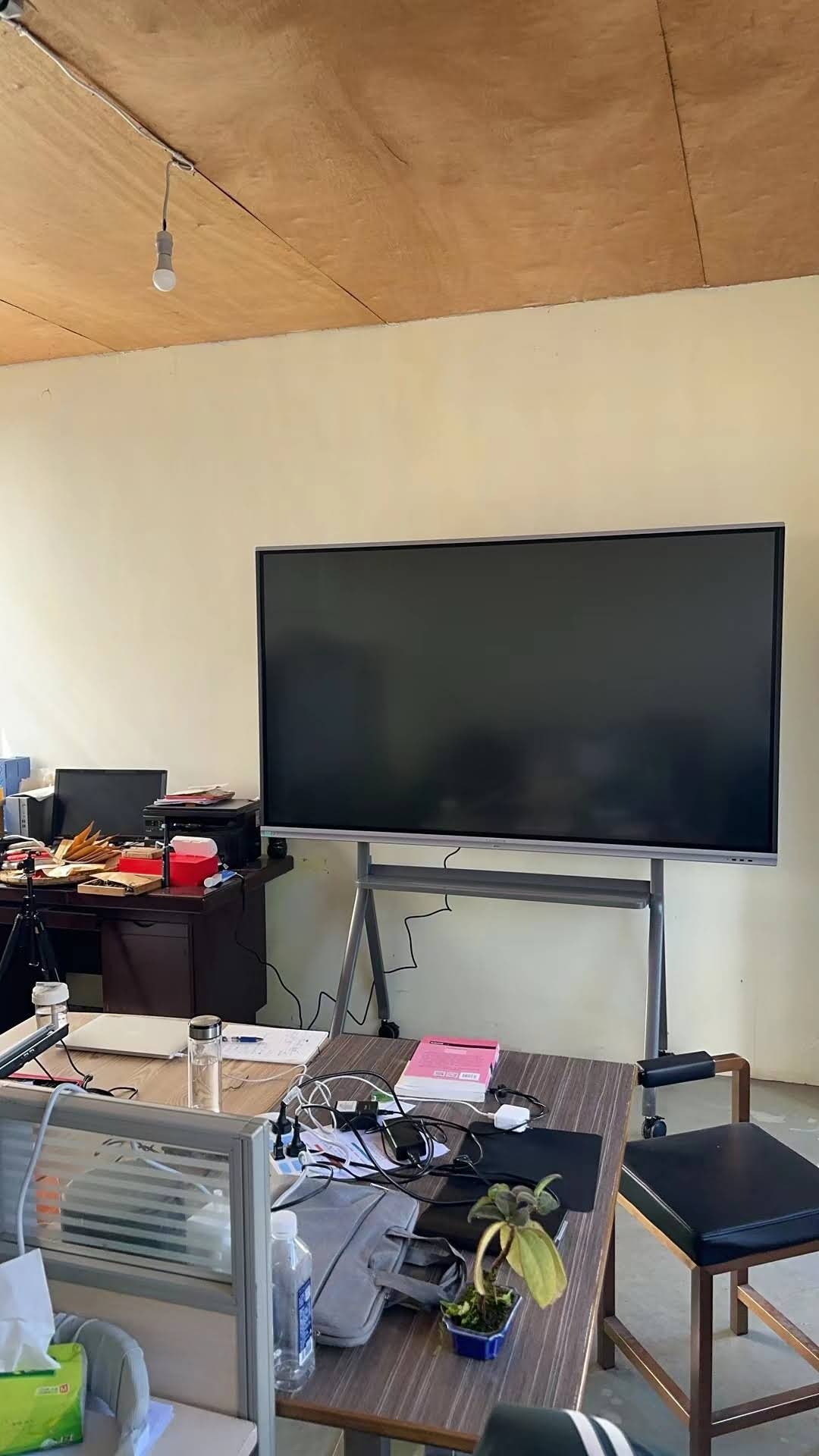
8 Criteria for Evaluating a Smart Board Manufacturer in China
1. Verifiable Manufacturing Capability
Ask for a factory video walkthrough or, better, arrange an audit through a third-party inspection agency in Shenzhen. Look for SMT lines, aging rooms where panels run for 24–72 hours before packing, anti-static assembly zones, and a dedicated touch-calibration station. A company that hesitates to show its production floor is usually not the one building the product.
2. Years in the Interactive Display Niche
The interactive flat panel market has gone through several technology shifts – from infrared frames to zero-bonding capacitive glass, from Android 5 to Android 14, from 1080p to 4K. A manufacturer that has survived more than a decade in this specific category has accumulated the firmware knowledge and supplier relationships that newcomers simply do not have.
3. Certifications That Match Your Destination Market
- Europe: CE (EMC, LVD, RED), RoHS, REACH, WEEE registration
- North America: FCC Part 15, UL/ETL safety, Energy Star (increasingly requested in government tenders)
- Middle East: SASO (Saudi Arabia), ESMA (UAE), G-Mark
- Factory level: ISO 9001 quality management, ISO 14001 environmental, and ideally BSCI or SEDEX social audits for corporate ESG compliance
4. In-House R&D and Firmware Control
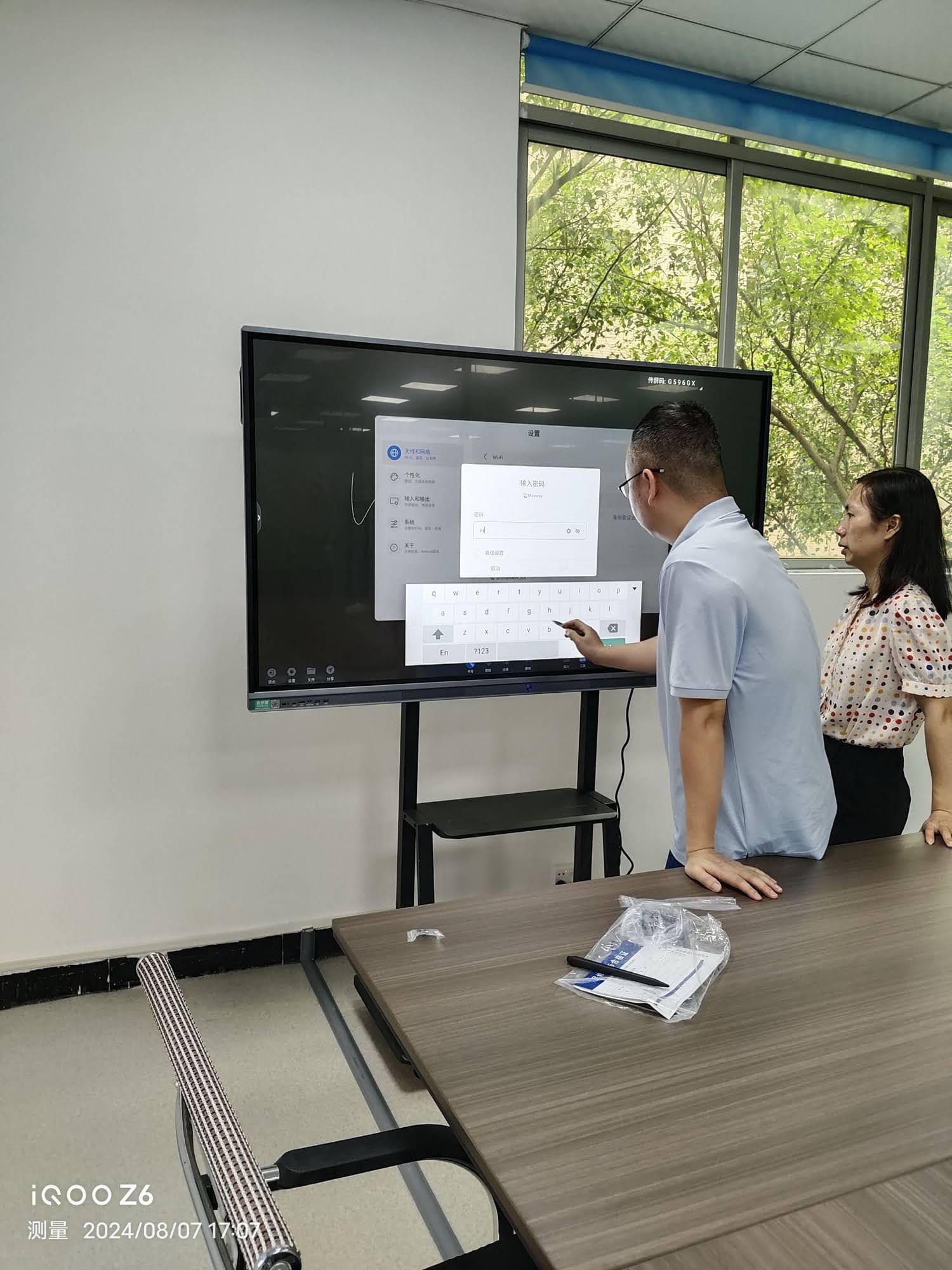
Corporate IT departments care about security patches, MDM compatibility, and the ability to lock down the Android launcher. Only a manufacturer with its own software team can commit to firmware updates for the life of your deployment. Ask specifically whether they control the mainboard BSP or simply flash a generic image from a chipset vendor.
5. Realistic Customization Scope
A reliable partner will tell you clearly what can and cannot be customized at your order volume. Typical ODM options for corporate projects include branded boot logos, custom launcher themes, pre-loaded video-conferencing apps, OPS slot configurations, mobile stands, and bilingual packaging. Beware of suppliers who say yes to everything without asking about quantity.
6. Transparent Quality Control Process
Request the manufacturer’s QC checklist. For interactive panels it should cover dead pixel standards (ask for Class A panels with zero bright dots), touch accuracy testing across the full surface, speaker and microphone verification, Wi-Fi and Bluetooth range tests, and a burn-in period. Insist on pre-shipment inspection reports with photos for every batch.
7. After-Sales Infrastructure
Spare parts availability is where many Chinese suppliers fall short. Confirm that the partner stocks mainboards, touch frames, and power supplies for at least three years after your final purchase, and clarify whether warranty service is handled by remote diagnostics, local service partners, or return-to-factory. Industry bodies such as AV Industry Standards and Resources publish useful benchmarks for commercial display service levels.
8. Communication and Project Management
Corporate projects require weekly status updates, engineering change documentation, and someone who answers emails within one working day across time zones. Evaluate the sales engineer assigned to you during the quotation phase – responsiveness at that stage is the best predictor of responsiveness after you have paid the deposit.
Technical Specifications Corporate Buyers Should Lock Down
When drafting an RFQ, vague wording like “4K smart board with touch” leaves far too much room for interpretation. Use the table below as a baseline specification sheet for enterprise meeting rooms.
| Specification | Recommended Minimum for Corporate Use | Why It Matters |
|---|---|---|
| Display | 4K UHD, 350–400 nits, anti-glare tempered glass, Class A panel | Readability under office lighting and spreadsheet legibility |
| Touch | 20-point infrared or 40-point capacitive, <8 ms response, palm rejection | Natural annotation during multi-user brainstorming |
| Processor & Memory | Octa-core SoC, 8GB RAM, 128GB storage, Android 13 or newer | Smooth video conferencing and future app compatibility |
| Windows Option | OPS slot (80-pin JAE) or bundled mini PC | Runs enterprise Windows images and domain policies |
| Connectivity | Wi-Fi 6, Bluetooth 5.x, Gigabit LAN, USB-C with 65W+ power delivery, 3× HDMI | Single-cable laptop connection and stable wireless casting |
| Audio & Camera | 2× 15W speakers, 8-array mic, optional 4K AI camera | Hybrid meetings without extra peripherals |
| Warranty | 3 years standard, extendable to 5 | Aligns with corporate asset depreciation cycles |
Red Flags When Dealing with Chinese Smart Board Suppliers
- Prices far below market. A 75-inch 4K panel quoted at the price of a 65-inch almost always means a refurbished or B-grade panel, a two-year-old chipset, or a touch frame with poor calibration.
- No company name on the certificate. CE and FCC reports should name the factory or brand you are buying from, not an unrelated entity.
- Reluctance to provide samples. Legitimate manufacturers will sell one or two sample units at a reasonable price and deduct the cost from the bulk order.
- Generic product photos. If every supplier shows the same renders, they are likely sourcing from the same assembly workshop.
- Payment to a personal account. Corporate orders should always be paid to a company account matching the business license.
- No exhibition presence. Serious manufacturers show up at ISE in Barcelona, InfoComm in the United States, GITEX in Dubai, and the Canton Fair or Hong Kong Electronics Fair – it is one of the easiest ways to verify they exist.
A Realistic Sourcing Timeline for Corporate Rollouts
| Phase | Duration | Key Activities |
|---|---|---|
| Shortlisting | 2–3 weeks | RFQ to 5–8 suppliers, document checks, video factory tours |
| Sampling | 3–4 weeks | Order 1–2 units from top 2 candidates, IT security testing, user trials |
| Negotiation & Contract | 1–2 weeks | Pricing tiers, Incoterms (FOB Shenzhen vs. DDP), warranty terms, penalty clauses |
| Production | 4–6 weeks | Branding approval, firmware build, aging test, third-party inspection |
| Shipping | 1–6 weeks | Air freight for pilot sites, sea freight from Yantian or Shekou port for bulk |
Plan for roughly three to four months from first inquiry to installed panels. Avoid scheduling production during Chinese New Year (late January to mid-February) and the October National Day holiday, when factories in Guangdong close for one to three weeks.
What a Mature Shenzhen Manufacturer Looks Like in Practice
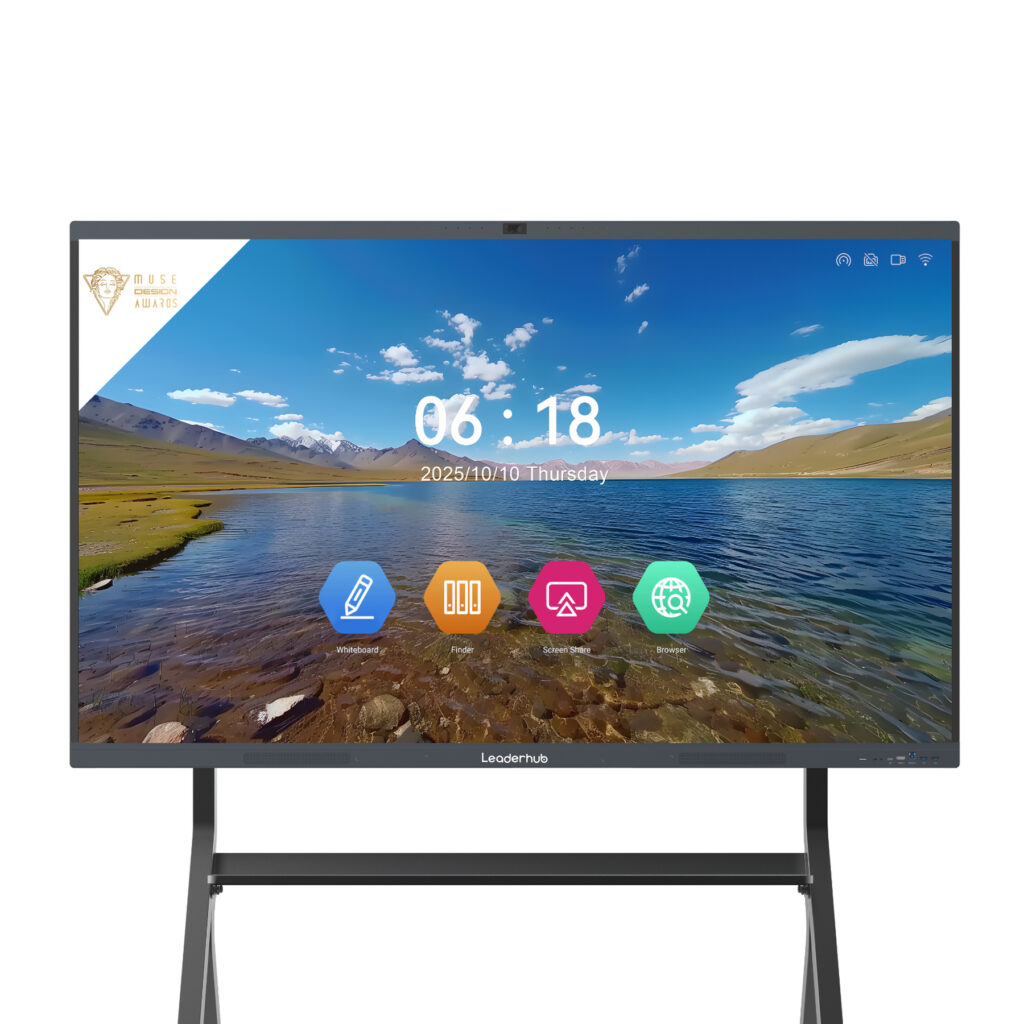
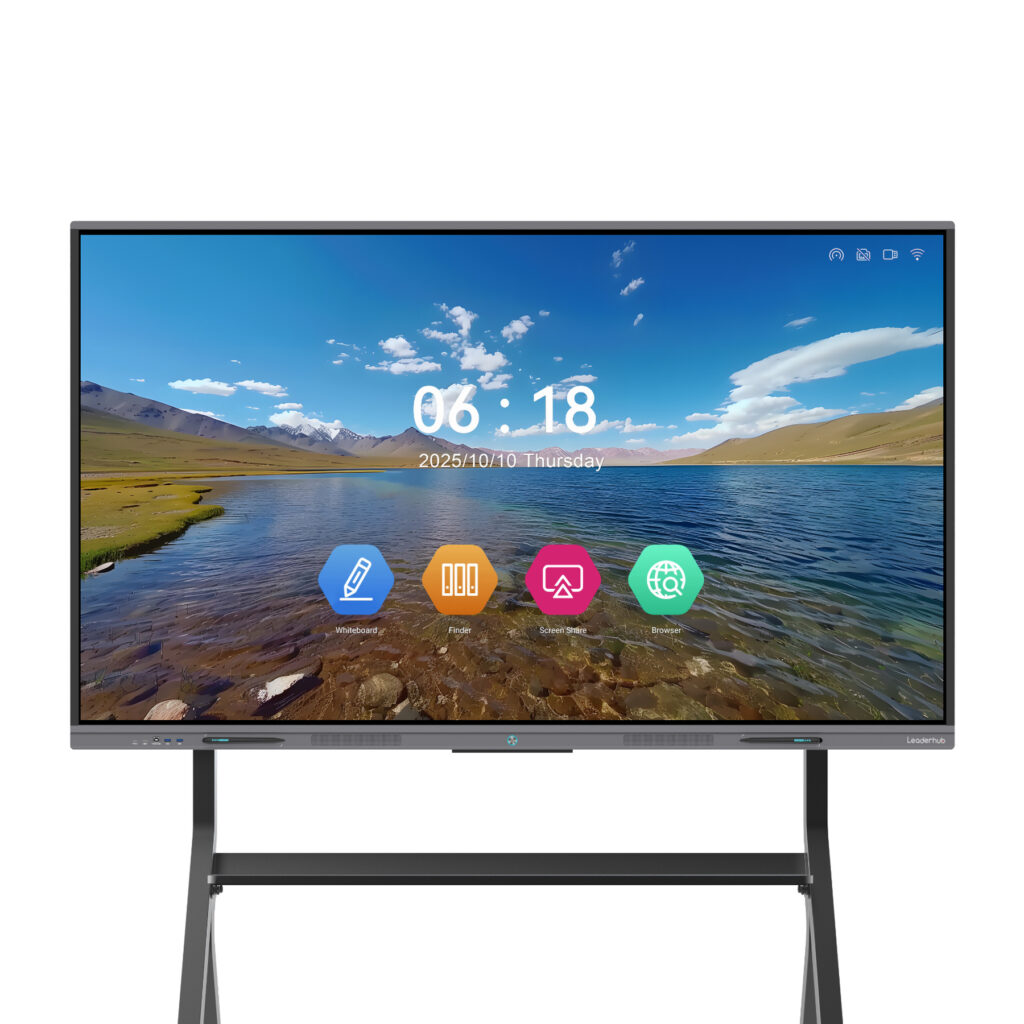
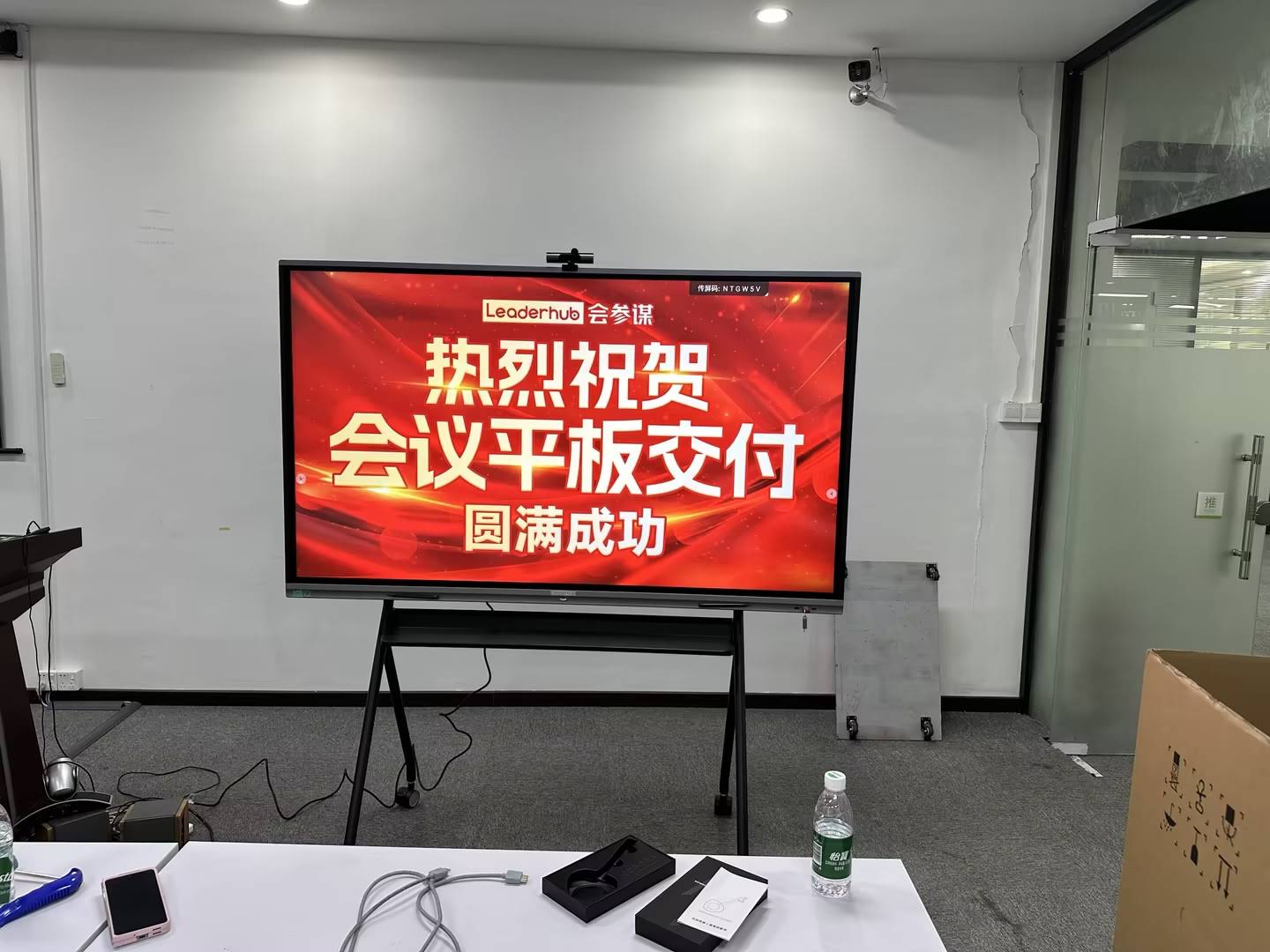
To make these criteria concrete, consider the profile of LeaderHub, a Shenzhen-based technology company with 16 years of experience in the interactive panel industry since 2010. It operates four product lines – smart whiteboards, interactive flat panels, mini PCs, and portable smart screens – ships to more than 82 countries, ranks NO.1 in the JD.com interactive panel subcategory, and holds strategic partnerships across the finance, internet, education, training, and government sectors. Its HM Series rotatable conference hub also received international design recognition, which you can review on the Leaderhub HM Series award page. That combination of own-brand retail validation, export track record, award-winning industrial design, and active participation in global electronics exhibitions is exactly the set of signals a corporate buyer should be looking for.
Recommended Configurations for Different Corporate Spaces
Not every room needs the same panel. A tiered approach keeps budgets under control while giving each space the right tool. The following configurations are drawn from the current smart whiteboards product range and pair well with the business mini PCs for Windows-based environments.
| Corporate Space | Suggested Model | Reference Price | Notes |
|---|---|---|---|
| Huddle room (2–6 people) | L65ZM 65″ 4K Interactive Whiteboard | $1,099 | Cost-effective entry point for volume deployment |
| Standard meeting room (6–12 people) | L75HM 75″ 4K Smart Whiteboard | $1,599 | Rotatable design for portrait document review |
| Executive boardroom | L86HM 86″ 4K Smart Whiteboard | $3,199 | Premium finish and larger canvas for presentations |
| Training hall / auditorium | L110H 110″ Interactive Flat Panel | $7,999 | Replaces projector setups in large spaces |
| Flexible / agile workspace | U55Pro 55″ Mobile 4K Smart Display | $2,499 | Battery-powered mobility between rooms |
| Windows integration add-on | LP5C Mini PC – Intel i5, 16GB RAM | $799 | Runs corporate Windows images alongside Android |
For a broader comparison of cost-effective options from Chinese suppliers, the China Smart Board Selection Guide offers a useful independent overview of the enterprise segment.
Questions to Ask Before Signing an OEM/ODM Agreement
- Who owns the custom firmware and branded UI after the project ends, and can we obtain the source files if the relationship terminates?
- What is the guaranteed firmware and security update period, and how are updates delivered (OTA, USB, MDM push)?
- Which panel brand and grade is used, and is the panel supplier fixed for the life of the contract?
- How is the defective-on-arrival rate handled – replacement units, credit notes, or on-site repair?
- Can the manufacturer provide installation drawings, VESA specifications, and wall-load data for our facilities team?
- What happens to pricing if LCD panel costs rise mid-project – is there a cap or an index clause?
- Can we visit the factory with our own inspector before the first bulk shipment leaves Shenzhen?
Frequently Asked Questions
What is the minimum order quantity for a branded smart board from China?
For logo and UI customization on an existing model, many Shenzhen manufacturers accept 20 to 50 units. Enclosure color changes typically start at 100 units, and fully custom industrial design requires 300 units or more to justify tooling.
Should corporate buyers choose Android-only or Android plus Windows panels?
If your organization relies on Microsoft Teams Rooms, Zoom Rooms, or domain-joined Windows policies, specify an OPS slot or a bundled mini PC. Android-only panels work well for whiteboarding, wireless casting, and web-based collaboration tools where IT control requirements are lighter.
How do I handle warranty service for panels installed in multiple countries?
Negotiate a spare-parts kit (typically 2–3% of order value in mainboards, touch frames, and power supplies) shipped with the main order, plus remote diagnostic support. Established manufacturers with a presence in 80+ countries can often connect you with local service partners.
Which Incoterm is best for corporate smart board imports?
FOB Shenzhen gives you control over freight and insurance and is preferred by companies with existing forwarders. DDP (Delivered Duty Paid) simplifies budgeting for first-time importers but carries a premium of roughly 8–15% depending on destination.
How can I verify a Chinese manufacturer is legitimate?
Check the business license on the National Enterprise Credit Information Publicity System, confirm the factory address matches the certificates, request a live video call from the production floor, and look for consistent presence at international trade shows over several years.
Start Your Corporate Smart Board Project with Confidence
Choosing a smart board manufacturer in China for corporate projects is ultimately about reducing risk: risk of poor hardware, risk of abandoned firmware, and risk of a supplier who disappears after the deposit clears. By prioritizing manufacturers with a long track record in the interactive display niche, verifiable factory capability, destination-market certifications, in-house R&D, and a clear after-sales plan, your procurement team can capture China’s cost and customization advantages while protecting your organization’s investment.
Ready to discuss OEM/ODM options, request sample units, or receive a tailored quotation for your meeting rooms and training spaces? Contact the project team to arrange a consultation, or browse the full interactive display catalog to shortlist models for your corporate rollout.