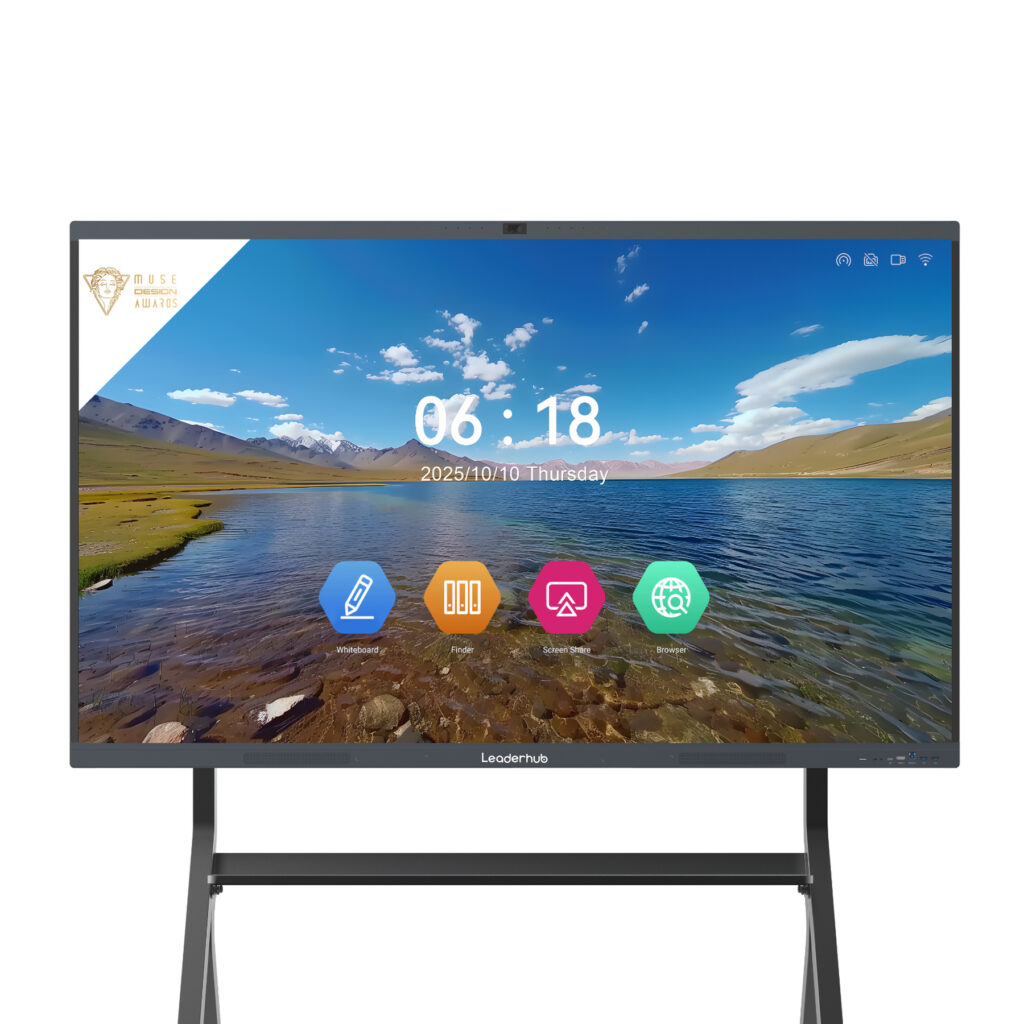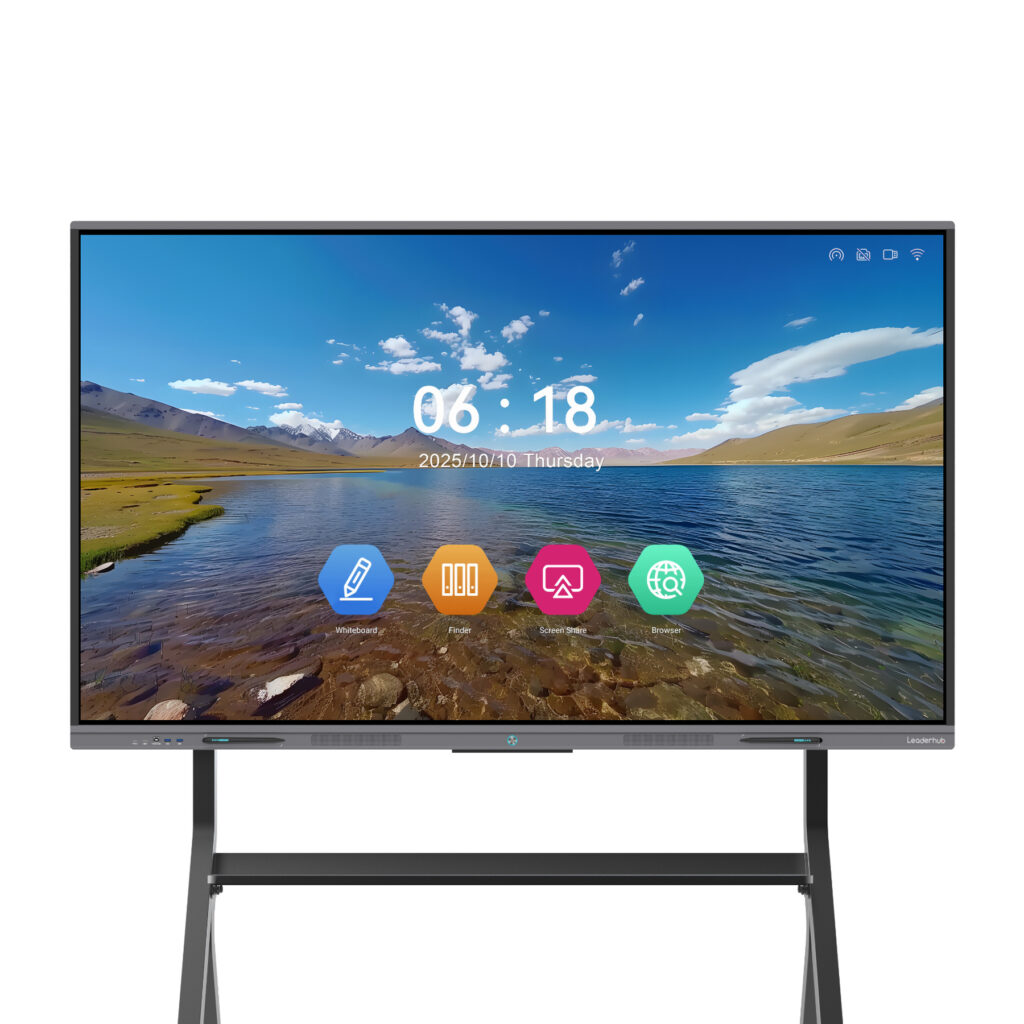
Shipping a 65-inch, 75-inch or 86-inch interactive display across an ocean is not the same as sending a laptop. A smart board is a large, glass-fronted, electronics-dense product that may spend 30 to 45 days inside a steel container, pass through three or four climate zones, and be handled by a dozen forklift operators before it reaches a classroom in Lagos or a boardroom in Oslo. Smart board environmental testing for international shipping is the discipline that makes sure the panel powering on at the destination behaves exactly like the one that left the factory.
This guide explains what environmental testing actually involves, which international standards apply, how climate and route affect the risk profile, and what procurement teams, distributors and system integrators should ask a supplier before placing a container order.
Why Environmental Testing Matters for Interactive Displays
Transit damage on interactive flat panels rarely looks dramatic. A shattered screen is obvious and gets claimed quickly. The expensive problems are the ones that surface weeks later: a touch frame that drifts after a humidity swing, a backlight with a dim corner caused by a micro-crack in the LED bar, or a speaker grille that rattles because a bracket loosened under vibration. These defects turn into warranty claims, return freight, and lost confidence among end users who never saw the container.
Environmental testing simulates the full journey before the product leaves. The goal is to answer one question with evidence: will this unit, inside this packaging, survive this route? For buyers importing interactive displays into Europe, the Middle East, Africa, Southeast Asia or the Americas, the answer should come from a test report rather than from a promise.
The Cost of Skipping the Test
- Direct replacement cost: a damaged 86-inch panel can cost more to replace than the freight for the entire pallet.
- Project delays: schools and offices install on fixed schedules; a late replacement can push a deployment by a full term.
- Hidden defects: moisture ingress or loosened connectors may not fail until the panel has been on a wall for months.
- Reputation damage: distributors carry the brand risk locally even when the root cause was transport.
What Happens to a Smart Board During Global Transport
Understanding the hazards is the first step to testing against them. The table below summarises the main stressors an interactive display encounters on a typical sea-plus-road route.
| Transport Stage | Environmental Stress | Typical Damage Risk |
|---|---|---|
| Factory to port (truck) | Road vibration, braking shock, forklift handling | Loosened internal cables, bracket fatigue, corner impact |
| Container loading | Crane sway, stacking compression | Carton crush, panel bowing, frame deformation |
| Ocean voyage (3 to 6 weeks) | Container temperatures from -10 °C to +60 °C, humidity up to 95 % RH, salt-laden air | Condensation inside the panel, PCB corrosion, adhesive failure |
| Air freight (urgent orders) | Rapid pressure change, low cargo-hold temperature | Sealed-cell stress, LCD optical bonding separation |
| Destination warehouse and last mile | Repeated handling, drops, uneven floors, unloading in rain or dust | Glass breakage, bezel scratches, moisture at port openings |
Notice that most of the risk is not in a single catastrophic event. It is the accumulation of thousands of small vibrations, dozens of temperature cycles and multiple handling points. That is why a credible test programme combines several test types rather than relying on a single drop test.
The Core Environmental Tests for Smart Boards
Environmental testing for export displays generally follows two families of standards. Product-level standards such as the IEC 60068 series test the display itself. Package-level standards such as ISTA and ASTM D4169 test the product inside its shipping carton as a complete system. A serious export programme uses both.
1. Temperature and Humidity Cycling
The panel is cycled between cold and hot extremes while humidity is controlled, typically following IEC 60068-2-1 (cold), IEC 60068-2-2 (dry heat) and IEC 60068-2-30 (damp heat, cyclic). The test exposes problems with adhesives, optical bonding layers, capacitor seals and the touch sensor glass. For sea freight, the storage range is more demanding than the operating range because the container is unconditioned.
2. Random and Sinusoidal Vibration
Vibration tables replay the frequency spectrum recorded on real trucks, ships and aircraft. IEC 60068-2-64 (random vibration) and IEC 60068-2-6 (sinusoidal) are the common references, often supplemented by the vibration profiles inside ISTA 3A for packaged products. This test finds loosened screws, chafed harnesses, and resonant points in the chassis that could crack solder joints on the main board.
3. Mechanical Shock and Drop
Shock testing (IEC 60068-2-27) applies defined half-sine pulses to the product, while packaged drop testing follows ISTA or ASTM D5276 procedures with drops on corners, edges and faces. For large panels, rotational edge drops and incline-impact tests are used because a full free-fall drop is not representative of how an 86-inch carton is actually mishandled.
4. Low Pressure and Altitude
Air freight and high-altitude destinations such as La Paz, Addis Ababa or Lhasa expose displays to reduced atmospheric pressure. IEC 60068-2-13 simulates this condition, checking for bubble formation in bonded layers and stress on sealed components.
5. Salt Spray and Corrosion
Coastal routes and island destinations bring salt-laden humidity. A salt mist test (IEC 60068-2-11 or IEC 60068-2-52) verifies that metal brackets, port shielding and exposed fasteners resist corrosion that would otherwise appear as rust stains or intermittent HDMI connections.
6. Compression and Stacking
Cartons in a container are stacked and strapped. Compression testing (ASTM D642 or ISO 12048) applies load to verify that the carton and inner foam protect the glass even when the pallet above is heavier than expected.
| Test | Reference Standard | Typical Export Parameters | What It Protects |
|---|---|---|---|
| Storage temperature | IEC 60068-2-1 / -2 | -20 °C to +60 °C, 16 h each extreme | LCD cell, backlight, adhesives |
| Damp heat cyclic | IEC 60068-2-30 | 25 °C to 55 °C, 93 % RH, 6 cycles | PCB, touch sensor, speaker cones |
| Random vibration | IEC 60068-2-64 / ISTA 3A | 5 to 200 Hz, 3 axes, 60 min per axis | Fasteners, cables, solder joints |
| Packaged drop | ISTA 3A / ASTM D5276 | Edge and corner drops scaled to carton weight | Glass, bezel, corner structure |
| Low pressure | IEC 60068-2-13 | Equivalent to 4,000 to 5,000 m altitude | Optical bonding, sealed capacitors |
| Salt mist | IEC 60068-2-11 | 5 % NaCl, 48 h | Brackets, ports, fasteners |
| Compression | ASTM D642 / ISO 12048 | Load equal to 2 to 3 stacked cartons | Carton integrity, panel flatness |
Packaging Engineering: The Other Half of the Test
A display that passes every product-level test can still arrive broken if the packaging is wrong. Environmental testing for international shipping treats the carton, foam, pallet and strapping as part of the product. Key design elements include:
- Moulded EPE or EPS corner blocks sized to the panel weight, with enough thickness to absorb edge drops without bottoming out.
- Double-wall or triple-wall corrugated cartons with edge crush test values matched to the stacking load.
- Vertical orientation for large panels, which reduces bending stress on the glass compared with flat stacking.
- Desiccant packs and moisture barrier bags for humid routes, sized to the carton volume and voyage duration.
- Shock and tilt indicators on the carton exterior so the receiving warehouse can identify mishandled units before signing.
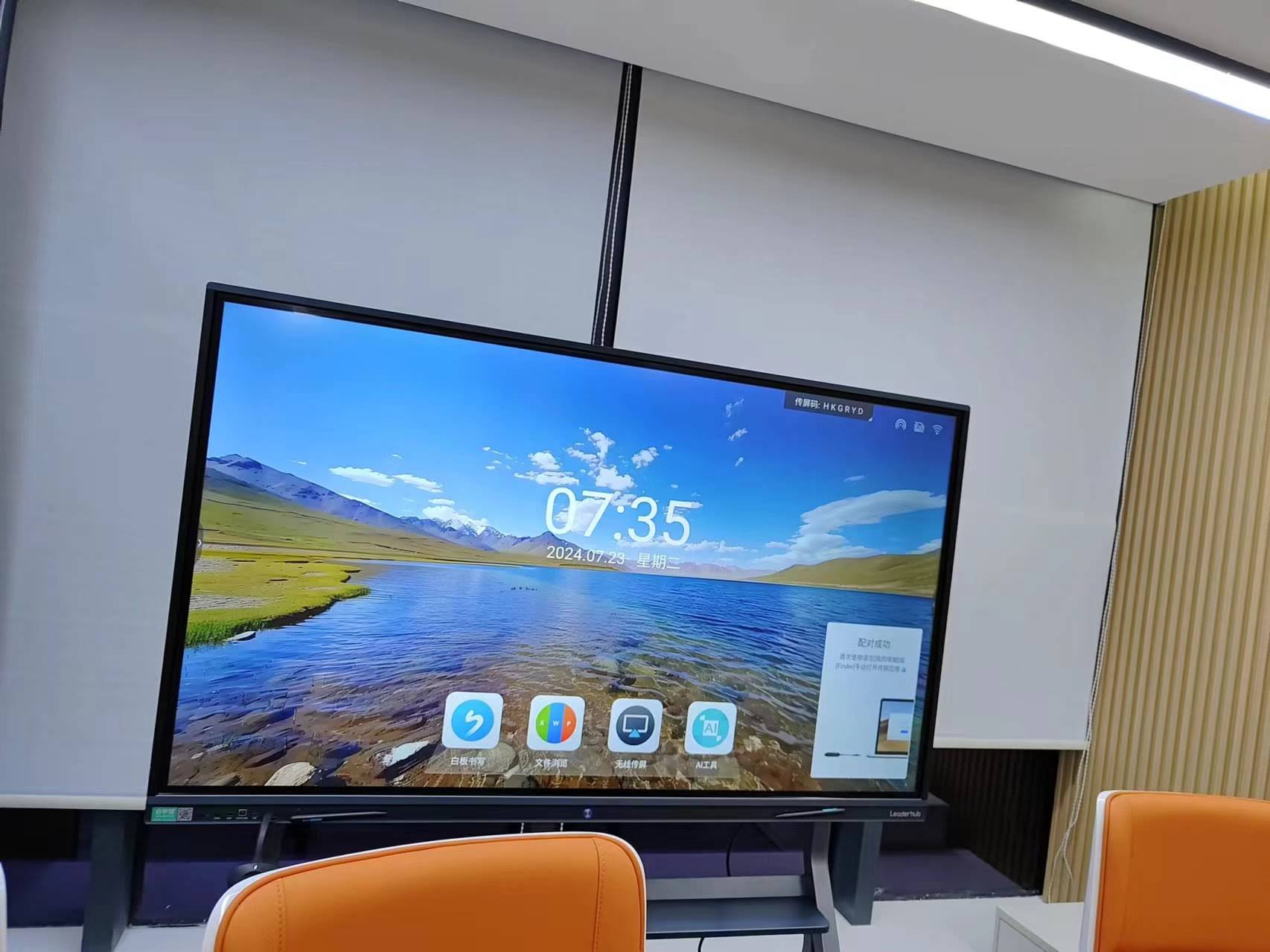
- Heat-treated or ISPM 15 compliant pallets to clear phytosanitary inspection at customs without delay.
Matching the Test Programme to the Destination Climate
Not every route needs every test at the same severity. A shipment to Rotterdam in spring faces a different profile from a shipment to Jeddah in August or Jakarta in the monsoon season. Experienced exporters adjust the test plan and packaging to the destination.
| Destination Region | Dominant Risk | Priority Tests and Measures |
|---|---|---|
| Northern Europe, Canada, Russia | Sub-zero storage, condensation when moved indoors | Cold storage test, 24-hour acclimatisation instruction on carton |
| Middle East, North Africa | Container interior above 60 °C, fine dust | Dry heat test, sealed bag, dust-resistant port covers |
| Southeast Asia, West Africa, Caribbean | Sustained high humidity, salt air | Damp heat cyclic, salt mist, high-capacity desiccant |
| South America (Andes), East Africa highlands | Altitude, long inland trucking on rough roads | Low pressure test, extended random vibration |
| United States, Australia (inland) | Multiple carrier handoffs, long rail segments | ISTA 3A or 3E full sequence, tilt indicators |
Pre-Shipment Quality Checklist for Interactive Displays
Environmental testing is usually done on samples during product qualification. Mass-production shipments then rely on a pre-shipment inspection to confirm that the units match the tested configuration. A practical checklist looks like this:
- Power-on and burn-in for every unit, with a touch calibration check across all zones of the screen.
- Verify that the packaging revision matches the one used in the ISTA report, including foam density and carton grade.
- Confirm desiccant quantity and that moisture barrier bags are heat-sealed, not taped.
- Check that wall mounts, remote controls, stylus pens and cables are secured so they cannot move and scratch the glass in transit.
- Inspect pallet condition, strapping tension and corner protectors.
- Apply shock and tilt indicators and record their serial numbers on the packing list.
- Photograph each pallet before the container is sealed and share the images with the consignee.
Questions Buyers Should Ask Before Ordering a Container
Whether you are a school district procurement officer, an AV integrator or a regional distributor, the following questions separate suppliers who test from suppliers who hope.
Can you share the ISTA or ASTM test report for this exact carton?
The report should name the product model, carton dimensions, gross weight and the test sequence. A generic certificate for another product size is not sufficient, because an 86-inch panel behaves very differently from a 65-inch one.
What are the storage temperature and humidity limits?
These should be printed in the datasheet and on the carton. If the supplier only quotes operating limits, the panel may not have been evaluated for unconditioned sea freight.
How is the touch frame protected during vibration?
Infrared touch frames and capacitive sensors are sensitive to misalignment. Ask how the frame is fixed and whether vibration testing included a post-test touch accuracy check.
What is the damage claim process and historical damage rate?
A supplier with real export experience will know their transit damage rate by route and will have a clear process for photo evidence, replacement and freight responsibility.
How an Experienced Exporter Approaches Transport Reliability
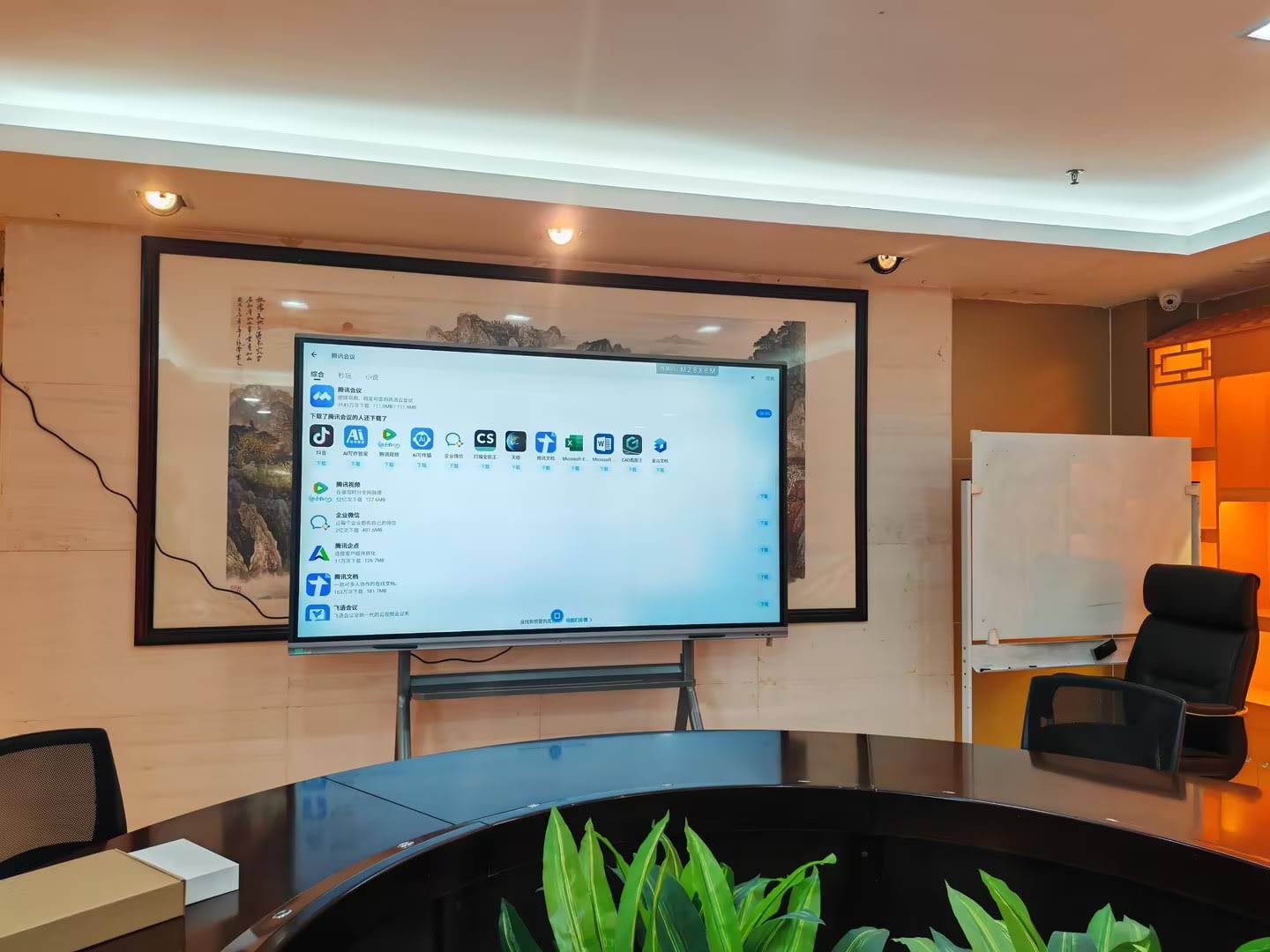
LeaderHub, a Shenzhen-based interactive display manufacturer with 16 years in the industry and shipments to more than 82 countries, builds environmental and packaging validation into product development rather than treating it as a final checkbox. Panels across the smart whiteboard range, including the 65-inch to 86-inch HM and ZM series, are qualified with temperature, humidity, vibration and packaged drop sequences, and the packaging for each screen size is designed and tested separately.
This matters for products with moving parts as well. A mobile unit such as the U55Pro 55-inch mobile interactive flat panel ships with a stand and casters, so the packaging must restrain more components than a wall-mounted panel. Smaller devices like the LeaderHub mini PC line that often ship alongside displays follow their own test profile, focused on shock and electrostatic protection rather than glass integrity.
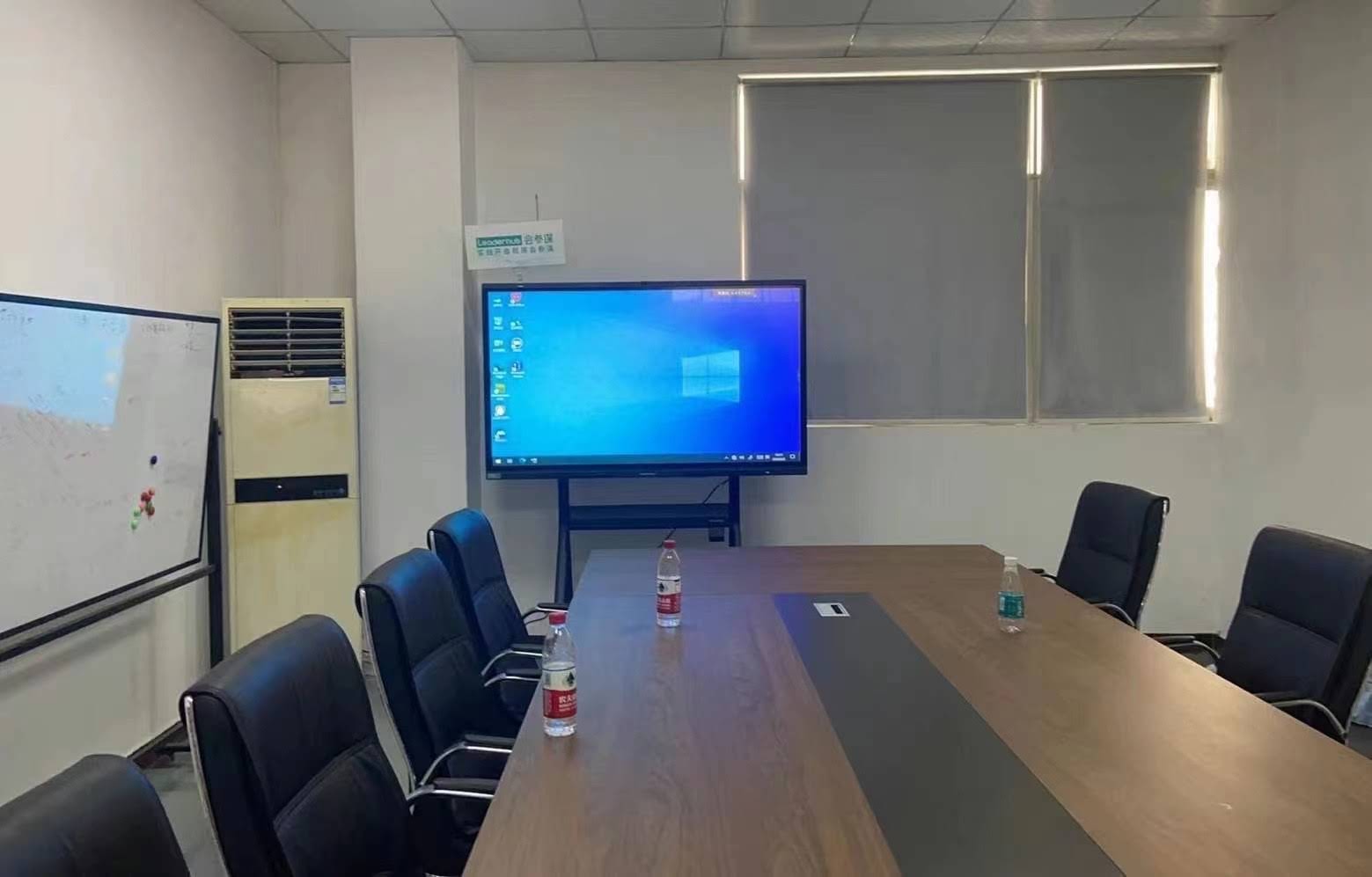
For integrators planning a multi-country rollout, the L75HM 75-inch 4K interactive smart whiteboard is a common choice because the 75-inch size balances classroom visibility with a carton that still fits standard pallet footprints and container door clearances, reducing handling risk at the destination.
Receiving Best Practices at the Destination
Testing protects the product up to the warehouse door, but the receiving team completes the chain of custody. Share these steps with your logistics partner or end customer:
- Inspect shock and tilt indicators before signing the delivery note; note any triggered indicator on the carrier’s document.
- Allow panels arriving from cold storage to acclimatise in the carton for at least 24 hours before unpacking and powering on, to avoid internal condensation.
- Unpack large panels with two people and keep the unit vertical; never lay an 86-inch panel flat on an unsupported surface.
- Power on and run a touch test within 48 hours of receipt so that any transit defect is reported inside the carrier’s claim window.
- Keep original packaging until the installation is complete, in case a unit needs to be returned or relocated.
Industry Standards and Further Reading
Audiovisual integrators can consult AV industry standards and resources from AVIXA for installation and handling guidance on large-format displays. The Consumer Technology Association also publishes guidance relevant to display reliability and packaging. For education buyers evaluating which interactive display to specify, EdTech Magazine offers a practical guide to choosing an interactive display for K-12 that complements the transport considerations covered here.
Frequently Asked Questions
Is ISTA 3A enough for shipping smart boards internationally?
ISTA 3A is a strong baseline for parcel and LTL shipments of packaged products, but large interactive displays shipped on pallets in full containers often benefit from ISTA 3E or ASTM D4169 sequences that reflect palletised handling. Combine it with product-level IEC 60068 tests for a complete picture.
Why do displays fail after arriving if they were not dropped?
The most common cause is condensation. A panel cooled in a container and then opened in a warm, humid warehouse can form moisture on the internal boards. Acclimatising the sealed carton before unpacking prevents most of these failures.
Can environmental testing be done for a custom OEM or ODM order?
Yes. When the carton size, bezel design or accessory kit changes, the packaging should be re-qualified. Reputable manufacturers include this in the OEM development timeline.
Does air freight reduce transit risk compared with sea freight?
Air freight shortens the journey and reduces humidity exposure, but it introduces pressure changes and more handling at both airports. The best option depends on the destination, the urgency and the panel size.
Conclusion
Interactive displays are an investment that is only realised once the panel is on the wall and responding to touch. Environmental testing for international shipping turns transport from the least controlled part of the supply chain into a documented, repeatable process. Insist on test reports that match the exact product and carton, match the test severity to your destination climate, and brief your receiving team on acclimatisation and inspection.
To discuss export packaging, test documentation or a multi-country rollout of interactive displays, contact the LeaderHub team or explore the full range of smart boards and interactive flat panels built for classrooms and meeting rooms around the world.