The interactive whiteboard has become an essential tool in modern classrooms and meeting rooms worldwide. But few people know the fascinating story behind this technology that transformed how we teach, present, and collaborate. Understanding the origins of the interactive whiteboard reveals not just a single inventor, but a series of innovations that built upon each other over several decades.
The Birth of Interactive Display Technology
The journey toward the interactive whiteboard began in the 1980s, when educators and technology developers recognized the need for more engaging teaching tools. The first interactive whiteboard patent was filed in 1987 by PARC (Palo Alto Research Center), though the technology didn’t reach commercial viability until several years later.
SMART Technologies, a Canadian company founded by David Martin and Nancy Knowlton, is widely credited with bringing the first commercially successful interactive whiteboard to market. In 1991, SMART introduced the SMART Board, which used resistive touch technology to detect user input. This groundbreaking product allowed users to control computer applications directly from the board surface using their fingers or special pens.
Key Pioneers and Their Contributions
While SMART Technologies played a crucial role in popularizing interactive whiteboards, several other innovators contributed to the technology’s development:
- David Martin and Nancy Knowlton ¨C Co-founders of SMART Technologies who developed the first commercially viable interactive whiteboard system
- PARC researchers ¨C Created early prototypes that explored touch-sensitive large-format displays
- Promethean ¨C Developed alternative interactive whiteboard technologies in the late 1990s, introducing infrared-based systems
- Hitachi and Panasonic ¨C Japanese companies that advanced ultrasonic and infrared detection methods
The SMART Board Revolution
The original SMART Board used a resistive membrane surface that detected pressure from any object ¨C fingers, pens, or pointers. When a user touched the board, the pressure caused two conductive layers to meet, registering the touch location. This analog approach was remarkably simple yet effective, making the technology accessible to schools and businesses with limited technical expertise.
By the mid-1990s, SMART Technologies had established partnerships with major projector manufacturers, creating complete interactive presentation systems. According to industry data from 2005, SMART Technologies controlled approximately 60% of the global interactive whiteboard market, demonstrating the widespread adoption of their invention.
Evolution of Interactive Whiteboard Technologies
As the interactive whiteboard market matured, different detection technologies emerged, each with distinct advantages:
| Technology Type | How It Works | Primary Advantages | Introduction Period |
|---|---|---|---|
| Resistive Touch | Pressure-sensitive membrane detects touch | Works with any object, affordable | Early 1990s |
| Infrared | IR sensors detect interruptions in light beams | No special pens required, durable surface | Late 1990s |
| Electromagnetic | Magnetic field detects special pen position | High precision, palm rejection | Early 2000s |
| Ultrasonic | Sound waves triangulate pen position | Accurate tracking, fast response | Mid-2000s |
| Capacitive Touch | Electrical field detects conductive objects | Multi-touch capability, smartphone-like experience | Late 2000s |
The Shift to Integrated Displays
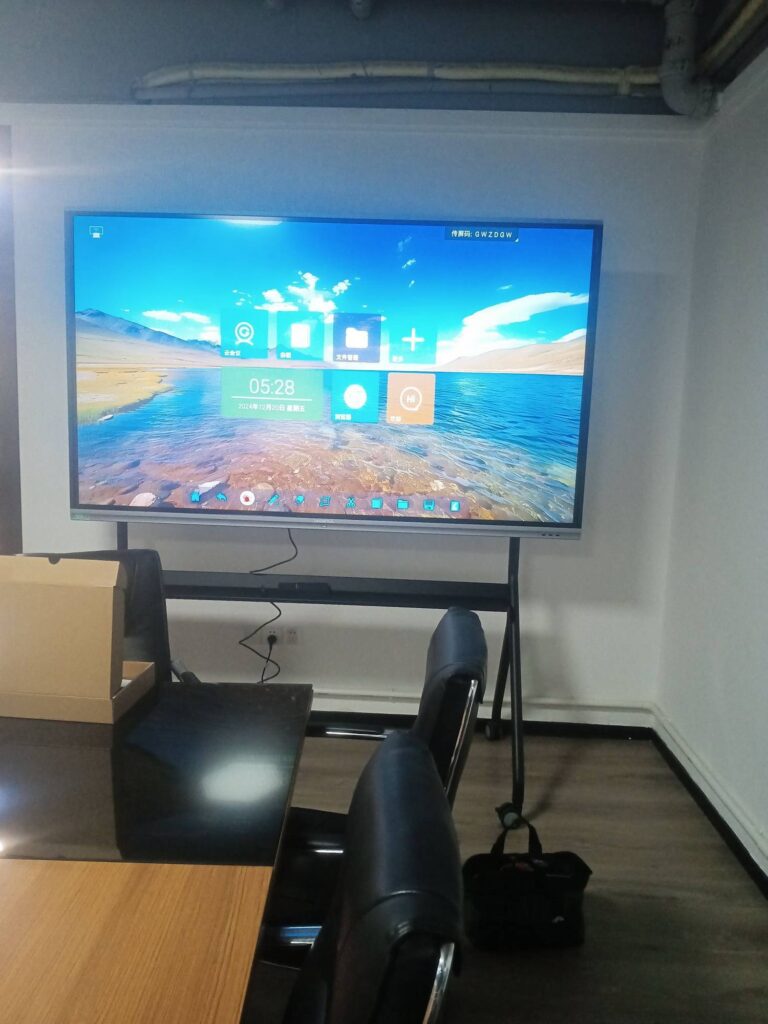
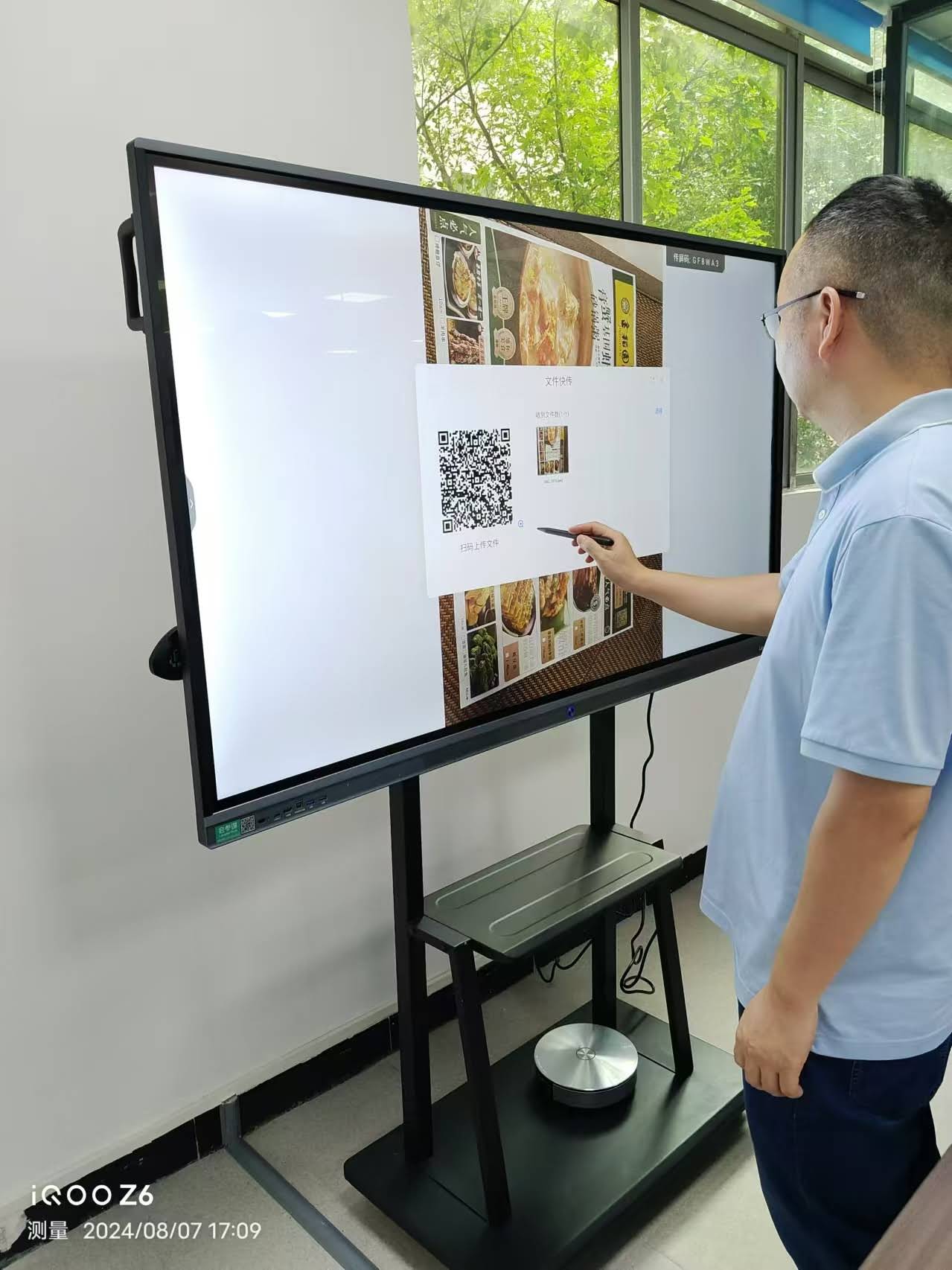
A significant evolution occurred in the 2010s when manufacturers began integrating displays directly into interactive whiteboards, eliminating the need for external projectors. These interactive flat panels combined large LCD or LED screens with touch technology, creating all-in-one solutions that offered superior image quality and reduced maintenance requirements.
Real-World Impact: From Classrooms to Boardrooms
The invention of the interactive whiteboard fundamentally changed how people collaborate and learn. In education specifically, research conducted by the British Educational Communications and Technology Agency (Becta) in 2007 found that interactive whiteboards improved student engagement by 25-40% when used effectively by trained teachers.
Educational Transformation
Schools worldwide adopted interactive whiteboards throughout the 2000s. The United Kingdom led this adoption, investing over ¡ê50 million between 2003 and 2006 to equip classrooms with interactive technology. Teachers reported that the technology enabled more dynamic lessons, allowing them to incorporate multimedia content, interactive exercises, and collaborative activities that weren’t possible with traditional chalkboards or dry-erase boards.
Dr. Sarah Mitchell, an education technology researcher at Stanford University, notes: “The interactive whiteboard didn’t just digitize the traditional board ¨C it fundamentally changed classroom dynamics. Students became more active participants rather than passive observers, and teachers gained tools to address different learning styles simultaneously.”
Business Adoption
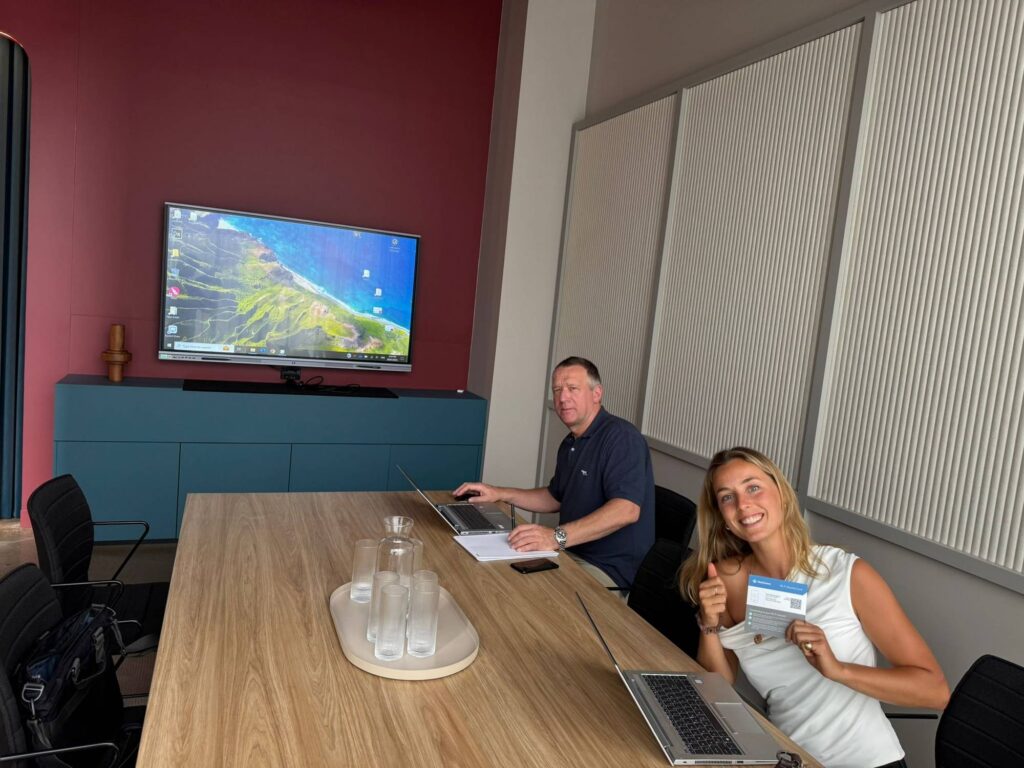
Beyond education, businesses quickly recognized the value of interactive whiteboards for presentations, brainstorming sessions, and remote collaboration. By 2012, approximately 35% of corporate meeting rooms in Fortune 500 companies were equipped with some form of interactive display technology, according to research firm Frost & Sullivan.
Modern Interactive Whiteboard Manufacturers
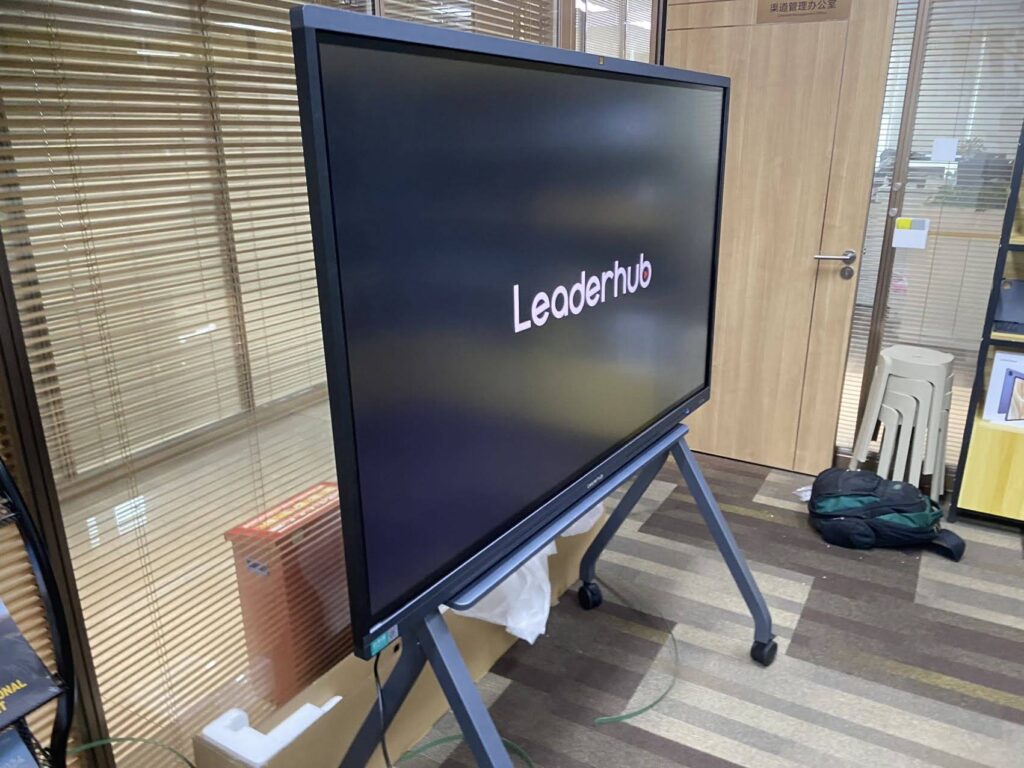
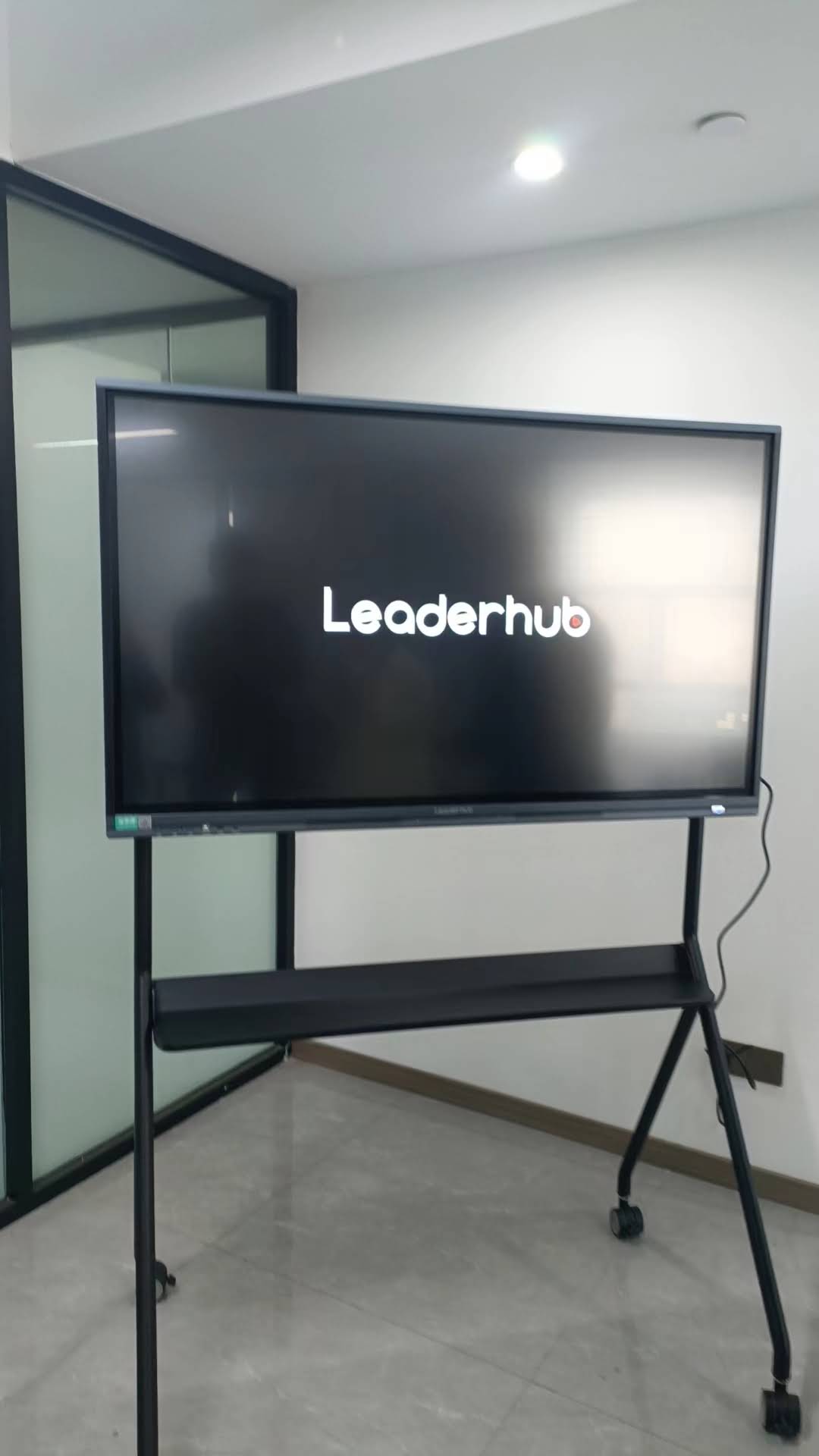
Today’s interactive whiteboard market includes numerous manufacturers offering advanced solutions. Companies like LeaderHub, which has over 16 years of experience developing interactive display technologies, now serve customers in more than 82 countries. Modern solutions integrate artificial intelligence features, cloud connectivity, and wireless screen sharing capabilities that the original inventors could scarcely have imagined.
The contemporary market offers several product categories:
- Smart whiteboards with projector-based systems
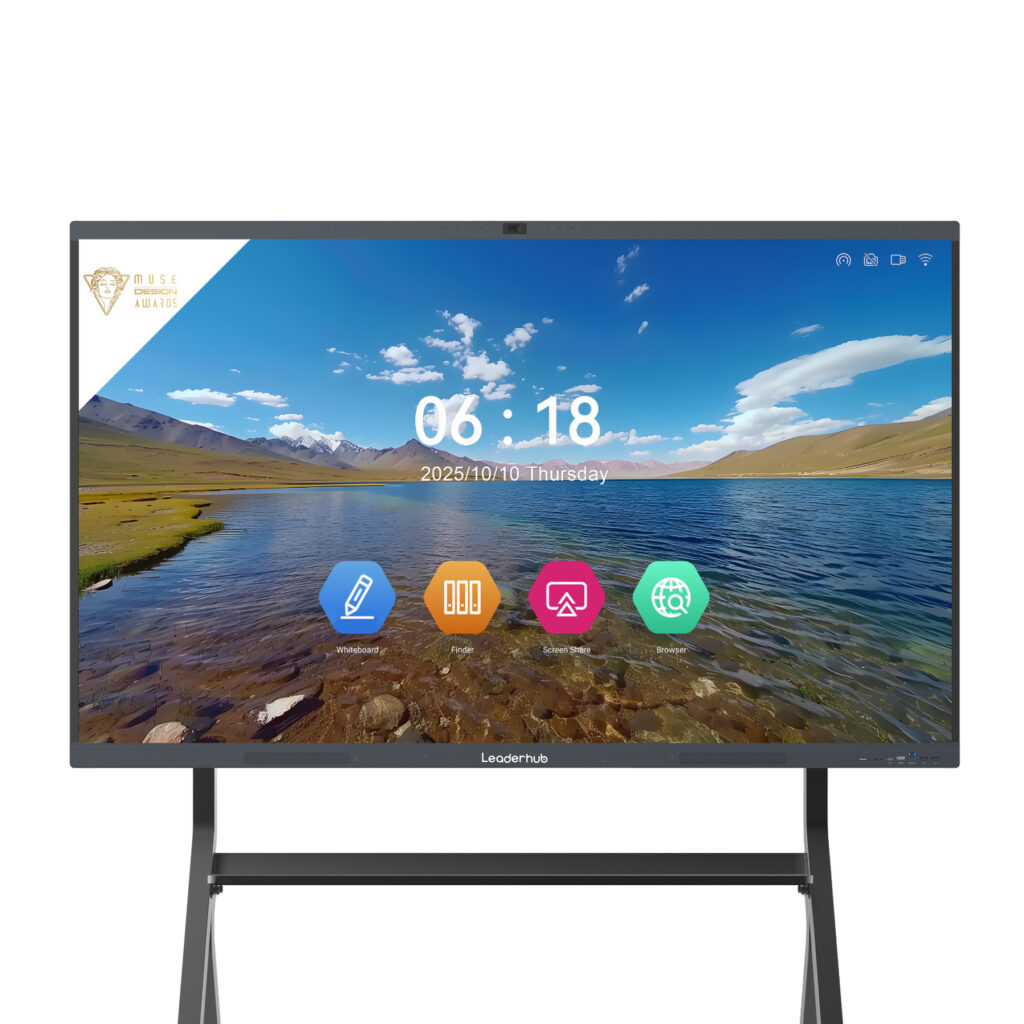
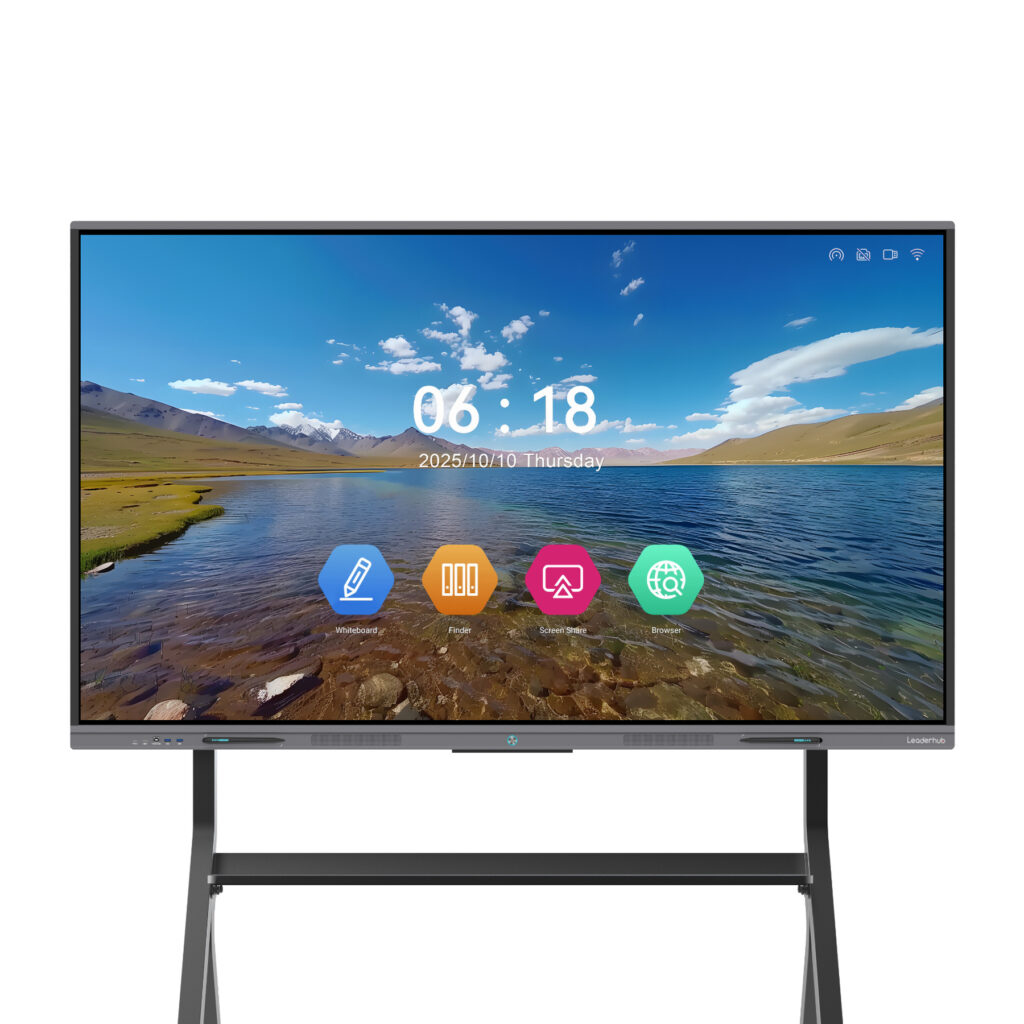
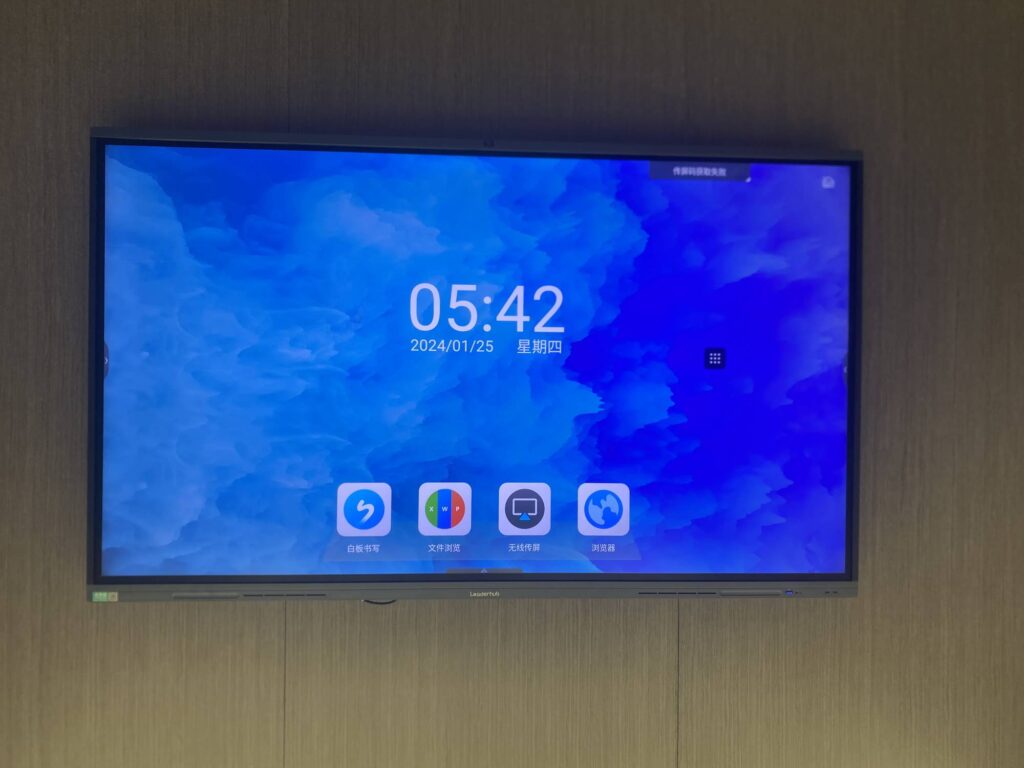
- Interactive flat panels with integrated displays
- Portable smart screens for flexible collaboration spaces
- Hybrid solutions combining traditional whiteboard surfaces with digital capture
Technical Innovations That Shaped the Industry
Multi-Touch Capability
One of the most significant advances came with multi-touch technology, allowing multiple users to interact with the board simultaneously. This capability, introduced broadly in the late 2000s, transformed collaborative work sessions by enabling several people to write, draw, or manipulate objects concurrently.
Object Recognition
Advanced systems developed in the 2010s could distinguish between different input types ¨C recognizing when users touched the screen with fingers versus special pens, and even differentiating between writing instruments and eraser tools. This intelligent recognition made the digital experience more intuitive and closer to traditional whiteboard interactions.
Cloud Integration and Remote Collaboration
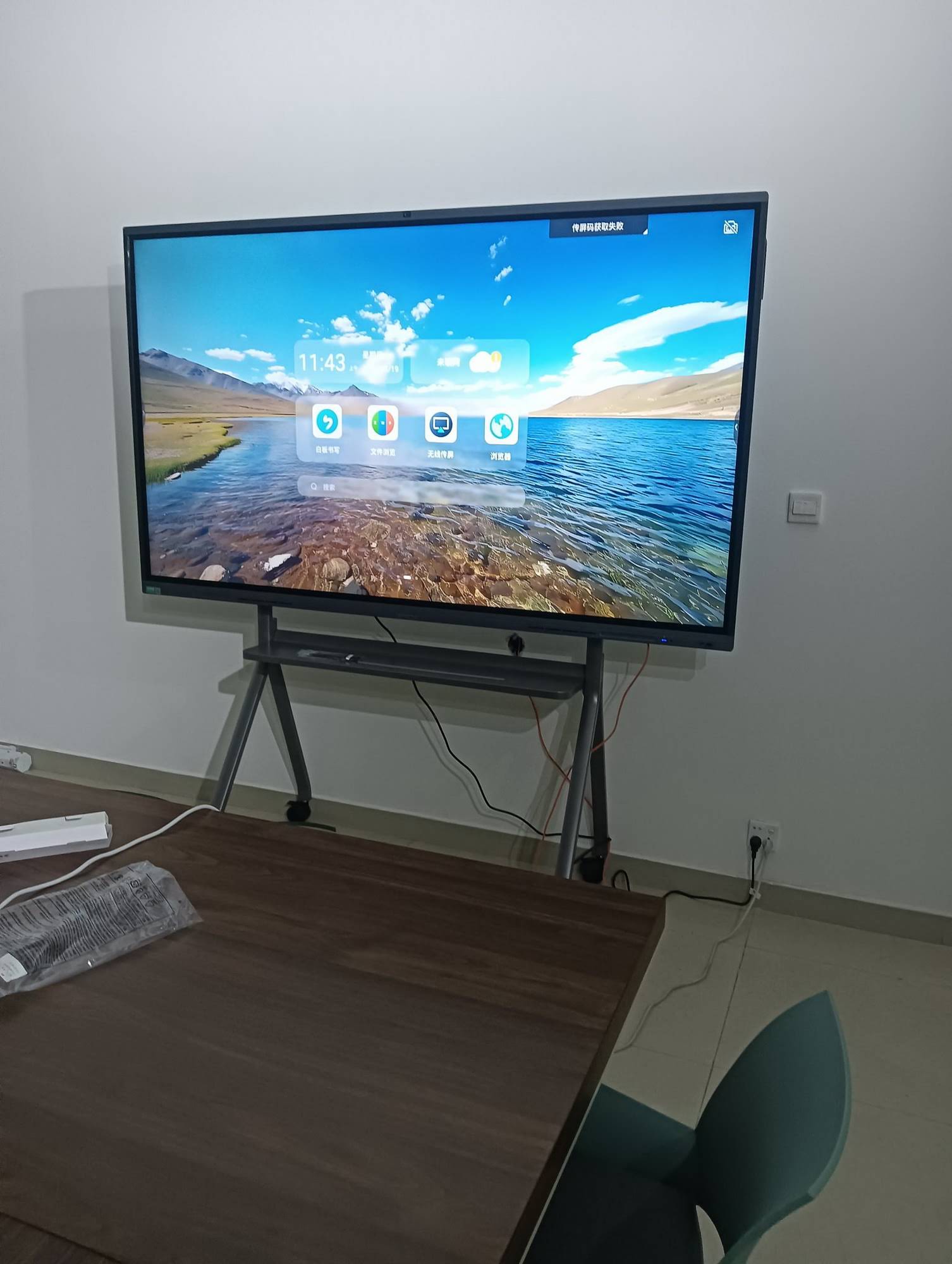
The most recent generation of interactive whiteboards integrates cloud storage and video conferencing capabilities, addressing the growing need for remote and hybrid work environments. According to Gartner research from 2023, 78% of newly purchased interactive displays include native cloud integration features, reflecting this priority shift.
The Role of Software Development
While hardware innovation receives most attention, software development proved equally crucial to the interactive whiteboard’s success. Early systems came with proprietary software offering basic annotation and presentation tools. Over time, software capabilities expanded dramatically:
- Lesson planning tools specifically designed for educators
- Content libraries with pre-made interactive materials
- Assessment features allowing real-time student response systems
- Recording capabilities to capture and share sessions
- Cross-platform compatibility supporting various devices and operating systems
AI-Powered Features
Artificial intelligence now enhances modern interactive whiteboards with features like handwriting recognition, automatic shape correction, smart content suggestions, and even real-time translation. These innovations build upon the foundation established by early pioneers while addressing contemporary collaboration needs.
Global Adoption Patterns and Regional Variations
Interactive whiteboard adoption varied significantly across regions, influenced by educational funding policies, technology infrastructure, and cultural approaches to teaching:
North America and Europe
These regions led early adoption, particularly in K-12 education. Government initiatives and institutional funding supported widespread deployment throughout the 2000s and 2010s.
Asia-Pacific Markets
Countries like China, Japan, and South Korea invested heavily in educational technology infrastructure from the mid-2010s onward. China’s market grew particularly rapidly, with domestic manufacturers developing competitive products that accelerated adoption in schools and businesses.
Emerging Markets
Latin America, Africa, and Southeast Asia showed strong growth in the late 2010s as prices declined and wireless connectivity improved. Mobile and portable interactive solutions gained particular traction in regions with diverse infrastructure conditions.
Challenges and Criticisms
Despite widespread adoption, interactive whiteboards faced legitimate criticisms that shaped their continued development:
- Implementation gaps ¨C Studies showed that simply installing hardware didn’t guarantee effective use; proper teacher training proved essential
- High initial costs ¨C Early systems required significant investment that strained educational budgets
- Maintenance requirements ¨C Projector-based systems needed regular bulb replacements and calibration
- Technical reliability ¨C Connection issues and software glitches sometimes disrupted lessons or meetings
- Teacher-centric use ¨C Some implementations focused on teacher presentations rather than student interaction
These challenges drove continuous improvement. Modern systems address many early limitations through more robust hardware, intuitive software, integrated displays that eliminate projector maintenance, and better professional development resources.
The Future of Interactive Display Technology
The evolution that began with SMART Technologies’ 1991 invention continues accelerating. Current development trends include:
Ultra-High Resolution Displays
4K and 8K displays provide exceptional clarity for detailed work in design, architecture, and medical imaging applications.
Advanced Collaboration Features
Integration with Microsoft Teams, Zoom, and other platforms creates seamless hybrid meeting experiences combining in-room and remote participants.
Artificial Intelligence Integration
AI capabilities now include automatic meeting summarization, intelligent content organization, and context-aware suggestions that anticipate user needs.
Sustainability Focus
Manufacturers increasingly prioritize energy efficiency, recyclable materials, and extended product lifecycles in response to environmental concerns.
Conclusion: A Collaborative Invention
While SMART Technologies and its founders deserve recognition for commercializing the interactive whiteboard, the technology represents a collaborative achievement spanning multiple companies, researchers, and decades of innovation. From early PARC prototypes to today’s AI-powered interactive flat panels, each generation built upon previous breakthroughs.
The interactive whiteboard’s true significance lies not in any single inventor’s contribution, but in how the technology fundamentally changed human communication, collaboration, and learning. As artificial intelligence continues transforming these tools, the vision of those early pioneers ¨C making collaboration more engaging, efficient, and accessible ¨C remains as relevant today as it was when the first SMART Board appeared over three decades ago.
Organizations worldwide now rely on interactive display technology for education, business, government operations, and creative work. The industry continues evolving, driven by manufacturers committed to developing more intelligent, intuitive, and accessible collaboration solutions that empower people to communicate effectively regardless of location or technical expertise.