Over the past decade, China has become the world’s primary source of interactive flat panels and smart whiteboards. Industry estimates suggest that more than 80% of global smart board shipments originate from factories in Guangdong Province, with Shenzhen alone hosting hundreds of display assembly lines, touch-frame suppliers, and mainboard designers within a 50-kilometer radius. For distributors, system integrators, and education procurement teams in the United States, Europe, the Middle East, Southeast Asia, and Latin America, this concentration means two things: unbeatable pricing potential and a very real risk of choosing the wrong partner.
This guide walks you through how a smart board mass production factory in China actually operates, what separates a genuine manufacturer from a trading company, how wholesale prices are structured, and which questions you must ask before placing a container order.
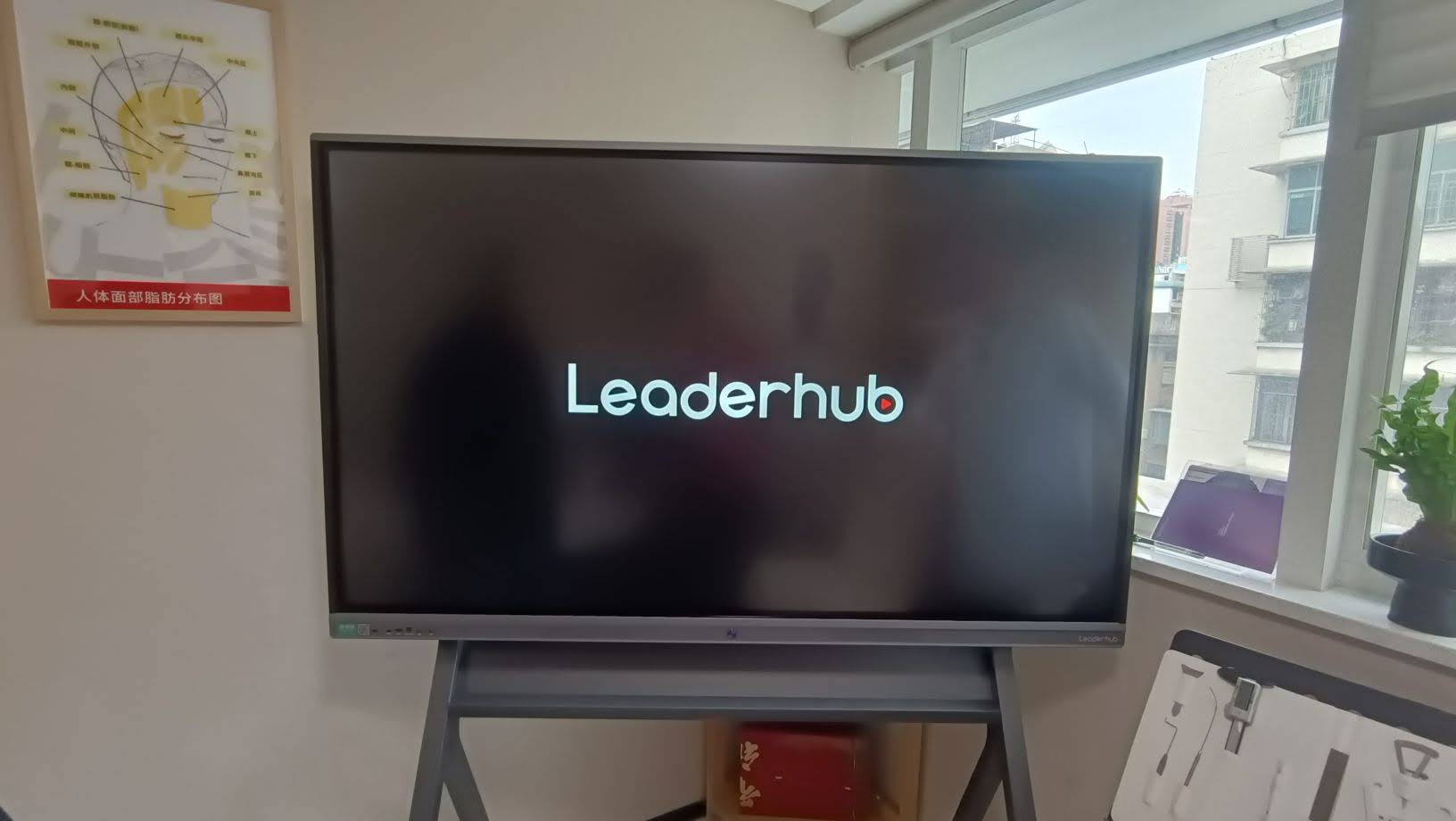
Why China Dominates Smart Board Mass Production
The reason buyers worldwide source interactive displays from China is not simply labor cost. It is supply chain density. A smart board is made of roughly 200 components — the LCD open cell, infrared or capacitive touch frame, tempered anti-glare glass, Android SoC board, optional OPS Windows module, speakers, camera array, microphone, aluminum frame, and power supply. In the Pearl River Delta, every one of these parts can be sourced within a one-day drive.
- Panel access: BOE, CSOT, and HKC produce most of the world’s 65″, 75″, 86″, and 110″ 4K open cells, and their logistics hubs sit near Shenzhen and Huizhou.
- Touch technology clusters: Infrared touch-frame makers in Shenzhen and Dongguan supply 20-point and 40-point frames at scale.
- Software ecosystem: Mature Android 13/14 whiteboard firmware, wireless screen-sharing, and AI meeting features are developed locally.
- Export experience: Factories are already familiar with CE, FCC, RoHS, UKCA, and ENERGY STAR documentation required by Western importers.
Public-sector demand is also accelerating. The UNESCO Technology in Education Report highlights how governments across Asia, Africa, and Latin America are prioritizing classroom digitization, while the EU Digital Equipment for Schools initiative drives large-volume tenders in Europe. This creates consistent order flow that keeps Chinese production lines running year-round and unit costs low.
Factory vs. Trading Company: How to Tell the Difference
The most common mistake foreign buyers make is assuming that every “manufacturer” on a B2B platform owns a production line. Many are trading companies that rebrand products from a third-party OEM. That is not always bad — but it adds a 10–20% margin and removes your control over quality and lead time.
| Checkpoint | Genuine Factory | Trading Company |
|---|---|---|
| Business license scope | Lists “production” or “manufacturing” of electronic displays | Lists “sales”, “trade”, or “import & export” only |
| Live video factory tour | Can show SMT lines, aging rooms, and packing lines on request | Shows a showroom or asks for “scheduling” |
| Firmware customization | In-house R&D can change boot logo, UI, apps, OTA server | Only cosmetic changes via supplier |
| Pricing transparency | Can break down cost by panel grade, touch type, RAM/ROM | Offers a single bundled price |
| Certifications | ISO 9001 / ISO 14001 issued in factory name | Certificates issued to another company |
| Industry awards & brand history | Verifiable design awards, domestic e-commerce rankings | Little or no independent recognition |
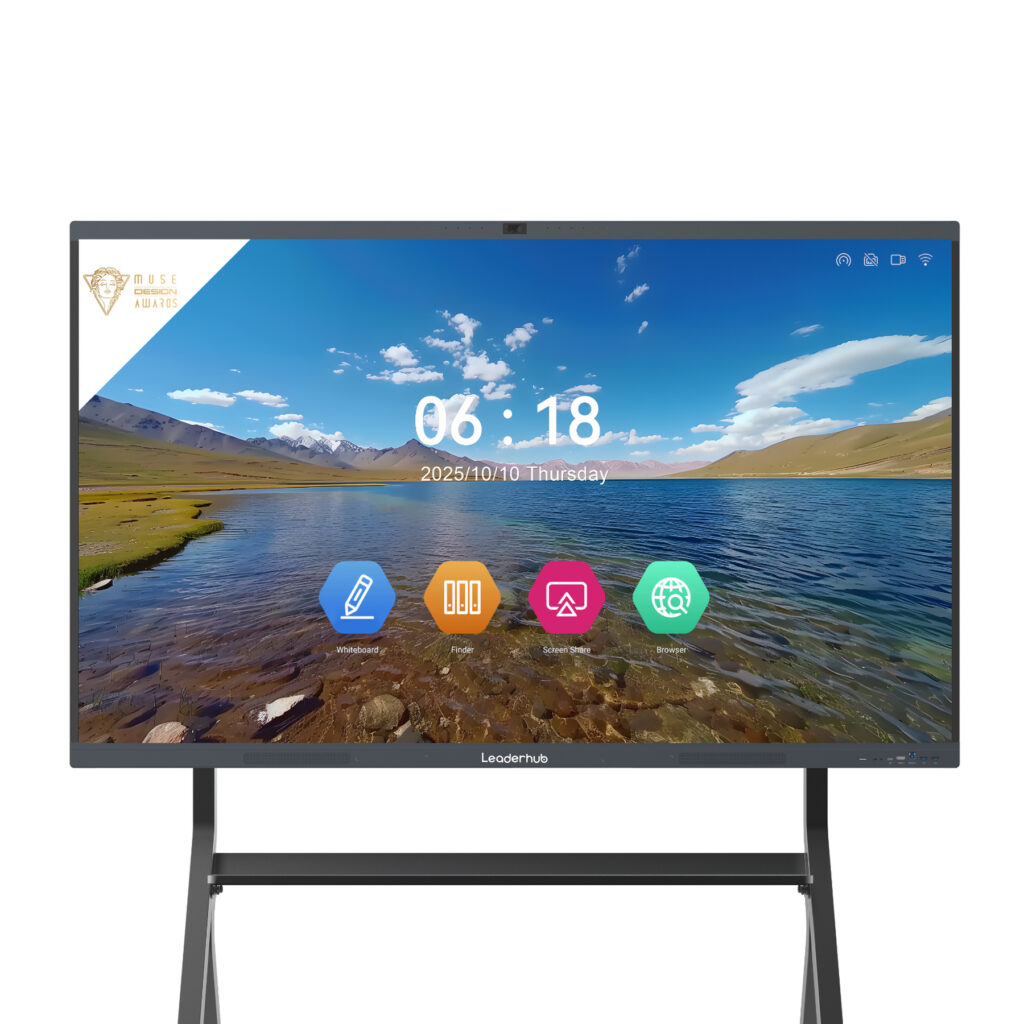
A useful cross-check is third-party recognition. For example, the Leaderhub HM Series rotating conference panel is listed among international design award winners — the kind of public record a trading company cannot fabricate.
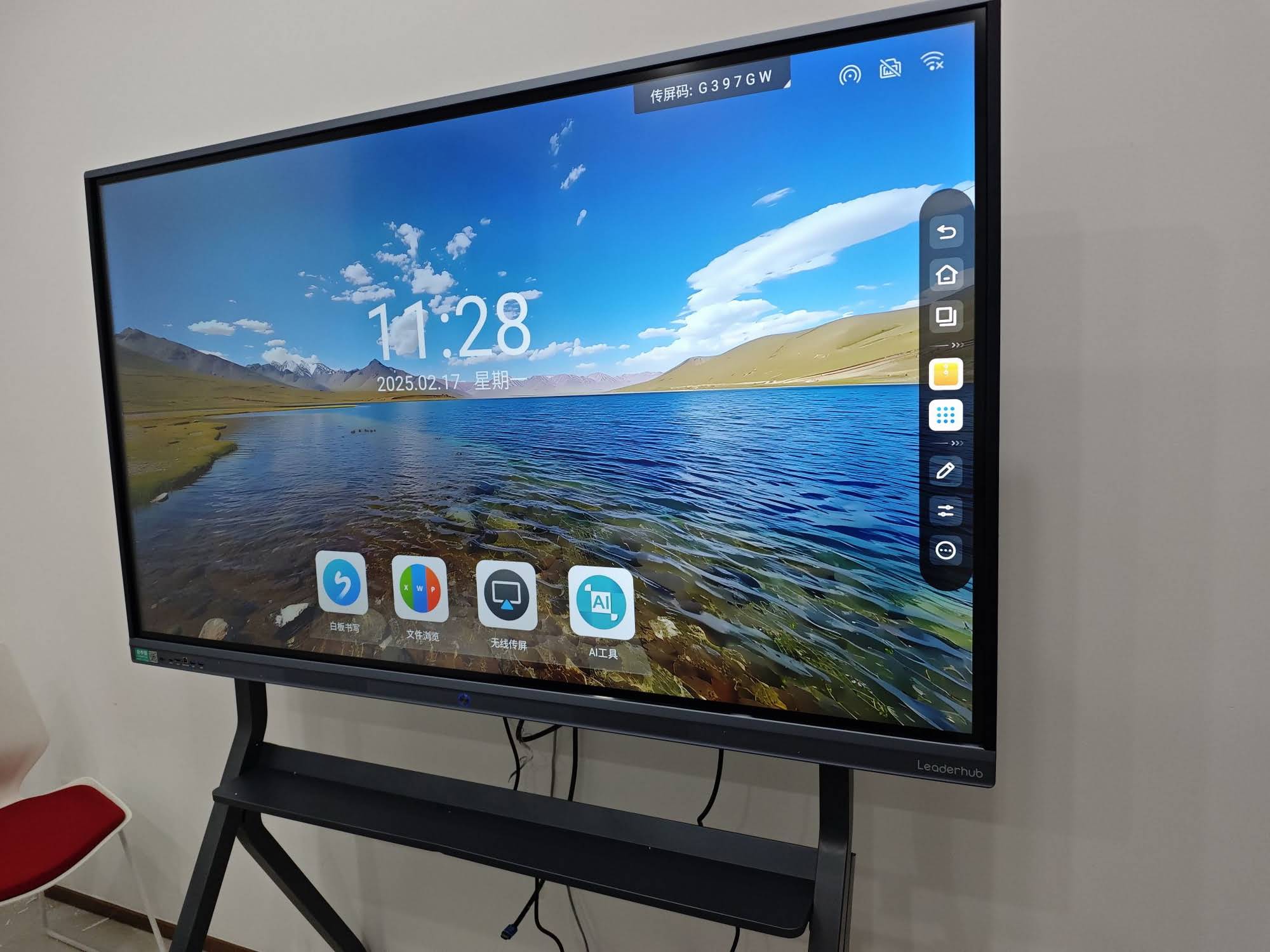
Inside the Mass Production Process: What Quality Actually Depends On
Understanding how a smart board is built helps you audit a supplier intelligently. A mature factory runs the following stages, and each one is a point where corners can be cut.
1. Component Sourcing and Incoming Quality Control (IQC)
The LCD open cell is the single most expensive part, typically 45–60% of the bill of materials. Factories buy either A-grade (zero bright dots, uniform backlight) or A-minus / B-grade cells (minor dead pixels, slight mura). A $200 difference per 75″ panel at this stage shows up as customer complaints twelve months later.
2. Glass Bonding and Touch Frame Assembly
Anti-glare tempered glass (usually 4 mm, Mohs 7 hardness) is laminated to the cell. Reputable factories use zero-gap or optical bonding to eliminate parallax when writing, while low-cost lines use air-gap framing that creates a visible offset between pen and ink.
3. Mainboard SMT and Firmware Flashing
The Android mainboard is populated on SMT lines, then flashed with the whiteboard OS. Ask whether the factory owns its firmware source code. If not, every bug fix depends on a third party.
4. Burn-In and Aging Test
Finished units should run in an aging room for at least 8–24 hours at elevated temperature to catch infant-mortality failures in power supplies and backlight drivers. Factories under schedule pressure skip or shorten this step — which is why you should write the aging duration into your purchase contract.
5. Final QC, Packing, and Drop Testing
Each panel passes touch calibration, color uniformity, port function, and audio checks. Export packaging should pass ISTA 2A drop tests, since 86″ panels travel across oceans and through multiple forklifts.
Wholesale Price Structure: What You Are Really Paying For
Buyers frequently receive quotes ranging from $600 to $2,500 for what appears to be “the same 75-inch 4K smart board.” The variance is explained almost entirely by specification tiers. The table below shows typical FOB Shenzhen pricing bands for mass production orders so you can benchmark offers.
| Specification | Entry Tier | Mainstream Tier | Premium Tier |
|---|---|---|---|
| Panel grade | A- / B grade | A grade | A grade, low blue light, anti-glare bonded |
| Touch | 10-point IR | 20-point IR, zero-gap | 40-point IR or capacitive |
| Android system | Android 11, 4GB+32GB | Android 13, 8GB+128GB | Android 14, 8GB+256GB, AI assistant |
| Camera / Mic | None | 13MP camera, 6-mic array | 48MP AI camera, 8-mic far-field |
| Typical 75″ FOB (100+ units) | $650 – $850 | $950 – $1,300 | $1,400 – $2,000 |
| Warranty | 12 months | 24 months | 36 months + spare parts kit |
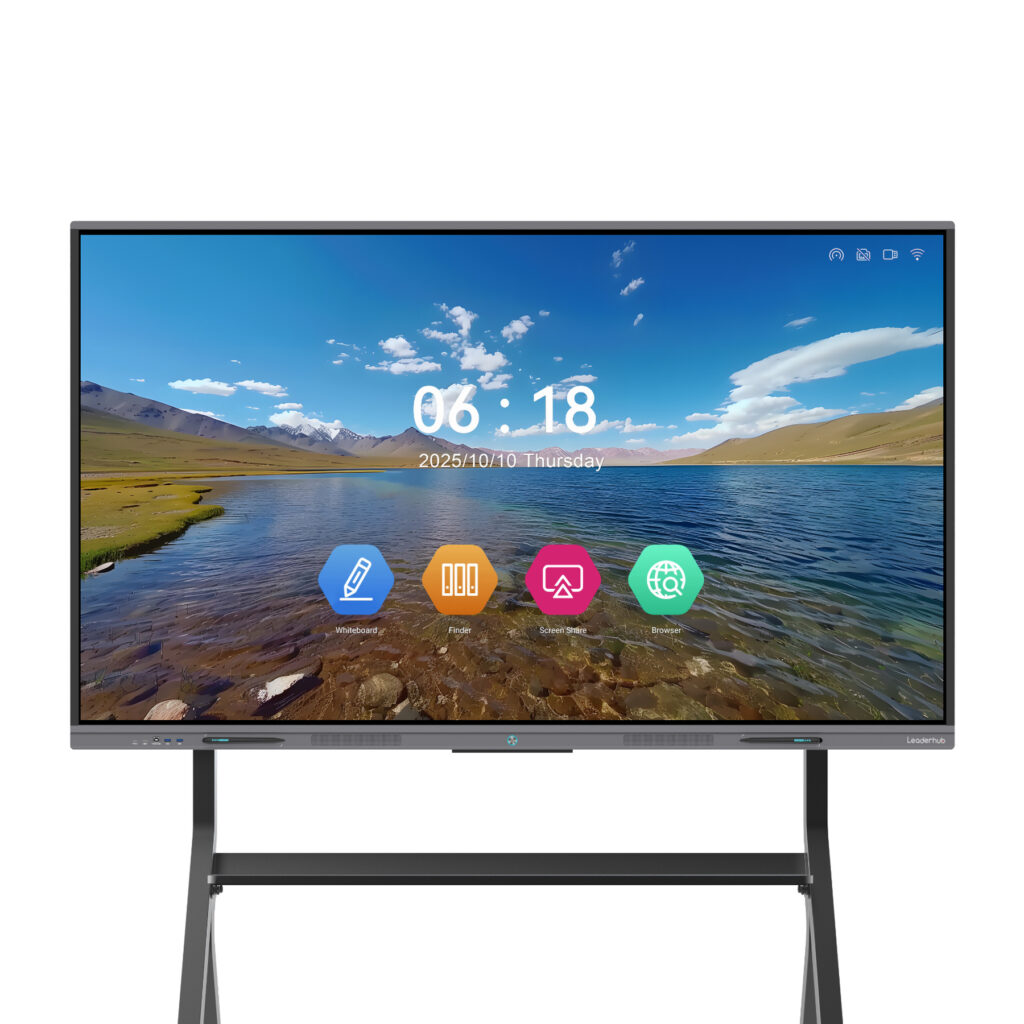
Retail reference points help here. A mainstream 75″ 4K interactive whiteboard lists at $1,399 at single-unit retail, while the rotating L75HM smart whiteboard with a motorized portrait/landscape stand sits at $1,599. Wholesale pricing for container quantities falls meaningfully below these figures, and the gap between retail and factory price is exactly the margin a distributor captures.
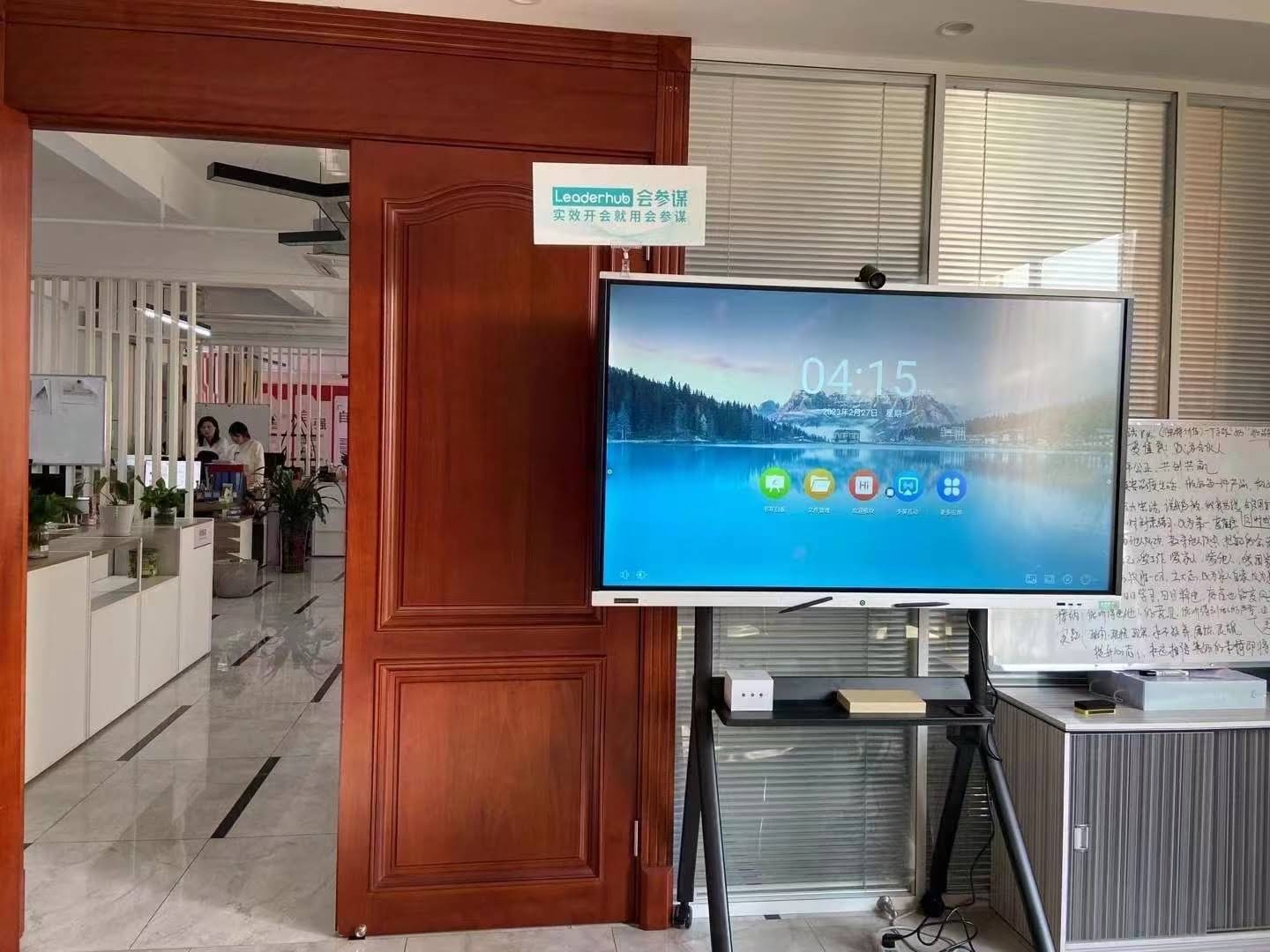
How to Negotiate the Best Wholesale Price Without Sacrificing Quality
Experienced importers do not simply ask “what is your lowest price.” They structure the negotiation so the factory can reduce cost in ways that do not hurt the end product.
- Consolidate sizes per container. A 40HQ container holds roughly 60–70 units of 75″ or around 45–50 units of 86″. Mixed-size loads waste cubic space and raise per-unit freight.
- Lock the panel brand in writing. Specify “BOE A-grade” or “CSOT A-grade” rather than accepting “original brand-new panel,” which is a phrase with no enforceable meaning.
- Choose stock firmware with a custom boot logo for the first order instead of a fully custom UI. Deep customization adds NRE fees and delays.
- Offer a 12-month rolling forecast. Factories give 3–8% better pricing to buyers who commit to quarterly volumes because it lets them pre-purchase panels before seasonal price spikes.
- Pay 30% deposit, 70% against bill of lading copy — standard terms that signal you are a professional buyer.
- Ask for a spare-parts allowance (typically 1–2% of order value in mainboards, power supplies, and remote controls) instead of a price cut. This protects your after-sales reputation.
Regional Considerations for Different Markets
Buyers in different regions should emphasize different specifications when negotiating:
- North America: FCC certification, ENERGY STAR, UL-listed power supplies, and Google EDLA certification for Play Store access are increasingly expected in K-12 tenders. Review the Choosing an Interactive Display for K-12 guidance to understand what school districts evaluate.
- European Union & UK: CE, UKCA, RoHS, REACH, and WEEE registration. Low-blue-light and flicker-free certification (TÜV) is a strong selling point.
- Middle East & Africa: Wide voltage tolerance (100–240V), dust-resistant IR frames, and Arabic/French firmware localization.
- Southeast Asia & Latin America: Price sensitivity is higher; mainstream-tier panels with 2-year warranty usually win tenders over premium builds.
A Practical Due Diligence Checklist Before You Sign
Use this list when evaluating any smart board mass production factory in China. A reliable manufacturer will answer every item without hesitation.
| Category | What to Verify |
|---|---|
| Company background | Years in interactive display industry, number of export markets, domestic brand presence |
| Production capacity | Monthly output, number of assembly lines, aging room capacity, peak-season lead time |
| Quality system | ISO 9001 certificate, IQC/IPQC/OQC reports, AQL sampling level, defect rate data |
| R&D ownership | In-house firmware team, OTA update server, software roadmap, AI feature development |
| Sample policy | Sample lead time, sample cost refund against bulk order, ability to test before deposit |
| After-sales | Warranty terms, remote diagnostics, spare parts stock, response time commitment |
| Product breadth | Complementary lines such as OPS mini PCs or portable screens that let you offer bundled solutions |
Product breadth matters more than many buyers realize. A factory that also produces OPS-compatible mini PCs and battery-powered rotating screens lets you build a complete classroom or meeting-room package from one supplier, simplifying logistics and warranty management.
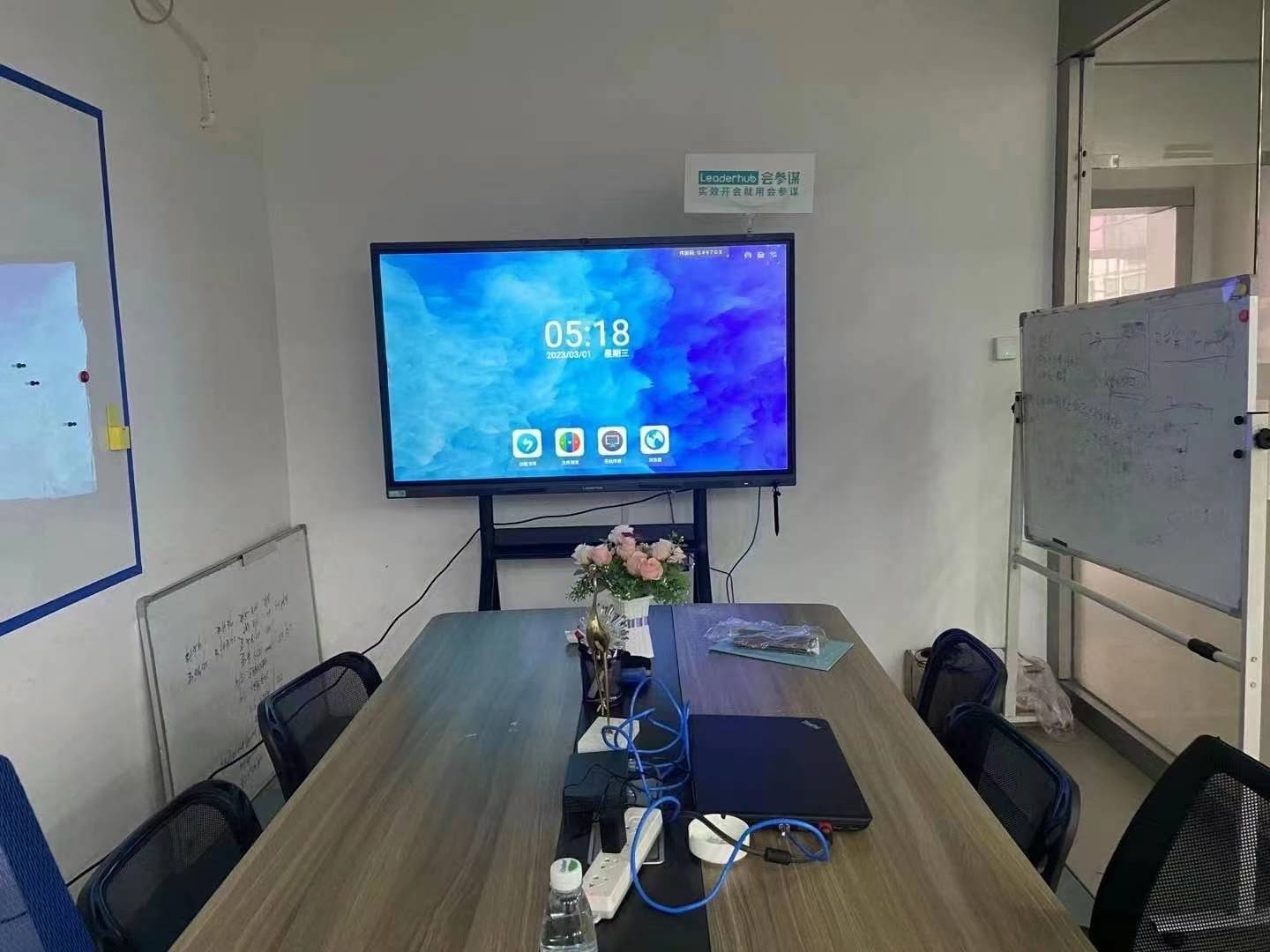
Case Example: What a Mature Shenzhen Manufacturer Looks Like
To make the above criteria concrete, consider LeaderHub, a Shenzhen-based interactive display manufacturer founded in 2010. With 16 years of production experience, exports to 82 countries, and a NO.1 ranking in the JD.com interactive panel subcategory, the company illustrates the profile buyers should look for: domestic market validation, international award recognition for the HM Series rotating conference hub, and four in-house product lines spanning smart whiteboards from 65″ to 110″, interactive flat panels, mini PCs, and portable smart screens. The company regularly exhibits at global electronics trade shows, where distributors can inspect build quality in person and discuss OEM/ODM programs before committing to volume.
This kind of profile — verifiable history, public rankings, award-winning design, and a complete product ecosystem — is what reduces procurement risk for an importer placing a first container order from thousands of kilometers away.
Market Outlook: Why Timing Your Order Matters
Demand for interactive displays is being shaped by policy as much as technology. The OECD Digital Education Outlook 2026 notes that classroom hardware investment continues to rise across member countries, while the World Bank Education Technology program finances large-scale school digitization in emerging economies. On the enterprise side, hybrid work has made AI-enabled meeting panels a standard fit-out item rather than a luxury.
For buyers, this has two practical implications:
- Panel prices are seasonal. Open-cell prices typically rise in Q2–Q3 ahead of back-to-school and year-end tenders. Placing forecasts in Q4–Q1 secures better factory pricing.
- AI features are becoming a tender requirement. Meeting transcription, auto-framing cameras, and voice-controlled whiteboarding are moving from premium to mainstream tiers. Choosing a factory with in-house AI software development protects your product line from obsolescence.
Frequently Asked Questions
What is the typical MOQ for smart board mass production in China?
Most factories accept 20–50 units for a first trial order with stock firmware and logo customization. Fully customized housing or UI usually requires 200–500 units.
How long does production take?
Standard lead time is 25–35 days after deposit for 100–300 units, extending to 45 days during peak season or for custom molds.
Can I get a sample before committing?
Yes. Reputable factories supply samples at or near wholesale price, often refundable against the first bulk order. Testing a sample for touch accuracy, color uniformity, and firmware stability is strongly recommended.
Which Incoterm is best for first-time importers?
FOB Shenzhen gives you control over freight and insurance. DDP is convenient but hides costs; use it only once you trust the supplier.
How do I handle warranty from overseas?
Negotiate a spare-parts allowance shipped with the order plus remote diagnostic support. Panels rarely fail; mainboards and power supplies account for most issues and are easy to replace locally.
Final Thoughts
Choosing a smart board mass production factory in China is less about finding the lowest number on a quotation and more about identifying a partner whose production process, firmware ownership, and after-sales structure will still serve you three years from now. Verify the business license, insist on panel grade in writing, confirm aging-test duration, and prioritize manufacturers with a track record you can independently check.
If you are ready to compare specifications or request a wholesale quotation, browse the full range of interactive smart whiteboards or contact the sales team to discuss OEM/ODM options, sample orders, and container pricing for your market.