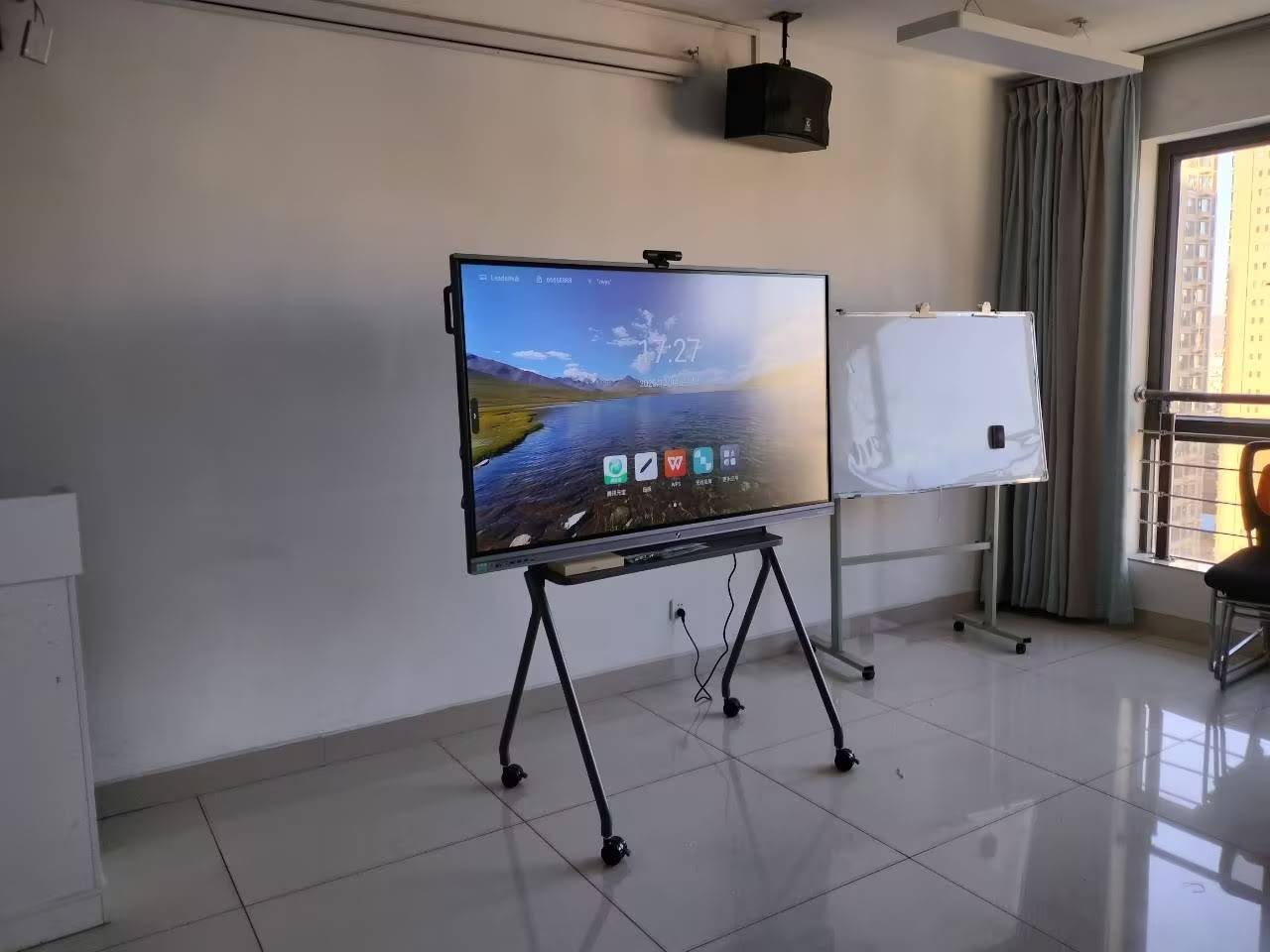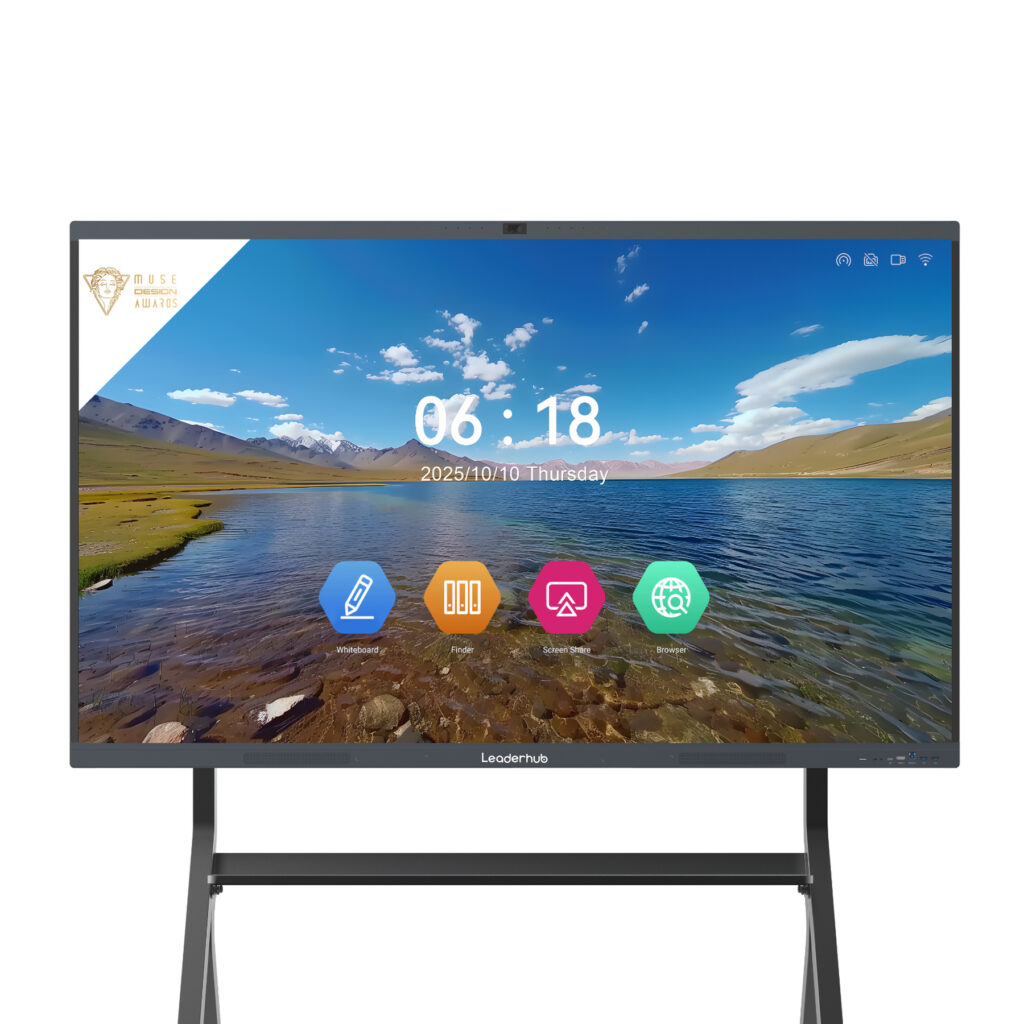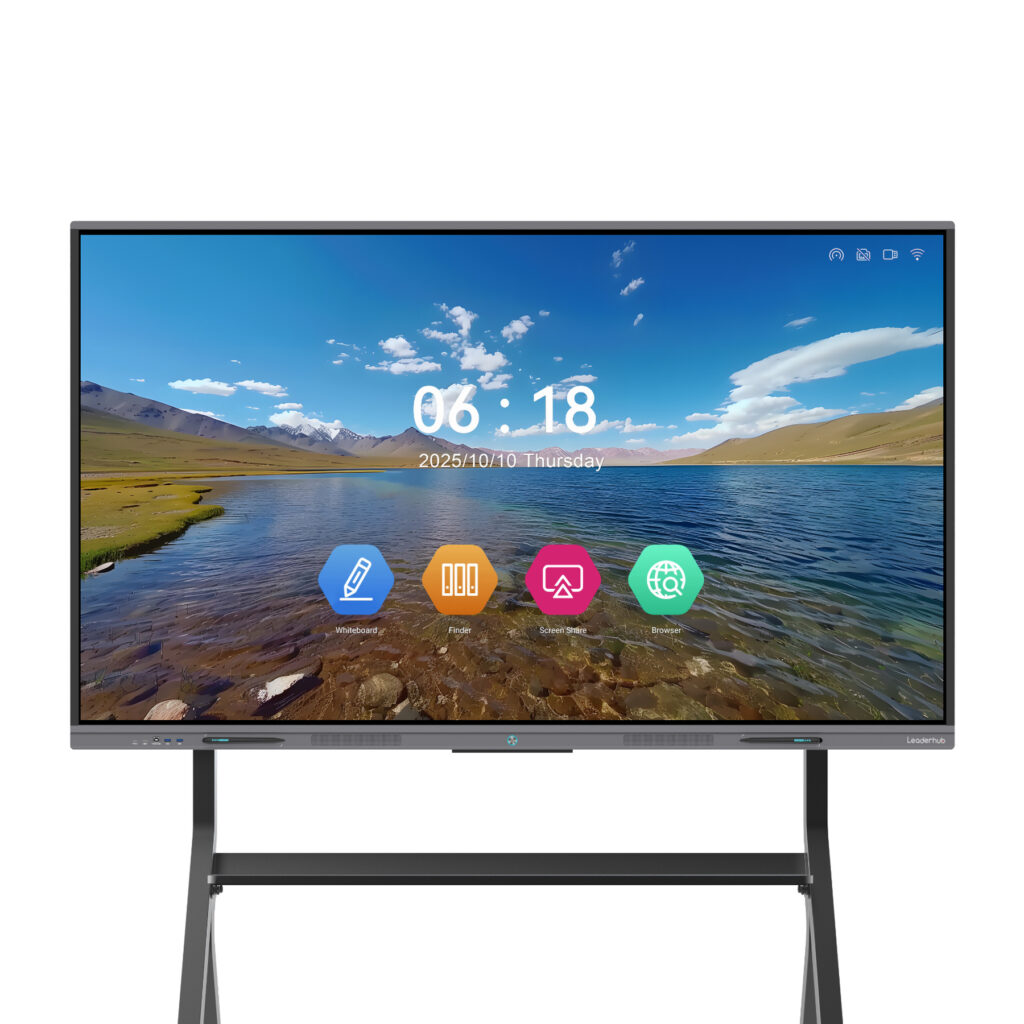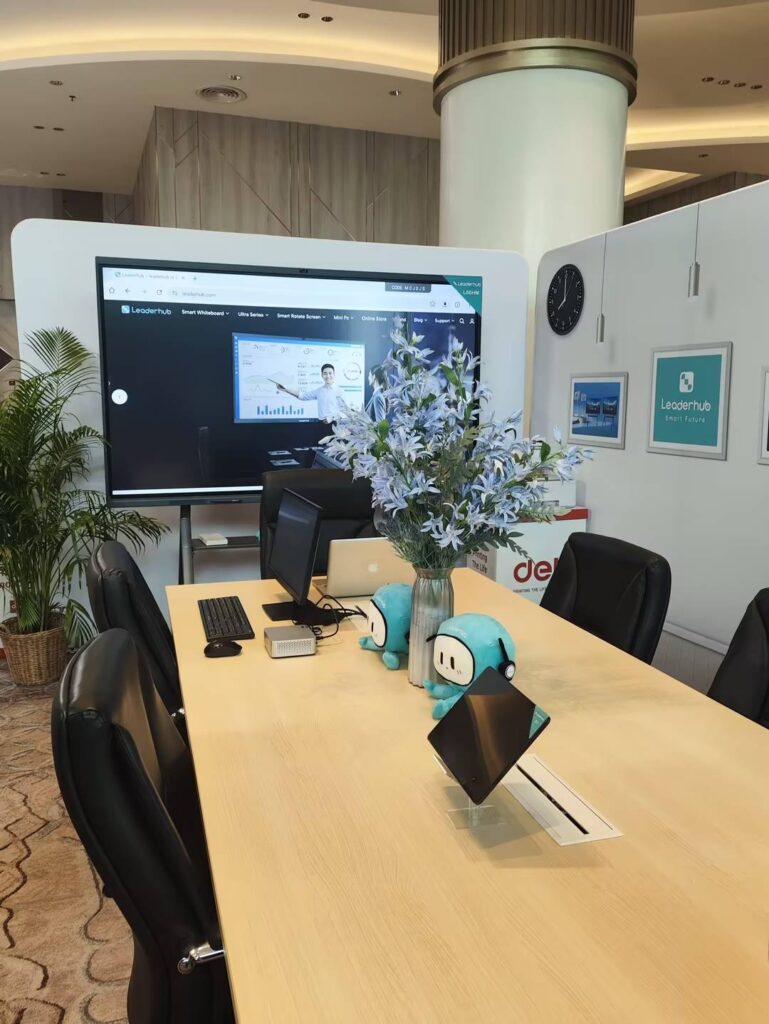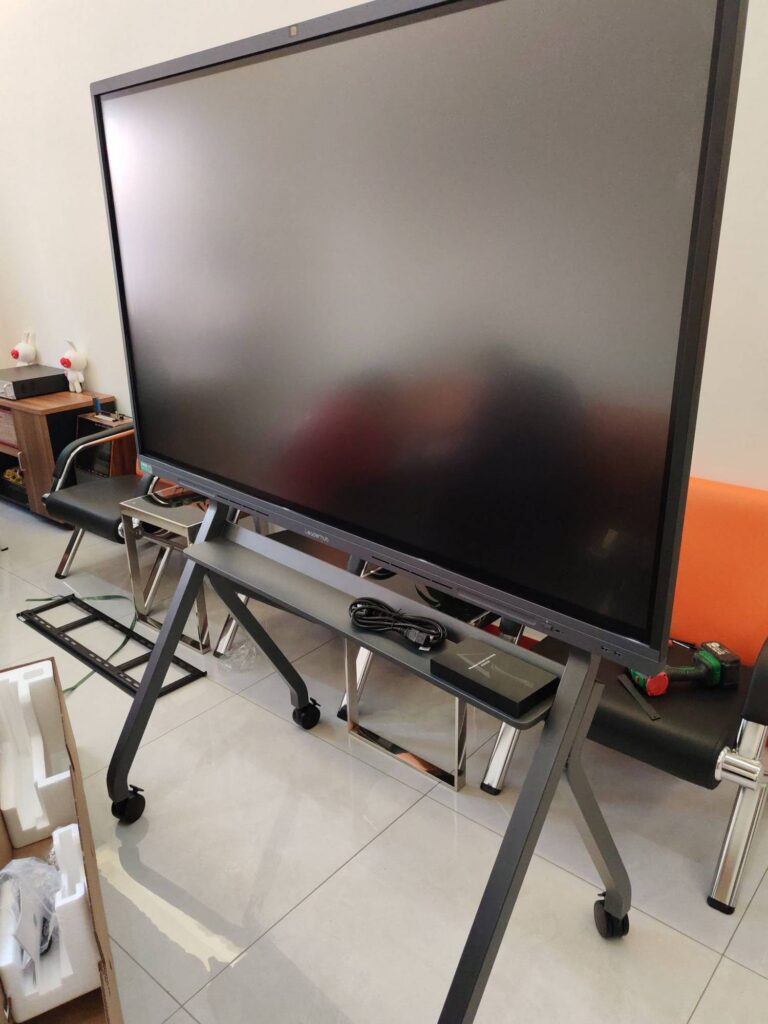
Interactive whiteboards have moved from “nice-to-have” classroom gadgets to standard infrastructure in schools, universities, corporate offices and government buildings worldwide. For distributors, system integrators and procurement managers, the question is no longer whether to buy smart boards, but where to source them at scale without sacrificing quality. Working directly with a smart board factory for bulk procurement in China remains the most cost-efficient route — provided you know how to separate genuine manufacturers from resellers and how to structure a bulk order that protects your margins.
This guide walks through the complete sourcing process: understanding China’s interactive display supply chain, vetting factories, comparing specifications, negotiating MOQs and pricing, and managing shipping and after-sales support for international buyers.
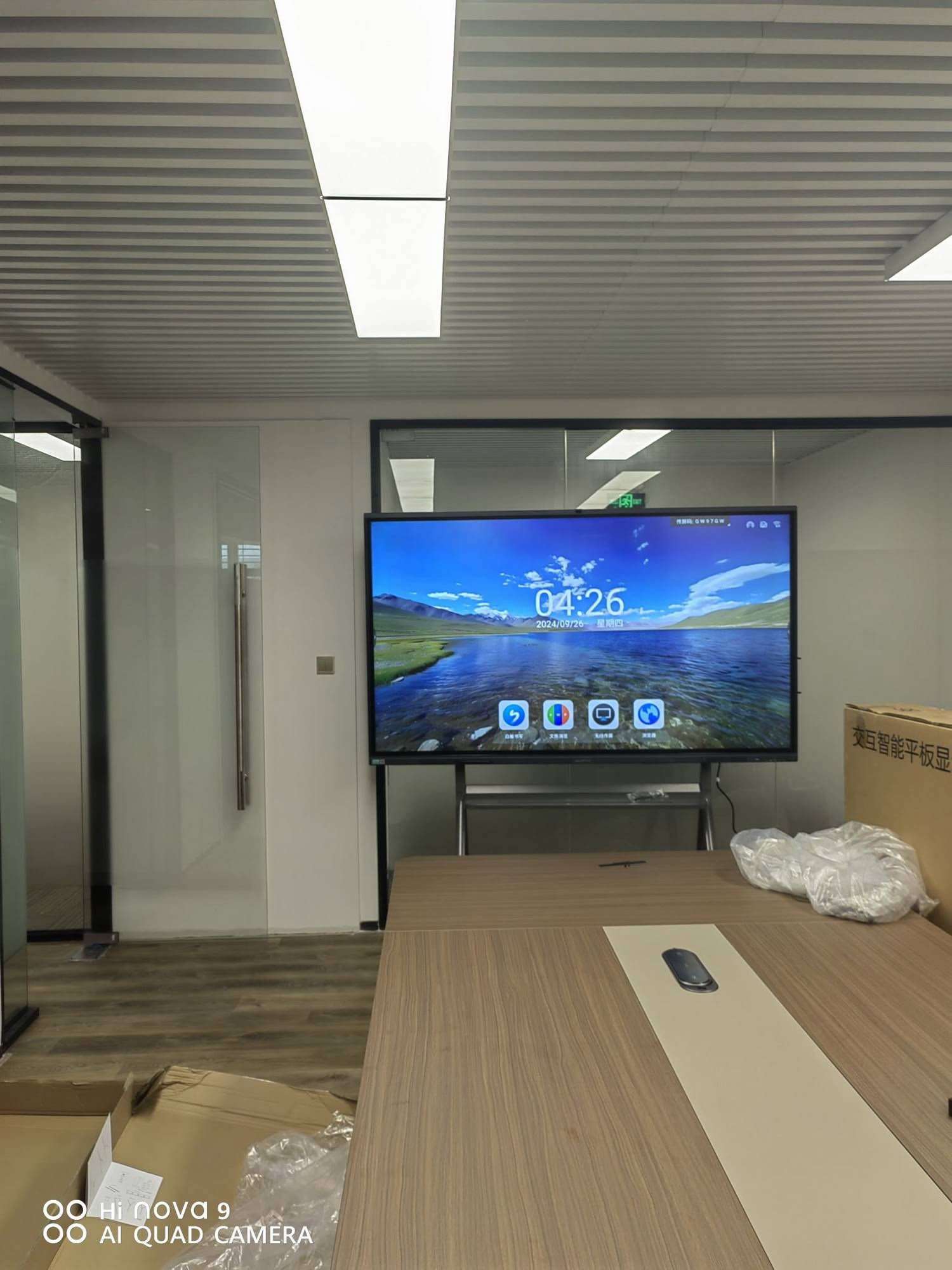
Why China Is the Global Hub for Interactive Whiteboard Manufacturing
Roughly 70–80% of the world’s interactive flat panels are assembled in Guangdong Province, with Shenzhen, Guangzhou, Dongguan and Huizhou forming a dense manufacturing cluster. The reason is structural: the LCD/LED panel suppliers (BOE, CSOT, HKC), touch-frame producers, OPS module makers, Android mainboard designers and metal housing factories are all located within a two-hour drive of one another.
For a bulk buyer, this cluster effect translates into tangible advantages:
- Lower unit costs — shorter component supply chains and high production volumes keep BOM pricing competitive.
- Faster lead times — standard 65″, 75″ and 86″ models are often produced within 15–25 days after deposit.
- Mature OEM/ODM ecosystems — custom logos, firmware, packaging and language localization are routine services.
- Deep technical know-how — many engineers have 10+ years of experience in infrared and capacitive touch integration.
Industry observers have also noted that Chinese brands now compete on innovation rather than price alone. The China Smart Board Selection Guide highlights how domestic manufacturers have closed the gap with Western brands on 4K resolution, zero-bonding touch and AI-assisted meeting features.
Who Buys Smart Boards in Bulk from China — and What They Need
Bulk procurement requirements differ sharply by buyer type. Before contacting any factory, define which profile you fit, because it determines the specifications, certification documents and commercial terms you should request.
| Buyer Profile | Typical Order Size | Priority Requirements |
|---|---|---|
| Education distributors & school districts | 50–2,000 units per tender | Anti-glare glass, 20/40-point touch, classroom software, 3–5 year warranty, CE/FCC/RoHS |
| AV system integrators | 20–300 units per project | OPS slot, wireless casting, Windows/Android dual OS, custom firmware, mounting compatibility |
| Corporate & enterprise procurement | 10–500 units across offices | Video-conferencing camera/mic array, Teams/Zoom certification, MDM support, uniform SKUs |
| Government & public tenders | 100–5,000 units | ISO 9001 factory audit, local certifications (BIS, SASO, KC, NOM), spare parts commitment |
| Private-label brands / e-commerce sellers | 50–1,000 units per SKU | Full OEM branding, retail packaging, Amazon/EU compliance, dropship or FBA logistics |
Public-sector buyers in particular should align their purchasing criteria with international frameworks. The UNESCO Technology in Education Report stresses that classroom hardware must be evaluated on pedagogical value, equity and long-term cost — not just upfront price — which is a useful lens when comparing factory quotations.
Factory vs. Trading Company: How to Tell the Difference
One of the most common mistakes international buyers make is assuming every Alibaba or Made-in-China listing labelled “manufacturer” actually owns a production line. Trading companies can be useful for very small orders, but for bulk procurement, the margin stack and the loss of engineering control usually make a true factory the better partner.
Signs You Are Dealing with a Genuine Smart Board Factory
- Business licence scope — the Chinese 营业执照 should list “生产” (production) or “制造” (manufacturing), not only “贸易” (trading) or “销售” (sales).
- Verifiable factory address — ask for a live video tour showing SMT lines, bonding rooms, aging test racks and packing lines.
- Own R&D team — a factory can discuss mainboard chipset choices (e.g. MT9679, RK3588), touch-frame IC firmware and PCB layout in detail.
- Export history — request bills of lading or customs data for shipments to markets similar to yours.
- Test reports in the factory’s own name — CE-EMC, CE-LVD, FCC, RoHS and ISO 9001 certificates should name the manufacturer, not a third party.
- Reasonable MOQ flexibility — true factories can often start OEM runs at 20–50 units because they control the line schedule.
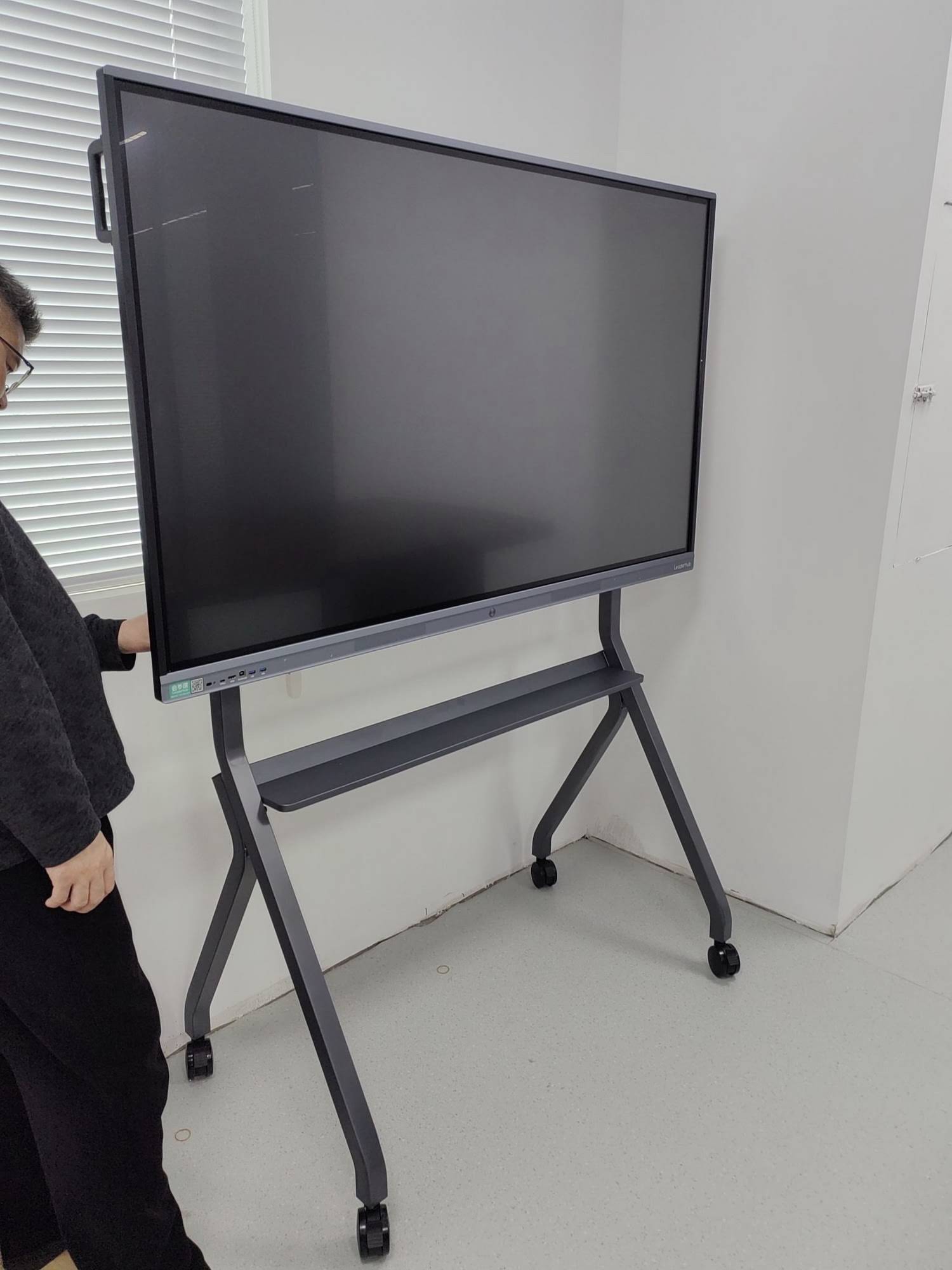
The 8-Step Vetting Checklist for Bulk Smart Board Sourcing
Step 1 — Shortlist by Product Fit, Not Just Price
Decide on your core SKUs first: screen sizes (55″, 65″, 75″, 86″, 110″), operating system, touch technology and whether you need a mobile stand or wall-mount configuration. Then request quotations for the same specification from 3–5 factories so the comparison is apples to apples.
Step 2 — Request Samples and Run a Structured Test
Order one or two units per candidate factory. Test touch latency, palm rejection, writing accuracy at the screen edges, brightness uniformity, speaker output, Wi-Fi 6 stability and wireless casting from Windows, macOS, iOS and Android devices. Document results in a scoring sheet.
Step 3 — Audit the Factory (Remote or On-Site)
If the order exceeds roughly US$100,000, an on-site visit to Shenzhen or a third-party audit (SGS, TÜV, Intertek) is worth the cost. Key areas to inspect: incoming panel inspection, dust-free bonding, 48–72 hour aging tests, and finished-goods QC sampling (AQL 2.5 or better).
Step 4 — Verify Certifications for Your Destination Market
- Europe & UK: CE (EMC, LVD, RED), RoHS, REACH, UKCA, WEEE registration
- North America: FCC Part 15, UL/ETL for power supplies, Energy Star where required
- Middle East: SASO/SABER (Saudi Arabia), ESMA (UAE), G-Mark
- Asia-Pacific: BIS (India), KC (South Korea), PSE (Japan), RCM (Australia)
- Latin America: NOM (Mexico), INMETRO (Brazil), IRAM (Argentina)
Step 5 — Negotiate MOQ, Pricing Tiers and Payment Terms
Typical factory terms are 30% T/T deposit and 70% before shipment. For repeat bulk buyers, many manufacturers will accept L/C at sight or 30/70 against B/L copy. Ask for tiered pricing at 50, 100, 300 and 500+ units — the price break between 100 and 300 units is often 6–10%.
Step 6 — Lock Down OEM/ODM Details in Writing
Boot logo, rear-cover silkscreen, remote control branding, carton artwork, pre-installed apps, default language and regional power plug should all be specified in a signed artwork confirmation and product specification sheet attached to the proforma invoice.
Step 7 — Define Warranty and Spare-Parts Commitments
Request a 3-year warranty on the panel and mainboard as standard, with a 1–3% free spare-parts allowance (touch frames, mainboards, power boards, remotes) shipped together with each bulk order. This eliminates the cost of shipping single replacement parts later.
Step 8 — Plan Pre-Shipment Inspection and Logistics
Arrange a pre-shipment inspection (PSI) once 100% of goods are packed. Confirm palletizing, corner protection, humidity indicators and whether the factory loads containers at its own warehouse (FCL) or via a consolidator (LCL).
Specification Benchmarks to Include in Your RFQ
Vague RFQs produce vague quotations. The table below lists the specifications that experienced bulk buyers define before requesting pricing from a Chinese interactive whiteboard manufacturer.
| Category | Entry-Level Spec | Recommended for Education / Enterprise |
|---|---|---|
| Panel | 4K UHD, 350 nits, 60Hz | 4K UHD, 400–450 nits, A-grade panel, 178° viewing angle, anti-glare tempered glass (Mohs 7) |
| Touch | Infrared, 20-point | Infrared 40-point or capacitive, zero-bonding, <8 ms latency, finger/pen/palm differentiation |
| Processor & Memory | Quad-core, 4GB + 32GB | Octa-core, 8GB + 128GB, Android 13/14, optional OPS Windows PC (Intel i5/i7) |
| Connectivity | Wi-Fi 5, 2× HDMI, 2× USB | Wi-Fi 6, Bluetooth 5.x, 3× HDMI 2.0, USB-C with 65W PD, Gigabit LAN, OPS slot |
| Audio / Video | 2× 10W speakers | 2× 15–20W + subwoofer, 4K/8MP AI camera, 6–8 mic array with echo cancellation |
| Software | Basic whiteboard app | Whiteboard with cloud save, wireless casting (4-split), MDM/remote management, AI meeting notes |
If your project involves K-12 classrooms, the Choosing an Interactive Display for K-12 guide offers a helpful district-level perspective on balancing durability, teacher training and total cost of ownership.
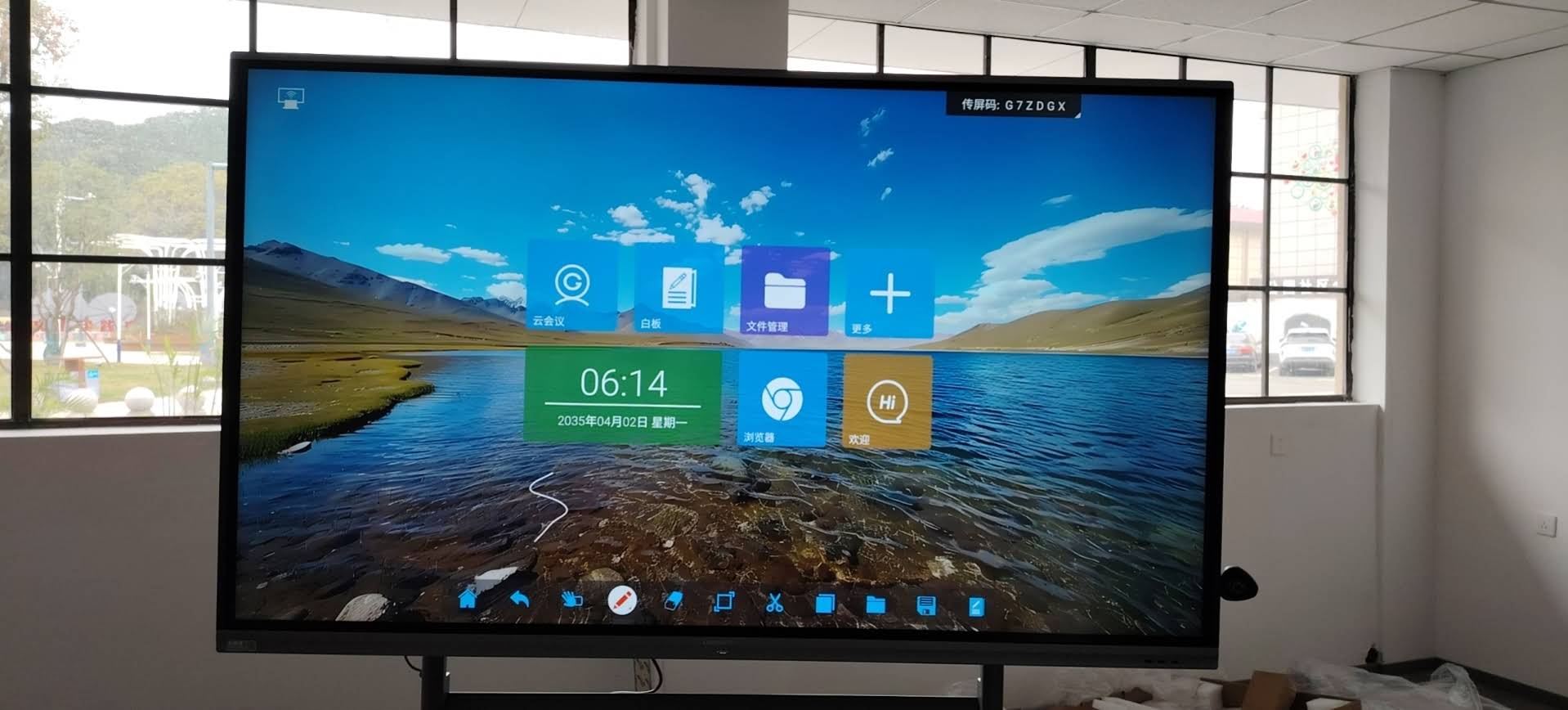
Realistic Pricing Expectations for Bulk Orders
Prices vary with panel grade, memory configuration and branding, but the ranges below reflect what a reputable Shenzhen factory typically quotes for OEM bulk orders of 100+ units (FOB Shenzhen, excluding OPS PC and mobile stand). For reference, published single-unit retail prices for comparable 4K models are also shown.
| Size | Reference Model | Retail Price (1 unit) | Typical Use Case |
|---|---|---|---|
| 55″ | U55Pro Mobile 4K Smart Display | $2,499.00 | Huddle rooms, mobile training carts |
| 65″ | L65ZM Interactive Whiteboard | $1,099.00 | Small classrooms, SME meeting rooms |
| 75″ | L75ZM Interactive Whiteboard | $1,399.00 | Standard classrooms (25–35 students) |
| 86″ | L86ZM Interactive Whiteboard | $1,699.00 | Lecture halls, boardrooms |
| 75″ Pro | L75H Pro Interactive Flat Panel | $2,399.40 | Executive conference rooms, hybrid meetings |
| 110″ | L110H Interactive Flat Panel | $7,999.00 | Auditoriums, command centers |
Bulk buyers should expect project pricing well below retail, with discounts scaling by volume. Always clarify whether a quotation includes wall mount, stylus pens, remote, power cable for your region, and the cost of the optional OPS module — these “small” items can shift the landed cost by 5–12%.
Landed Cost: Shipping, Duties and Hidden Expenses
A 75″ interactive panel in retail packaging occupies roughly 0.35–0.40 m³ and weighs 55–65 kg. A 40′ HQ container typically holds 160–180 units of 75″ or 110–130 units of 86″. Build your landed-cost model with these line items:
- FOB unit price × quantity
- Ocean freight (FCL recommended above ~80 units of 75″)
- Marine insurance (0.3–0.5% of CIF value)
- Import duty and VAT/GST for your HS code (usually 8528.52 or 8471.41 depending on OPS configuration)
- Destination port handling, customs brokerage and inland trucking
- Certification or labelling costs specific to your market
- Spare parts, installation accessories and training materials
Procurement teams in Europe may also want to review the Digital Equipment for Schools guidance under the EU Digital Education Action Plan, which frequently shapes tender specifications and eligible funding for interactive displays.
Common Pitfalls in Bulk Smart Board Procurement
Panel grade substitution
Some suppliers quote an A-grade panel and ship A- or B-grade stock with more dead pixels and uneven backlighting. Specify the panel grade and dead-pixel tolerance (e.g. zero bright dots, ≤3 dark dots) in the contract and verify during PSI.
Firmware without long-term updates
Ask how long the factory commits to Android security patches and app compatibility updates. For school deployments running 5+ years, this matters more than headline specs.
Unclear after-sales responsibility
Define who covers return freight for defective units, response time for remote diagnostics and whether the factory provides English-language technical documentation for your local service partners.
Ignoring total ecosystem compatibility
Interactive panels rarely work alone. Confirm compatibility with your preferred mini PC or OPS module, document cameras, LMS platforms and video-conferencing software before committing to a large order.
Working with an Established Shenzhen Manufacturer
LeaderHub is a Shenzhen-based interactive display manufacturer with 16 years of experience since 2010, serving distributors, integrators and institutions in 82+ countries. The company is ranked NO.1 in the JD.com interactive panel subcategory and holds the Shenzhen Famous Brand title, with four product lines spanning smart whiteboards, interactive flat panels, mini PCs and portable rotating screens — an ecosystem that lets bulk buyers consolidate sourcing with a single factory for complete room solutions, OEM/ODM customization and consistent after-sales support.
For buyers planning a factory visit, the Shenzhen cluster is well served by Shenzhen Bao’an International Airport and the Hong Kong high-speed rail link, making it practical to audit several candidate manufacturers in a single trip. Many factories also exhibit at major international electronics trade shows, offering a convenient opportunity to test products hands-on before placing a sample order.
Frequently Asked Questions
What is the typical MOQ for OEM smart boards from a Chinese factory?
Most genuine manufacturers accept OEM orders from 20–50 units for logo branding and 100+ units for custom firmware, packaging or hardware modifications. Trading companies often demand higher MOQs because they must meet the factory’s threshold themselves.
How long does production take for a 300-unit order?
For standard 65″–86″ models, allow 20–30 days from deposit to ready-for-shipment, plus 25–45 days ocean freight depending on destination. Custom ODM projects with new tooling may require 60–90 days.
Infrared or capacitive touch for bulk education orders?
Infrared remains the cost-effective standard for classrooms and performs reliably with 20–40 touch points. Capacitive touch delivers smoother writing and a slimmer bezel but adds 15–25% to the unit cost — more common in premium corporate deployments.
Can I mix sizes in one container to reach FCL volume?
Yes. Factories routinely mix 65″, 75″ and 86″ units in one 40′ HQ container. Share your projected mix early so the factory can optimize carton dimensions and pallet layout.
What documentation should I receive with a bulk shipment?
Commercial invoice, packing list, bill of lading, certificate of origin (Form E / EUR.1 where applicable), test reports (CE/FCC/RoHS), serial-number list and the signed QC inspection report.
Next Steps for Your Bulk Smart Board Project
Sourcing from a smart board factory in China for bulk procurement is straightforward when you follow a disciplined process: define your buyer profile, specify every technical detail in the RFQ, verify manufacturer status, test samples rigorously and lock down warranty and logistics terms in writing. The cost advantage of Shenzhen’s manufacturing cluster is real — but it is only fully realized when quality control and after-sales commitments are built into the deal from day one.
Ready to request a project quotation, samples or OEM specifications? Contact the LeaderHub sales team with your target sizes, quantities and destination market, or browse the full product range to shortlist models for your next bulk order.