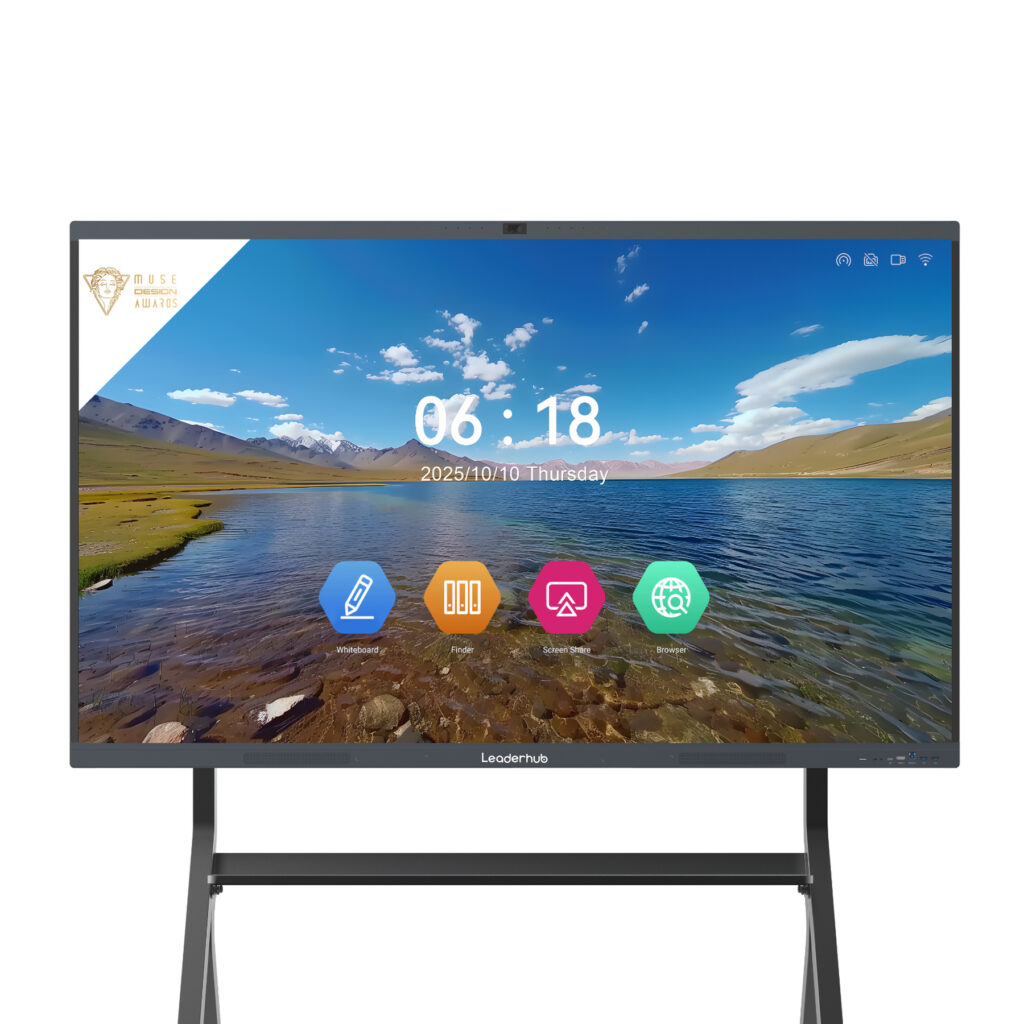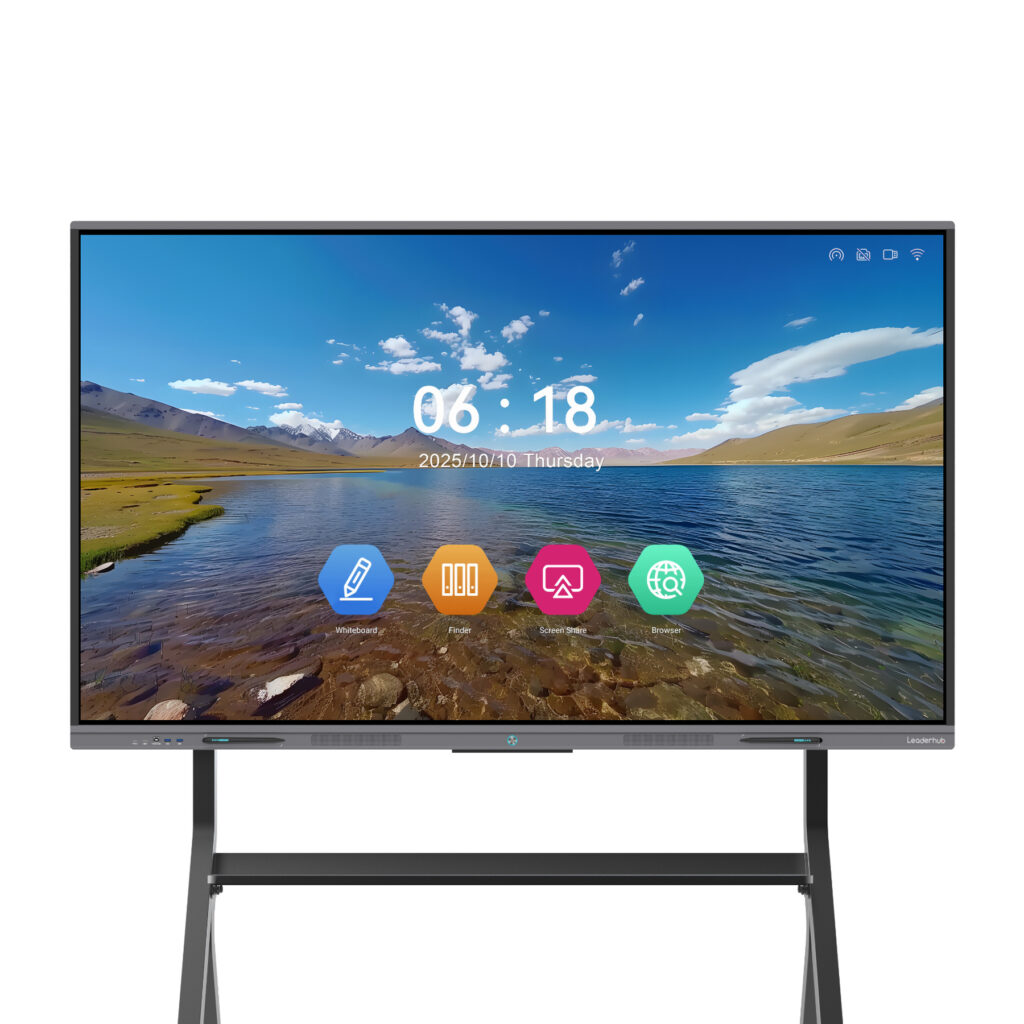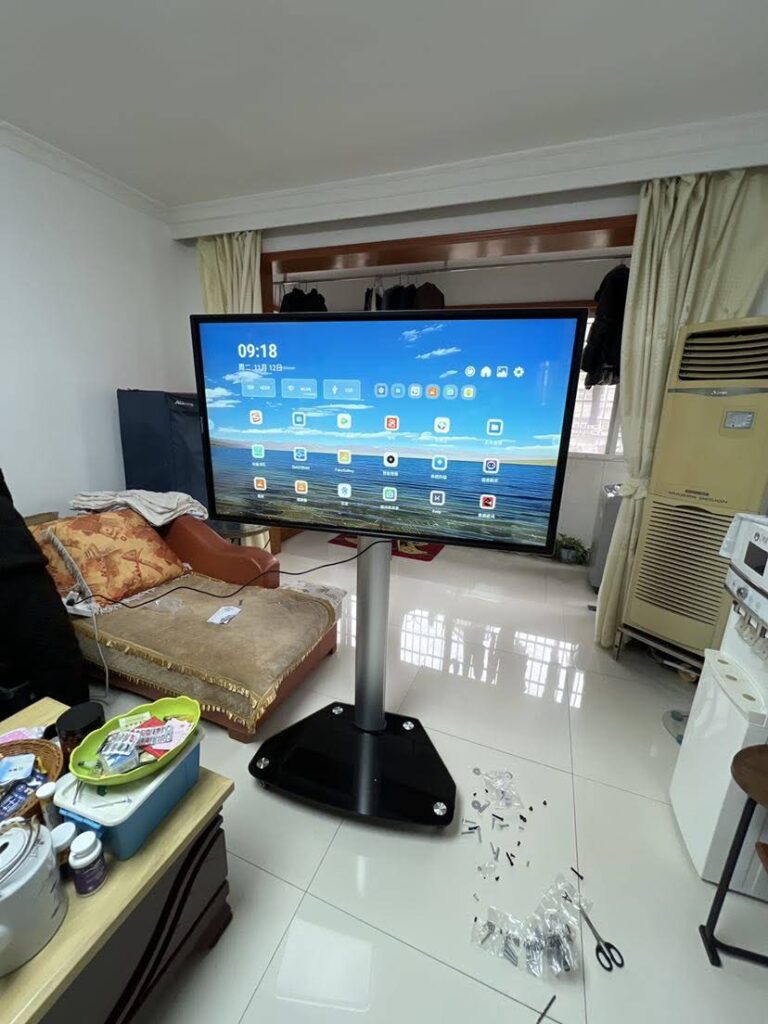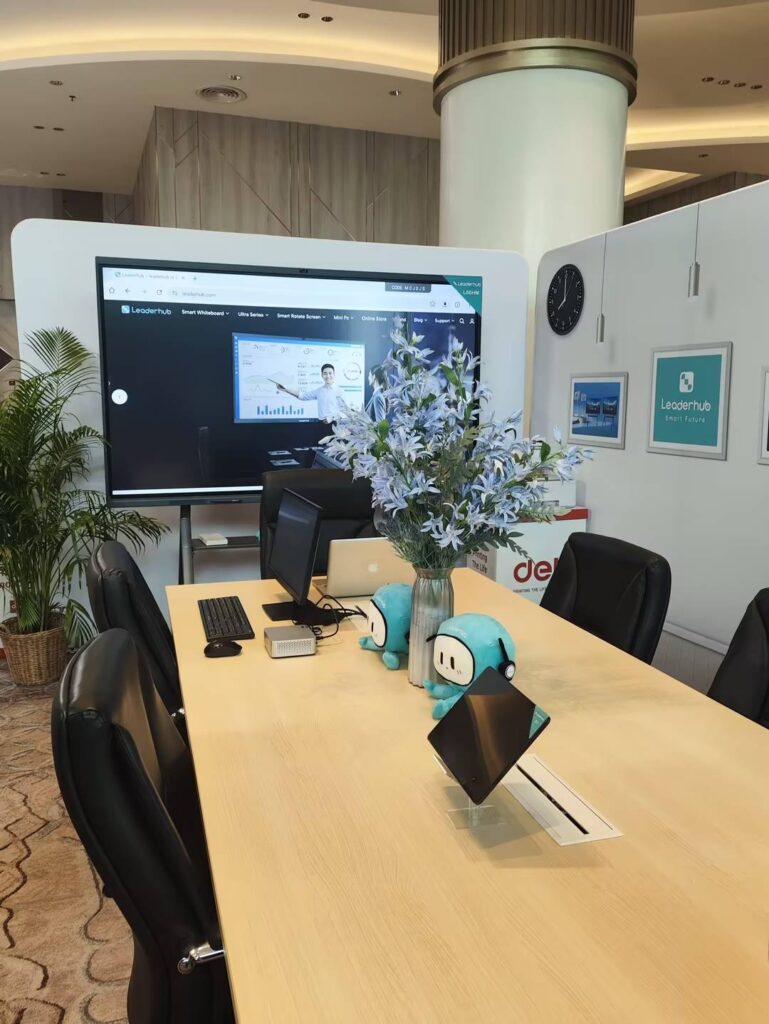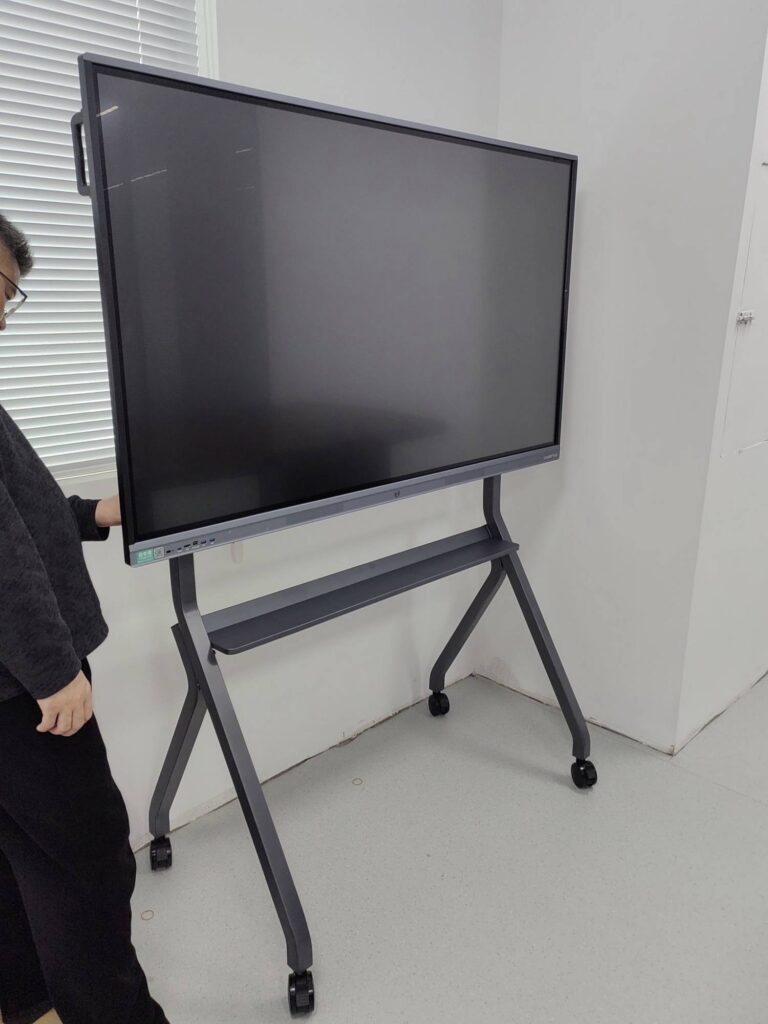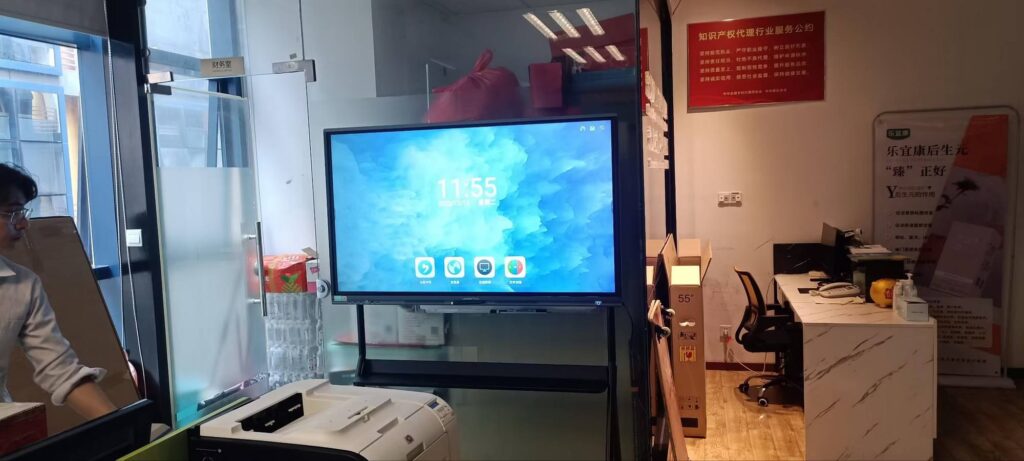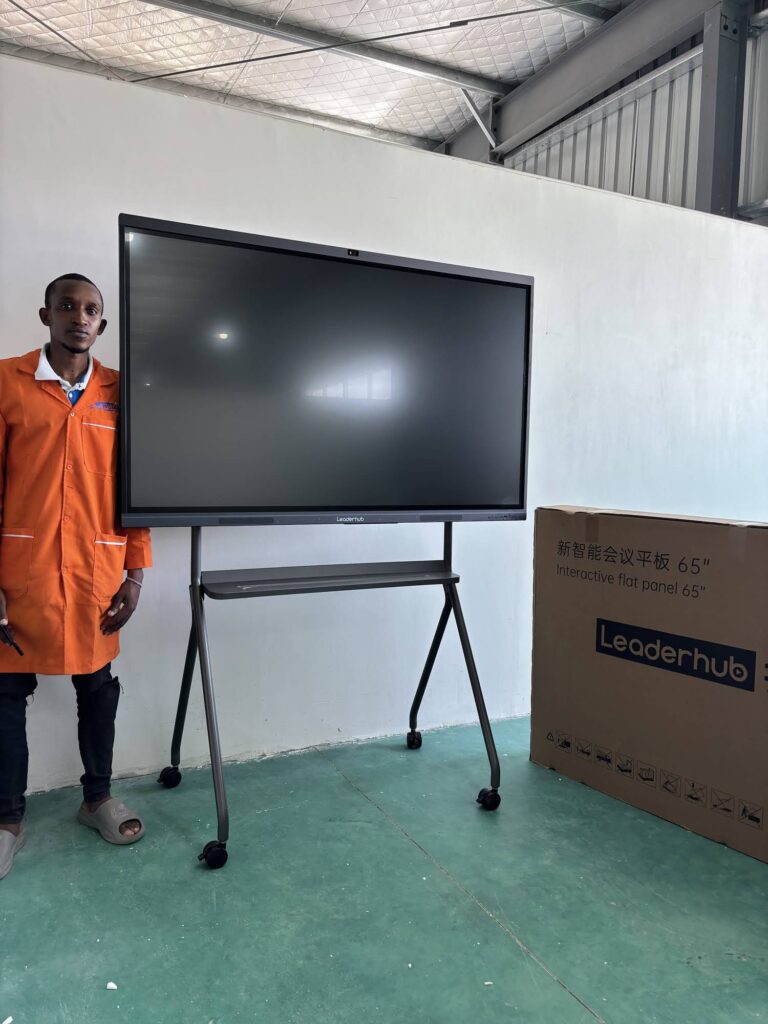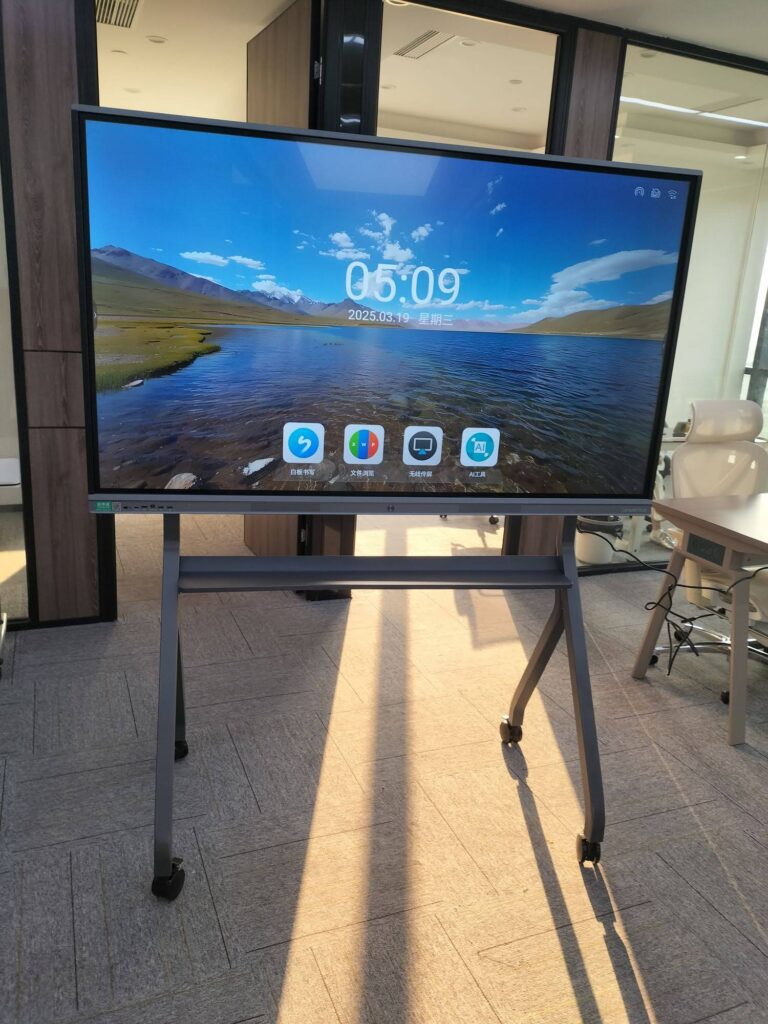
For international buyers, “smart board factory in China” has become one of the most searched sourcing phrases in the interactive display industry. The reason is simple: more than 70% of the world’s interactive flat panels are produced within a few hundred kilometers of Shenzhen, where panel makers, touch-frame suppliers, PCB assemblers and OPS module factories operate side by side. This concentration is what makes smart board competitive pricing from a China factory possible — but it also means the market is crowded with trading companies, re-branders and workshops that look identical online.
This guide explains how factory pricing actually works, what wholesale and OEM/ODM options are available, which price ranges are realistic for 65″ to 110″ panels, and — most importantly — how to tell a dependable manufacturer from a risky one before you wire a deposit.
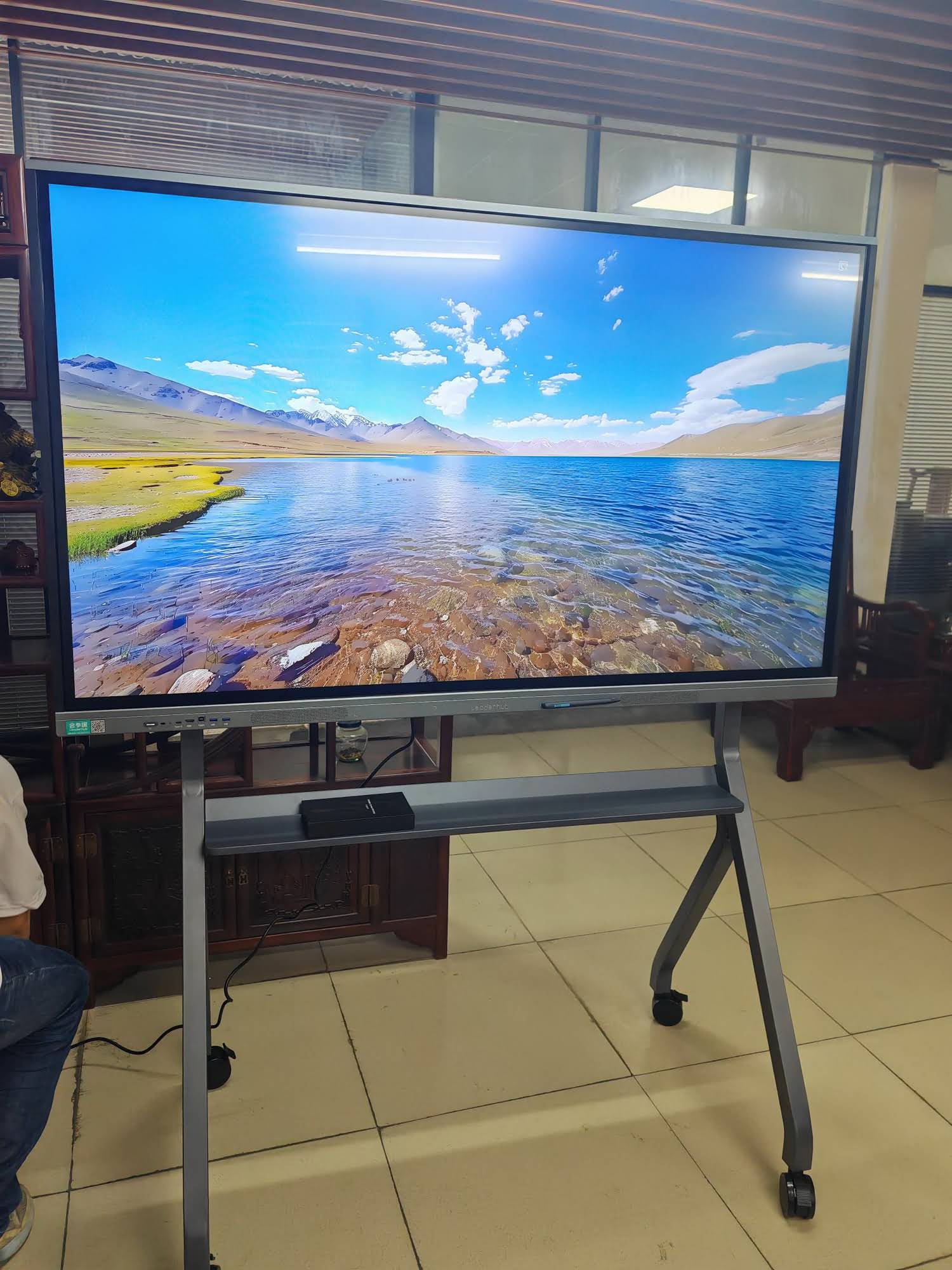
Why China Remains the Global Hub for Smart Board Manufacturing
The Pearl River Delta — Shenzhen, Dongguan, Huizhou and Guangzhou — is home to the most complete interactive display supply chain in the world. LCD panels from BOE, CSOT and HKC are cut, bonded and framed within the same industrial zone where infrared touch frames, Android mainboards, speakers and cameras are produced. Because components travel only hours instead of weeks, factories can keep inventory low and respond quickly to custom requests.
For buyers in North America, Europe, the Middle East, Southeast Asia and Africa, this translates into several practical advantages:
- Lower landed cost — factory-direct pricing is typically 30–50% below Western-brand distributor prices for comparable specifications.
- Short lead times — standard models often ship within 15–25 days, even in volume.
- Flexible customization — logo, firmware, UI language, packaging and accessory bundles can be adjusted per market.
- Mature export logistics — Shenzhen (Yantian) and Guangzhou (Nansha) ports handle daily sailings to every major trade route.
- Proven international compliance — leading factories already hold CE, FCC, RoHS and energy-efficiency certifications required by overseas regulators.
Industry analysis such as the China Smart Board Selection Guide confirms that cost efficiency is now matched by rising quality standards, which is why schools and enterprises across 80+ countries source directly from Chinese manufacturers rather than through multi-layer distribution.
Understanding Smart Board Competitive Pricing From Chinese Factories
What Actually Drives the Factory Price?
Two smart boards of the same size can differ by $800 or more at factory level. Understanding the variables helps you compare quotes fairly and avoid being misled by an unusually low number.
- Panel grade and size — A+ grade 4K panels cost noticeably more than A- or refurbished glass. 65″, 75″ and 86″ are volume sizes; 98″ and 110″ carry a premium.
- Touch technology — 20-point infrared touch is standard; zero-bonding or capacitive touch increases the price but improves writing accuracy.
- Built-in computing — Android RAM/storage (4+32GB vs 8+128GB), and whether an OPS Windows slot or an integrated OPS PC is included.
- Audio-visual modules — integrated 4K camera, microphone array and speaker wattage add $80–$250 depending on specification.
- Software and licensing — pre-installed whiteboarding, wireless screen sharing, and AI meeting tools may be bundled or charged per unit.
- Certifications — regulated markets require CE, FCC, UL/ETL or ENERGY STAR; the cost of testing is distributed across the production run.
- Order volume and payment terms — larger, repeat orders with predictable schedules receive the sharpest tiers.
Realistic Factory Price Ranges by Size (2026)
The table below reflects typical factory-level pricing for 4K interactive smart boards with Android systems. Prices in your region will add freight, duties and local VAT.
| Screen Size | Typical Factory Price | Common Configuration | Best Suited For |
|---|---|---|---|
| 55″ Mobile | $1,800 – $2,600 | 4K, battery, rolling stand | Huddle rooms, training, retail |
| 65″ | $1,000 – $1,400 | 4K, 20-point IR touch, Android | Small classrooms, meeting rooms |
| 75″ | $1,300 – $1,700 | 4K, 20-point IR touch, Android | Standard classrooms (25–35 students) |
| 75″ Pro | $2,200 – $2,600 | Zero-bonding, camera, mic array, OPS | Executive boardrooms, hybrid work |
| 86″ | $1,600 – $3,300 | 4K, Android; Pro variants with OPS | Lecture halls, large conference rooms |
| 110″ | $7,500 – $9,000 | 4K, premium panel, full AV | Auditoriums, command centers |
If a quote lands far below these ranges, ask which component has been downgraded. A $650 “75-inch 4K smart board” almost always means a lower-grade panel, 2GB RAM, no certification or a trading company that has not yet secured production capacity.
Factory-Direct vs. Distributor Pricing
When you purchase a Western-branded interactive panel, the retail price typically includes the brand’s margin, the regional distributor’s margin, the reseller’s margin and marketing costs. A factory-direct relationship removes two or three of those layers. For a school district buying 200 units, the difference can exceed $150,000 — enough to equip dozens of additional classrooms.
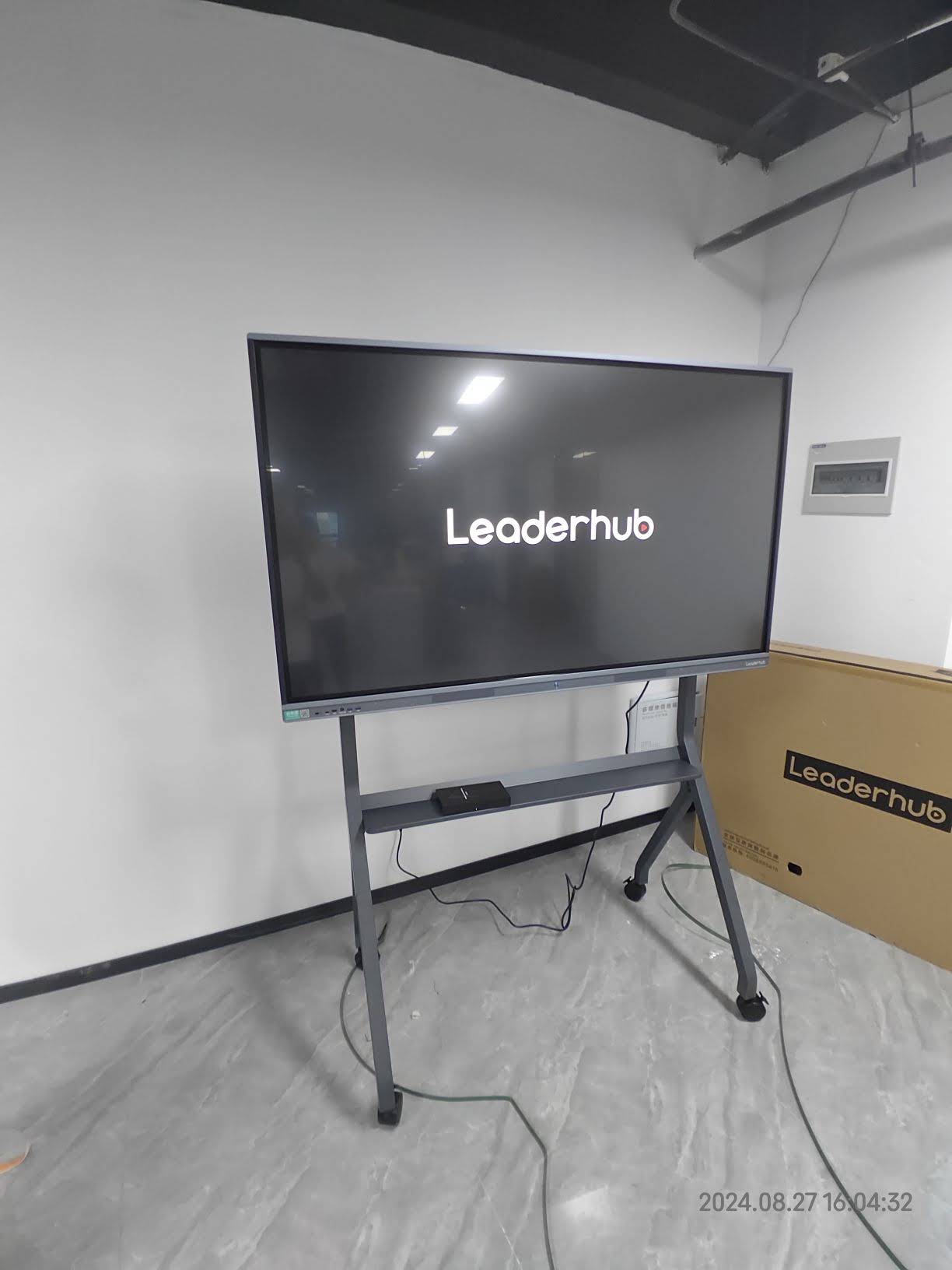
Wholesale Options: MOQ, OEM/ODM and Volume Tiers
Common Wholesale Models Offered by Chinese Factories
| Model | Typical MOQ | Customization Level | Ideal Buyer |
|---|---|---|---|
| Factory brand wholesale | 1–5 units | Language, firmware, accessories | Schools, SMEs, first-time importers |
| OEM (your brand) | 20–50 units | Logo, boot screen, packaging, manual | Distributors, AV integrators |
| ODM (custom design) | 100–500 units | Housing, mainboard, software features | Established brands, government tenders |
| Project / tender supply | Negotiated | Compliance docs, local-language support | Ministries of education, universities |
Volume Discount Tiers You Can Expect
- 1–10 units: list or near-list factory price, often with free sample upgrade on reorder.
- 11–50 units: roughly 5–8% reduction, consolidated shipping, OEM logo usually included.
- 51–200 units: 10–15% reduction, dedicated QC report per batch, flexible payment terms.
- 200+ units: project pricing, dedicated production line slot, extended warranty options.
Sample Orders Before Scaling
Reputable factories encourage sample orders. A single 65″ or 75″ unit lets your technical team test touch latency, panel uniformity, Wi-Fi stability and software compatibility with your LMS or video-conferencing platform. Many manufacturers refund or credit the sample cost against the first bulk order.
What to Include in Your RFQ
- Target sizes and quantities per size
- Android RAM/storage and whether an OPS slot or OPS PC is required
- Camera, microphone and speaker requirements
- Destination country and required certifications
- Branding scope (logo, packaging, UI)
- Preferred Incoterms (EXW, FOB Shenzhen, CIF, DDP)
- Warranty length and spare parts expectation
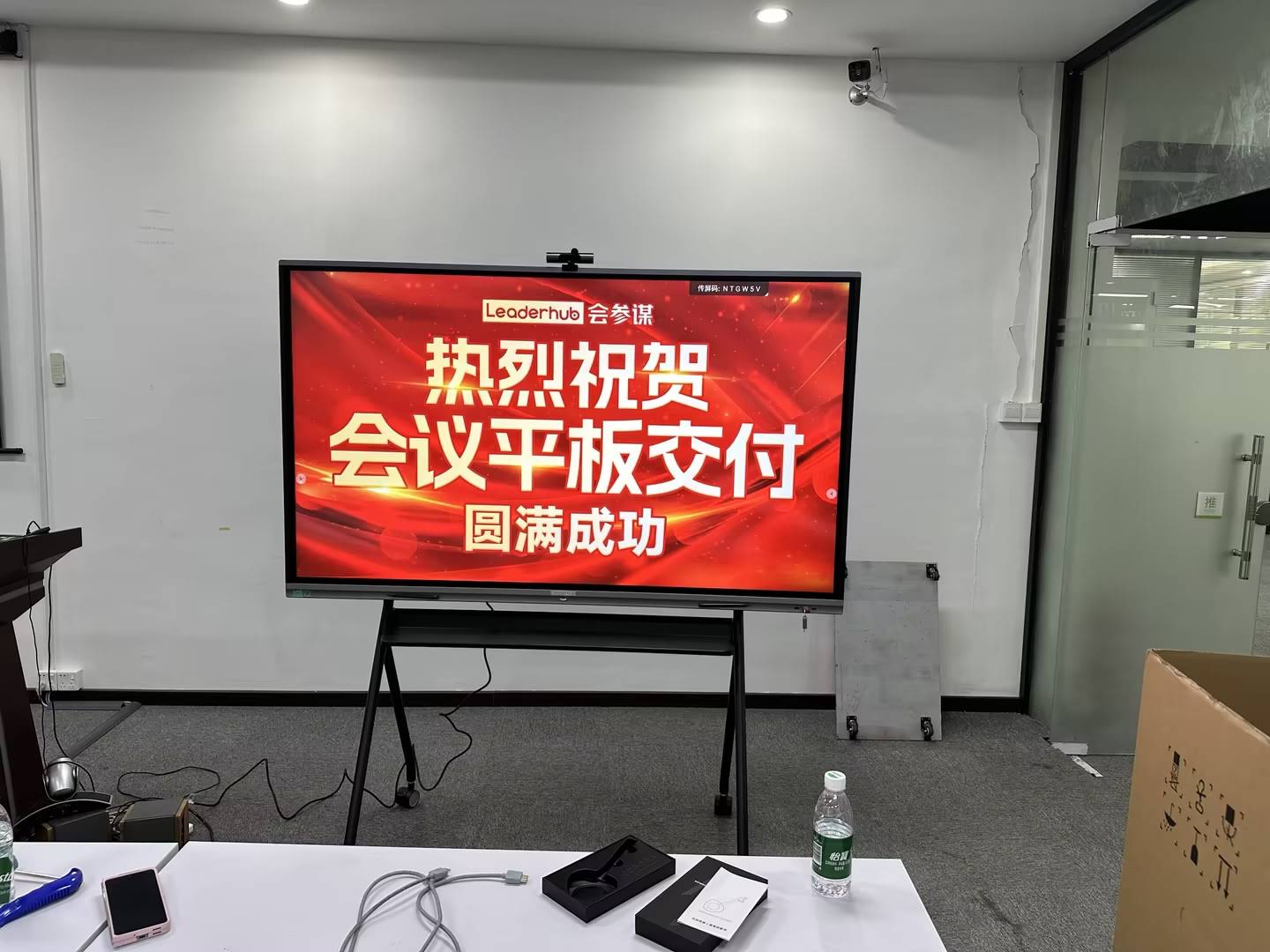
How to Choose a Reliable Smart Board Supplier in China
Competitive pricing only matters if the product arrives on time, passes customs and keeps working for five or more years. Use the following framework to evaluate suppliers.
1. Verify Real Manufacturing Capability
- Request a live video tour of the SMT line, bonding workshop, aging room and packing area.
- Ask for the business license and check that the registered scope includes “manufacturing,” not only “trading.”
- Confirm years in operation — factories with 10+ years have survived multiple panel-price cycles and policy changes.
- Ask which export markets they already serve; a supplier shipping to 50+ countries understands diverse voltage, plug and labeling rules.
2. Check Certifications for Your Market
| Region | Required / Expected | Notes |
|---|---|---|
| European Union / UK | CE, RoHS, REACH, UKCA, ErP | WEEE registration often required for importers |
| United States / Canada | FCC, UL or ETL, ENERGY STAR (schools) | Check E-Rate and district procurement rules |
| Middle East | SASO (KSA), ESMA (UAE), G-Mark | Arabic UI and RTL writing support valued |
| Southeast Asia / India | BIS (India), SIRIM (Malaysia), SNI (Indonesia) | Heat and humidity tolerance matters |
| Latin America / Africa | CE accepted widely; INMETRO (Brazil), NRCS (South Africa) | Voltage stability and surge protection recommended |
3. Evaluate Product Quality in Detail
- Panel — ask for the panel brand and grade in writing; request a dead-pixel policy.
- Glass — 4mm tempered anti-glare glass with Mohs 7 hardness is standard for classrooms.
- Touch — test writing latency; under 10ms with palm rejection is the current benchmark.
- Thermal design — aging test reports (48–72 hours at full brightness) show long-term reliability.
- Software — check update frequency, cloud whiteboard features and remote device management.
4. After-Sales Support and Warranty
A standard warranty from a credible Chinese factory is 2–3 years on the panel and 1 year on accessories. Ask how spare parts are stocked, whether remote firmware diagnostics are available, and if the supplier can ship replacement mainboards or touch frames within 7 days. For tenders, request a written service-level agreement.
5. Communication and Export Experience
Reliable suppliers assign a dedicated English-speaking account manager, respond within one business day, and provide proforma invoices, packing lists and HS codes without being asked twice. If you need guidance on how display technology should fit into pedagogy, resources such as the UNESCO Technology in Education Report and the OECD Digital Education Outlook 2026 help frame requirements that a good supplier should be able to meet.
Red Flags vs. Green Flags
| Red Flags | Green Flags |
|---|---|
| Refuses video factory tour | Invites you to visit or exhibits at global trade shows |
| Price 40%+ below market with no explanation | Itemized quote showing panel grade and components |
| Requests 100% payment upfront | 30% deposit, balance against B/L copy or inspection |
| No certification documents available | Test reports from accredited labs on request |
| Generic product photos reused across suppliers | Own brand recognized on domestic platforms and awards |
Regional Considerations for International Buyers
North America and Europe: procurement cycles are longer and compliance documentation is scrutinized. Prioritize suppliers who can supply UL/ETL or CE files, data-privacy statements for Android systems, and ENERGY STAR data for school tenders. Resources like Choosing an Interactive Display for K-12 outline what districts typically require.
Middle East and Africa: heat, dust and voltage fluctuation are the main challenges. Ask for operating-temperature ratings up to 45°C and built-in surge protection. Arabic and French UI localization is a frequent OEM request.
Southeast Asia and South Asia: high-volume education projects dominate demand. Price sensitivity is strong, so the 65″ and 75″ Android-only configurations are most popular; humidity-resistant coatings and local-language teaching software add value.
Latin America: import duties can be high, so DDP quotations and consolidated container shipping (roughly 60–70 units of 75″ per 40HQ) materially affect total cost. Spanish and Portuguese UI support should be confirmed before ordering.
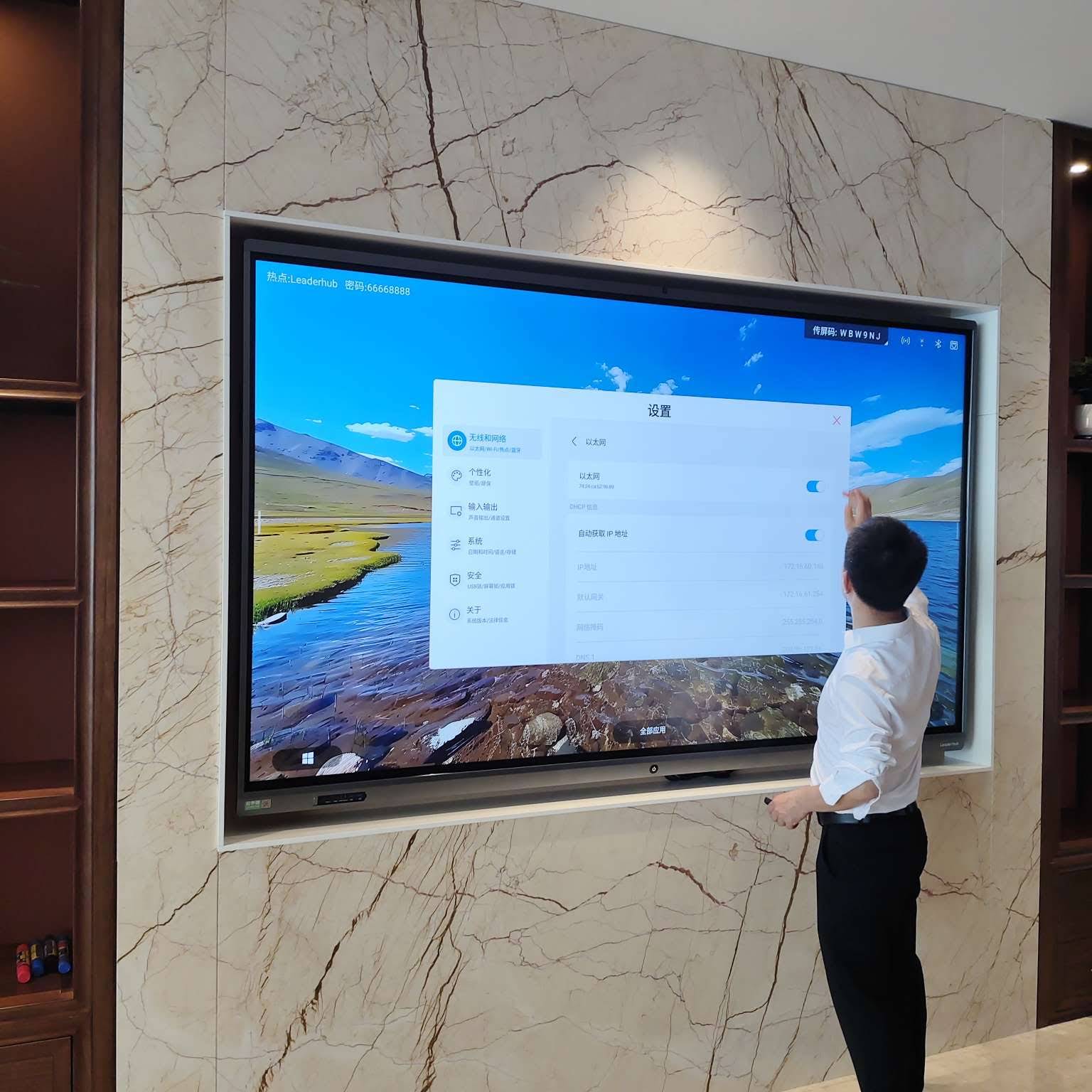
Case Example: A Shenzhen Factory With Transparent Pricing
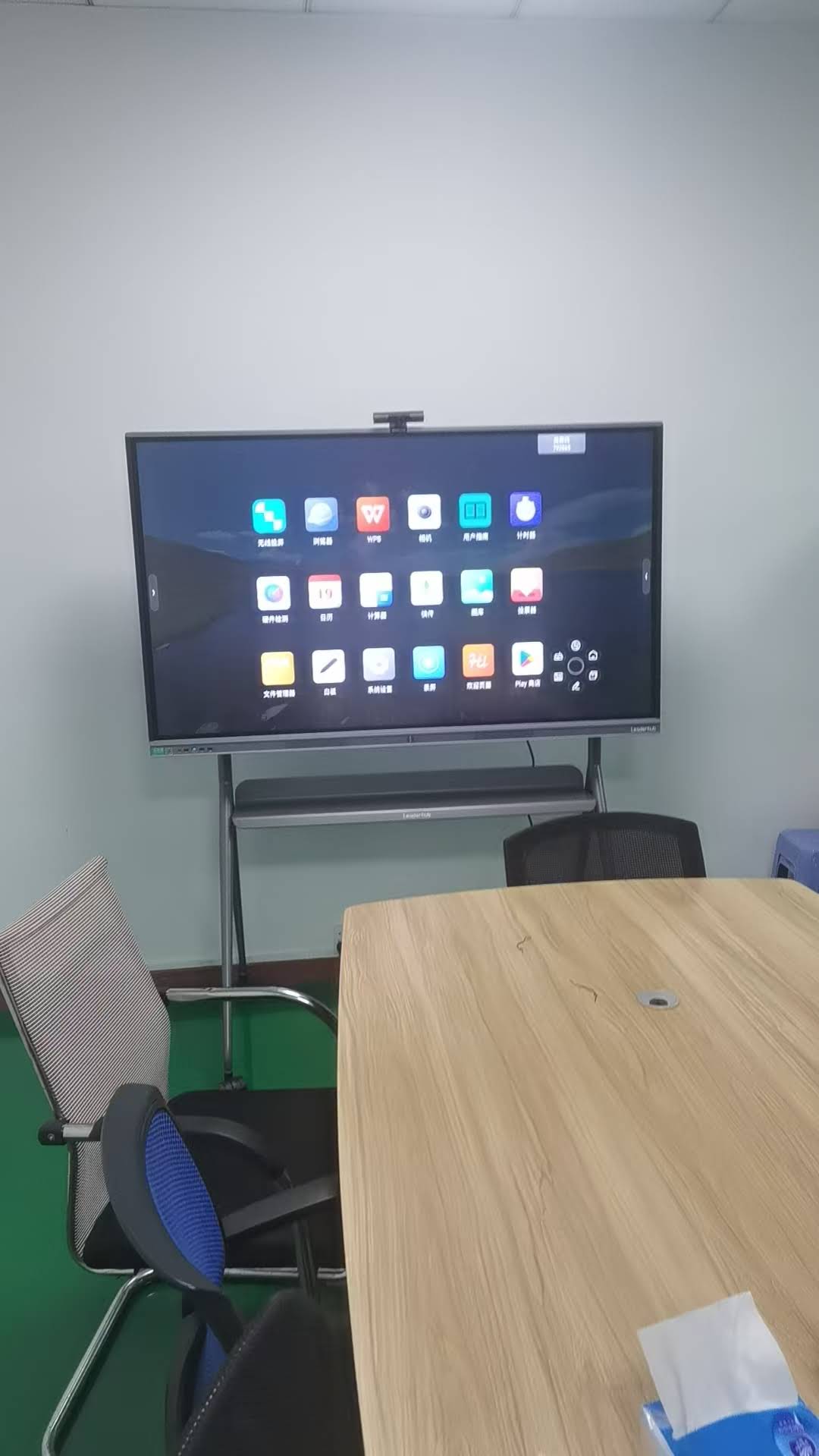
LeaderHub is a Shenzhen-based technology company with 16 years of experience in the interactive panel industry, delivering smart whiteboards, interactive flat panels, mini PCs and portable smart screens to customers in 82 countries, and ranked NO.1 in the interactive panel subcategory on JD.com. Its publicly listed pricing illustrates what realistic factory-level value looks like across the full size range:
| Model | Size | Positioning | Price |
|---|---|---|---|
| L65ZM Interactive Whiteboard | 65″ 4K | Entry classroom / SME | $1,099 |
| L75ZM Interactive Whiteboard | 75″ 4K | Standard classroom | $1,399 |
| L86ZM Interactive Whiteboard | 86″ 4K | Large classroom / lecture hall | $1,699 |
| L75HM Smart Whiteboard | 75″ 4K | Rotatable conference hub | $1,599 |
| L75H Pro Interactive Flat Panel | 75″ 4K | Executive boardroom | $2,399 |
| L110H Interactive Flat Panel | 110″ 4K | Auditorium / command center | $7,999 |
Beyond the main smart whiteboard range, the same factory supplies mini PCs that slot into OPS bays and rotating smart screens with built-in batteries — useful when a distributor wants a complete interactive portfolio from a single source rather than coordinating multiple vendors.
Step-by-Step: Sourcing Smart Boards From a China Factory
- Define requirements — sizes, quantities, software needs, certifications and budget per unit.
- Shortlist 3–5 manufacturers — verify factory status, export history and awards.
- Request itemized quotes — compare panel grade, RAM, touch type and warranty, not just the bottom line.
- Order samples — test in a real classroom or meeting room for at least two weeks.
- Negotiate terms — MOQ, payment schedule, Incoterms, lead time and penalty clauses.
- Arrange pre-shipment inspection — either third-party or a factory-issued QC report with photos and serial numbers.
- Plan logistics — containers, insurance, customs broker and local delivery.
- Establish after-sales workflow — spare parts stock, firmware updates and escalation contacts.
Buyers who want to meet manufacturers face-to-face can do so at exhibitions such as InfoComm, ISE, GITEX and the Canton Fair, where AV standards bodies like AVIXA also provide useful benchmarks for display performance and installation quality.
Frequently Asked Questions
What is the minimum order quantity for a smart board from a Chinese factory?
Many established factories accept single-unit sample orders under their own brand. OEM branding typically starts at 20–50 units, while full ODM projects usually require 100 units or more.
How long does production and shipping take?
Standard models ship in 15–25 days after deposit. Sea freight adds roughly 18–25 days to Europe, 20–30 days to the US East Coast, and 10–18 days to the Middle East and Southeast Asia.
Can I get Windows and Android on the same smart board?
Yes. Most panels run Android natively and include an OPS slot. Adding an OPS mini PC gives you a full Windows environment that switches with one touch.
What warranty should I expect?
Two to three years on the main unit is standard from reputable factories, with extended options available for volume projects. Always confirm how replacement parts are shipped and who bears freight costs.
Is factory-direct really cheaper after shipping and duties?
In most cases, yes. Even after freight, insurance and import duties, factory-direct total landed cost typically remains 25–40% below equivalent Western-branded panels sold through distributors.
Final Thoughts
China’s smart board factories offer genuinely competitive pricing because of supply-chain density, not because of corner-cutting — provided you choose the right partner. Focus on verified manufacturing capability, transparent itemized quotes, market-specific certifications and a clear after-sales plan. Do that, and factory-direct sourcing becomes a long-term advantage rather than a one-time saving.
Ready to compare specifications or request a wholesale quotation? Contact the LeaderHub team for an itemized quote, sample arrangement or OEM/ODM consultation tailored to your market.