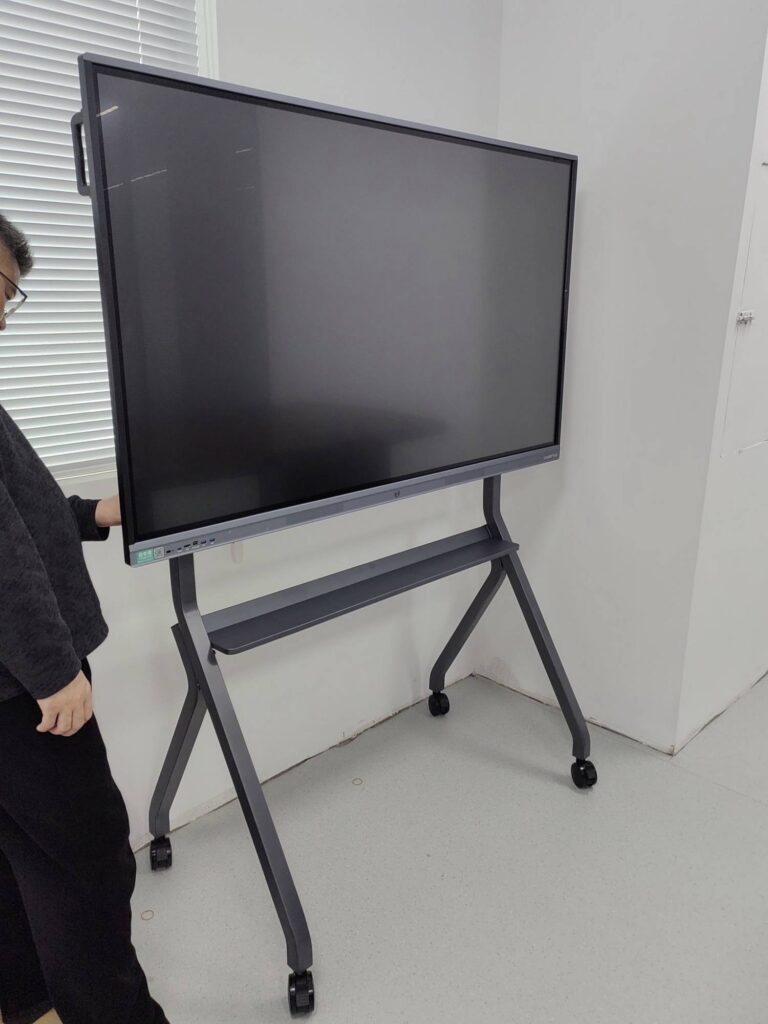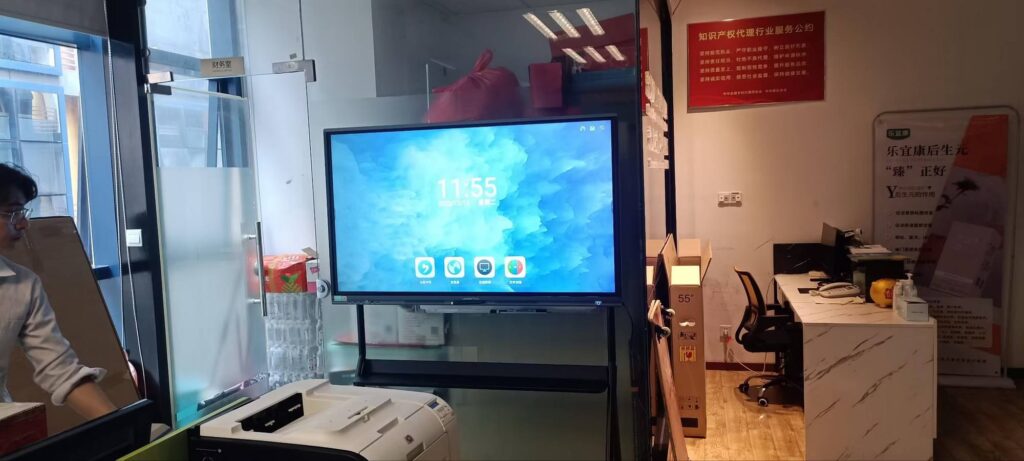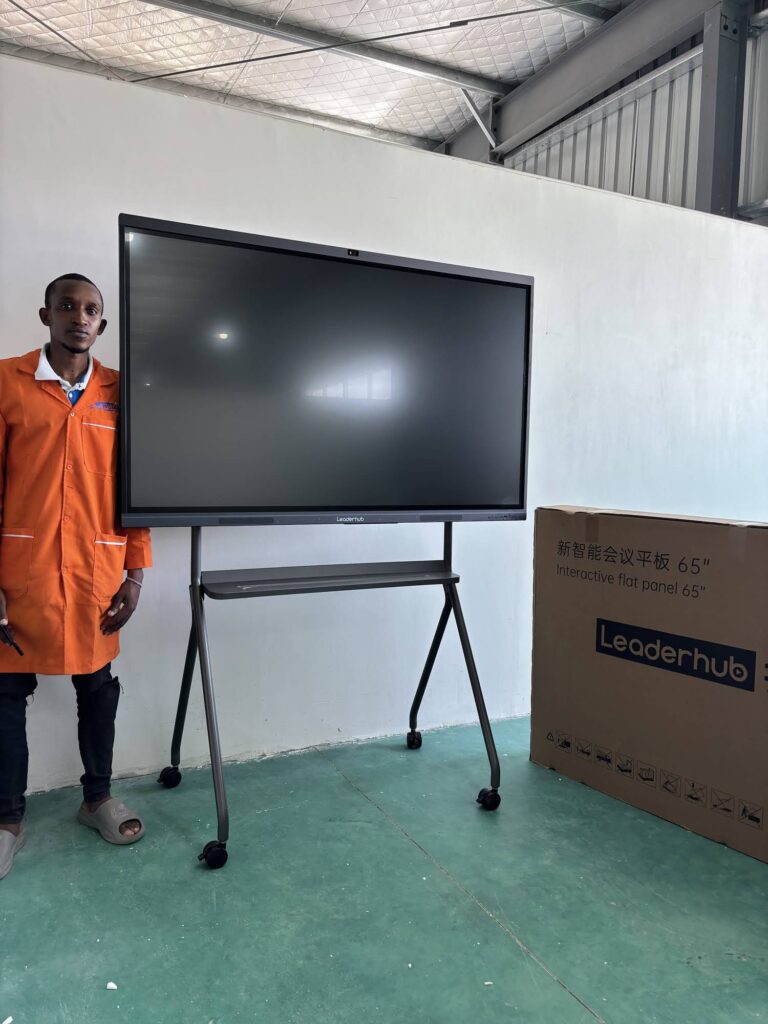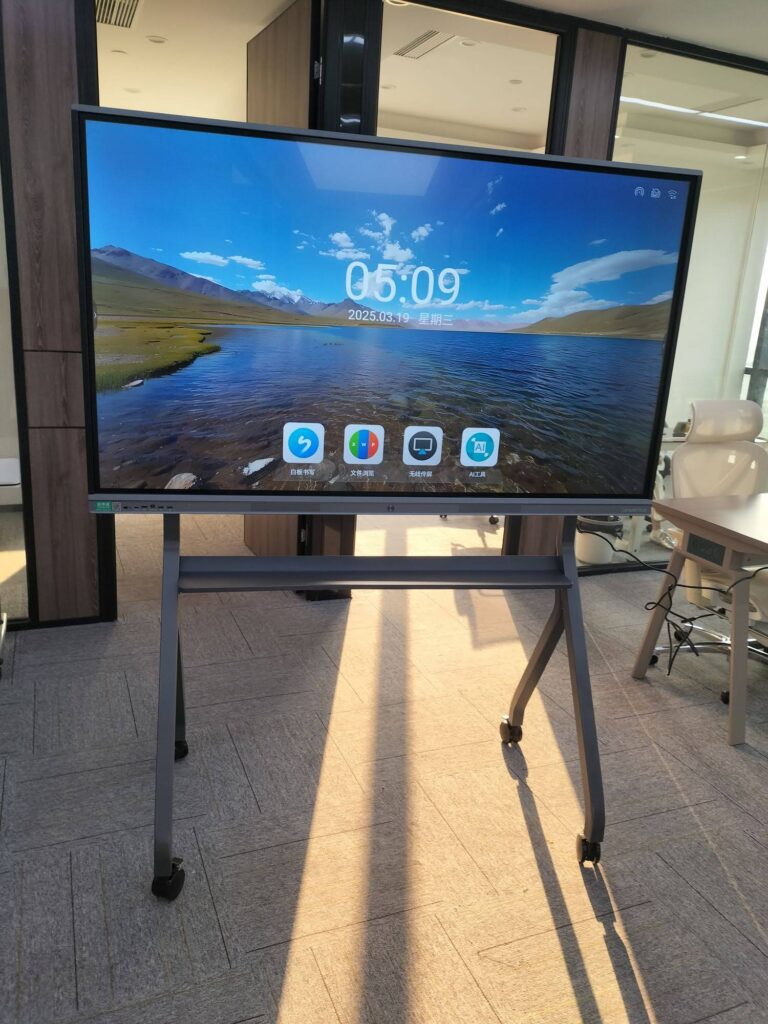
If you are sourcing interactive displays for schools, offices or resale, the first question is always the same: what is the real smart board factory price in China, and why do quotes for what looks like the same 75-inch panel range from $900 to $2,500? This guide breaks down current wholesale cost levels from Shenzhen and Guangdong manufacturers, explains the hardware and commercial factors that move the price up or down, and gives you a practical checklist for choosing a supplier that will still answer your emails two years after delivery.
Quick answer: In 2025, factory (FOB Shenzhen) prices for a 4K Android smart board typically fall between $650–$1,100 for 65″, $950–$1,700 for 75″ and $1,400–$2,800 for 86″, depending on panel grade, touch technology, processor and whether a Windows OPS module is included. Published retail-style prices from Chinese brand manufacturers usually sit 20–40% above these levels and already include software, warranty and support.
Why China Sets the Global Price for Smart Boards
More than 80% of the world’s interactive flat panels are assembled in China, and the vast majority of those come from a single region: the Pearl River Delta in Guangdong Province. Shenzhen, Guangzhou, Huizhou and Dongguan host the complete supply chain within a two-hour drive, which is why no other country can match Chinese factory pricing on large-format touch displays.
- Panel supply: BOE, CSOT (TCL) and HKC produce LCD open cells domestically, cutting the single largest cost item.
- Touch and glass: Infrared touch frames, capacitive sensors and anti-glare tempered glass are all made within Guangdong.
- Electronics: Mainboards, Android SoCs, speakers, cameras and OPS modules are sourced from Shenzhen’s Huaqiangbei ecosystem.
- Logistics: Yantian and Shekou ports ship directly to Europe, North America, the Middle East, Africa and Southeast Asia.
For international buyers, this means the “factory price” you negotiate is not an abstract number; it is directly tied to which panel grade, which touch frame and which mainboard the factory picks from this local ecosystem. Understanding those choices is the key to comparing quotes fairly.
Smart Board Factory Price in China: Wholesale Cost Guide by Size
The table below reflects typical FOB Shenzhen pricing for 4K UHD Android interactive flat panels at order quantities of 20–100 units. Prices assume A-grade panels, 20-point infrared touch, 4GB/32GB or 8GB/64GB Android configurations and standard CE/FCC/RoHS certification.
| Screen Size | Entry Level (FOB) | Standard Business/Education | Premium (OPS, Camera, AI) |
|---|---|---|---|
| 55″ | $520 – $680 | $680 – $900 | $900 – $1,400 |
| 65″ | $650 – $820 | $820 – $1,100 | $1,100 – $1,600 |
| 75″ | $950 – $1,200 | $1,200 – $1,700 | $1,700 – $2,500 |
| 86″ | $1,400 – $1,800 | $1,800 – $2,800 | $2,800 – $3,800 |
| 98″ – 110″ | $3,500 – $4,800 | $4,800 – $7,000 | $7,000 – $12,000 |
Keep in mind that panel prices fluctuate quarterly. Open-cell costs for 75″ and 86″ sizes rose through 2024 and have stabilised in 2025, while 65″ remains the most competitive size because of massive production volume for both TV and commercial markets.
Published Reference Prices from a Shenzhen Brand Manufacturer
A useful way to sanity-check factory quotes is to compare them with publicly listed prices from manufacturers that sell under their own brand. These figures include Android software, a multi-year warranty and after-sales support, so they sit above raw OEM factory cost but give a transparent ceiling for negotiation.
| Model | Size | Positioning | Listed Price |
|---|---|---|---|
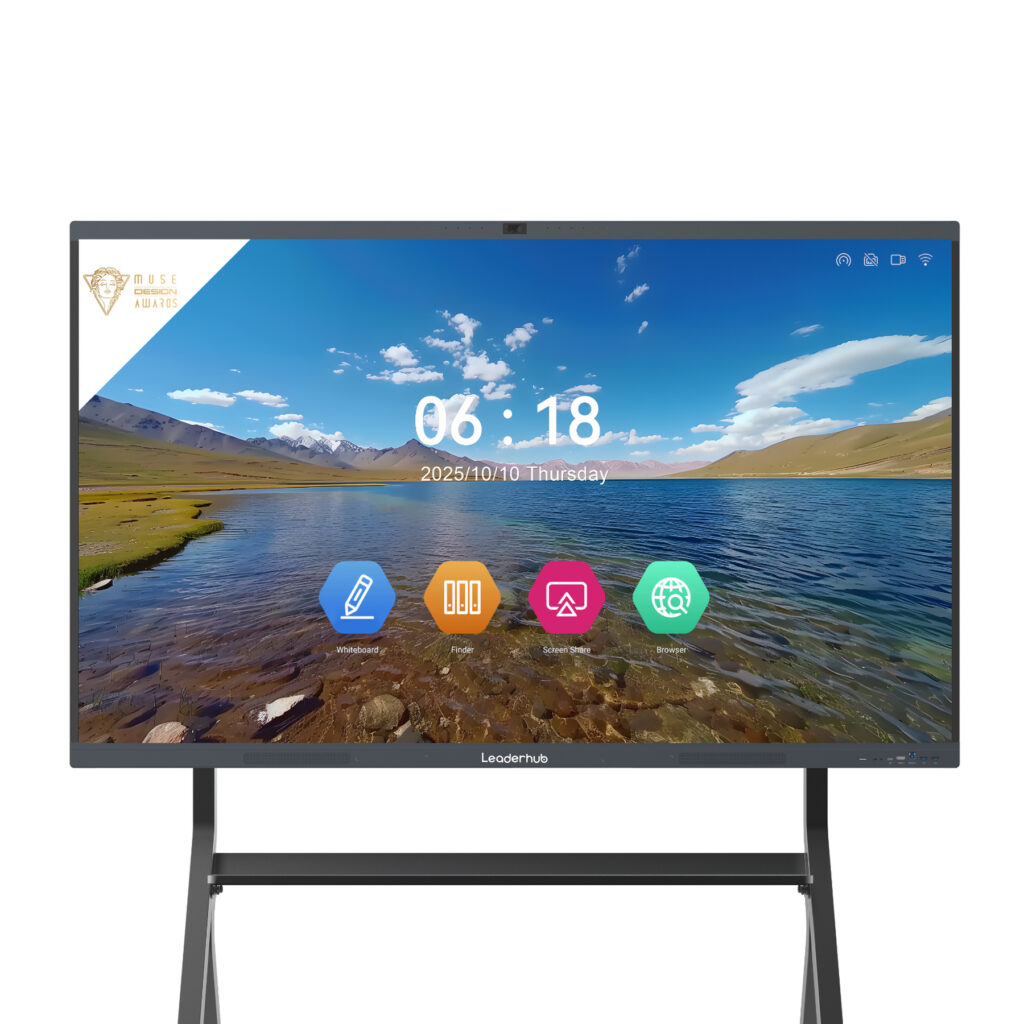
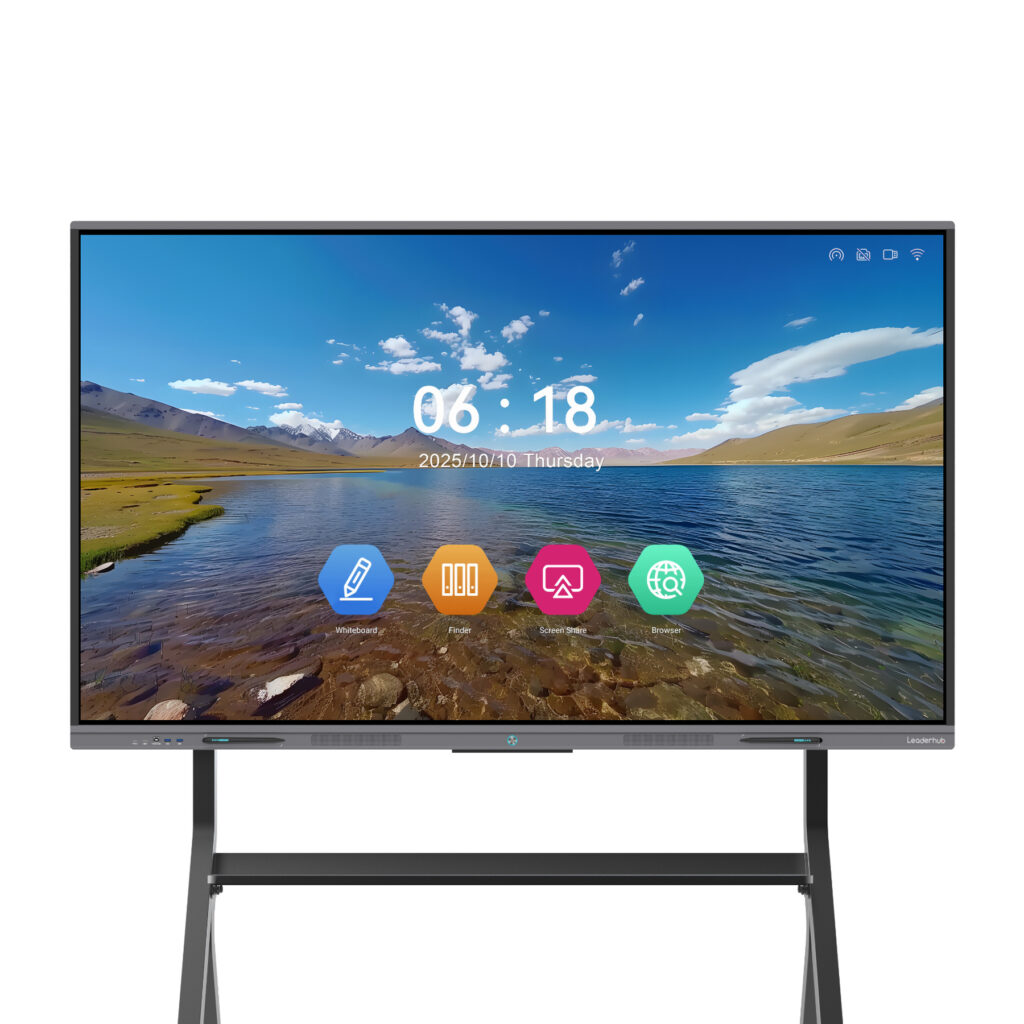
| L65ZM Interactive Whiteboard | 65″ | Value education / SME meeting room | $1,099 |
| L75ZM Interactive Whiteboard | 75″ | Value classroom standard | $1,399 |
| L86ZM Interactive Whiteboard | 86″ | Large classroom / lecture hall | $1,699 |
| L65HM Smart Whiteboard | 65″ | Rotatable conference hub | $1,299 |
| L75HM Smart Whiteboard | 75″ | Rotatable conference hub | $1,599 |
| L75H Pro Interactive Flat Panel | 75″ | Premium enterprise | $2,399 |
| L110H Interactive Flat Panel | 110″ | Boardroom / auditorium | $7,999 |
For wholesale and project quantities, distributors normally receive tiered discounts off these listed figures. You can browse the full range in the smart whiteboards category to compare configurations side by side.
Key Factors That Determine Smart Board Factory Prices
Two 75-inch boards can look identical in a product photo and differ by $800 in factory cost. Below are the nine variables that explain almost every price gap you will see in Chinese quotations.
1. Display Panel Source and Grade
The LCD open cell accounts for 40–55% of total cost. A-grade BOE or CSOT panels with full 4K resolution, 350–400 nits brightness and 178° viewing angles command a premium over B-grade or refurbished cells. Always ask the factory to state the panel brand and grade in writing on the pro forma invoice.
2. Touch Technology
Infrared (IR) touch with 20 points is the cost-effective standard for education. Zero-bonding or in-cell capacitive touch adds $150–$400 per unit but delivers lower parallax and a smoother writing feel favoured in premium conference rooms. Writing latency (ideally under 8 ms) is a good spec to compare.
3. Android Mainboard, Processor and Memory
Entry boards use quad-core SoCs with Android 11 and 4GB/32GB. Mid-range and premium units move to octa-core processors, Android 13 or 14, and 8GB/128GB storage, adding $60–$150. If you plan to run AI meeting tools, screen-sharing for 9+ devices or cloud whiteboarding, do not save money here.
4. Windows OPS Module
A pluggable OPS PC turns the board into a full Windows machine. Intel N100-class modules add roughly $200–$300; Core i5 modules add $450–$700. Many buyers purchase a compact mini PC separately to keep the upgrade path flexible.
5. Glass, Housing and Structural Build
4 mm anti-glare tempered glass (Mohs 7 hardness) is the baseline for schools. Thin-bezel aluminium frames, matte finishes and reinforced wall-mount brackets are extra. Cheap boards often cut cost with 3 mm glass and plastic rear covers, which show up later as cracked corners in transit.
6. Camera, Microphone Array and Speakers
Integrated 4K/13MP cameras with auto-framing and 6–8 microphone arrays with echo cancellation add $120–$250 but remove the need for separate video-bar hardware in hybrid meeting rooms.
7. Certifications and Compliance
CE, FCC, RoHS and UKCA are essential for Europe and North America; Energy Star, TÜV eye-comfort, and child-safety certifications are increasingly requested for school tenders. Factories that already hold these certificates include the cost; those that do not will quote lower and leave compliance risk with you.
8. Order Quantity and OEM/ODM Customisation
MOQ for private-label branding typically starts at 20–50 units for logo printing and 100–300 units for custom firmware, UI skins or colour variants. Unit price generally falls 8–15% between the 20-unit and 100-unit tiers, and another 5–10% at container volume.
9. Trade Terms, Payment and Shipping
Most Guangdong factories quote FOB Shenzhen or EXW with 30% T/T deposit and 70% before shipment. A 40HQ container holds roughly 100–110 units of 75″ boards; sea freight to Rotterdam, Los Angeles or Jebel Ali adds $40–$120 per unit depending on season. Lead time is usually 15–30 days, extended by 3–4 weeks around Chinese New Year and Golden Week in October.
| Cost Driver | Typical Impact on a 75″ Board | Worth Paying For? |
|---|---|---|
| A-grade vs B-grade panel | +$150 – $300 | Always |
| Capacitive vs IR touch | +$150 – $400 | Conference rooms yes, classrooms optional |
| 8GB/128GB vs 4GB/32GB | +$60 – $150 | Yes for AI and multi-app use |
| Integrated camera + mic array | +$120 – $250 | Yes for hybrid meetings |
| Intel i5 OPS module | +$450 – $700 | Only if Windows is mandatory |
| Full CE/FCC/Energy Star package | +$20 – $50 amortised | Non-negotiable for regulated markets |
From Factory Price to Landed Cost
Procurement teams in Europe, North America, the Gulf and Africa frequently underestimate the gap between a Chinese FOB quote and the final cost delivered to a classroom wall. A realistic calculation for a standard 75″ board looks like this:
- FOB Shenzhen unit price: $1,300
- Sea freight + insurance (share of 40HQ): $60 – $110
- Import duty and VAT/GST: varies by HS code 8528.52 / 8471.41 and country, often 0–25% of CIF value
- Customs brokerage and port handling: $15 – $40
- Inland delivery, wall mount, installation: $80 – $200
Depending on your destination, the landed cost can be 20–45% higher than the factory price. Ask your supplier whether they can quote DDP for your main markets; experienced exporters that ship to 80+ countries usually can, and it removes most of the uncertainty.
Factory, Trading Company or Brand Manufacturer?
Online marketplaces blur the line between a true factory and a reseller. Each supplier type has a legitimate role, but the price, risk and support profile are very different.
| Criteria | OEM Assembly Factory | Trading Company | Brand Manufacturer |
|---|---|---|---|
| Unit price | Lowest | +5 – 15% | +15 – 35% |
| Software & firmware updates | Generic, rarely updated | Depends on source factory | Own OS, regular OTA updates |
| Warranty | 12 months, parts only | 12 months, via factory | 2 – 3 years, service network |
| MOQ | 50 – 100+ | 1 – 20 | 1 – 20 |
| Best for | Large private-label programs | Mixed sourcing, small trials | Schools, enterprises, distributors needing support |
How to Choose a Reliable Smart Board Supplier in China
The lowest smart board factory price in China is rarely the lowest total cost of ownership. Use this due-diligence sequence before placing a deposit.
- Verify the legal entity. Request the business licence and check it on the National Enterprise Credit Information system. The registered scope should include display or electronics manufacturing, not just “trading”.
- Confirm the production site. Ask for a live video tour of SMT lines, aging rooms and packing areas, or commission a third-party audit (SGS, BV, TÜV) for $300–$600.
- Check certifications match the model. CE and FCC reports must list the exact model number you are buying, not a sister product.
- Order a sample first. Test writing latency, touch accuracy at the edges, backlight uniformity, speaker volume and wireless casting with Windows, macOS, iOS and Android devices.
- Evaluate the software roadmap. Find out how often Android OTA updates are released and whether the whiteboard app, screen-share tool and device-management console are developed in-house.
- Negotiate warranty and spare parts. A serious supplier will commit to keeping mainboards, touch frames and power supplies available for at least three years, and will ship replacement parts within 7–10 days.
- Review export track record. Suppliers already shipping to your region understand local plugs, languages, voltage and compliance paperwork.
- Protect payment. Use a written sales contract, 30/70 T/T with pre-shipment inspection, or an L/C for container orders.
Red Flags to Walk Away From
- Quotes significantly below the ranges in this guide without a clear hardware explanation.
- Refusal to state panel brand and grade in writing.
- Certificates with mismatched model numbers or expired dates.
- Pressure to pay 100% upfront or to a personal bank account.
- No reference customers in education or enterprise sectors.
Education buyers should also align technical specifications with pedagogical goals. The UNESCO Technology in Education Report stresses that classroom technology should be chosen on evidence of learning benefit rather than price alone, and the K-12 interactive display selection Q&A from EdTech Magazine offers a practical procurement framework for schools.
Negotiation Tips for Better Wholesale Pricing
- Standardise your configuration. Mixed specs across one order destroy volume discounts; one size and one configuration per container gets the best rate.
- Time your order. Place orders in March–April or July–August, outside peak season and far from Chinese New Year.
- Ask for annual framework pricing. Committing to a yearly forecast often unlocks pricing one tier below your first shipment quantity.
- Bundle complementary products. Adding mini PCs, portable rotating screens or mobile stands to the same order improves the overall margin for the supplier and your leverage.
- Trade MOQ for marketing support. Distributors can often negotiate demo units, localised brochures and co-branded packaging instead of a further price cut.
A Shenzhen Manufacturer Built for International Buyers
LeaderHub is a Shenzhen-based technology company with 16 years of experience in the interactive panel industry, specialising in smart whiteboards, interactive flat panels, mini PCs and portable smart screens delivered to 82 countries. Ranked NO.1 in its JD.com subcategory and recognised as a Shenzhen Famous Brand, the company combines in-house hardware engineering with AI-driven software to give schools, enterprises and distributors factory-level pricing together with brand-level warranty, OTA updates and OEM/ODM support. The HM Series rotatable conference hub has also received international design recognition as an award-winning rotatable conference hub.
Whether you need a single 65″ board for a pilot classroom or a container of 86″ panels for a district roll-out, you can request a wholesale quotation with transparent panel grades, certification files and DDP options for your market.
Frequently Asked Questions
What is the cheapest smart board factory price in China?
Entry-level 55″ and 65″ Android boards can be found around $520–$700 FOB at volume, but these usually use B-grade panels, 3 mm glass and older Android versions. For school or business deployment, a realistic floor for a dependable 65″ 4K board is $800–$1,100.
Why are 86-inch boards so much more expensive than 75-inch?
Panel yields drop sharply above 75″, and shipping volume per container falls from roughly 100 units to 60–70. Both factors push the 86″ factory price 40–60% higher than 75″ for the same configuration.
Can I get my own brand on the smart board?
Yes. Logo printing and custom boot screens normally start at 20–50 units; custom firmware, colours and packaging start at 100–300 units. Confirm tooling fees and artwork approval timelines in the contract.
How long does production and shipping take?
Standard production is 15–30 days after deposit. Sea freight is 18–25 days to the US West Coast, 30–40 days to Europe and 20–25 days to the Middle East. Add 3–4 weeks if your order overlaps Chinese New Year.
Should schools prioritise price or software?
Software and support determine daily usability. The OECD Digital Education Outlook highlights that hardware investment only pays off when paired with teacher-friendly tools and ongoing updates, so weigh the software roadmap as heavily as the unit price.
Ready to compare configurations and wholesale tiers? Explore the full product range or contact the sales team for a detailed factory quotation tailored to your region.