Interactive whiteboards have become essential tools in modern education and business environments, transforming how we teach, learn, and collaborate. But when did these innovative devices first emerge, and how have they evolved into the sophisticated smart displays we use today? This comprehensive guide explores the complete history of interactive whiteboards, from their initial invention to the AI-powered solutions reshaping collaboration in 2026.
The Birth of Interactive Whiteboard Technology
The first interactive whiteboard was developed in 1991 by SMART Technologies, a Canadian company founded by David Martin and Nancy Knowlton. This groundbreaking device, called the SMART Board, used resistive touch technology that allowed users to control computer applications by touching the board’s surface with their finger or a special pen.
The original SMART Board combined a simple whiteboard surface with digital projection and computer connectivity. When users touched the board, sensors detected the contact point and transmitted corresponding commands to the connected computer. This innovation marked the beginning of a new era in interactive presentation and teaching technology.
Early Development and Market Growth (1991-2000)
Following the 1991 introduction, interactive whiteboards remained relatively niche technology throughout the 1990s. Early adoption was limited primarily to:
- Corporate training departments seeking innovative presentation tools
- Technology-forward educational institutions with substantial budgets
- Government agencies exploring digital collaboration solutions
- Research facilities requiring advanced visualization capabilities
During this period, the technology faced several challenges that slowed widespread adoption. High costs placed interactive whiteboards out of reach for most schools and small businesses. A single system could cost between $5,000 and $10,000, including the board, projector, mounting hardware, and necessary software. Additionally, the technology required dedicated training, and many educators and professionals were unfamiliar with integrating digital tools into their established workflows.
Despite these obstacles, pioneering users recognized the potential. Teachers found that interactive whiteboards increased student engagement, while corporate trainers appreciated the ability to save and share annotated presentations. These early success stories laid the foundation for future growth.
The Education Revolution (2000-2010)
The early 2000s marked a turning point for interactive whiteboard technology. Governments worldwide began investing heavily in educational technology infrastructure, recognizing that digital literacy would be essential for future workforce readiness.
The United Kingdom led this transformation with the largest educational technology deployment in history. Between 2003 and 2007, the UK government invested over ¡ê50 million to install interactive whiteboards in primary and secondary schools across the country. By 2007, approximately 73% of UK secondary classrooms and 62% of primary classrooms had interactive whiteboards installed¡ªthe highest penetration rate globally.
| Year | Milestone | Market Impact |
|---|---|---|
| 2003 | UK national deployment begins | Market demand increases significantly |
| 2005 | Multiple manufacturers enter market | Prices begin to decline due to competition |
| 2007 | Global sales exceed 1 million units | Technology becomes mainstream in education |
| 2010 | Touch technology improvements | Multi-user interaction becomes possible |
Other countries followed suit with substantial investments. The United States implemented numerous state and district-level programs, while Australia, Singapore, South Korea, and European nations launched similar initiatives. This global push dramatically increased production volumes, which helped reduce costs and improve technology accessibility.
Technological Evolution and Competition (2010-2020)
As the market matured, interactive whiteboard technology underwent significant transformation. The decade from 2010 to 2020 saw multiple technological breakthroughs that improved performance, usability, and affordability.
From Projector-Based to Flat Panel Displays
The most significant shift occurred with the introduction of interactive flat panel displays (IFPDs). Unlike traditional interactive whiteboards that required external projectors, these new devices integrated the display, touch sensors, and computer processing into a single unit. This integration offered several advantages:
- Eliminated shadows: No projector meant presenters no longer blocked the display when standing in front of it
- Better image quality: LED and LCD panels provided brighter, higher-resolution images than projected content
- Reduced maintenance: No projector bulbs to replace, significantly lowering total cost of ownership
- Simpler installation: Wall-mounted panels required less space and fewer components than projector systems
- Improved touch response: Capacitive touch technology offered faster, more accurate interaction
By 2015, interactive flat panels began outselling traditional projector-based interactive whiteboards in many markets. This trend accelerated as display manufacturing costs declined and screen sizes increased, making large-format displays increasingly affordable.
Software and Operating System Integration
Interactive whiteboard software also evolved considerably during this period. Early systems relied on proprietary software that required specialized training and often limited compatibility with other applications. Modern interactive displays incorporated standard operating systems like Android and Windows, allowing users to run familiar applications and access cloud-based resources directly on the display.
This shift dramatically improved usability. Teachers could now use their existing lesson plans and digital resources without converting them to proprietary formats. Business users could seamlessly present content from various sources and collaborate using standard productivity tools.
The Modern Era: AI-Powered Smart Whiteboards (2020-Present)
The current generation of interactive whiteboards represents a fundamental evolution from their 1991 predecessors. Today’s devices are sophisticated computing platforms that integrate artificial intelligence, cloud connectivity, wireless collaboration, and advanced sensors to create truly intelligent collaboration environments.
Key Features of Contemporary Interactive Displays
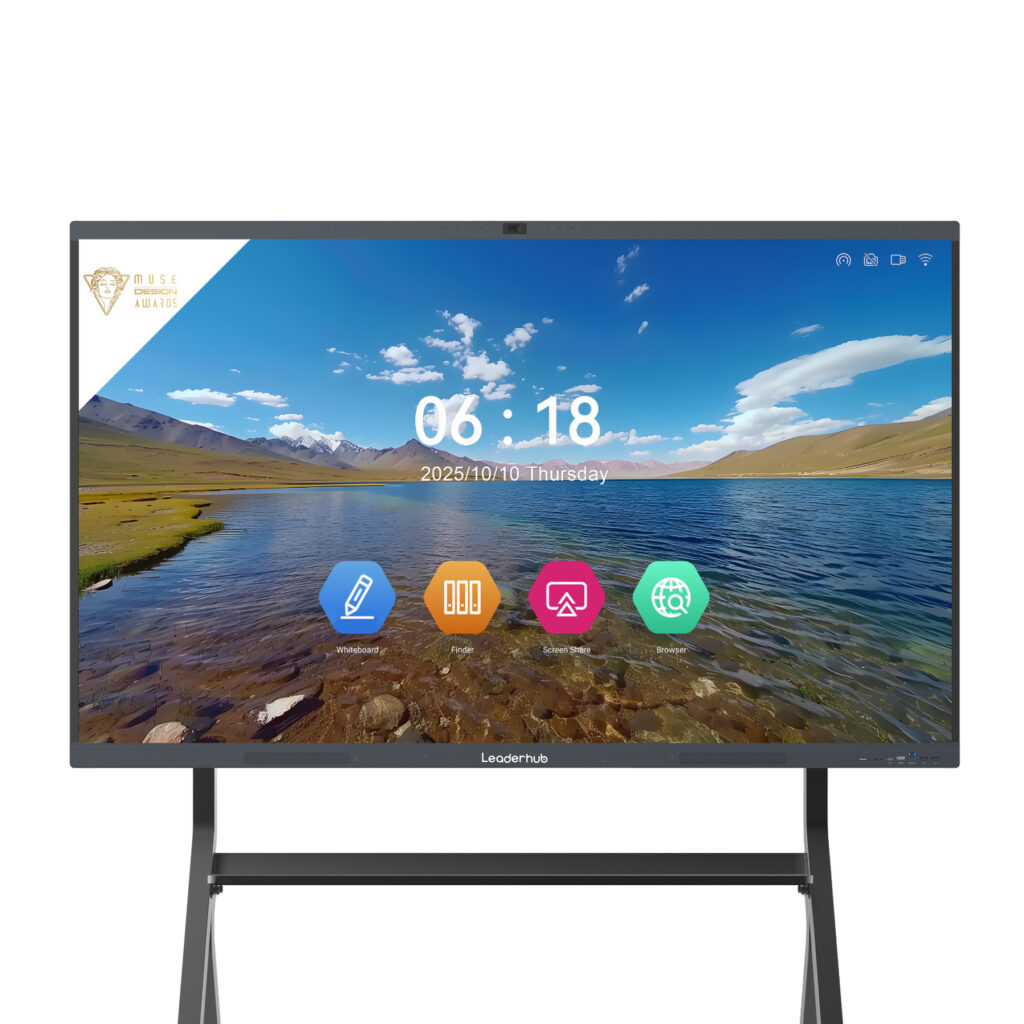
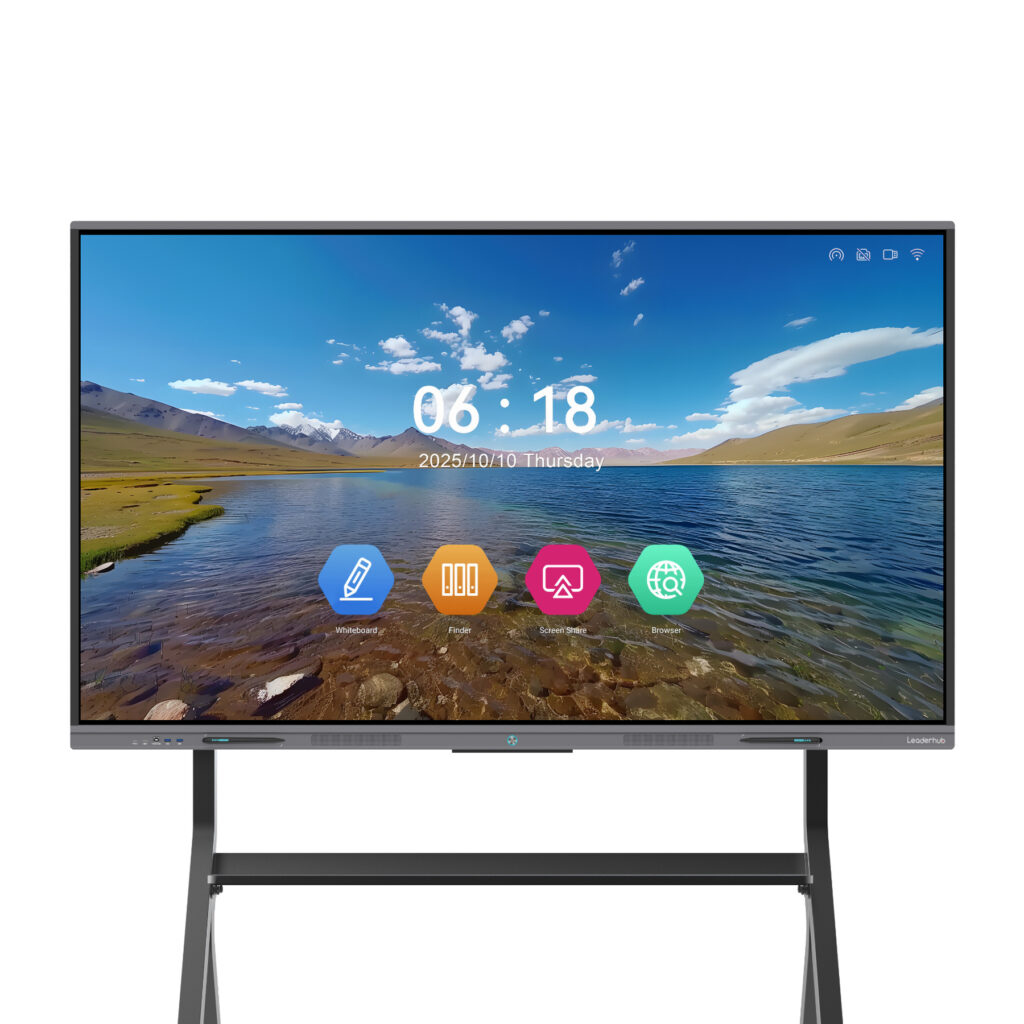
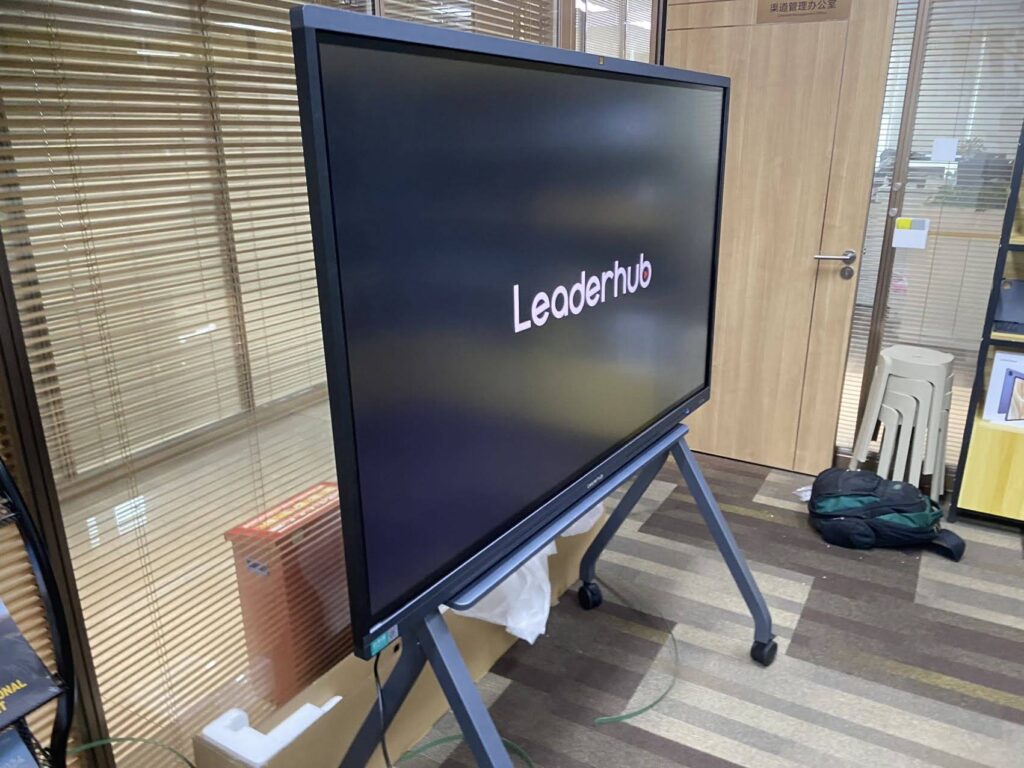
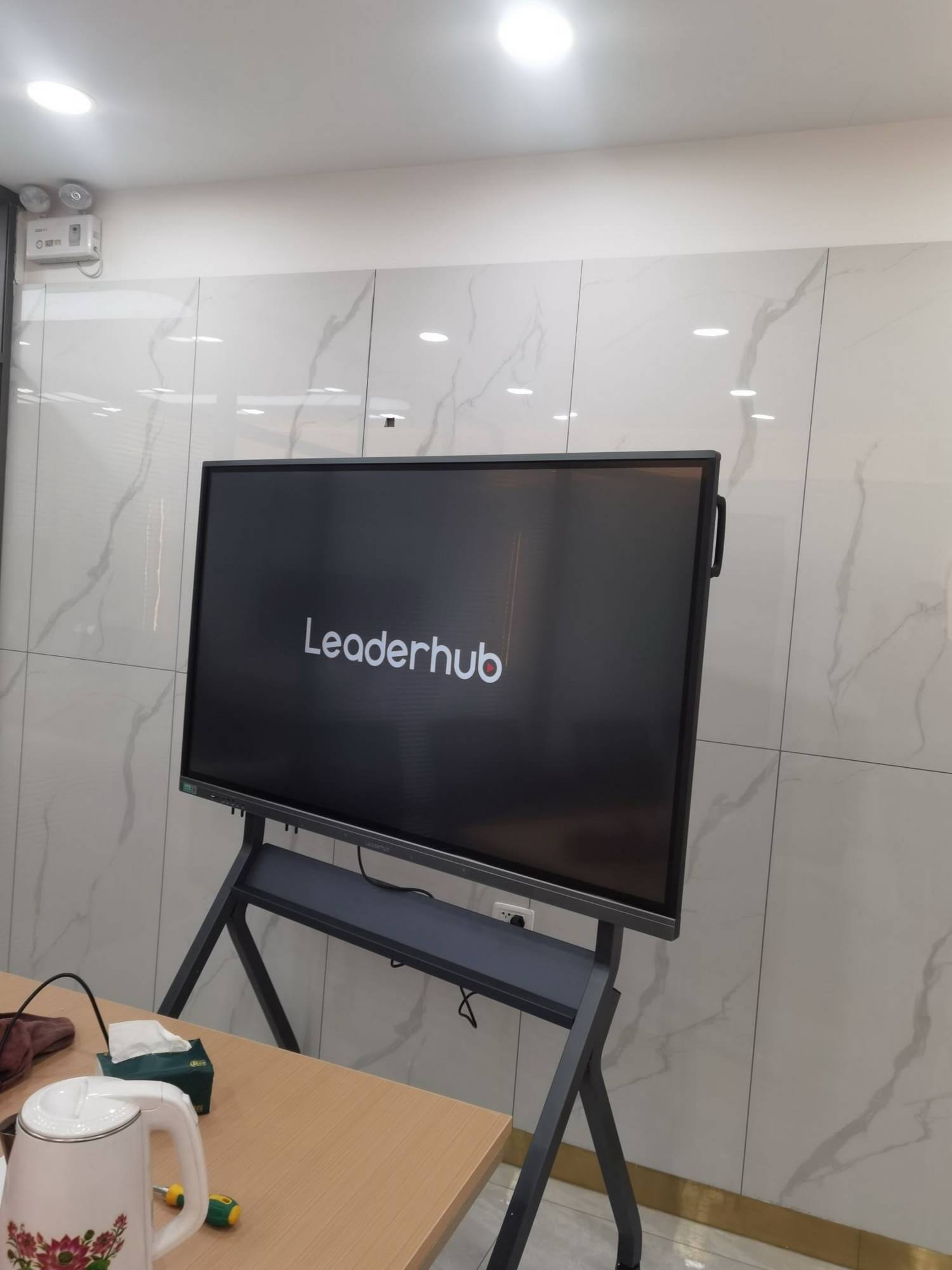
Modern interactive whiteboards from manufacturers like LeaderHub incorporate technologies that were unimaginable when the first SMART Board launched:
- 4K and 8K resolution displays: Ultra-high-definition screens deliver crystal-clear text and images
- Multi-touch capability: Up to 40 simultaneous touch points enable collaborative work by multiple users
- AI-powered features: Handwriting recognition, automatic content organization, intelligent meeting summaries
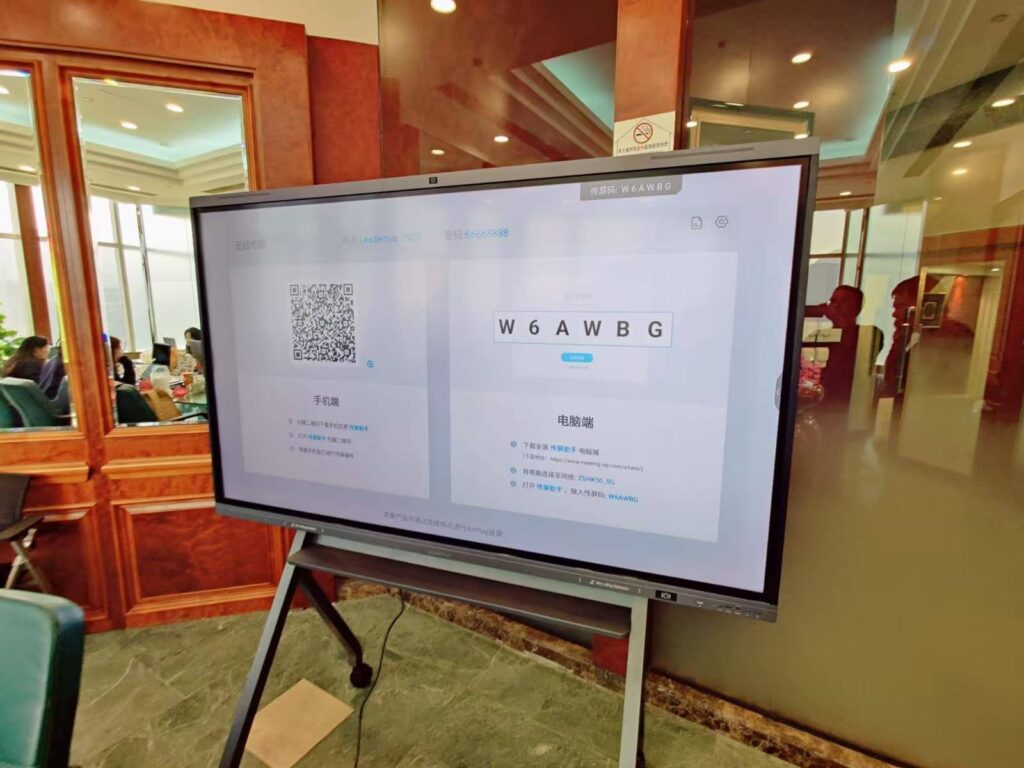
- Wireless screen sharing: Connect laptops, tablets, and smartphones without cables
- Cloud integration: Seamless access to cloud storage and collaboration platforms
- Built-in cameras and microphones: Support for video conferencing and hybrid meetings
- Object recognition: Automatic detection and response to different writing instruments
- Gesture control: Intuitive navigation using natural hand movements
The Impact of COVID-19 on Interactive Display Adoption
The global pandemic accelerated digital transformation in education and business, driving unprecedented demand for interactive display solutions. As organizations adapted to remote and hybrid work models, interactive whiteboards evolved to bridge physical and virtual collaboration.
Research from Futuresource Consulting showed that global interactive display shipments grew by 26% in 2021 compared to pre-pandemic levels, with particularly strong growth in corporate and government sectors. This expansion reflected the technology’s critical role in enabling effective hybrid communication.
Interactive Whiteboards Around the World
While interactive whiteboard technology originated in North America, adoption patterns and preferences vary significantly across global markets, influenced by local educational philosophies, infrastructure capabilities, and cultural factors.
North America
The United States and Canada remain large markets for interactive displays, with particularly strong adoption in K-12 education. However, implementation approaches vary widely. Some districts have deployed interactive panels in every classroom, while others take a more measured approach, focusing on shared spaces and specific subject areas.
Corporate adoption in North America has grown substantially, especially in technology companies, professional services firms, and organizations prioritizing collaborative work environments. The shift toward open office designs and huddle rooms has created new opportunities for smaller, more affordable interactive displays.
Europe
European markets demonstrate varied adoption patterns. The United Kingdom maintains high penetration rates established during the 2000s government programs, though many schools now face equipment replacement cycles. Nordic countries emphasize high-quality, sustainable technology investments with strong digital pedagogy support.
Southern European nations have seen more gradual adoption, often concentrated in urban areas and well-funded institutions. However, recent European Union educational technology initiatives are driving increased deployment across member states.
Asia-Pacific
The Asia-Pacific region represents the fastest-growing market for interactive displays. Countries like China, South Korea, and Singapore have made massive investments in educational technology infrastructure. China alone accounts for approximately 40% of global interactive display shipments, driven by government mandates for classroom modernization and a competitive manufacturing sector.
Japan and South Korea emphasize cutting-edge technology features and seamless integration with existing digital ecosystems. These markets often adopt new innovations earlier than other regions, making them important indicators of future global trends.
Emerging Markets
Latin America, the Middle East, and Africa represent significant growth opportunities. While current penetration rates remain lower than developed markets, government initiatives and declining technology costs are driving increased adoption. Many organizations in these regions leapfrog older technologies, deploying the latest flat panel displays rather than projector-based systems.
The Role of Companies Like LeaderHub
The evolution of interactive whiteboards from expensive niche products to mainstream collaboration tools required contributions from manufacturers worldwide. Companies like LeaderHub, with over 16 years of experience developing interactive display technologies, have played crucial roles in making these tools more accessible and reliable.
LeaderHub’s approach exemplifies how modern manufacturers support customers across 82+ countries, combining hardware innovation with practical software solutions and long-term technical support. By offering complete product portfolios including smart whiteboards, interactive flat panels, portable smart screens, and supporting computing devices, companies like LeaderHub enable organizations to implement comprehensive collaboration solutions tailored to their specific needs.
Current Market Landscape and Statistics
The interactive display market has matured considerably since 1991, becoming a multi-billion dollar global industry. Understanding current market dynamics helps contextualize the technology’s journey and future trajectory.
Market Size and Growth
According to recent industry analysis, the global interactive display market was valued at approximately $7.2 billion in 2023 and is projected to reach $12.8 billion by 2030, representing a compound annual growth rate (CAGR) of around 8.5%. This growth reflects continued demand from education, corporate, government, and healthcare sectors.
Technology Preferences
Interactive flat panels now dominate the market, accounting for more than 75% of unit shipments in 2023. Traditional projector-based interactive whiteboards maintain niche positions in specific applications where projection offers advantages, such as very large display areas or environments with controlled lighting.
Screen Size Trends
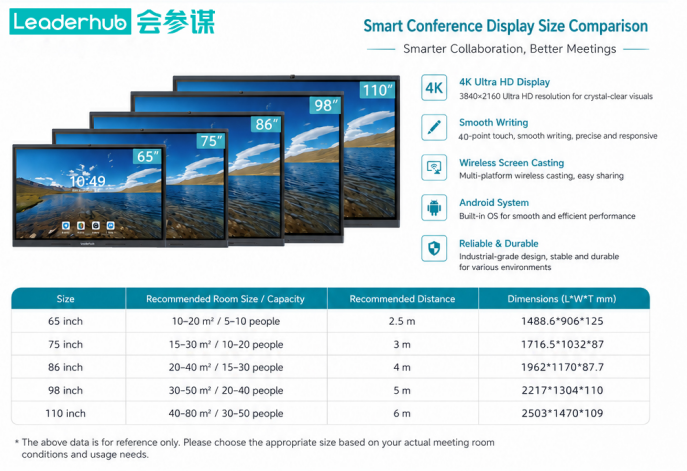
Average screen sizes have increased steadily. Education customers typically select 65-75 inch displays for standard classrooms, while 86-98 inch panels are increasingly common in lecture halls and large meeting rooms. Corporate users often prefer 55-65 inch displays for huddle rooms and 75-86 inch screens for conference rooms.
Applications Beyond Traditional Classrooms
While education drove initial interactive whiteboard adoption, contemporary applications extend far beyond teaching environments. Modern interactive displays serve diverse purposes across multiple industries.
Corporate Collaboration
Businesses use interactive displays for meetings, presentations, brainstorming sessions, and design reviews. The technology facilitates visual collaboration, allowing teams to annotate documents, sketch ideas, and review visual content together. Integration with video conferencing platforms makes these displays essential for hybrid meetings where some participants join remotely.
Healthcare
Medical facilities deploy interactive displays in training rooms, patient consultation areas, and collaborative diagnostic environments. Physicians use these displays to review medical imaging with colleagues, explain procedures to patients, and facilitate multidisciplinary case reviews.
Government and Public Sector
Government agencies utilize interactive displays for public presentations, emergency operations centers, urban planning sessions, and citizen engagement forums. The technology’s ability to visualize complex data and facilitate collaborative decision-making makes it valuable for policy development and public communication.
Retail and Hospitality
Forward-thinking retailers incorporate interactive displays for customer engagement, product demonstrations, and training. Hotels use them in conference facilities and event spaces, offering clients modern presentation capabilities.
Looking Forward: The Future of Interactive Display Technology
From the first SMART Board in 1991 to today’s AI-powered collaboration platforms, interactive whiteboards have undergone remarkable transformation. Looking ahead, several trends will shape the next chapter of this technology’s evolution.
Artificial Intelligence Integration
AI capabilities will become increasingly sophisticated, offering real-time language translation, automatic content summarization, intelligent meeting facilitation, and adaptive user interfaces that learn individual preferences. These features will make interactive displays more intuitive and productive.
Enhanced Remote Collaboration
As hybrid work and distributed teams become standard, interactive displays will further evolve to bridge physical and virtual environments seamlessly. Improved camera technology, spatial audio, and presence detection will create more natural remote collaboration experiences.
Sustainability Focus
Environmental considerations will drive product design, with manufacturers prioritizing energy efficiency, recyclable materials, longer product lifecycles, and responsible end-of-life management. Customers increasingly evaluate total environmental impact alongside traditional purchase criteria.
Ecosystem Integration
Interactive displays will integrate more seamlessly with broader technology ecosystems, connecting with IoT devices, room scheduling systems, building automation, and organizational IT infrastructure. This integration will enable smarter spaces that adapt to user needs automatically.
Choosing the Right Interactive Display in 2026
With over three decades of technological evolution, today’s buyers face numerous choices when selecting interactive displays. Understanding key considerations helps organizations make informed decisions aligned with their specific requirements.
Define Your Primary Use Case
Different applications prioritize different features. Educational environments might emphasize multi-user collaboration and annotation tools, while corporate users might prioritize video conferencing integration and cloud connectivity. Healthcare applications might require specific compliance certifications and medical imaging capabilities.
Consider Total Cost of Ownership
Look beyond initial purchase price to evaluate long-term costs including installation, training, software subscriptions, maintenance, and eventual replacement. Interactive flat panels typically offer lower total cost of ownership than projector-based systems due to reduced maintenance requirements.
Evaluate Software Ecosystem
Examine available applications, cloud integration options, and compatibility with your existing tools. Displays that support standard operating systems typically offer greater flexibility and easier integration with organizational workflows.
Assess Support and Service
Consider the manufacturer’s track record, available technical support, warranty terms, and replacement part availability. Companies with established global presence and long industry experience typically provide more reliable long-term support.
Conclusion: Three Decades of Innovation
Interactive whiteboards emerged in 1991 as innovative tools that digitized the traditional whiteboard experience. Over the following decades, they evolved from expensive, specialized equipment into mainstream collaboration platforms used by millions of people daily across education, business, government, and healthcare sectors worldwide.
The journey from the original SMART Board to today’s AI-powered interactive displays reflects broader technological progress¡ªincreasing processing power, improving display technology, declining costs, and rising user expectations for intuitive, connected experiences. What began as a simple way to capture whiteboard content digitally has become a comprehensive collaboration platform that bridges physical and virtual environments.
As we look toward the future, interactive display technology will continue evolving, incorporating artificial intelligence, enhanced connectivity, and increasingly sophisticated capabilities. However, the core purpose remains unchanged: enabling people to communicate ideas, collaborate effectively, and work more productively together. That fundamental goal, established when the first interactive whiteboard appeared 35 years ago, continues driving innovation today and will shape the technology’s development for years to come.
Whether you’re an educator seeking to engage students, a business professional facilitating team collaboration, or an organization evaluating technology investments, understanding the history and evolution of interactive whiteboards provides valuable context for making informed decisions about tools that will shape how you work, teach, and communicate in the years ahead.