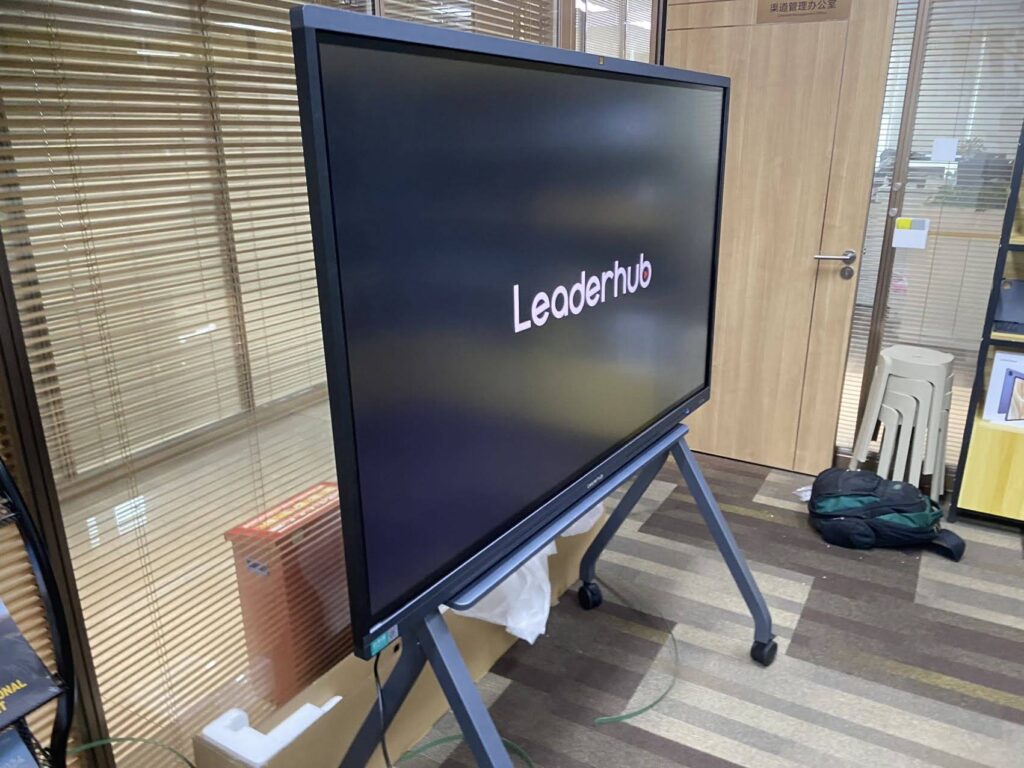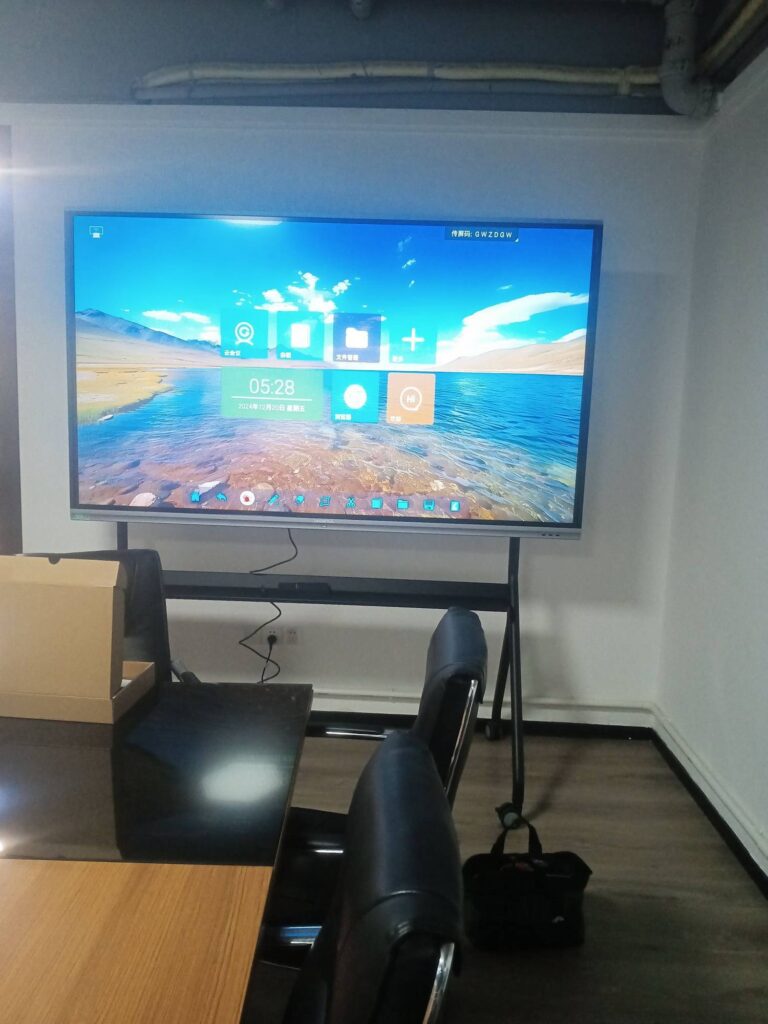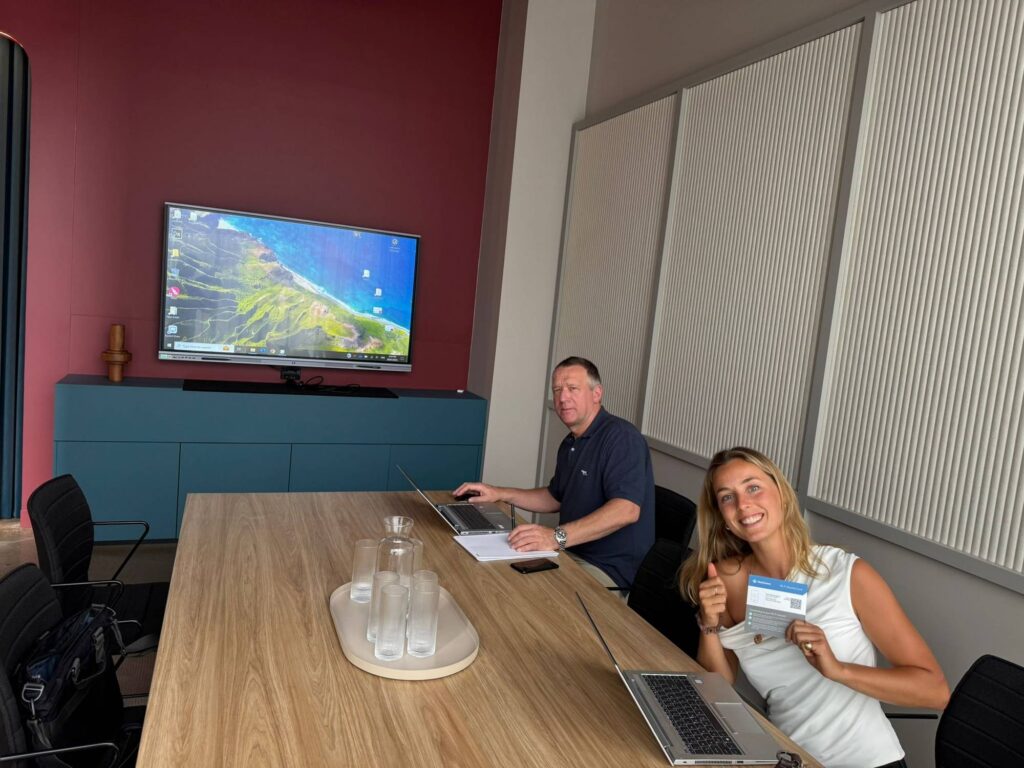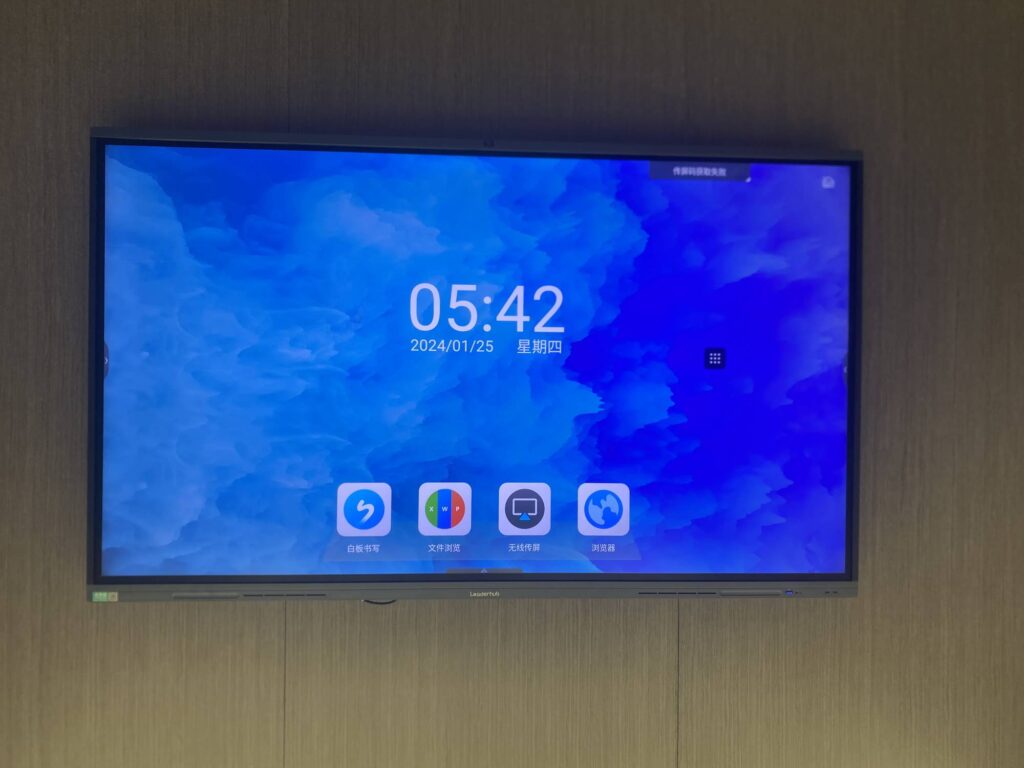
Choosing a ceiling-mounted smart whiteboard is one of the most impactful decisions a school, training center, or corporate office can make when upgrading a shared meeting or classroom space. Unlike wall-mounted or mobile stand units, ceiling-mounted systems free up floor space, create a cleaner visual layout, and allow the display to be positioned exactly where sightlines are best — whether that’s above a stage, in the center of a boardroom table, or suspended over a collaborative pod in an open-plan office.
After working with hundreds of schools, corporate clients, and system integrators across 82 countries, our team at LeaderHub has seen firsthand how the right mounting solution and panel specification can make or break the daily usability of an interactive display. This guide walks through everything you need to evaluate — from screen size and mounting hardware to touch technology and total cost of ownership — so you can make a confident, informed purchase.
Why Ceiling Mounting Is Growing in Popularity
Traditional wall-mounted smart whiteboards work well in fixed classrooms, but many modern spaces — flexible training rooms, open collaboration zones, auditoriums, and multi-purpose halls — don’t always have a suitable wall. A ceiling-mounted rig solves this by suspending the display from an overhead track or motorized lift, giving architects and AV integrators far more flexibility in room design.
- Space efficiency: No wall bracket or floor stand needed, which is critical in rooms where every square foot counts.
- Better sightlines: The panel can be centered over a table or stage rather than pushed to one wall.
- Flexible room reconfiguration: Motorized ceiling mounts let the display retract when not in use.
- Improved cable management: Power and data cabling run through the ceiling void, keeping the room tidy.
Key Factors to Evaluate Before You Buy
Not every interactive flat panel is engineered to be flipped, tilted, or suspended safely from a ceiling rig. Below are the core specifications our engineering team recommends checking before committing to a purchase.
1. Panel Weight and VESA Mount Compatibility
Ceiling mounts and motorized lifts have maximum weight ratings. A 65″ panel typically weighs 25–35 kg, while an 86″ unit can exceed 55 kg. Always confirm the panel’s VESA hole pattern matches your chosen mount, and that the mount’s rated load includes a safety margin of at least 20%.
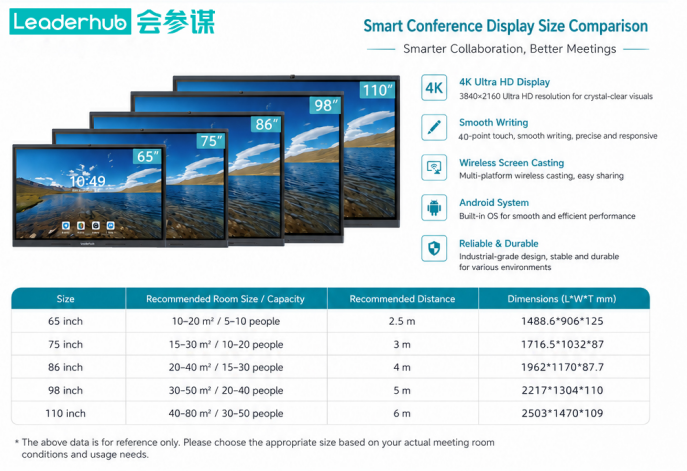
2. Screen Size and Viewing Distance
Screen size should be matched to the room’s depth and seating arrangement. As a general industry rule used by AV consultants:
| Room Depth | Recommended Screen Size | Typical Use Case |
|---|---|---|
| Up to 4m | 55″ – 65″ | Small meeting rooms |
| 4m – 7m | 75″ – 86″ | Classrooms, training halls |
| 7m and above | 98″ – 110″ | Auditoriums, large lecture halls |
3. Display Resolution and Brightness
For any ceiling installation where viewers sit further away or at angles, a true 4K UHD resolution (3840×2160) is non-negotiable for text clarity. Brightness of at least 350–400 nits with an anti-glare coating is also important, since ceiling-mounted screens are often positioned near overhead lighting fixtures.
4. Touch Technology and Responsiveness
Infrared (IR) touch remains the most reliable technology for large-format interactive panels because it performs consistently regardless of mounting angle — an important consideration since ceiling rigs sometimes tilt the screen slightly forward for better visibility. Look for panels supporting 20+ touch points with palm-rejection and stylus support.
5. Operating System and Embedded Computing
Many modern boards ship with a built-in Android system for annotation and file sharing, plus an OPS slot for a Windows mini PC module. This dual-system approach gives you the flexibility to run full desktop software (Office, Zoom, CAD) while still using the lightweight built-in whiteboard app for quick brainstorming sessions.
6. Noise, Heat, and Long-Term Reliability
Because ceiling-mounted units are harder to access for maintenance, reliability matters even more than with wall-mounted displays. Ask manufacturers for MTBF (Mean Time Between Failures) ratings and warranty terms — reputable brands typically offer 3-year on-site warranties for commercial panels.
Ceiling Mount Types Compared
| Mount Type | Best For | Pros | Cons |
|---|---|---|---|
| Fixed Ceiling Bracket | Auditoriums, lecture halls | Low cost, simple install | No height adjustment |
| Motorized Drop-Down Lift | Multi-purpose rooms | Retracts when not in use | Higher cost, requires power |
| Articulating Arm Mount | Collaborative pods | Adjustable angle and reach | Limited to lighter panels |
Matching the Right Panel to Your Space
Based on installation data from our partner integrators, here are commonly deployed panel sizes for ceiling-style setups:
- Small huddle rooms: A 55″ mobile-friendly panel such as the LeaderHub U55Pro offers flexibility for rooms that occasionally need overhead suspension via articulating arms.
- Standard classrooms and training rooms: 65″–75″ panels like the L65HM or L75ZM strike the right balance between visibility and mount weight limits.
- Large halls and auditoriums: The L110H 110-inch interactive flat panel is engineered for high-ceiling installations where audience distance exceeds seven meters.
Installation Best Practices
Even the best hardware underperforms without proper installation. Based on feedback from certified AV installers who work with LeaderHub systems, we recommend the following checklist:
- Confirm ceiling structural load capacity before installing any motorized lift system.
- Route HDMI, USB, and network cabling through conduit to avoid signal degradation.
- Position the panel so the bottom edge sits no higher than 1.8m from the floor for touch accessibility, when using drop-down lifts.
- Test touch calibration after final mounting angle is set, since IR touch frames can be sensitive to tilt.
- Schedule annual maintenance checks on motorized components to prevent gear wear.
Total Cost of Ownership Considerations
Price shouldn’t be the only factor. When evaluating total cost of ownership, factor in:
| Cost Factor | Typical Range |
|---|---|
| Panel Hardware (65″–86″) | $1,099 – $3,199 |
| Motorized Ceiling Mount | $800 – $2,500 |
| Professional Installation | $300 – $1,200 |
| Annual Maintenance | $150 – $400 |
Real-World Application: Corporate Training Center Case
One mid-sized training institute upgraded three multi-purpose rooms from wall-mounted panels to motorized ceiling-mounted 75″ units. According to their facilities manager, floor space utilization improved by roughly 18%, and room turnaround time between different training sessions dropped by nearly 30% because instructors no longer needed to physically move mobile stands between rooms. This kind of measurable efficiency gain is a common outcome when ceiling mounting is paired with the right rotating screen or fixed panel choice.
Frequently Overlooked Details
- Ventilation clearance: Ceiling-mounted panels need airflow space behind them to avoid overheating, especially with embedded PC modules.
- Cable slack: Always leave extra cable length to accommodate motorized height adjustments without strain.
- Firmware updates: Choose a manufacturer that provides remote firmware updates, since physical access to ceiling units is inconvenient.
Final Recommendations
When selecting a ceiling-mounted smart whiteboard, prioritize panels with verified VESA compatibility, 4K resolution, reliable IR touch technology, and a manufacturer warranty that covers on-site service. Companies with over a decade of manufacturing experience — such as LeaderHub, which has shipped interactive display solutions to 82 countries over 16 years — typically offer more robust build quality and better after-sales support than newer market entrants.
Whether you’re outfitting a single training room or an entire campus, taking time to match panel size, mount type, and technical specification to your specific room conditions will ensure your investment delivers years of reliable, high-impact collaboration.
Ready to find the right interactive display for your ceiling installation? Explore LeaderHub’s full product lineup or contact our team for a personalized recommendation based on your room dimensions and use case.