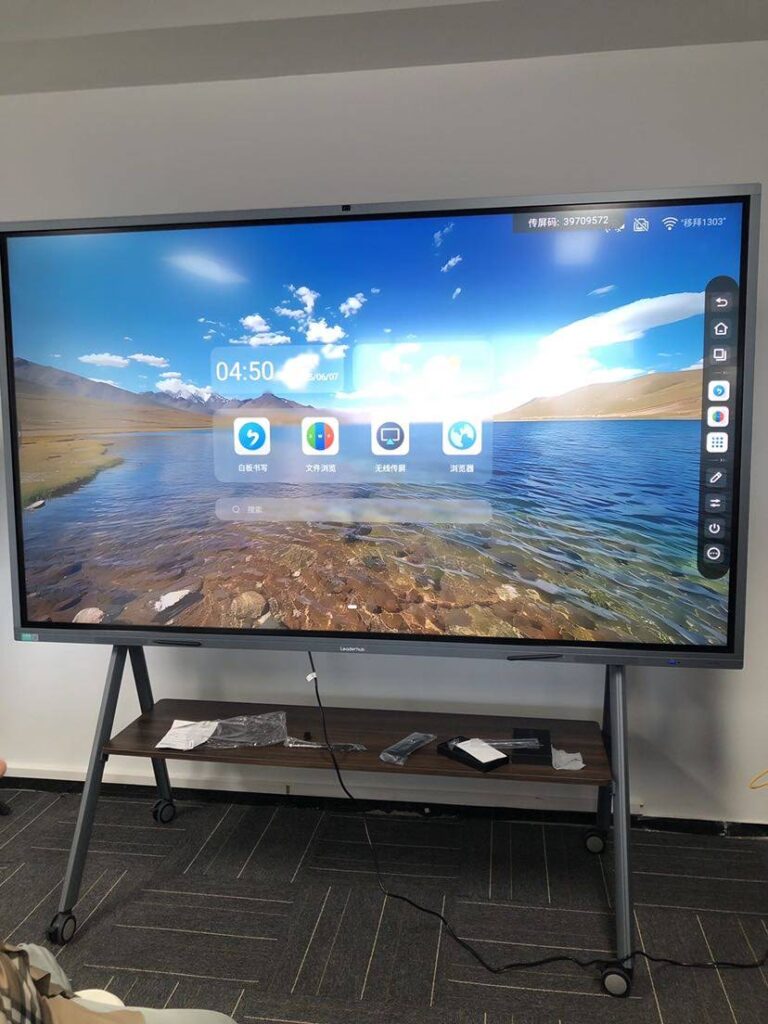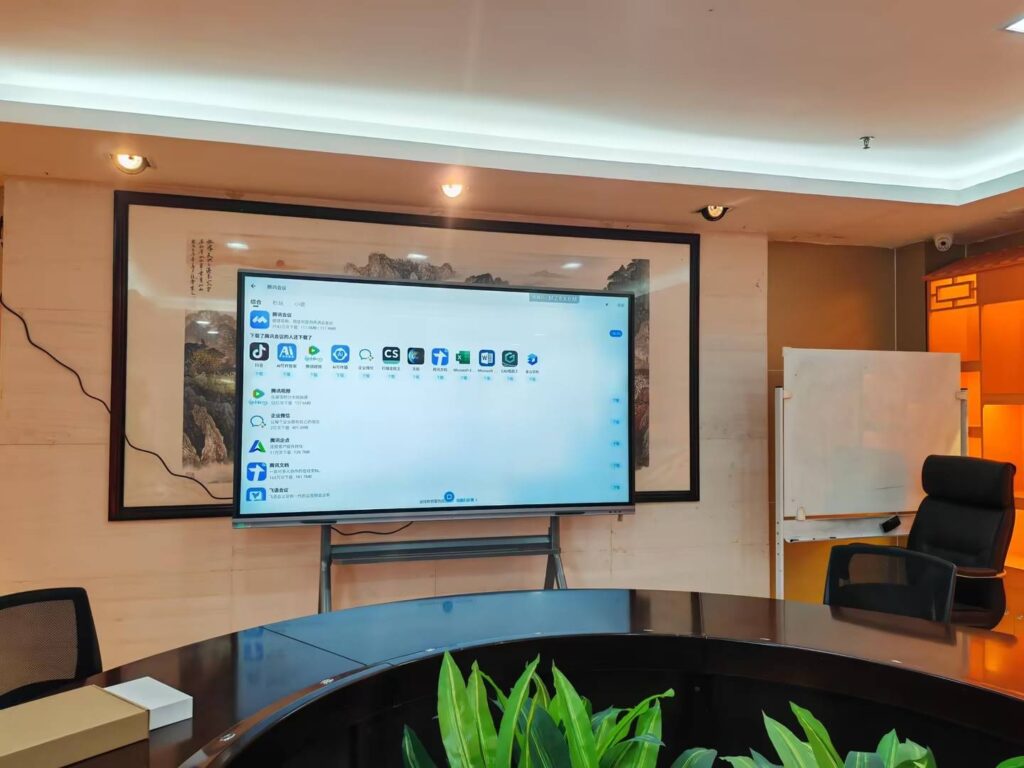
Whether you are a school district equipping forty classrooms before the autumn term or a distributor filling a container for a regional launch, one question decides whether the project succeeds: when will the boards actually arrive? Smart board manufacturing lead time planning is the discipline of answering that question before you place the order, not after the first delay. This guide breaks down every stage of the lead time cycle, shows you realistic benchmarks, and gives you a practical method to compress production time and protect your delivery date.
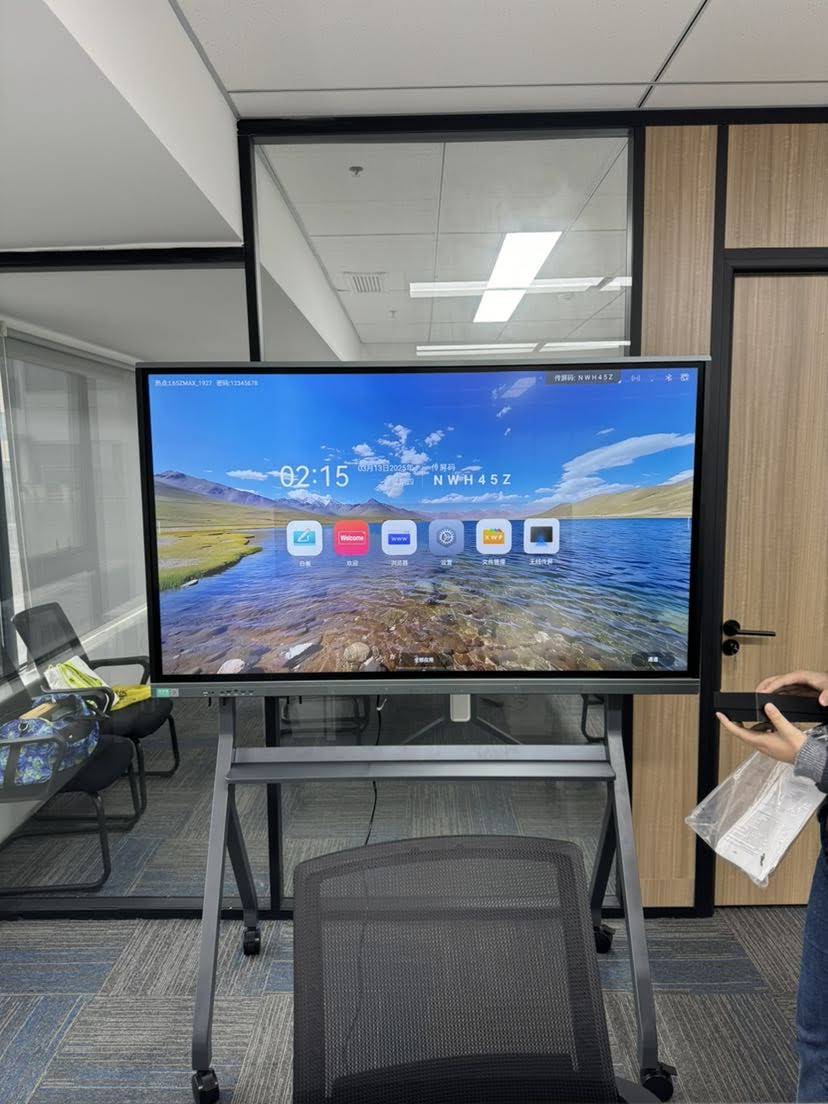
What Smart Board Manufacturing Lead Time Really Includes
Many buyers hear “production takes 25 days” and assume the boards will be on their loading dock in 25 days. In practice, manufacturing lead time is only the middle segment of a much longer chain. A realistic plan tracks three separate clocks that run one after another, and sometimes overlap.
The Three Clocks Every Buyer Must Track
| Clock | What Happens | Typical Duration | Who Controls It |
|---|---|---|---|
| Pre-Production | Spec confirmation, sample approval, deposit, material procurement, firmware/OS image preparation | 5–20 days | Shared: buyer and factory |
| Production | SMT, panel bonding, assembly, aging test, QC inspection, packing | 15–35 days | Factory |
| Post-Production | Booking, export clearance, ocean/air transit, import clearance, last-mile delivery | 7–45 days | Freight forwarder and buyer |
Add the three clocks together and a “25-day production” order can easily become a 60- to 90-day door-to-door timeline. Planning around the full chain, rather than the factory quote alone, is the single biggest improvement most procurement teams can make.
Lead Time Benchmarks by Order Type
Lead time scales with complexity far more than with quantity. A thousand units of a standard model can ship faster than fifty units with a custom Android launcher, a branded bezel, and a new packaging design. Use the following benchmarks as a starting point when building your schedule.
| Order Type | Example | Production Lead Time | Key Risk |
|---|---|---|---|
| Sample order | 1–3 units of a stock model such as a 65-inch 4K interactive whiteboard | 3–7 days | Air freight cost and customs paperwork |
| Small batch, standard spec | 20–100 units, factory default firmware | 15–20 days | Panel allocation during peak season |
| Full container, mixed sizes | 65″, 75″ and 86″ models in one 40HQ | 20–30 days | Staggered panel arrivals delaying the slowest size |
| OEM / ODM custom | Custom logo, launcher UI, packaging, pre-installed software | 30–45 days | Artwork approval loops and firmware testing |
| Large-format or specialty | 110-inch panels, mobile battery-powered displays | 35–50 days | Limited glass supply and special crating |
Plan Backwards: A Step-by-Step Lead Time Method
The most reliable way to plan is to start at the date the boards must be working on the wall and work backwards. Each step below adds a buffer, and the sum of those buffers becomes your order deadline.
- Fix the installation date. For schools, this is usually two to three weeks before term starts so teachers can be trained. For offices, align it with the fit-out contractor’s schedule.
- Subtract installation and commissioning time. Allow 1–2 days per 20 boards for wall mounting, cabling and software setup, plus a few days for snagging.
- Subtract inland delivery and import clearance. Budget 5–10 working days for customs and trucking in most markets; more if the shipment needs inspection.
- Subtract ocean or air transit. Sea freight from South China to Europe or the US East Coast typically runs 30–40 days; air freight runs 5–8 days but costs several times more.
- Subtract production lead time. Use the benchmark table above, then add a 10–15% contingency for component delays.
- Subtract pre-production time. Sample approval, artwork sign-off and deposit transfer frequently take longer than buyers expect, especially across time zones.
- The result is your latest safe order date. If that date has already passed, you need to shorten a stage — the next section shows you where.
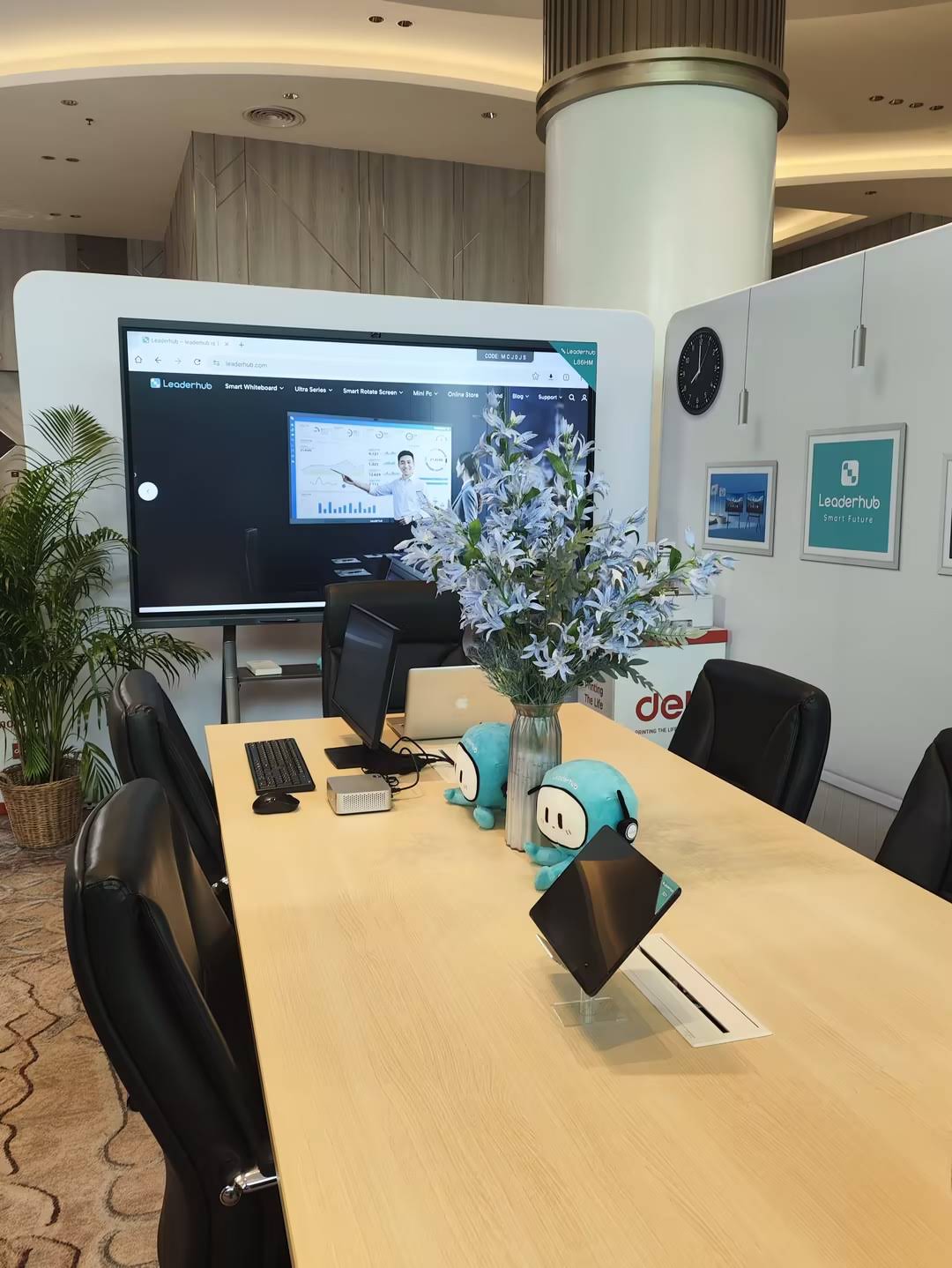
The Hidden Variables That Stretch Lead Time
Most delays are not caused by slow assembly lines. They come from a handful of predictable variables that buyers can anticipate if they know where to look.
1. Panel Supply and Component Allocation
The LCD open cell is the single most expensive and most constrained component in any smart board. Panel makers allocate glass to customers on a quarterly basis, and a factory without a confirmed allocation may quote a short lead time it cannot honour. Always ask whether panels for your order are already allocated or still to be sourced.
2. Customization Scope
Every custom element introduces an approval loop. A logo on the bezel requires a silkscreen proof; a custom Android launcher requires firmware compilation and regression testing; branded packaging requires die-line approval and a print run. Each loop can add 3–7 days, and loops that run in sequence rather than in parallel multiply the impact.
3. Certification and Compliance
If you are shipping to a market that requires CE, FCC, UKCA, or energy labelling and the model has not been certified for that destination, testing can add four to eight weeks before production even begins. Choosing a pre-certified model from the manufacturer’s existing smart whiteboard range removes this risk entirely.
4. Seasonal Peaks
- Chinese New Year (late January to February): Factories close for two to four weeks and ramp back up slowly. Orders placed in December are at highest risk.
- Back-to-school rush (May to July): Education demand spikes globally, straining panel supply and freight capacity.
- Pre-Christmas shipping (September to November): Ocean freight rates rise and container space tightens.
- Golden Week (early October): A one-week closure that is easy to forget when planning from overseas.
How to Shorten Smart Board Production Time Without Sacrificing Quality
Compressing lead time does not mean skipping aging tests or cutting QC. It means removing waiting time from the process. The following tactics are used by experienced distributors and institutional buyers.
Standardize Where It Doesn’t Matter
Choose stock models and stock firmware for the majority of your order. Reserve customization for the elements users actually see, such as the boot logo or the default wallpaper, which can be applied in minutes rather than days.
Run Approvals in Parallel
Approve artwork, firmware and packaging at the same time rather than one after another. Ask the factory for a single consolidated approval pack with every item that requires your sign-off.
Use Forecasts to Reserve Capacity
If you expect recurring orders, share a rolling three-month forecast. Manufacturers can reserve panel allocation and line capacity against a forecast even before a purchase order is issued, which can cut production lead time by a week or more.
Split Shipments Strategically
- Ship the first classroom or boardroom by air to begin training and testing early.
- Send the bulk of the order by sea to control cost.
- For urgent partial deliveries, a compact unit such as the 55-inch mobile interactive flat panel is far cheaper to air-freight than an 86-inch board.
Pay Deposits Promptly
Most factories do not purchase panels until the deposit clears. A three-day delay in international payment becomes a three-day delay in production. Set up payment approval in advance so funds move the day the proforma invoice is confirmed.

Shipping Choices: The Second Half of the Lead Time Equation
Once the boards leave the factory, your choice of transport mode determines the remaining timeline. The table below compares the main options for a typical shipment from Shenzhen.
| Mode | Transit Time | Relative Cost | Best For |
|---|---|---|---|
| Ocean FCL | 25–40 days | Lowest per unit | Full container orders, planned rollouts |
| Ocean LCL | 30–45 days | Low to medium | 10–40 units, cost-sensitive buyers |
| Rail (China–Europe) | 18–25 days | Medium | European buyers needing a middle option |
| Air freight | 5–8 days | Highest | Samples, pilot classrooms, emergency replacements |
Large panels also require specialized crating and vertical loading. Confirm that your forwarder has handled 75-inch and 86-inch displays before, because improper stacking is one of the most common causes of transit damage and the re-shipment delays that follow.
A Practical Lead Time Planning Checklist
Use this checklist during supplier evaluation and again before every purchase order. If you cannot tick a box, treat it as a schedule risk.
Before Ordering
- Installation date, training date and go-live date are documented and agreed internally.
- The model is already certified for the destination market.
- Customization scope is frozen and limited to high-visibility elements.
- Panel allocation for the order quantity has been confirmed in writing.
- Payment approval is pre-arranged so the deposit can clear within 48 hours.
During Production
- A named production contact provides weekly progress updates with photos.
- Pre-shipment inspection is scheduled before the final balance payment.
- Firmware version and serial number range are recorded for warranty tracking.
- Packing list and HS codes are reviewed by your customs broker before shipment.
After Shipment
- Tracking numbers and ETA are shared with the installation team.
- Import duties and VAT are pre-calculated to avoid clearance holds.
- Spare accessories, such as styluses and wall mounts, are confirmed in the shipment.
Why Deadline Discipline Matters More in Education and Enterprise
The cost of a late smart board is rarely the board itself. For a school, a two-week delay can push training into term time and leave teachers improvising with legacy equipment. The UNESCO Technology in Education Report stresses that technology delivers learning value only when it is integrated with adequate teacher preparation, which is exactly what a rushed, late installation undermines. The OECD Digital Education Outlook similarly highlights that infrastructure rollout succeeds when it is sequenced with staff capacity and support systems.
For enterprises, a delayed boardroom refresh can stall a fit-out, hold up contractors and leave hybrid teams without functioning collaboration tools. Standards bodies such as AVIXA emphasize that AV project success depends on coordinated scheduling between equipment supply and integration. In both cases, predictable lead time is a feature of the product, not just a logistics detail.
Choosing a Manufacturer That Treats Your Deadline as Its Own
The best lead time plan still depends on a partner who can execute it. Look for a manufacturer with its own production lines rather than a trading company, a documented QC process with aging tests, pre-certified models for your market, and a track record of exporting at scale. Leaderhub, a Shenzhen-based interactive display manufacturer with 16 years of experience and deliveries to 82 countries, builds its smart whiteboards, interactive flat panels and mini PCs around exactly this kind of schedule transparency, supporting both stock orders and OEM/ODM projects with clear production milestones.
When comparing suppliers, request the same information from each: current production lead time for your specific model and quantity, panel allocation status, certification list, and a sample shipment date. A supplier that answers precisely is far more likely to deliver precisely. For a mixed classroom and meeting-room order, pairing a 75-inch 4K smart whiteboard with a compact mini PC from the same supplier also simplifies consolidation and avoids waiting on two separate production schedules.
Frequently Asked Questions
How long does smart board manufacturing usually take?
For standard models in moderate quantities, production typically takes 15–30 days after the deposit clears. Custom OEM orders and large-format panels can take 35–50 days. Add shipping and clearance to estimate door-to-door time.
Can I get smart boards faster than the quoted lead time?
Often yes, if you select stock models, keep customization minimal, approve items in parallel and pay the deposit promptly. Some manufacturers also hold limited finished-goods inventory for popular sizes, which can ship within days.
What is the biggest cause of smart board delivery delays?
Panel supply constraints and unfrozen customization specifications are the two most common causes. Both are preventable with early confirmation and a disciplined approval process.
Should I ship by sea or air?
Sea freight is the default for cost reasons on full orders. Air freight makes sense for samples, pilot sites and urgent replacements, or for smaller portable displays where the weight penalty is modest.
How much buffer should I add to my plan?
A 10–15% contingency on production and a one-week buffer on shipping is a sensible baseline. Increase the buffer if your order spans Chinese New Year or the back-to-school peak.
Final Thoughts
Effective smart board manufacturing lead time planning comes down to three habits: plan backwards from the go-live date, control the variables you own, and partner with a manufacturer that gives you honest, specific timelines. Do these consistently and on-time delivery stops being a hope and becomes a repeatable outcome. If you are preparing a rollout and want a production schedule tailored to your model mix, destination and deadline, reach out for a lead time consultation or browse the full interactive display catalogue to shortlist pre-certified models that can ship on your timeline.