Behind every interactive flat panel that survives years of classroom traffic or daily boardroom use sits a component most buyers never think about: the metal frame. If you are sourcing custom interactive display frames, choosing the right smart board metal frame manufacturer in China determines whether your panels arrive square, mount safely, dissipate heat properly and still look premium after thousands of touches. This guide walks distributors, system integrators, education procurement teams and private-label brands through the practical criteria for evaluating Chinese frame suppliers — and explains why frame quality and panel quality can never be separated.
Why the Metal Frame Is the Backbone of an Interactive Display
A smart board metal frame is not decorative trim. It is the structural chassis that holds a 40–90 kg glass-and-LCD assembly perfectly flat, protects the touch sensor edges, anchors the VESA mounting points and channels heat away from the mainboard. When a frame is poorly engineered, the consequences show up quickly:
- Touch drift and dead zones caused by frame flex that pressures the infrared or capacitive sensor bezel.
- Panel cracking in transit when corner joints cannot absorb shock loads.
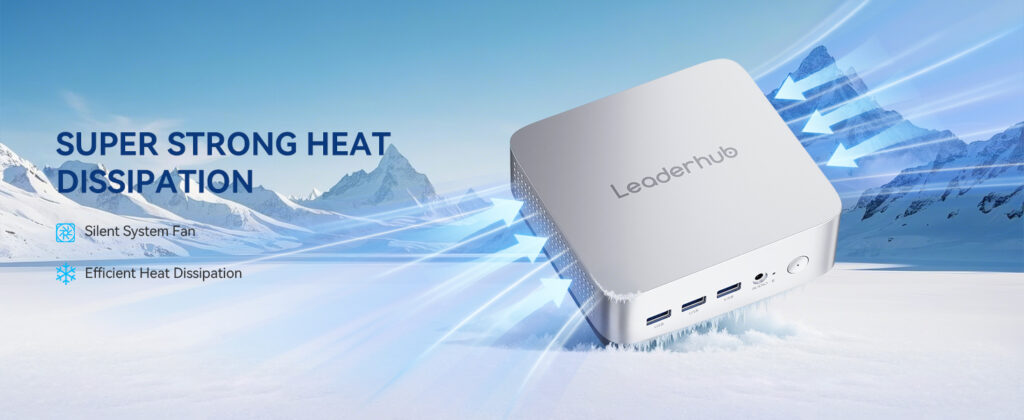
- Overheating when aluminum extrusions lack proper ventilation channels.
- Wall-mount failures if mounting plates are welded to undersized steel.
- Cosmetic rejection from inconsistent anodizing, visible weld marks or color mismatch between batches.
For buyers serving schools, these failures have real consequences. The UNESCO Technology in Education Report stresses that hardware durability and total cost of ownership — not just purchase price — should drive educational technology decisions. A frame that fails after two years erases any upfront savings.
Why China Leads Smart Board Metal Frame Manufacturing
The global interactive display industry is concentrated in the Pearl River Delta, with Shenzhen, Dongguan, Huizhou and Foshan forming a dense supply chain of LCD module assemblers, touch-frame makers, sheet-metal fabricators and aluminum extruders located within a two-hour drive of each other. This clustering is the reason China produces the majority of the world’s interactive flat panels and the metal frames that house them.
Advantages Chinese Frame Suppliers Offer
- Integrated supply chain: extrusion, CNC machining, stamping, powder coating and anodizing frequently sit under one roof or within the same industrial park.
- Tooling speed: a new extrusion die or stamping mold can be ready in 2–4 weeks rather than months.
- Scalable MOQs: from 50-unit pilot batches to 10,000-unit annual contracts.
- Mature export experience: familiarity with CE, FCC, RoHS and packaging standards for North America, Europe, the Middle East and Southeast Asia.
Challenges International Buyers Should Anticipate
- Trading companies presenting themselves as factories.
- Batch-to-batch variation when subcontracted finishing is not controlled.
- Quotes that omit tooling, packaging or inland freight.
- Communication gaps on tolerance expectations and inspection standards.
Core Criteria for Evaluating a Smart Board Metal Frame Manufacturer
1. Material Capability and Selection Guidance
A reliable manufacturer should recommend materials based on your panel size, mounting method and target market — not simply default to the cheapest option. The table below summarizes the most common choices for custom interactive display frames.
| Material | Typical Use | Strengths | Considerations |
|---|---|---|---|
| 6063-T5 Aluminum Extrusion | Front bezel, touch-frame housing | Lightweight, excellent anodizing, clean edges | Requires precise die design; corner joints need reinforcement |
| SPCC Cold-Rolled Steel | Rear chassis, VESA mounting plate | High rigidity, low cost, strong weld points | Heavier; must be powder coated or galvanized against corrosion |
| SGCC Galvanized Steel | Internal brackets, humid-climate markets | Built-in corrosion resistance | Zinc layer can burn during welding without proper process |
| Die-Cast Aluminum / Zinc Alloy | Corner caps, logo plates, mobile-stand joints | Complex shapes, premium feel | Higher tooling cost; justified at volume |
2. Machining Precision and Tolerance Control
Interactive displays are unforgiving. An infrared touch frame on a 75-inch panel must align with the glass edge within a fraction of a millimeter, or touch accuracy suffers. Ask any prospective smart board metal frame manufacturer for their standard tolerances on:
- Overall frame length and width (industry benchmark: ±0.3 mm on CNC-machined extrusions).
- Diagonal squareness across the full frame (target under 1.0 mm deviation on 86-inch units).
- Flatness of the rear chassis so the LCD module seats without stress.
- VESA hole positioning (±0.2 mm) to ensure compatibility with third-party wall mounts and mobile carts.
3. Surface Finishing In-House
Anodizing, sandblasting, brushing and powder coating are where many frames fail visually. A supplier who outsources finishing loses control over color consistency, which is especially visible on bezels where silver, space grey and matte black are the most requested finishes. Request physical color chips, confirm the RAL or Pantone reference, and ask for a salt-spray test report (48–96 hours minimum) for any product heading to coastal or tropical markets.
4. Structural Testing and Compliance Documentation
Safety regulators in the EU, UK, US and Australia expect mounting hardware to carry four times the static load of the display. A credible manufacturer will provide:
- Static load test reports for wall-mount brackets.
- ISTA or equivalent drop and vibration test results on packaged units.
- RoHS and REACH material declarations.
- Material certificates traceable to the aluminum or steel mill.
For education buyers, the UK Education Technology Guidance and similar frameworks increasingly reference safety and installation standards that originate in how the display frame was engineered.
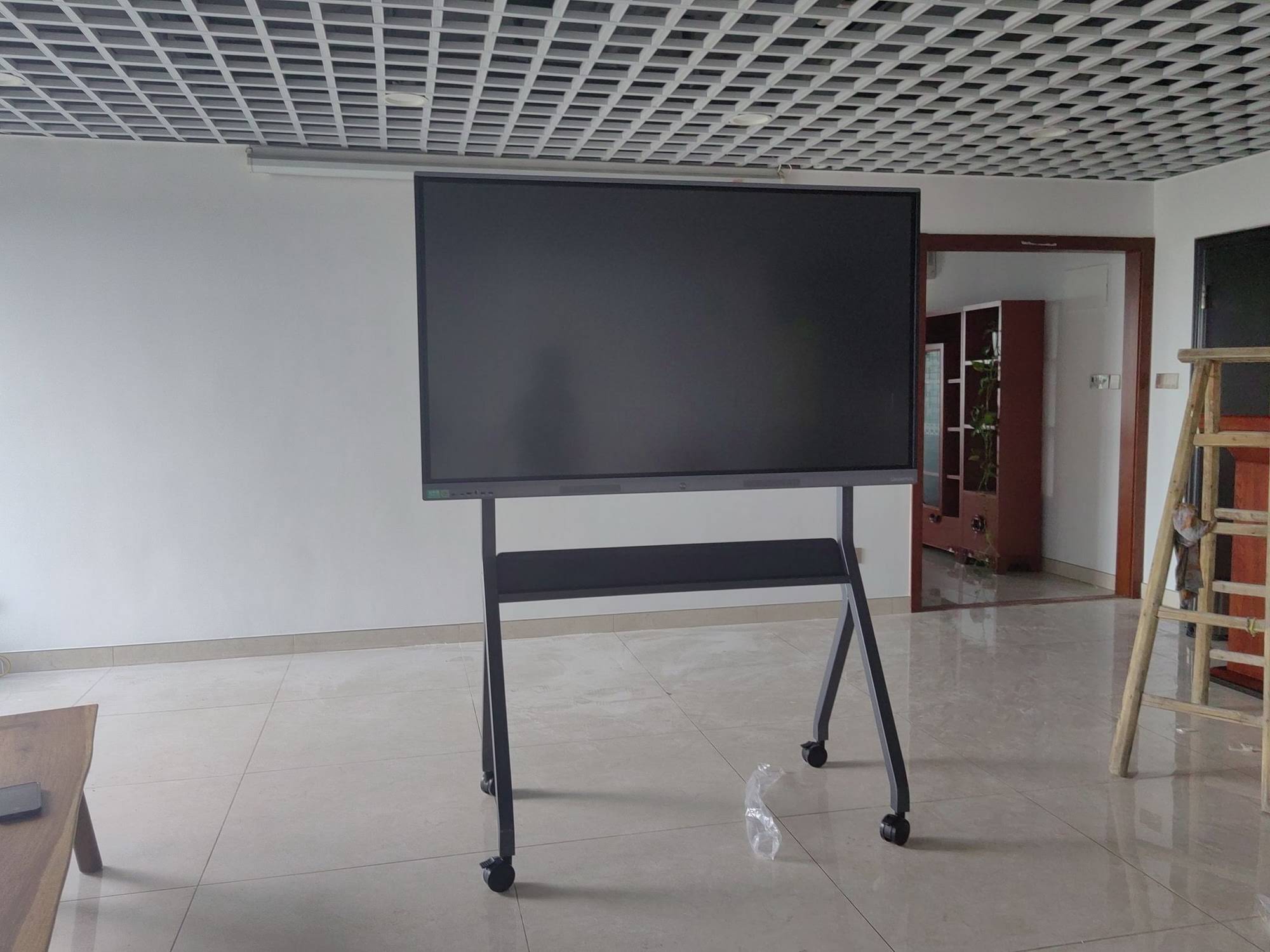
5. Genuine OEM/ODM Customization Capability
Custom interactive display frames go far beyond adding a logo. Serious projects often require:
- Custom bezel widths to match a specific LCD open-cell or module.
- Integrated speaker grilles, camera housings and microphone arrays.
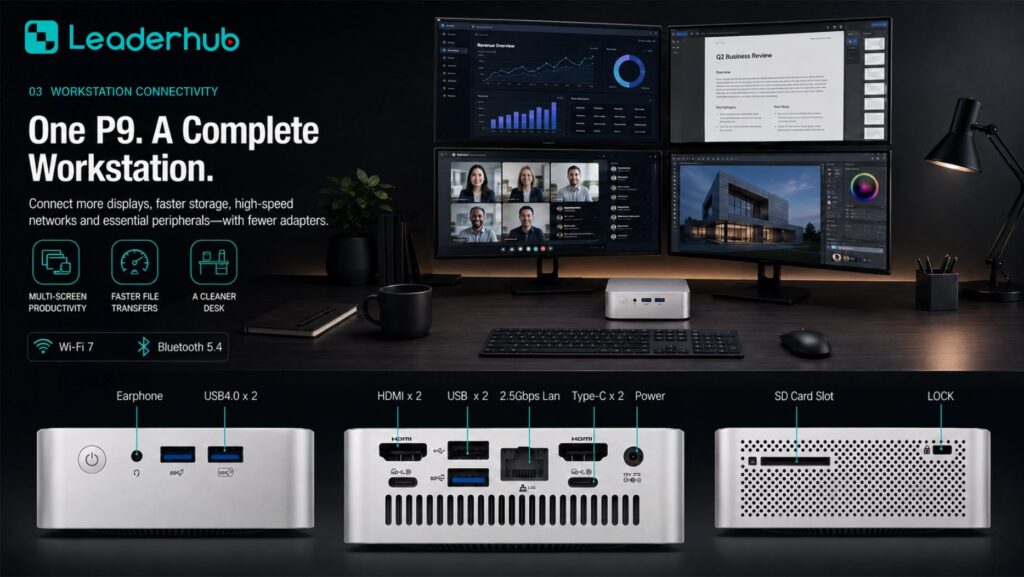
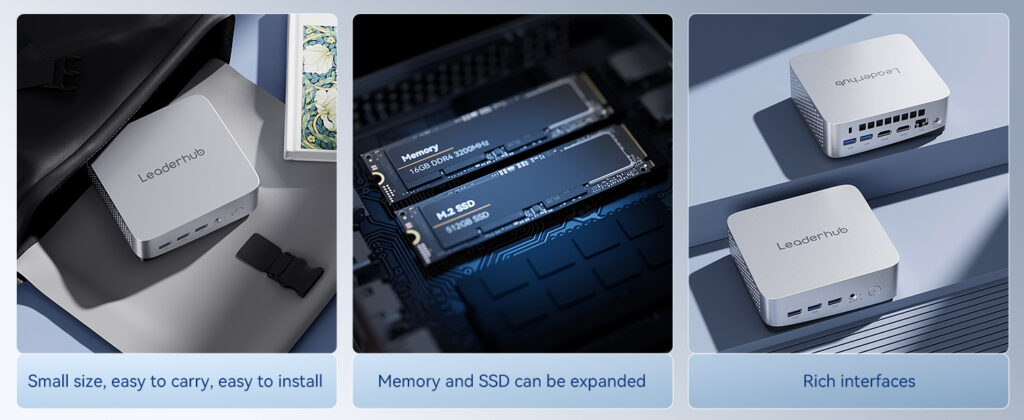
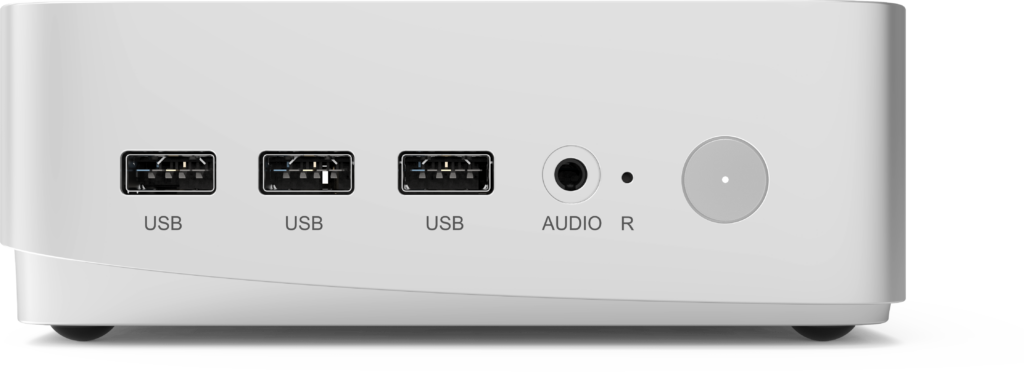
- Slide-in OPS slot alignment for modular computing units such as the mini PCs many integrators bundle with panels.
- Rotation hinges for portrait-landscape rotating screens.
- Battery compartments and handle structures for portable displays.
Ask to see DFM (design for manufacturability) feedback on a sample drawing. A manufacturer who simply says “yes” to everything without flagging risks is usually not the one doing the engineering.
Red Flags When Sourcing Frames from China
| Warning Sign | What It Usually Means | How to Verify |
|---|---|---|
| No factory video call offered | Likely a trading agent | Request a live walkthrough of extrusion and CNC lines |
| Price far below market | Thinner wall sections or recycled alloy | Ask for wall thickness drawing and material certificate |
| Cannot name their anodizing partner | Uncontrolled finishing quality | Request batch color-difference (ΔE) data |
| No experience with display assembly | Frame may not account for LCD stress or heat | Ask which panel brands or models their frames currently fit |
| Vague lead times | Capacity shared with higher-priority clients | Get tooling, sample and mass-production dates in writing |
Frame Specification Checklist to Send with Your RFQ
The fastest way to receive accurate quotations from Chinese suppliers is to send a complete specification package. Include the following:
- Panel size and model (e.g., 65″, 75″, 86″, 110″) plus LCD module drawing if available.
- Touch technology — infrared, capacitive or electromagnetic — as this dictates bezel depth.
- Target weight ceiling for the finished display.
- Mounting standard (VESA 600×400, 800×400, 800×600) and whether a mobile stand version is required.
- Finish, color reference and logo method (laser etching, silk screen, inlaid nameplate).
- Annual forecast volume and first-order quantity.
- Required certifications and test reports by destination market.
- Packaging specification — foam density, carton grade, pallet pattern.
Understanding Cost Structure and Lead Times
| Stage | Typical Timeline | Cost Notes |
|---|---|---|
| Drawing review & DFM | 3–7 days | Usually free for qualified projects |
| Extrusion die / stamping tooling | 15–30 days | Often refundable or amortized after volume threshold |
| First article sample | 7–15 days after tooling | Request assembled with a real panel, not frame alone |
| Mass production | 25–40 days | Aluminum price indexed to LME; lock quotes for 60–90 days |
Remember that the frame is typically 8–15% of a finished interactive panel’s bill of materials. Squeezing that cost by 20% saves very little on the final product but can dramatically increase field failure rates — a poor trade for any brand owner.
Frame-Only Supplier or Full Display Manufacturer?
Many international buyers begin by searching for a standalone frame fabricator, then discover that coordinating a frame vendor, a panel assembler, a touch-frame maker and a packaging supplier across four factories creates more risk than it removes. Working with a manufacturer that designs the frame and the display together eliminates alignment disputes and gives you a single point of accountability for warranty claims.
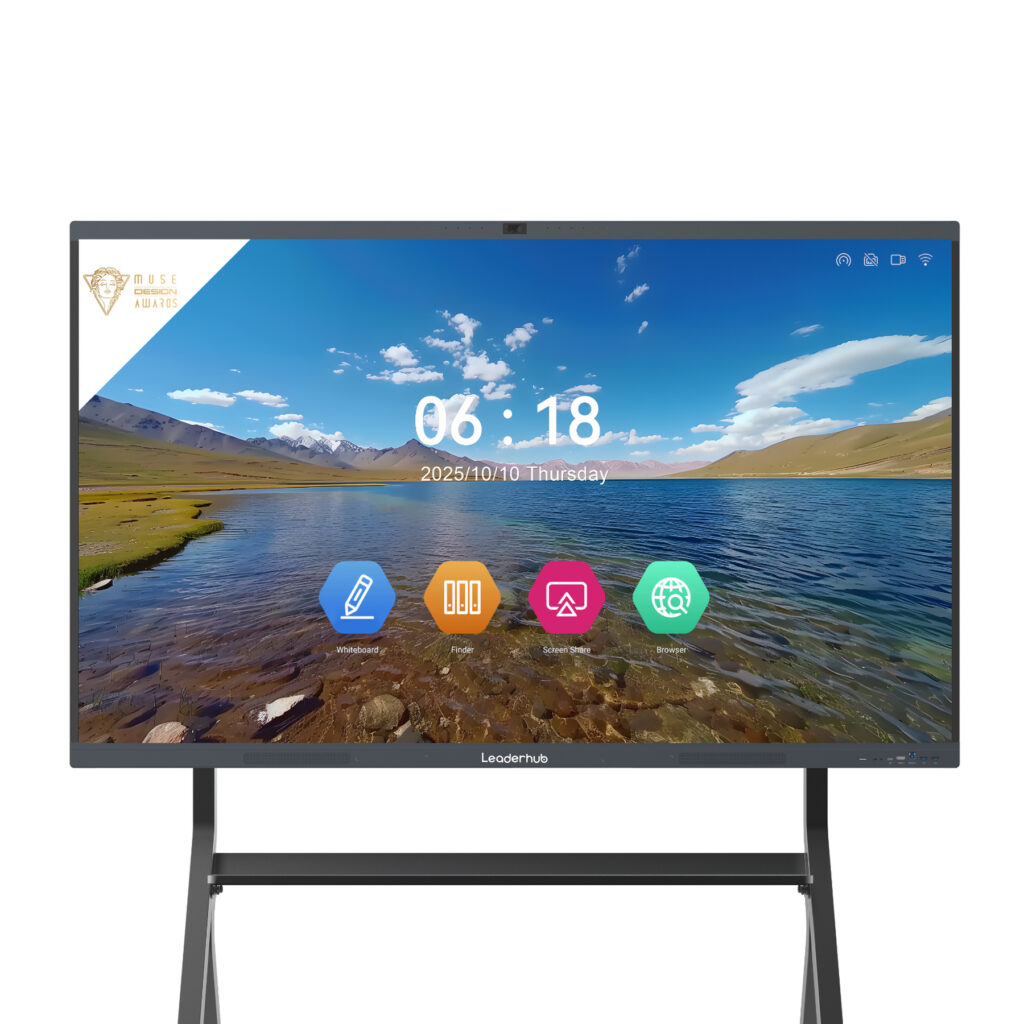
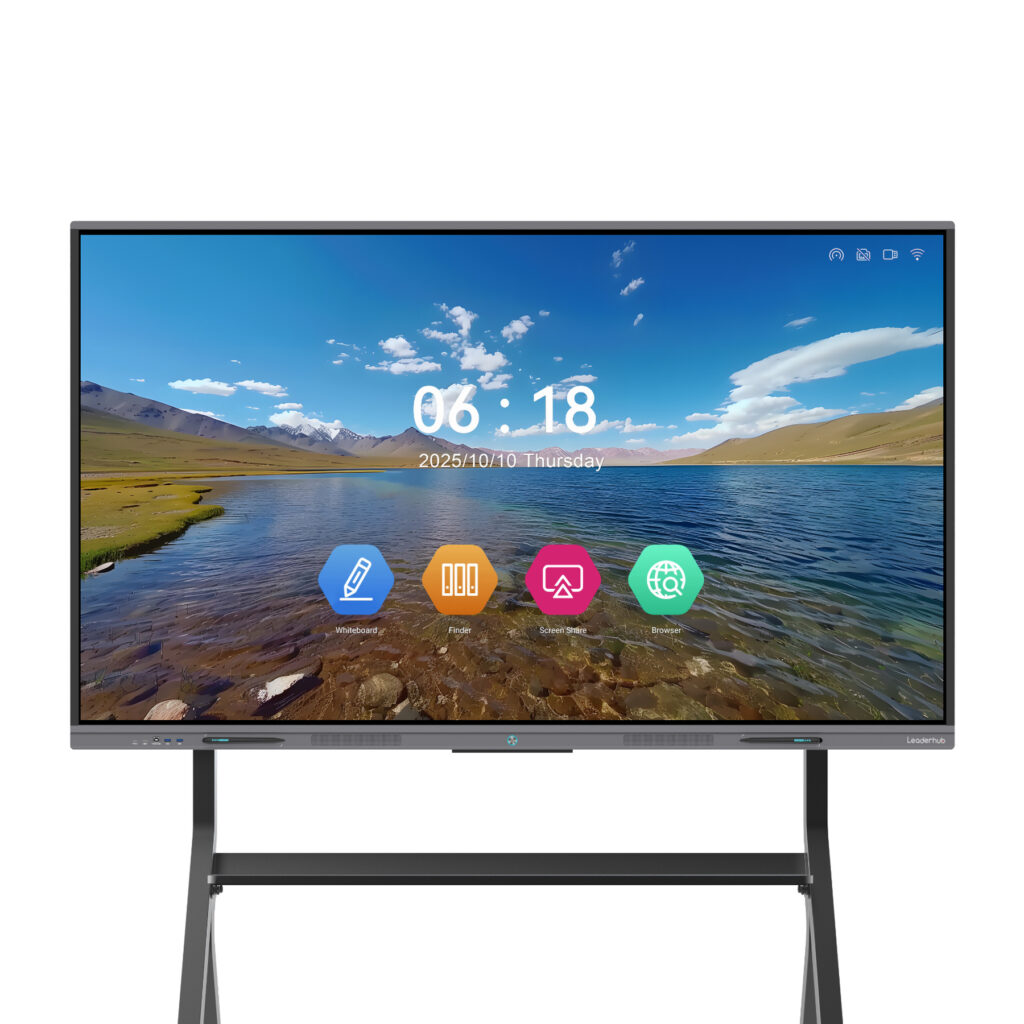
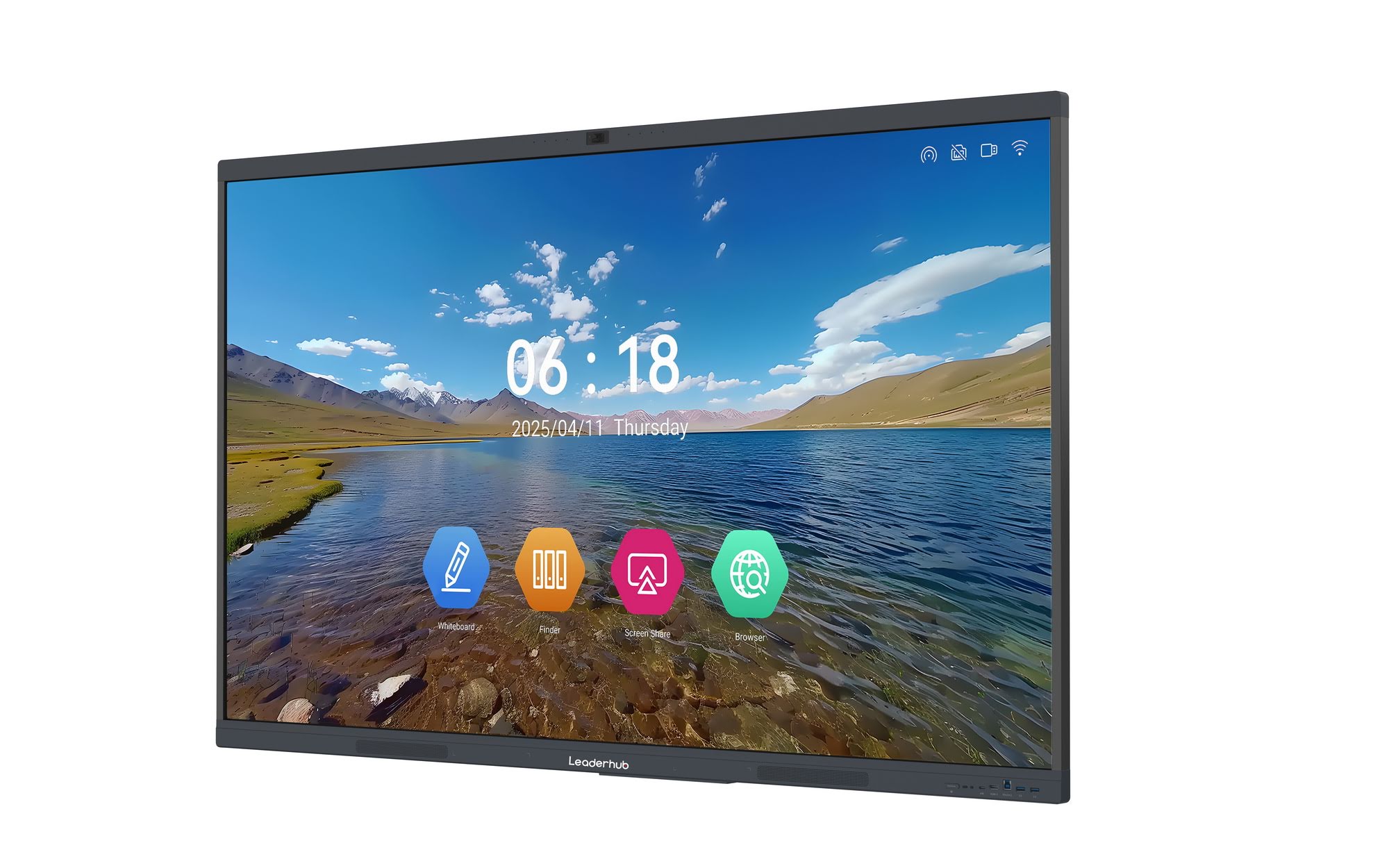
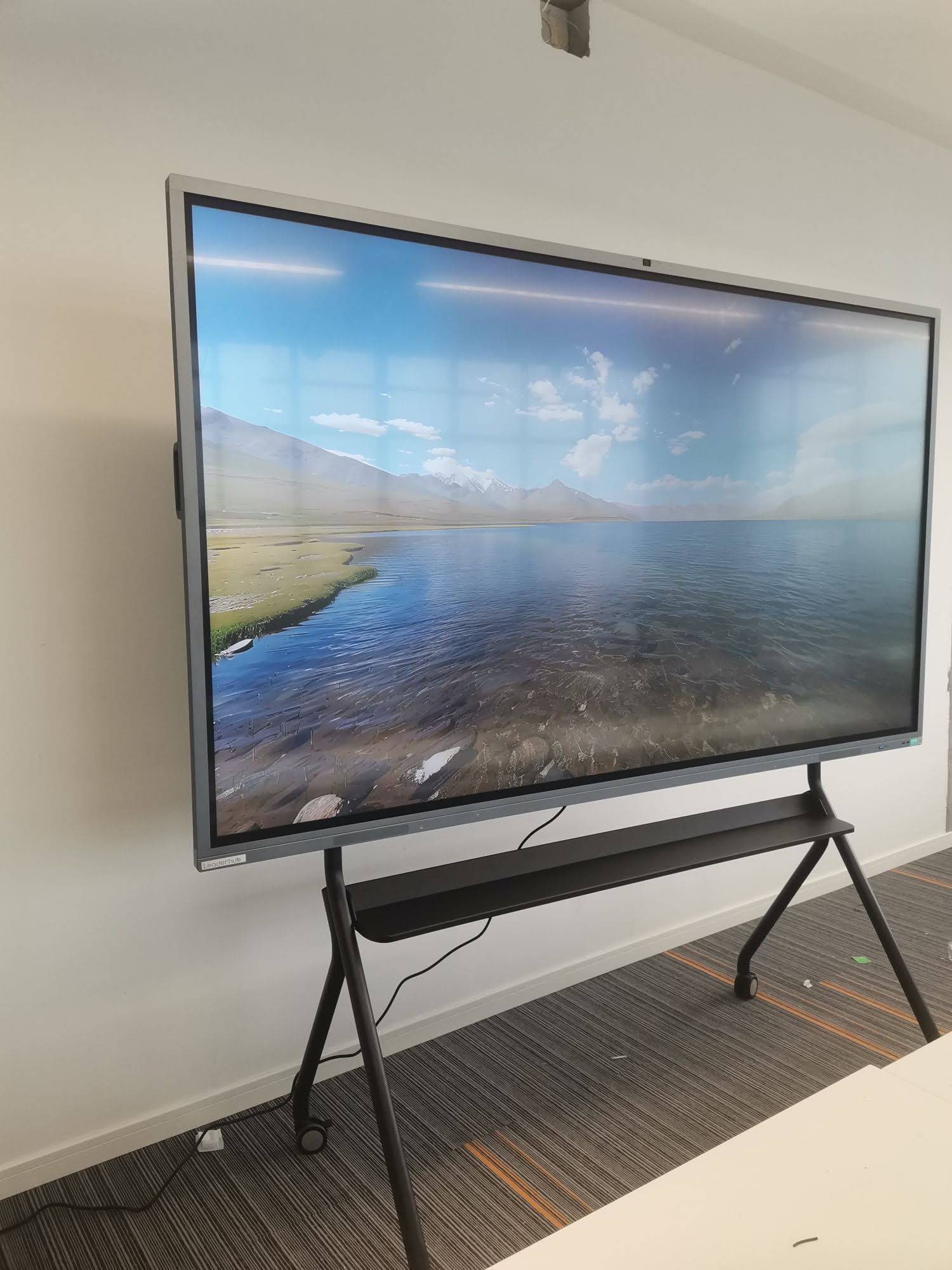
This is the model behind Shenzhen-based Leaderhub, which has spent 16 years engineering interactive displays — including frame structures, rotation mechanisms and portable chassis — for customers in 82 countries, with OEM/ODM programs built specifically for distributors and private-label brands. The company’s smart whiteboard range, from the 65-inch L65HM to the 110-inch L110H, demonstrates how frame, panel and electronics are validated as one system before shipment.
Questions to Ask Before Signing a Frame Supply Agreement
- Who owns the tooling, and can it be transferred if the relationship ends?
- What is the AQL level used for outgoing inspection, and can we appoint a third-party inspector?
- How are engineering changes documented and approved?
- What is the defect-rate commitment and remedy for cosmetic versus structural failures?
- Can the supplier support a pilot order of 50–100 units before committing to volume?
Market Context: Why Frame Quality Matters More Each Year
Interactive displays are moving from fixed classroom walls to mobile carts, rotating stands and battery-powered portable units carried between rooms. Each of these use cases places new mechanical demands on the frame — repeated rotation cycles, cart vibration, handle stress and thermal cycling. Research on interactive displays in education highlights that device reliability directly affects how consistently teachers integrate technology into lessons, while the OECD Digital Education Outlook notes that infrastructure longevity is a core factor in sustainable digital transformation. A frame engineered for a decade of use is now a competitive requirement, not a premium option.
Final Takeaways for Buyers
- Treat the metal frame as a structural and thermal component, not a cosmetic one.
- Prioritize manufacturers with in-house extrusion, CNC and finishing — and verify it on camera.
- Demand tolerance data, load tests and material certificates before discussing price.
- Send a complete specification package to get comparable quotations.
- Where possible, source frame and display from one engineering team to eliminate integration risk.
Choosing a reliable smart board metal frame manufacturer in China is ultimately about engineering discipline and transparency rather than finding the lowest unit price. Buyers who apply the checklist above consistently end up with displays that mount safely, perform accurately and preserve their brand reputation in classrooms and boardrooms worldwide. To discuss a custom frame or full OEM interactive display project, contact our engineering team with your drawings and target specifications.