Ask a teacher who started work in 1995 and a teacher who started in 2015 what a “board” is, and you will get two very different answers. The first will describe chalk dust and marker fumes; the second will describe a touchscreen the size of a wall that connects to the cloud. Somewhere between those two answers lies the story of how smart boards went from an expensive boardroom curiosity to a standard fixture in classrooms and meeting rooms around the world. This article traces that journey decade by decade and answers the central question directly: when did smart boards become popular, and why?
The Short Answer
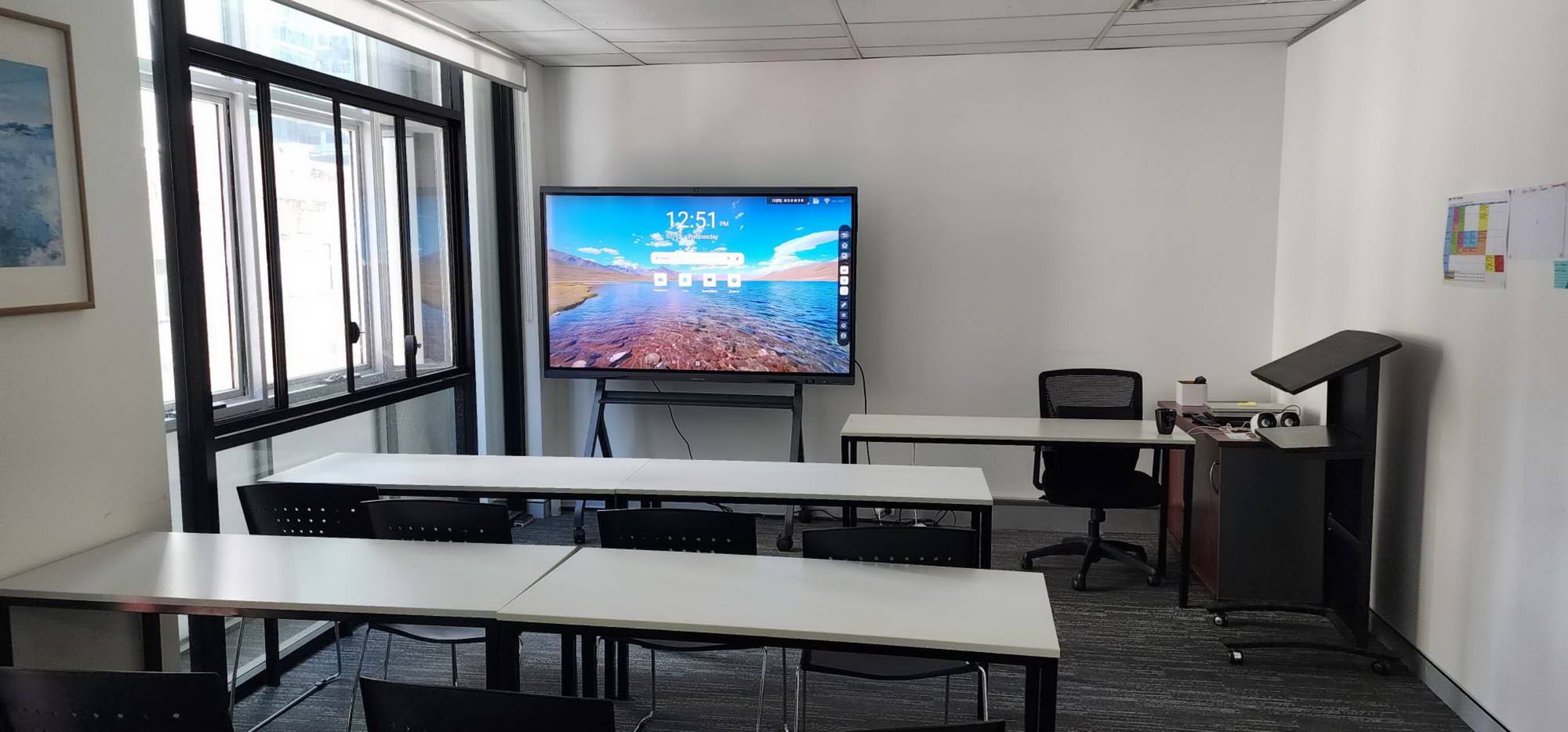
Smart boards were invented in 1991, gained real traction in classrooms between 2003 and 2010 (led by the United Kingdom and then the United States), transitioned from projector-based whiteboards to interactive flat panels in the mid-2010s, and reached mass adoption in offices after 2020, when hybrid work made touch-enabled, camera-equipped displays a meeting-room necessity rather than a luxury.
In other words, there is no single “year smart boards became popular.” Education and the corporate world followed different timelines, and the technology itself changed so much along the way that a 2005 smart board and a 2025 smart board share little beyond the name. Let us walk through each era.
Smart Board History at a Glance
| Period | Key Milestone | Primary Market |
|---|---|---|
| 1991 | First commercial interactive whiteboard launched by SMART Technologies | Corporate |
| 1996–1999 | Promethean and other competitors enter; first school pilots | Corporate / Early education |
| 2003–2008 | UK government funding drives near-universal classroom adoption | Education (UK) |
| 2005–2012 | Rapid US and global K-12 adoption; interactive projectors appear | Education (global) |
| 2013–2017 | Interactive flat panels (IFPs) overtake projector-based boards | Education + Corporate |
| 2015–2019 | Surface Hub, Jamboard and all-in-one collaboration displays launch | Corporate |
| 2020–2022 | Pandemic-driven hybrid learning and hybrid work boom | Both |
| 2023–Present | AI assistants, 4K/8K panels, portable and rotating smart screens | Both + SMB / Creative |
The 1990s: The Invention of the Interactive Whiteboard
1991 – The First SMART Board
The interactive whiteboard as a product category was born in 1991 when Calgary-based SMART Technologies released the first SMART Board. The concept was elegantly simple: a large touch-sensitive surface connected to a computer and a front projector. Whatever the computer displayed appeared on the board, and whatever you touched on the board controlled the computer. Teachers could annotate over software, and executives could mark up slides without leaving the front of the room.
Despite the excitement, early units were expensive and relied on bulky projectors that threw shadows and required frequent lamp replacement. For most of the decade, the technology lived in corporate training rooms, government agencies and university lecture halls rather than ordinary classrooms. The word “popular” did not yet apply.
1996–1999 – Competition and the First School Pilots
In the second half of the 1990s, new manufacturers arrived. Promethean, founded in the UK, began focusing specifically on education, and companies such as PolyVision and Hitachi developed their own touch and pen-based technologies. Resistive touch surfaces, electromagnetic pens and infrared sensing all competed for dominance. Pilot programmes in UK and US schools started to generate the first evidence that interactive displays could raise student engagement, setting the stage for the explosion that followed.

The 2000s: Smart Boards Become Popular in Classrooms
If you have to pick one decade in which smart boards became popular, it is the 2000s, and if you have to pick one country that started the trend, it is the United Kingdom.
The UK Leads the World
Between 2003 and 2005 the UK government committed tens of millions of pounds to its Primary Schools Whiteboard Expansion programme, following earlier investment in secondary schools. The policy goal was explicit: put an interactive whiteboard in as many classrooms as possible. The result was remarkable. By roughly 2007, the overwhelming majority of UK primary and secondary classrooms were equipped, making Britain the most heavily penetrated interactive whiteboard market on earth. Government agencies published teacher-training resources and evaluation studies, and the UK became the reference case that other education ministries studied. Today the same spirit of monitoring continues in reports such as the UK Technology in Schools Survey.
The United States and the Rest of the World Follow
The American market moved a little later but on a much larger scale. Federal and state technology grants, combined with aggressive marketing to school districts, pushed US classroom penetration from single digits in the early 2000s to roughly one in three classrooms by the end of the decade. Textbook publishers began shipping whiteboard-ready digital content, which further reinforced demand. Mexico, Australia, Scandinavia, the Netherlands and parts of the Middle East ran their own national or regional programmes during the same period.
Why the 2000s Were the Tipping Point
- Public funding – governments treated interactive whiteboards as infrastructure, not optional extras.
- Falling projector prices – DLP and LCD projectors became affordable enough for every classroom.
- Digital curriculum – publishers and teachers created vast libraries of whiteboard lessons that could be shared.
- Teacher communities – online forums and lesson-sharing platforms lowered the learning curve.
- Visible engagement – even sceptical administrators could see students volunteering to come up to the board.
This period also produced the first serious debates about whether the technology improved learning outcomes or simply made traditional teaching more polished. That debate continues today and is explored in depth in the UNESCO Technology in Education Report, which argues that the value of any classroom technology depends on how deliberately it is integrated into pedagogy.
The 2010s: From Projector Boards to Interactive Flat Panels
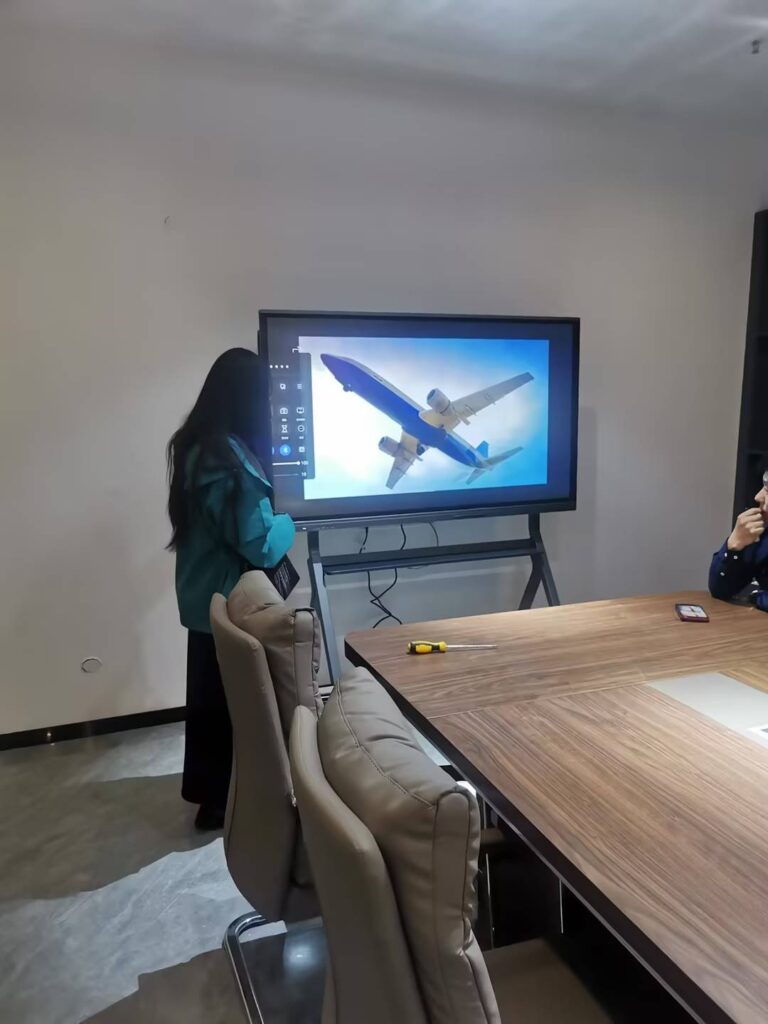
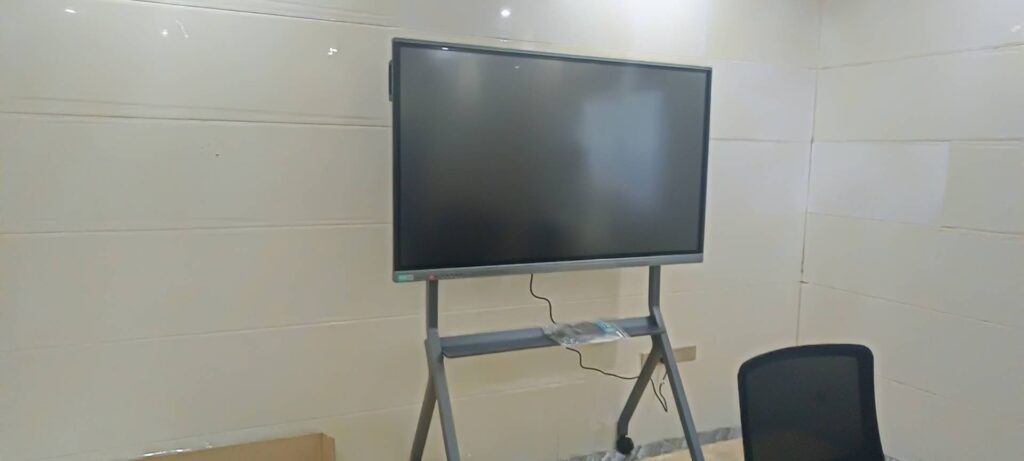
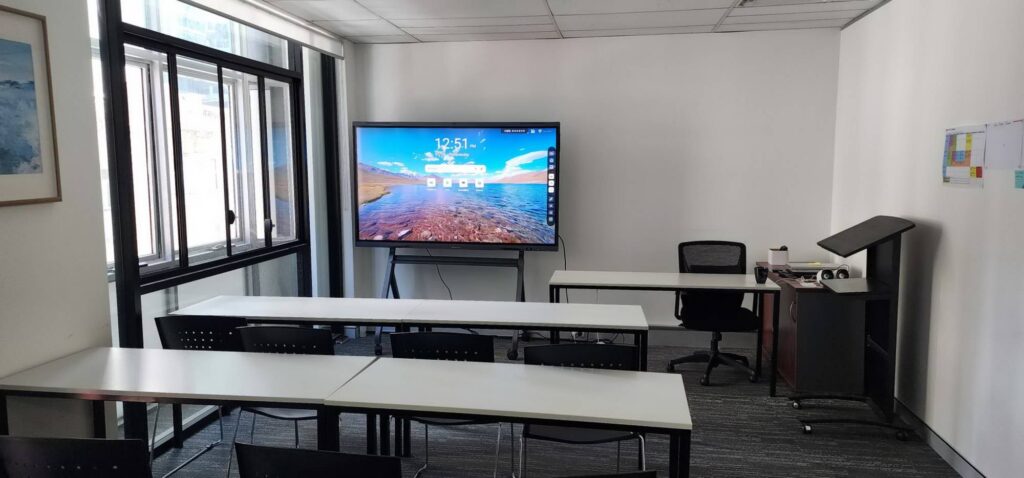
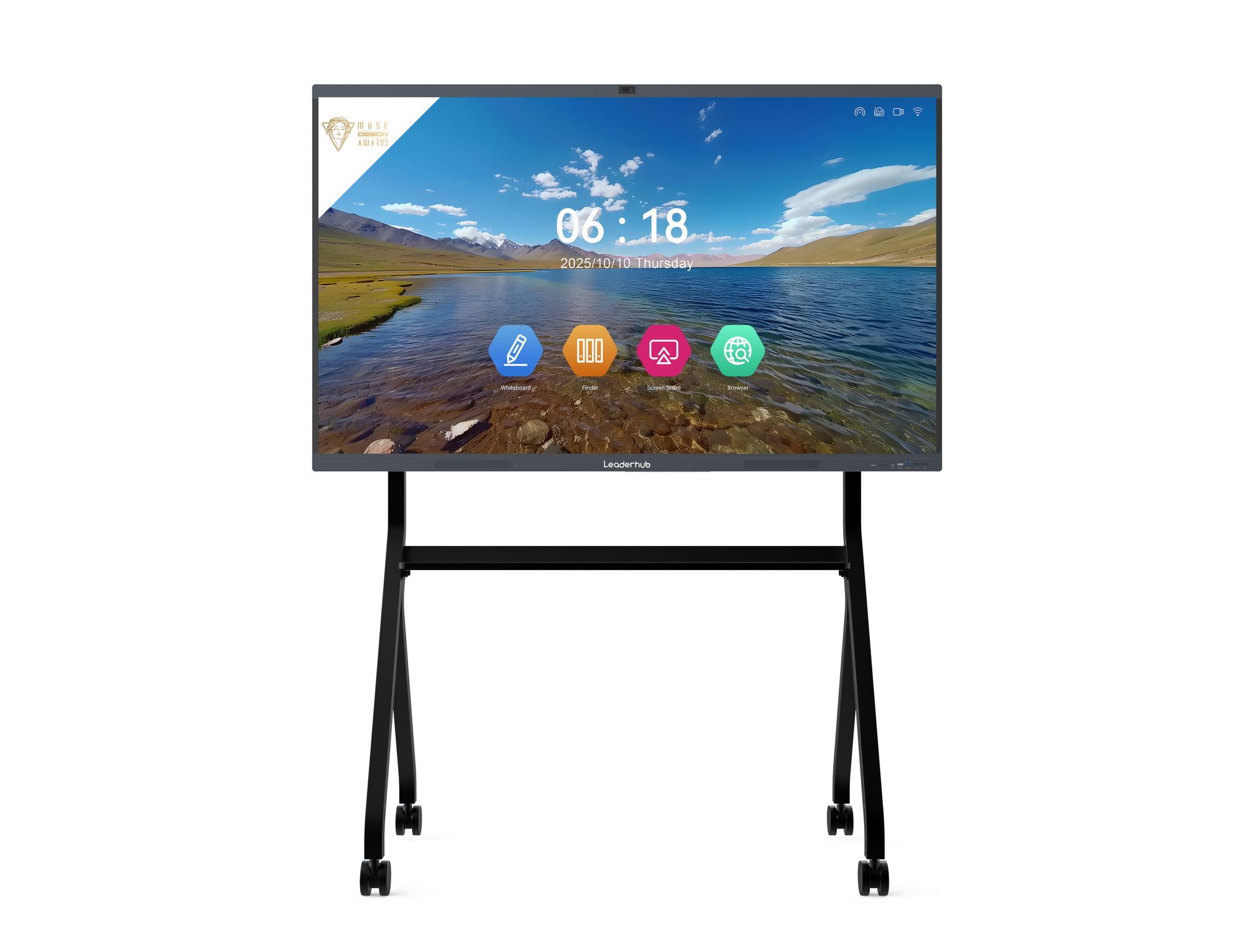
By the early 2010s the classic smart board had an obvious weakness: the projector. Lamps dimmed, shadows blocked content, calibration drifted and the whole system needed a dark room to look good. The answer came from the television industry. As large LCD panels became cheaper, manufacturers began bonding touch sensors directly onto 55-, 65-, 75- and 86-inch screens. The interactive flat panel (IFP) was born.
Interactive Whiteboard vs. Interactive Flat Panel
| Feature | Projector-Based Whiteboard (1991–2015) | Interactive Flat Panel (2013–Present) |
|---|---|---|
| Image source | External projector | Built-in LCD/LED panel |
| Resolution | XGA to 1080p | 4K UHD standard |
| Shadows and glare | Common | None |
| Touch points | 1–4 | 20–50 |
| Maintenance | Lamp replacement, recalibration | Minimal, 50,000+ hour panel life |
| Operating system | Requires connected PC | Built-in Android, optional Windows module |
| Connectivity | VGA/USB cable | Wireless casting, cloud, video conferencing |
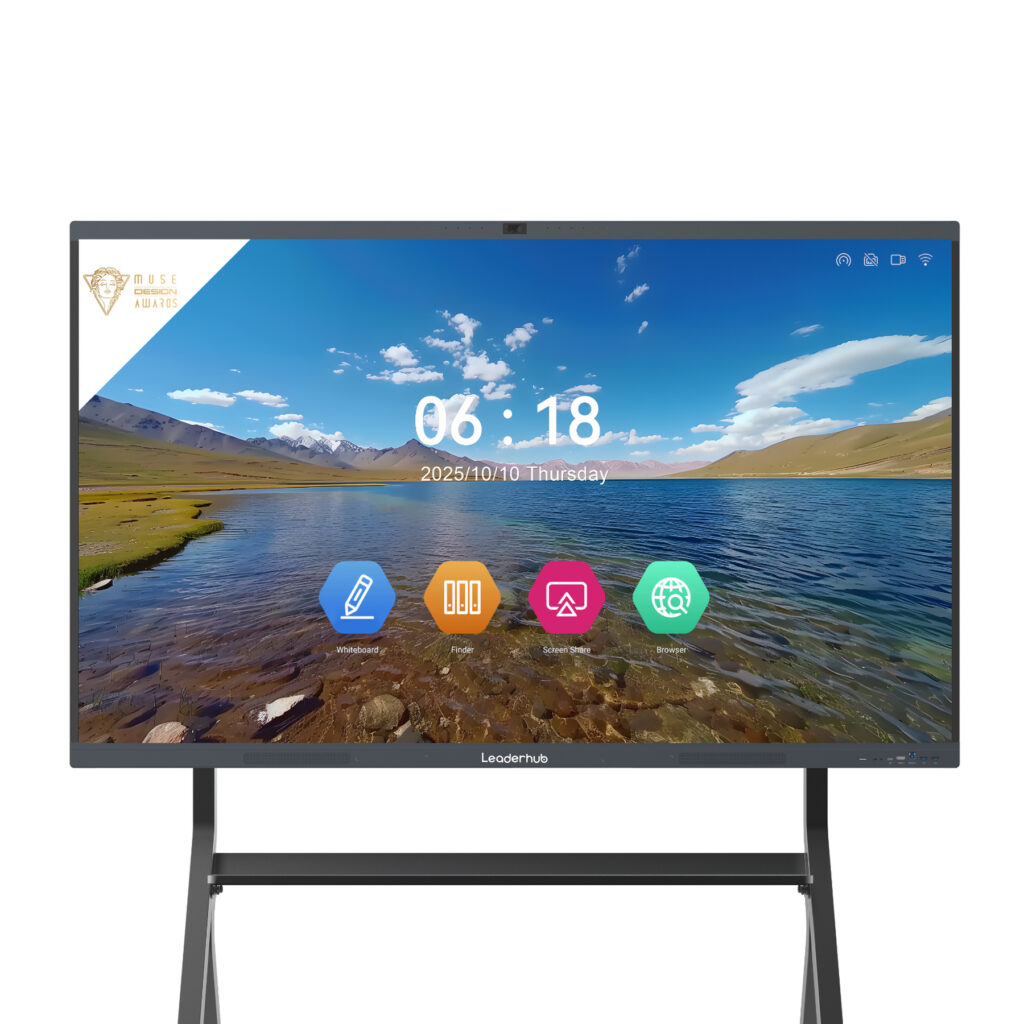
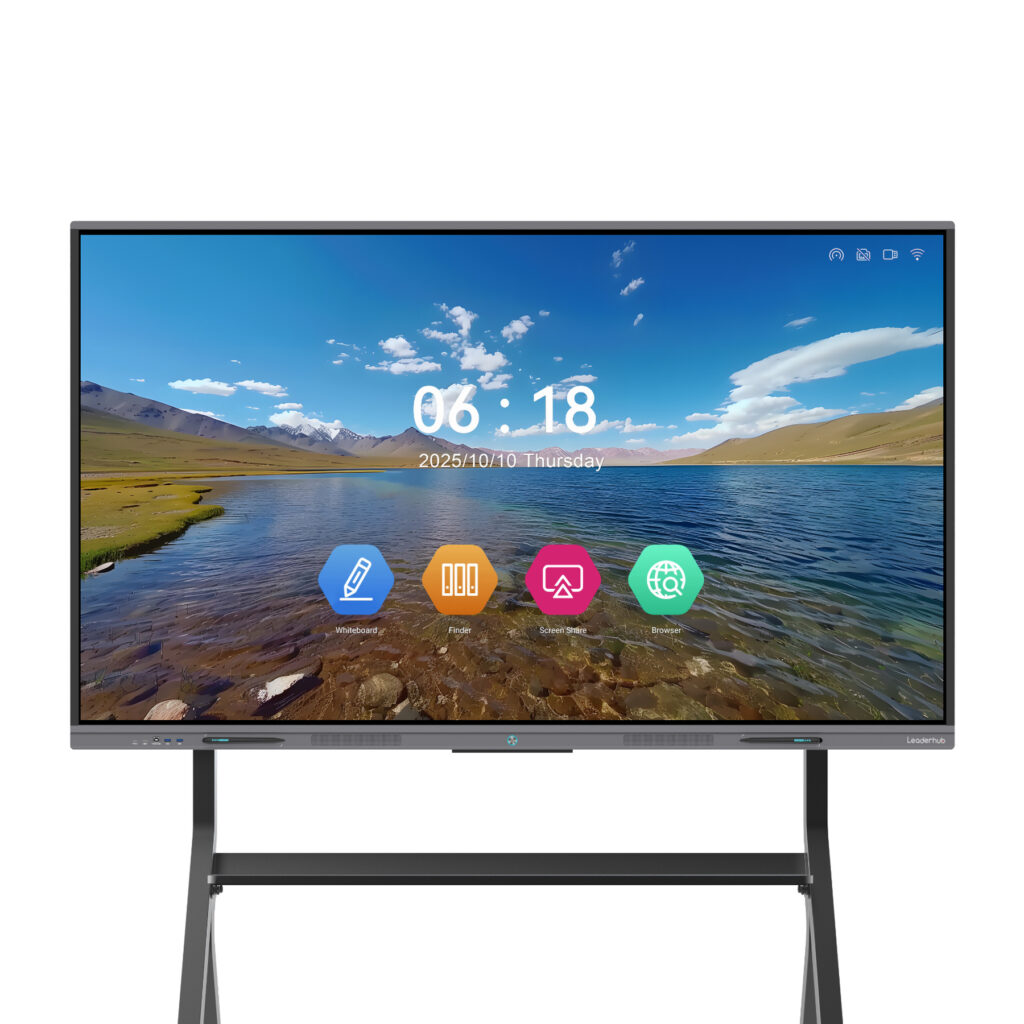
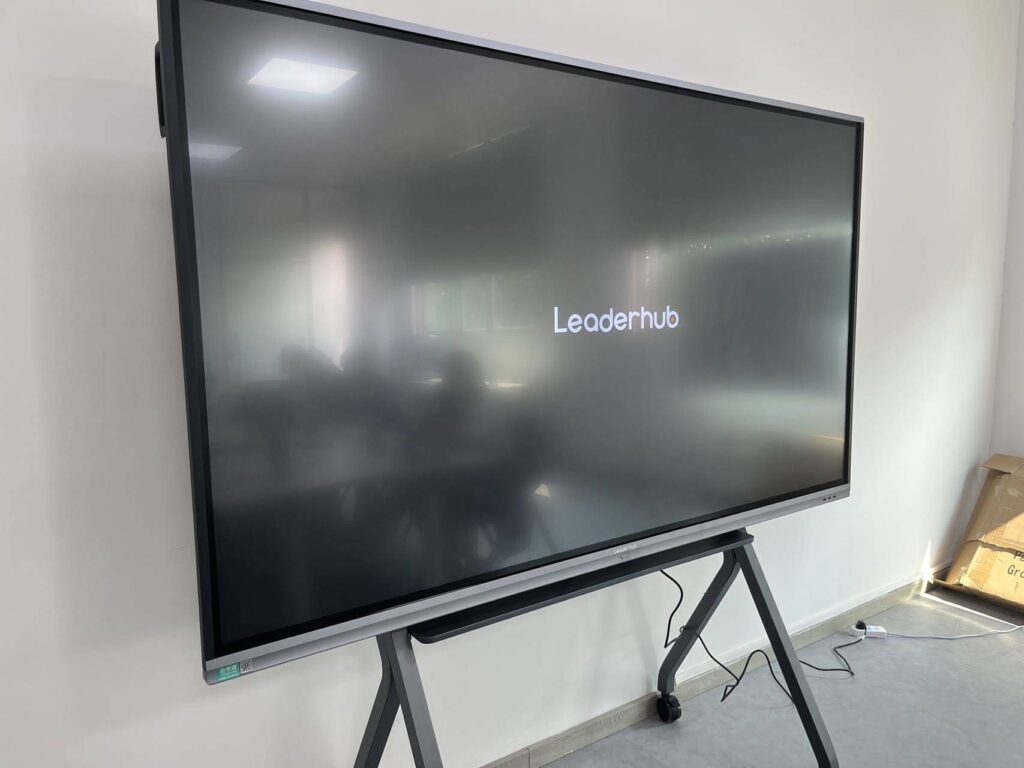
Market analysts generally agree that IFP unit sales overtook traditional whiteboards somewhere between 2014 and 2016 in mature markets. Schools replacing ageing 2000s-era boards simply skipped a generation. Today, products such as the Leaderhub L75HM 75-inch 4K smart whiteboard represent the direct descendants of this shift: an all-in-one panel with no projector, no lamp and no external PC required.
Offices Finally Catch Up
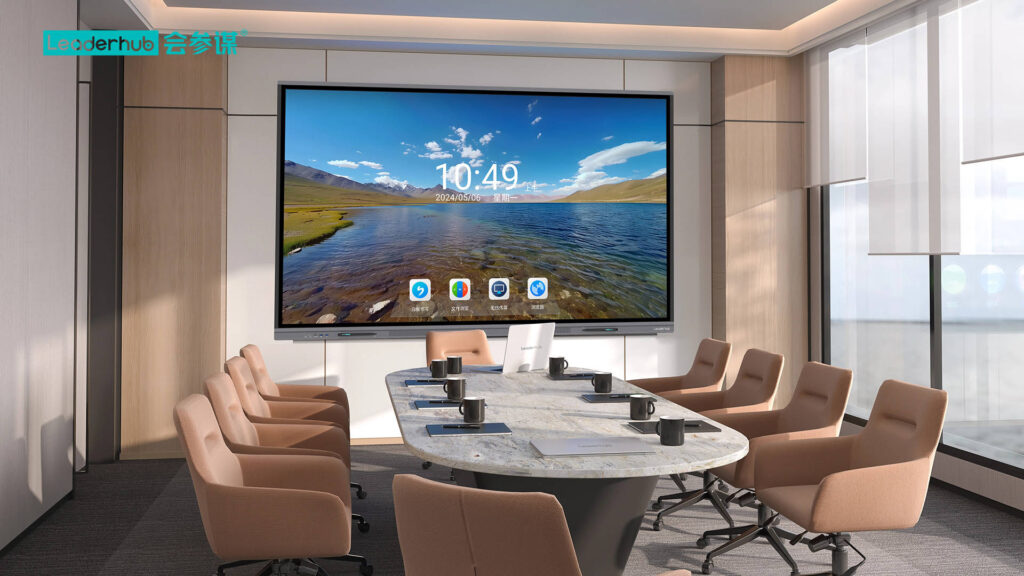
Interestingly, the corporate market that first adopted smart boards in the 1990s lagged behind education for almost twenty years. Most meeting rooms through the 2000s still relied on a projector and a dry-erase board. That changed in the mid-2010s when technology giants reframed the smart board as a collaboration device rather than a presentation tool. Microsoft launched the Surface Hub in 2015, Google introduced Jamboard in 2016 and Cisco followed with its Spark Board in 2017. These products bundled video conferencing, cloud whiteboarding and wireless screen sharing into a single unit, and they persuaded IT departments that the smart board belonged in the workplace.
2020 and Beyond: The Hybrid Era Makes Smart Boards Essential
The Pandemic Accelerator
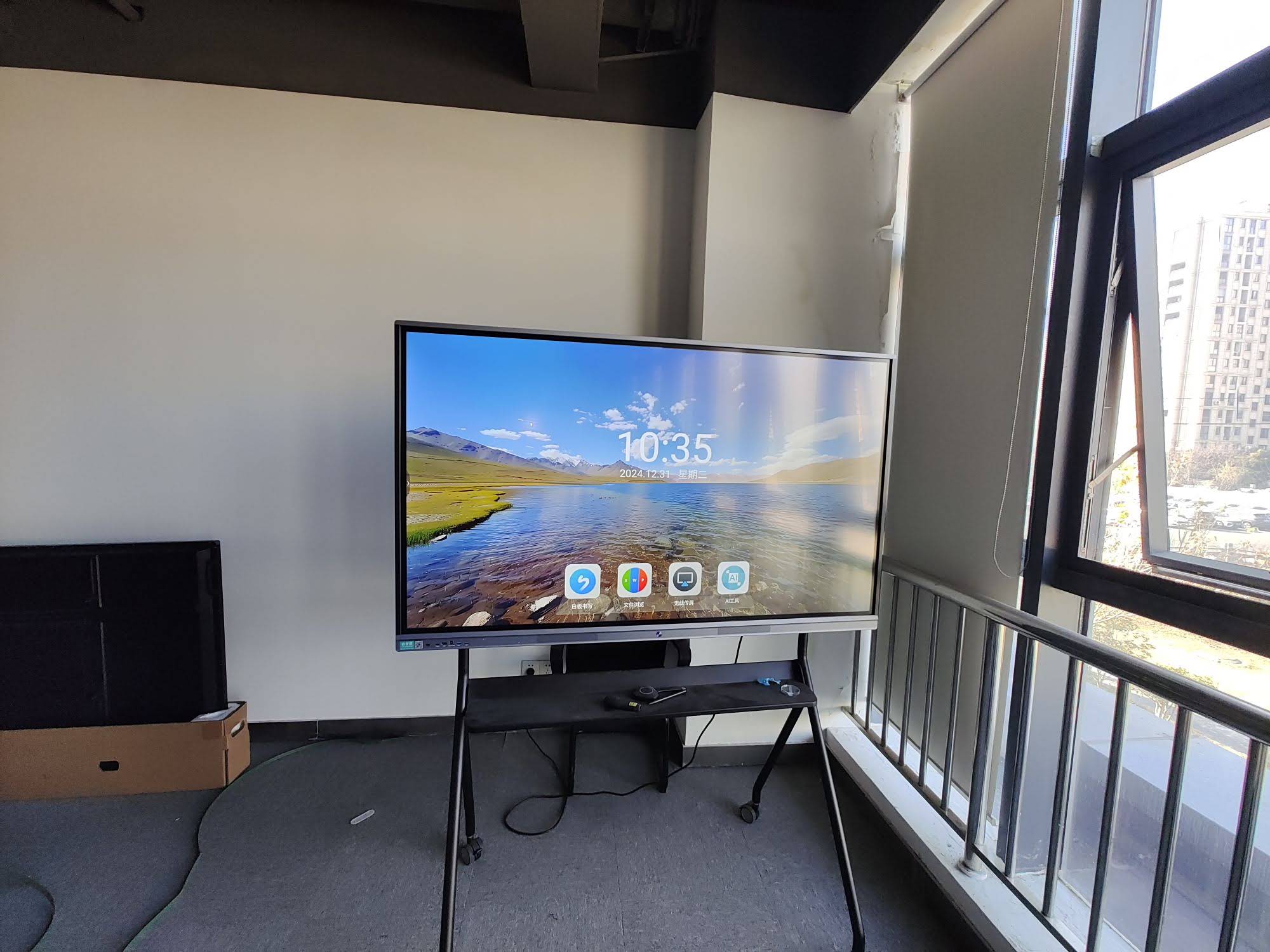
When schools and offices closed in 2020, the smart board’s value proposition changed overnight. A display that could show remote students, record a lesson, share a whiteboard to the cloud and run a video call without a separate laptop was no longer a nice-to-have. Education systems around the world rushed to procure interactive panels for hybrid teaching, and enterprises redesigned meeting rooms around the assumption that at least one participant would always be remote. The OECD Digital Education Outlook documents how this period permanently raised expectations for digital infrastructure in schools.
What Defines a Smart Board Today
- 4K resolution and anti-glare glass on panels from 55 to 110 inches.
- Integrated cameras and microphone arrays for Zoom, Teams and Google Meet.
- AI features such as handwriting recognition, automatic meeting summaries, real-time translation and smart framing.
- Dual operating systems with Android for quick whiteboarding and a slot-in Windows module for full productivity software.
- Mobility, including battery-powered rotating screens and handheld smart displays that leave the wall entirely.
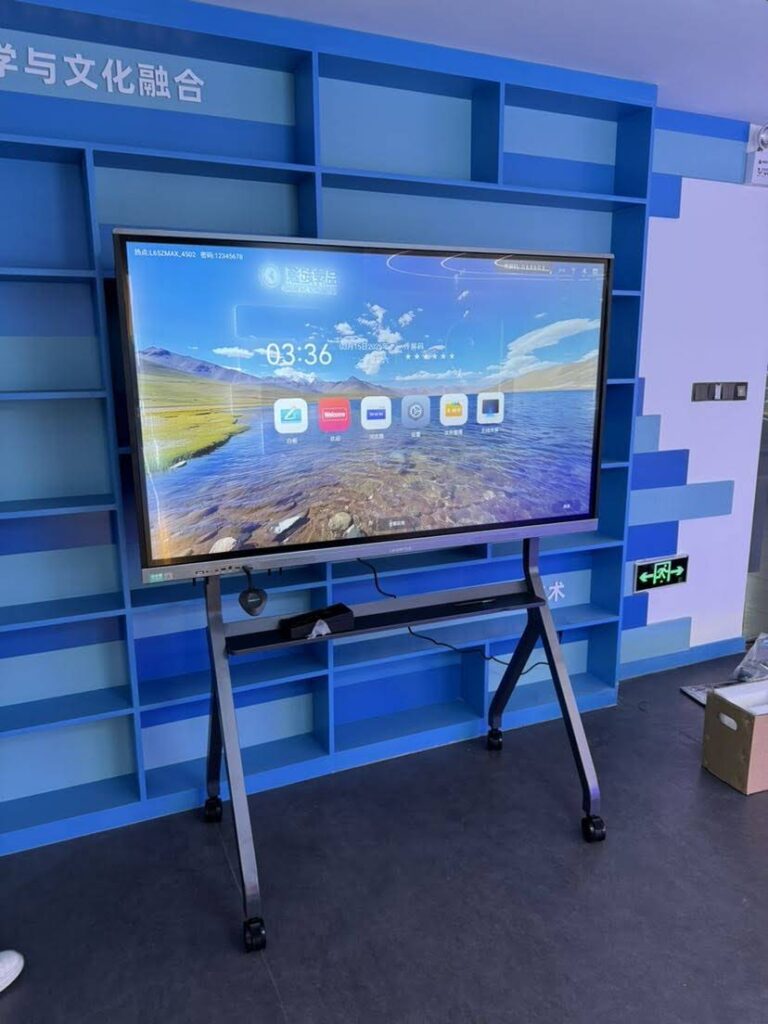
The last point is perhaps the most significant evolution since the move away from projectors. The smart board is no longer a fixed object. Mobile panels on wheeled stands, such as the 55-inch mobile 4K smart display, allow a single unit to serve several classrooms or huddle spaces, while rotating smart screens with built-in batteries bring touch collaboration to small teams, creative studios and even homes. For very large lecture theatres and auditoriums, the opposite trend applies, with 110-inch interactive flat panels replacing projection walls altogether.
Why Smart Boards Became Popular: Five Underlying Drivers
Looking across three decades, the same forces appear again and again whenever adoption jumps.
1. Cost Curves
Each major wave of popularity coincided with a dramatic drop in component prices: projectors in the early 2000s, large LCD panels in the mid-2010s and system-on-chip Android boards in the 2020s. A 65-inch 4K interactive panel today costs a fraction of what a lower-resolution projector-and-board combination cost in 2005.
2. Policy and Funding
From the UK whiteboard programme to pandemic recovery funds, government money has consistently been the catalyst that moves smart boards from pilot to standard. Guidance such as the Choosing Technology in Education framework reflects how policymakers now try to spend that money more thoughtfully.
3. Content Ecosystems
Hardware alone never drives adoption. Smart boards took off in classrooms only after publishers, teachers and software developers built enough interactive content to make the board indispensable. The same was true in offices once Teams, Zoom and cloud whiteboarding apps matured.
4. Simplicity
Each generation removed a point of friction: no more calibration, no more cables, no more external PC, no more dedicated room. Research on Interactive Displays in Education consistently finds that ease of use predicts how often teachers actually integrate the technology into lessons.
5. Changing Work and Learning Models
Project-based learning, flipped classrooms, agile teams and hybrid work all reward tools that let groups think visually together. The smart board happened to be the right form factor at the right time.
Who Makes Smart Boards Today?
The market that SMART Technologies and Promethean once dominated is now global and highly competitive, with Shenzhen emerging as the manufacturing centre for interactive flat panels. Leaderhub, a Shenzhen-based technology company founded in 2010, is one example of this new generation of manufacturers: with 16 years of interactive-display expertise, four product lines spanning smart whiteboards, interactive flat panels, mini PCs and portable smart screens, and customers in 82 countries, it focuses on making AI-enabled collaboration hardware accessible to schools and small and medium-sized enterprises rather than only to large institutions. Its HM series rotatable conference hub has been recognised with international design awards, a sign of how far the category has travelled from the first projector-and-board kits of 1991.
Frequently Asked Questions
When was the first smart board invented?
The first commercial interactive whiteboard was released by SMART Technologies in 1991. “Smart board” has since become a generic term for any interactive display, although SMART Board remains a trademark.
When did smart boards become common in schools?
UK classrooms reached near-universal adoption between 2003 and 2008. US schools followed between roughly 2005 and 2012. Most other developed markets reached mainstream adoption during the 2010s, often skipping straight to interactive flat panels.
When did smart boards become popular in offices?
Corporate adoption accelerated from 2015 onward with all-in-one collaboration displays, and became widespread after 2020 when hybrid meetings made integrated video, touch and wireless sharing essential.
Are projector-based interactive whiteboards still sold?
Yes, but they now represent a small share of the market. Interactive flat panels dominate new installations because they offer 4K resolution, no shadows, no lamp replacement and built-in operating systems.
What is the difference between a smart board and an interactive flat panel?
Technically, a smart board is any interactive display, while an interactive flat panel is the specific modern type that uses a touch-enabled LCD screen rather than a projector. In everyday use the terms are interchangeable.
How should a school or business choose a smart board today?
Consider screen size relative to room depth, the operating system your team already uses, video-conferencing compatibility, warranty length and whether you need mobility. Resources such as Choosing an Interactive Display for K-12 offer a practical checklist, and you can compare current options in the Leaderhub smart whiteboard collection or request a tailored recommendation.
Final Thoughts
Smart boards did not become popular in a single moment. They were invented in 1991, became a classroom standard in the 2000s thanks to public investment and falling projector costs, reinvented themselves as interactive flat panels in the 2010s, and finally conquered the office in the hybrid era after 2020. Each wave was driven by the same combination of cheaper hardware, supportive policy, richer software and a genuine change in how people wanted to learn and work together. With AI now moving into the display itself, the next chapter of this history is already being written, and the board at the front of the room is once again becoming something entirely new.