Choosing an interactive flat panel in 2026 is no longer simply a matter of comparing screen size and price.
For a school, an interactive flat panel may be used for several lessons every day, across multiple teachers and subjects. For a business, the same display may need to handle presentations, video conferencing, wireless screen sharing, brainstorming and remote collaboration.
For distributors, system integrators and organizations planning larger deployments, the decision becomes even more important. A panel that looks impressive in a specification sheet may still create problems if it is difficult to use, difficult to maintain or poorly suited to the actual room.
So, what should you look for when buying an interactive flat panel?
The short answer is: start with the room and user scenario, then evaluate screen size, display quality, writing performance, operating system, connectivity, collaboration tools, installation and long-term support.
This interactive flat panel buying guide explains the factors that matter most before you purchase one unit—or deploy hundreds.
1. Start With the Use Case, Not the Specification Sheet
One of the most common purchasing mistakes is comparing products before defining how they will actually be used.
A primary school classroom, university lecture room, executive meeting room and corporate training center do not require exactly the same interactive display.
Before comparing models, ask five questions:
- Who will use the panel every day?
- How large is the room?
- What is the distance to the farthest viewer?
- What software and devices need to connect?
- Is this a single-room installation or a large-scale deployment?
For schools
The priorities are usually:
- Simple operation for teachers
- Clear visibility throughout the classroom
- Smooth writing and annotation
- Multiple teaching tools
- Wireless screen sharing
- Reliable daily operation
- Easy device management
- Durable construction
A technologically advanced panel has little value if teachers need several minutes to understand how to start a lesson.
For businesses
Typical priorities include:
- Fast meeting startup
- Wireless presentation
- Video conferencing
- Document annotation
- Multi-device compatibility
- Camera and microphone integration
- BYOD support
- Collaboration with remote participants
For business environments, reducing friction is often more valuable than adding another rarely used feature.
2. Choose the Right Interactive Flat Panel Size
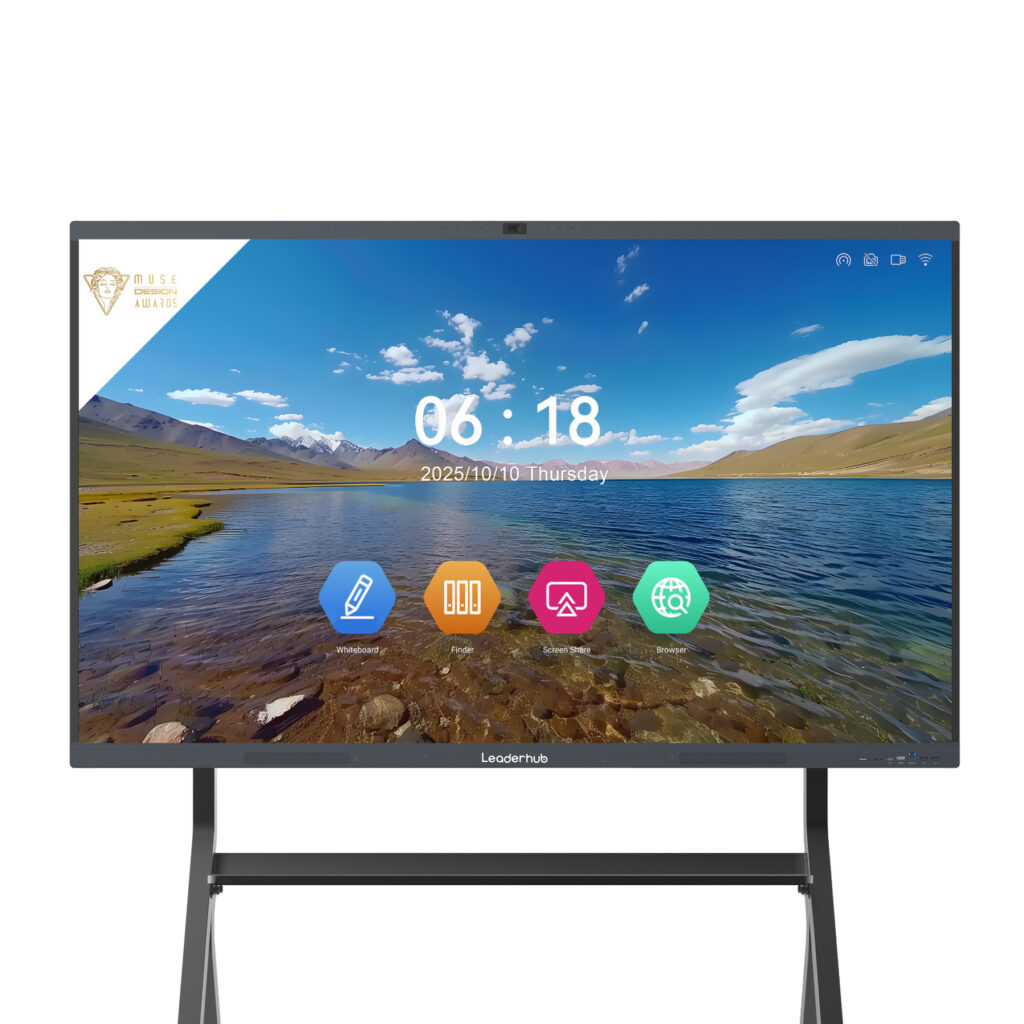
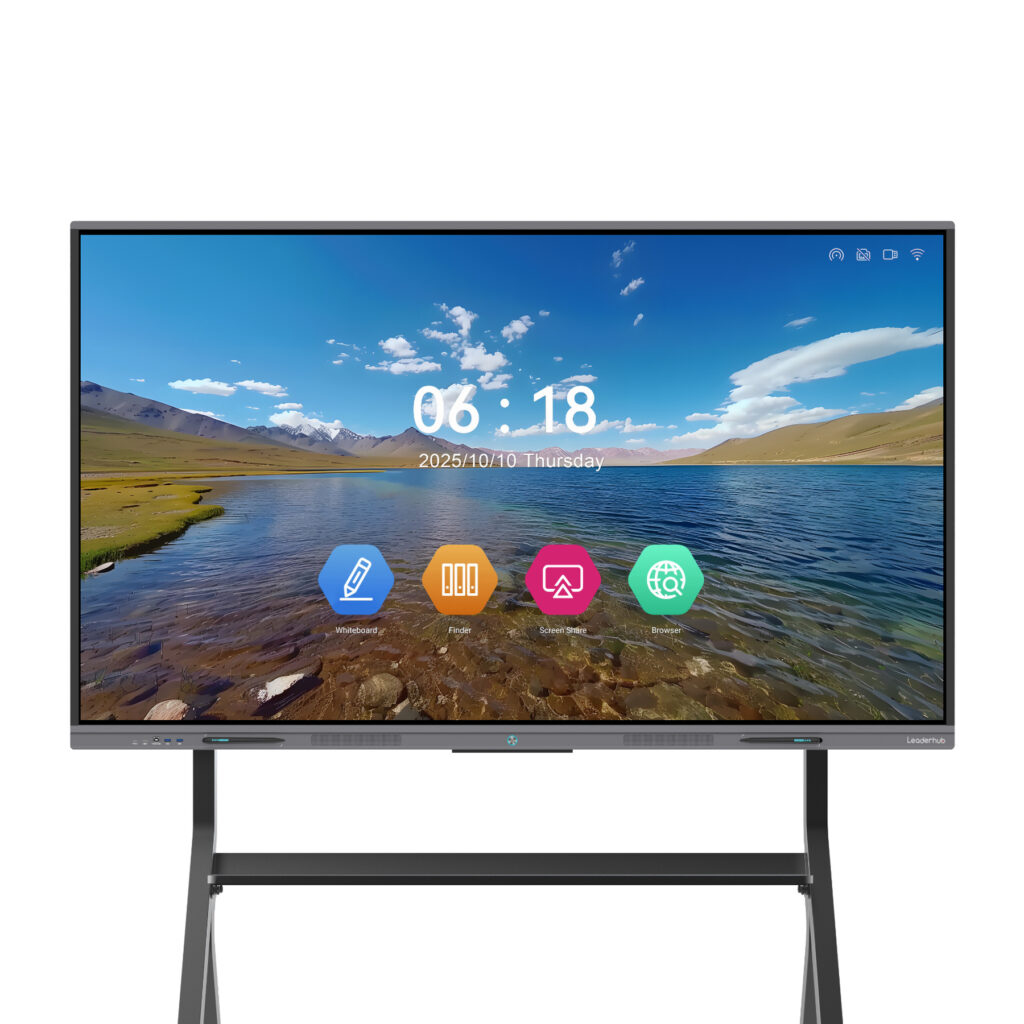
The most common interactive flat panel sizes for classrooms and meeting rooms are 65 inch, 75 inch and 86 inch.
There is no single “best” size. The correct choice depends on room depth, viewing distance, content type and how many people need to interact with the screen.
65-inch interactive flat panel
A 65-inch panel is generally suitable for small classrooms, huddle rooms, small meeting rooms, training rooms and spaces where users sit relatively close to the screen. Its main advantages are lower cost, easier installation and a smaller footprint.
75-inch interactive flat panel
A 75-inch panel is often the most versatile option. It provides more viewing area than a 65-inch display without requiring the installation space of an 86-inch panel.
- Standard classrooms
- Medium-sized meeting rooms
- Training centers
- Collaborative workspaces
For organizations standardizing one screen size across multiple typical rooms, 75 inches is often worth evaluating first.
86-inch interactive flat panel
An 86-inch display is better suited to larger classrooms, larger conference rooms, seminar rooms, training spaces, rooms with longer viewing distances and applications displaying detailed spreadsheets, diagrams or teaching materials.
A larger screen does not automatically mean a better experience, however. Installation height, wall structure and viewing angles still need to be considered.
For a more detailed comparison, see our guide: 65 vs 75 vs 86 Inch Interactive Flat Panel: Which Size Should You Choose?
3. 4K Resolution Is Now the Practical Baseline
For modern interactive displays, 4K UHD resolution should generally be considered a baseline for professional education and business applications.
A 4K display provides 3840 × 2160 pixels, helping improve clarity when displaying:
- Text
- Presentations
- Spreadsheets
- Engineering drawings
- Educational diagrams
- Images
- Video
- Multi-window content
Resolution becomes especially important as screen size increases. On a large interactive panel, lower-resolution content can appear noticeably less sharp, particularly when users stand close to the display to write or annotate.
But resolution alone does not determine display quality. Also evaluate anti-glare treatment, viewing angle, contrast, color performance, screen brightness and glass quality.
In brightly lit classrooms and offices, controlling reflections can have a bigger practical impact than chasing maximum brightness.
4. Pay Close Attention to Writing and Touch Performance
An interactive flat panel is not simply a large television. Touch performance is one of the biggest differences between a good interactive display and a frustrating one.
Writing latency
Digital ink should follow the pen naturally. Noticeable delay makes handwriting feel disconnected from the user’s movement.
Touch accuracy
Try writing near screen corners, screen edges and small interface controls. Accuracy should remain consistent across the entire display.
Multi-touch capability
Multi-touch allows multiple people to interact with the screen simultaneously. This is particularly useful for group classroom activities, collaborative brainstorming, training and team workshops.
Writing feel
Hardware specifications alone do not tell the whole story. Actually write a sentence, draw a circle and make several quick strokes. A good interactive flat panel should feel natural enough that users stop thinking about the technology.
5. Consider the Operating System and Computing Platform
Many interactive flat panels include a built-in operating system, while others can also support an optional Windows OPS computer. This gives buyers several deployment options.
Built-in operating system
A built-in system allows users to quickly access functions such as whiteboarding, annotation, file management, screen sharing, browser access and presentation tools.
This is particularly useful when users want to start a lesson or meeting without connecting a separate computer.
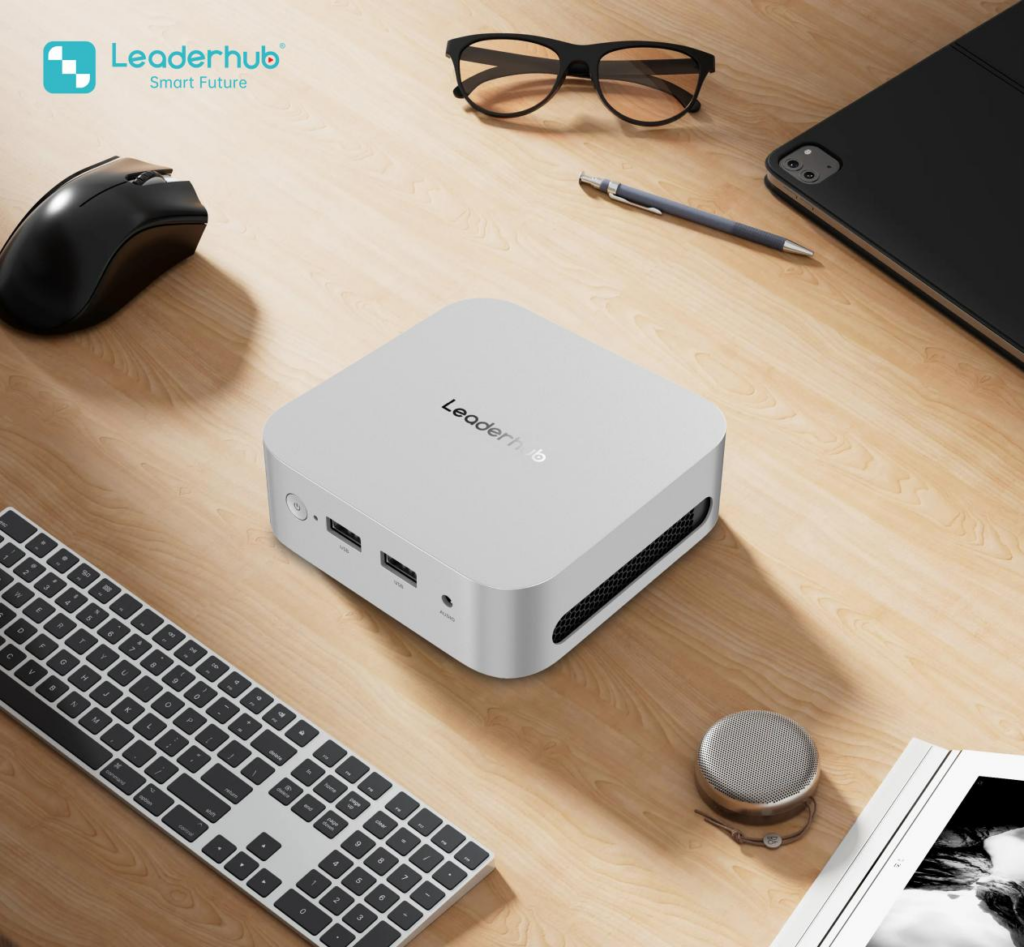
Windows OPS
An OPS module can turn the panel into a more complete Windows workstation. This may be useful for organizations that rely heavily on Microsoft Office, Windows enterprise applications, specialist teaching software and corporate management tools.
Before purchasing, ask whether you really need a dual-system configuration. Adding hardware that users never use increases cost without improving the experience.
6. Check Connectivity Before You Buy
Connectivity problems are one of the easiest ways to create frustration after installation. A professional interactive display should support the devices people actually use.
Check for interfaces such as:
- HDMI
- USB
- USB-C
- LAN
- Audio connections
USB-C can be particularly useful in modern meeting rooms because supported configurations can simplify laptop connectivity.
However, do not evaluate connectivity by counting ports alone. Ask: where are the ports located?
Frequently used interfaces should be easy for teachers and presenters to reach. A port that looks good on a specification sheet may be inconvenient if users need to reach behind a wall-mounted panel every day.
7. Wireless Screen Sharing Should Be Simple
Modern users expect to walk into a room and share content quickly.
An interactive flat panel should therefore support convenient screen sharing from common devices such as Windows laptops, Mac computers, smartphones and tablets.
Wireless sharing is particularly valuable in classrooms and meeting rooms with multiple presenters. For businesses, it can significantly reduce the time spent passing cables between participants. For schools, it allows teachers and students to present content without repeatedly changing physical connections.
When evaluating wireless sharing, test:
- Connection speed
- Image quality
- Stability
- Device compatibility
- Whether multiple devices can connect
- Whether touch-back control is supported
The goal is not simply to have wireless sharing listed as a feature. The goal is to make sharing easy enough that people actually use it.
8.Interactive Flat Panel Buying Checklist
| Category | What to Check |
| Application | Classroom, meeting room, training or hybrid collaboration |
| Screen size | 65″, 75″, 86″ or larger based on room and viewing distance |
| Resolution | 4K UHD recommended |
| Touch | Accuracy, latency, multi-touch and writing experience |
| Operating system | Built-in OS and/or optional Windows OPS |
| Connectivity | HDMI, USB, USB-C, LAN and device compatibility |
| Screen sharing | Wireless connection stability and ease of use |
| AV capability | Camera, microphone and speakers if required |
| Installation | Mounting, power, networking and service access |
| Support | Warranty, spare parts, training and technical service |
Which Interactive Flat Panel Is Right for You?
There is no universal answer.
For smaller rooms, a 65-inch interactive flat panel may provide everything you need.
For many standard classrooms and meeting rooms, a 75-inch display offers a strong balance between visibility, installation and budget.
For larger rooms, an 86-inch model provides more workspace and better visibility for viewers sitting farther from the screen.
But size is only one part of the decision. The best interactive flat panel is the one that fits the actual workflow of the people who will use it every day.
Explore Leaderhub Interactive Flat Panels
Leaderhub provides interactive display solutions for education, enterprise collaboration, training and large-scale projects.
The Leaderhub interactive flat panel portfolio includes multiple 65-inch, 75-inch and 86-inch options across product series designed for different budgets and deployment requirements.
For distributors, schools, enterprises and project partners, Leaderhub can also support product selection and project planning based on room type, application and deployment scale.
Planning an interactive display project?
Contact Leaderhub to discuss your classroom, meeting room or distribution requirements and receive a recommended configuration.